
Case study Nº 05
Stuyvesant Town sold twice at nearly the same price — the capital stack decided which deal survived
Tishman Speyer and BlackRock paid $5.4 billion in 2006 with $56 million of their own money and defaulted in three years. Blackstone and Ivanhoé Cambridge paid $5.3 billion in 2015 with $2.6 billion of equity and still own it. Same eighty acres, same headline price, two capital structures — and a public record that will not close the first one.
Ben Fan, with Darryl WengDecember 14, 202519 min readWatch the reel
Sponsor cash, 2006
$56M
Buyers’ equity, 2015
$2.6B
The same eighty acres, nine years apart, at almost exactly the same price — $5.4 billion and then $5.3 billion.3,42 The first deal defaulted in just over three years and cost its investors more than any single property loss in the history of American commercial real estate. The second is still standing. Nothing about the buildings changed. Everything about the capital did.
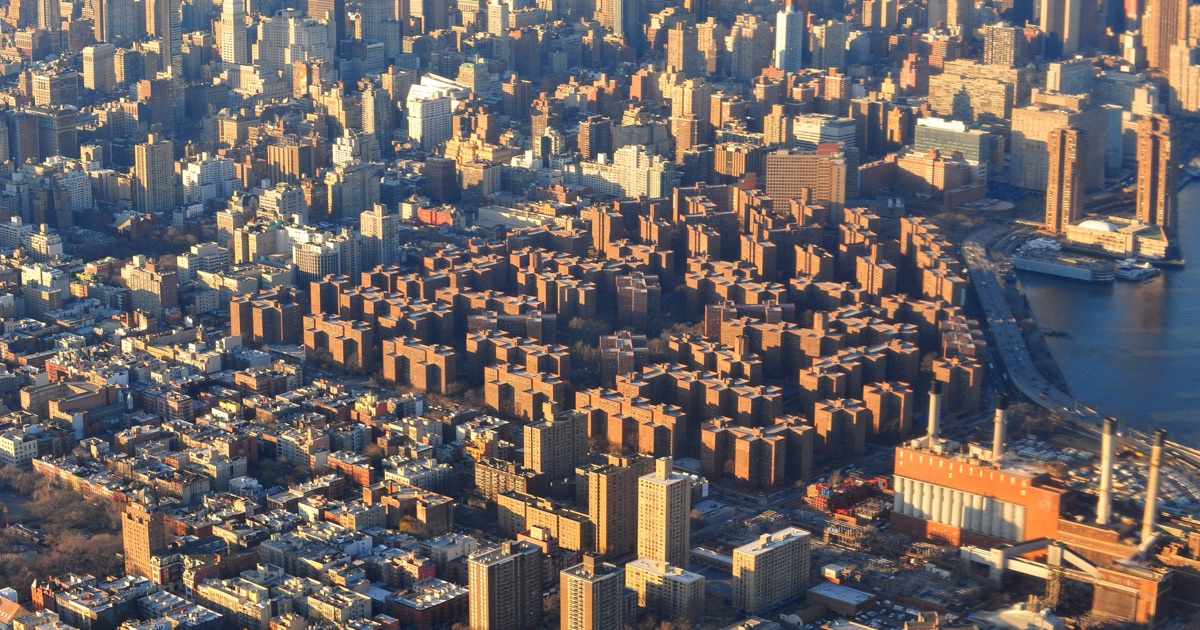
The short answer to why Stuyvesant Town’s first sale failed: the buyers put in almost no money of their own, borrowed the rest against income that did not exist yet, and the income never arrived because a court said the law had never allowed it. Tishman Speyer and BlackRock Realty paid $5.4 billion in November 2006 on a $3 billion interest-only senior mortgage and roughly $1.4 billion of mezzanine debt stacked eleven levels deep.5,6 Rental income covered forty per cent of the debt service from the first day.8,9 The gap was paid out of a reserve fund, and when the reserve ran dry the deal was over.
Nine years later Blackstone and Ivanhoé Cambridge bought the same complex for $5.3 billion with about $2.6 billion of equity — roughly half the price, in cash, on the day.43 The debt beside it was a single ten-year Fannie Mae loan that Fannie itself described as low-leverage.47 That is the whole comparison, and it is why this brief’s central figure is two bars rather than a chart of rents.
| The asset, and both deals | Number |
|---|---|
| What it is | 80 contiguous acres, First Avenue to the FDR, 14th to 23rd Street3 |
| Apartments | 11,232 to 11,250 depending on the source; 11,241 by 20153,10,47 |
| Buildings (genuinely disputed) | 110, or 56 — two well-sourced camps3,5,10 |
| Seller, closed Nov 2006 | MetLife, owner since 1947; gain of about $3 billion net of tax1 |
| Price, agreed Oct 2006 | $5.4 billion; about $6.3 billion all in3,7 |
| Sponsor cash, Nov 2006 (disputed) | $56 million from Tishman Speyer alone, or $56 million each7,8,9,62 |
| Senior mortgage, Nov 2006 | $3.0 billion, interest-only, 55.6% LTV at origination5 |
| Mezzanine, Nov 2006 | $1.4–1.5 billion across eleven levels6,10,36 |
| Income against debt service, from Nov 2006 | 40% from the first day8,9 |
| Default | 8 January 2010, a missed $16 million payment20,21 |
| Title actually conveyed | 3 June 2014, by deed in lieu of foreclosure35 |
| Price, signed Oct 2015 | $5.3 billion net; $5.45 billion including transfer taxes42,49 |
| Equity, Dec 2015 | About $2.6 billion, split evenly between two buyers43 |
| Debt, Dec 2015 | $2.7 billion, ten-year Fannie Mae loan, “low-leverage”47 |
| The city’s side, Oct 2015 | About $220 million, of which $143.7 million never repayable9,46 |
| Published loss on the 2006 equity and mezzanine | $2.4 billion — one analyst’s figure, and the only total anyone printed41 |
| Refinanced | $3.15 billion, closed 26 November 202558,59 |
| Rent-stabilised share today | All of it59 |
Start with the seller, because the seller explains the timing
Metropolitan Life built Stuyvesant Town and Peter Cooper Village in the 1940s as a middle-class housing project on the cleared Gas House District, and held them for sixty years. What changed was not the buildings but the owner’s legal form. MetLife demutualised and went public in 2000, and a quiet, tax-advantaged, socially framed hold stopped making sense for a company that now had to report to shareholders every quarter.
On 17 October 2006 it announced the sale, and on 17 November it closed. The company’s own filing states the outcome plainly: a gain of approximately $3 billion, net of income taxes.1,2 That figure is the least examined number in the whole story and arguably the most important one. Everything that followed — the litigation, the default, the five years of servicer control, the second sale — happened downstream of a seller who collected in full and left.
The auction was competitive and the record is unusually clear about it. Darcy Stacom of CB Richard Ellis ran the sale; roughly eight finalists reached the end. Apollo Real Estate Advisors, working with the Dermot Company, bid $5.33 billion. Related bid with Lehman Brothers; the Milstein brothers and Vornado bid. A tenant-organised bid led by City Council member Daniel Garodnick came in at $4.5 billion. Tishman Speyer and BlackRock signed at around ten in the morning on 17 October after an overnight negotiation, having gone about $70 million above the runner-up.3,4
Seventy million dollars is a rounding error on $5.4 billion, and it is also the entire margin by which the losing bidders avoided the worst commercial real estate loss on record. Winning an auction and being right are different things.
What $5.4 billion actually bought
Eighty contiguous acres of Manhattan between First Avenue and the FDR Drive, 14th Street to 23rd Street, holding somewhere around eleven thousand two hundred apartments and about twenty-five thousand residents.3 The apartment count wobbles by source — 11,232 in the Times in 2006, 11,227 in 2010, 11,250 in two trade publications, 11,241 in Fannie Mae’s 2015 announcement — and no source explains the spread.3,6,10,11,47
The building count does not wobble; it splits. The New York Times said 110 buildings in 2006 and again in 2010. Multifamily Executive, Commercial Property Executive and the Congressional Oversight Panel — the last citing SEC and Fitch filings directly — said 56.3,5,10,11 Two well-sourced camps, no reconciliation, and it is worth noticing that the most heavily reported real estate transaction in New York’s history cannot agree on how many buildings changed hands.
The relevant number for the underwriting was neither of those. It was the rent-stabilised share, and that is disputed too: the Times said nearly three quarters at the time of sale, Multifamily Executive said about eighty per cent.3,10 Either way, the overwhelming majority of the income was set by law rather than by the market, at rents far below what the same square footage would fetch a few blocks away. The value the buyers were paying for was not the rent roll. It was the difference between the rent roll and the market — and the legal mechanism that let an owner close that gap one apartment at a time.
That mechanism was vacancy decontrol, in force since 1993. When a rent-stabilised apartment came empty and its legal rent crossed a statutory threshold, it left regulation permanently. Renovation spending and vacancy bonuses were the tools for pushing a legal rent over the line. So the plan was to empty apartments, improve them, deregulate them and re-let them at market — and the seller’s own offering memorandum said how fast. Prepared by MetLife and CBRE, it targeted a rent-stabilised share below thirty per cent by 2018 and projected net operating income reaching $504.1 million by 2017.12
MetLife had already been running that play, gently. It told the Times at the time of sale that rents on twenty-seven per cent of the apartments were at market, and that another 1,800 units would be decontrolled over the following two years.3 What it was selling, in other words, was a conversion already in progress and a projection of how much faster somebody else could run it.
Net operating income in 2006 was $112 million.9 The memo was projecting a four-and-a-half-fold increase inside eleven years, and the buyers paid a price consistent with believing a version of it. The sign on the tower at 14th Street and First Avenue already said luxury rentals; the rent rolls said something else entirely.
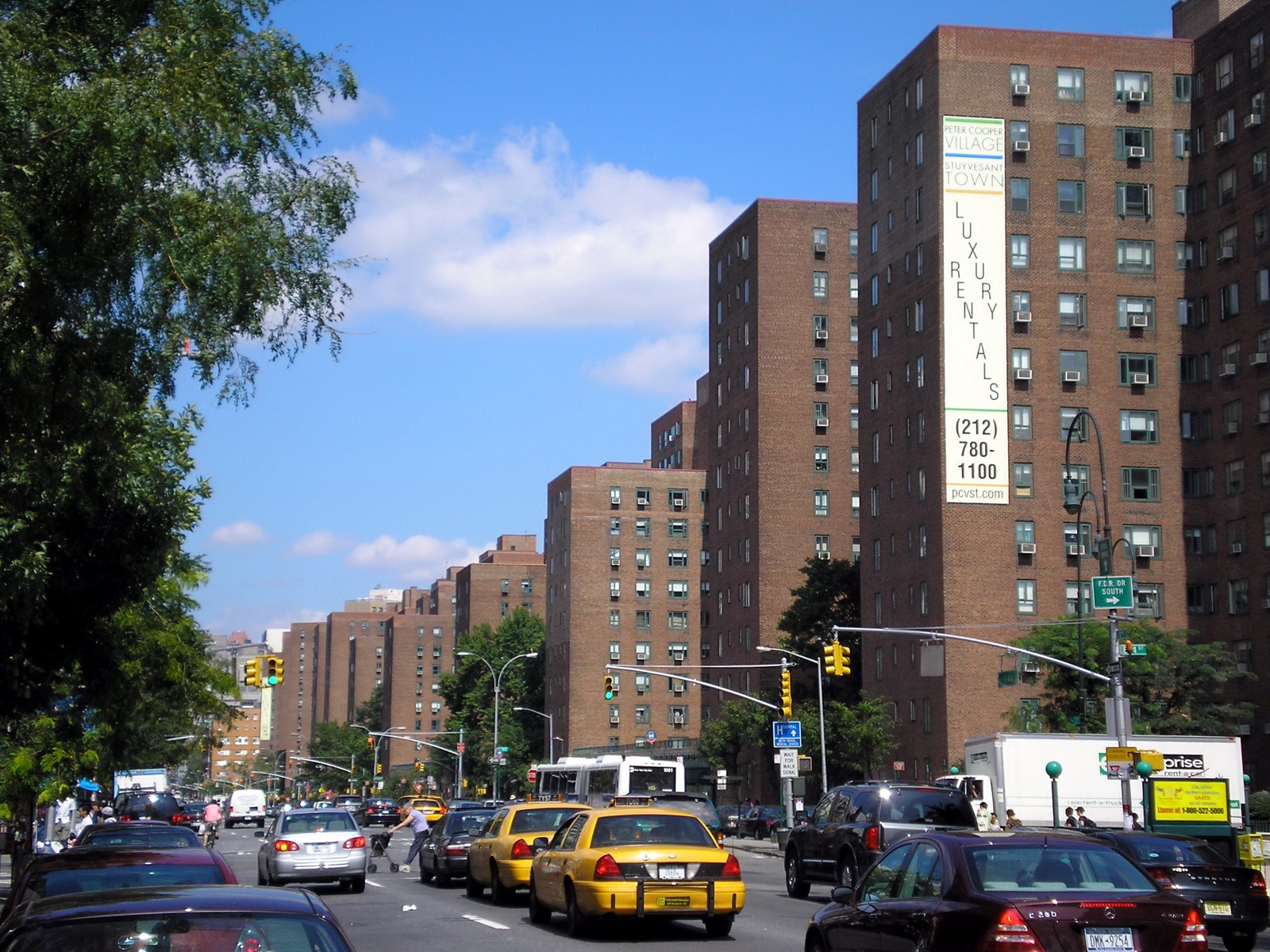
Ten weeks before the sale closed
The sign already said luxury rentals. The rent rolls said something else entirely.
Stuyvesant Town and Peter Cooper Village from 1st Avenue and 14th Street on 3 September 2006, with a leasing sign for both properties painted on the building face — ten weeks before the sale to Tishman Speyer closed.Photo: David Shankbone, CC BY 2.5, via Wikimedia Commons
Forty per cent, from day one
Here is the correction that matters most, because the wrong version of it circulates everywhere. The figure usually quoted alongside the $112 million of income is $165 million of annual senior debt service. That number appears in no source this brief could find. It is reproducible as arithmetic — a plausible rate on $3 billion — but arithmetic that reproduces a figure is not a source for it, and a number nobody published does not become one by being repeated.
What is sourced, twice and independently, is the coverage ratio. Gothamist, reviewing the deal in 2016, wrote that rental income covered a scant forty per cent of the new, inflated debt load.9 City Journal, reviewing Charles Bagli’s book on the transaction, put it identically: from the first day, income from the property covered only forty per cent of the debt service.8 Two writers, two sources, one number — and it is a more damning number than the invented one, because it is a ratio rather than a dollar figure and therefore cannot be argued down.
A property covering forty per cent of its debt service is not a property with a financing problem. It is a property whose financing assumes a future that has not happened yet. The difference had to come from somewhere for as long as it took the plan to work, and the somewhere was a reserve fund carved out of the closing.
The lawsuit was filed three months after closing
In January 2007, nine residents of seven apartments sued. Their argument turned on J-51, a city tax abatement for building improvements — asbestos removal, boiler replacement, gut rehabilitation — which in exchange required the apartments to be registered with the state and kept under rent stabilisation for as long as the benefits ran.13
The 1993 statute that created luxury decontrol carved out an exception: it did not apply to apartments that became subject to rent stabilisation “by virtue of” receiving J-51 benefits. The state housing agency and every landlord had read that for years to meansolely by virtue of — so a building already stabilised for other reasons could take J-51 money and still deregulate. The tenants read it literally. The entire case, and with it the business plan, was four words in a statute.13
Justice Richard B. Lowe III dismissed the complaint in August 2007, adopting the agency’s reading.13 The Appellate Division reversed unanimously in March 2009.14 And on 22 October 2009 the Court of Appeals affirmed the reversal, four to two, in a per curiam opinion that dealt with the consequences in a sentence: defendants predict dire financial consequences from our ruling, and if the statute imposes unacceptable burdens, their remedy is to seek legislative relief.13
The court expressly left open whether the ruling applied retroactively, noting in a footnote that the lower courts had not considered the question.13 That single unresolved issue is what made the decision unpriceable rather than merely expensive — nobody could say what the liability was. Cleary Gottlieb told clients within a week that a property whose income had been projected to triple by 2011 and whose value had been projected at $7 billion within five years now looked highly unlikely to reach either.16 The Times reported the same day that the ruling could affect landlords of as many as 80,000 apartments across the city.15
It took another three and a half years to settle. In November 2012 the parties signed: $68.75 million of cash for overcharges running from January 2003 through December 2011, paid $58.25 million by the ownership entities and $10.5 million by MetLife’s successor company.17 Final approval came on 10 April 2013 — from Justice Lowe, the same judge who had dismissed the case six years earlier. The settlement returned 4,311 apartments to rent stabilisation through June 2020 and put total tenant recovery at $173.25 million, with legal fees of $18.9 million, under eleven per cent.18 The two press releases from the same firms six months apart give the class as 21,250 members and then about 27,500, and never reconcile the difference.17,18
The reserve ran out first
The reserve is where the two most confident accounts of this deal disagree with each other, and neither is a bad source. The New York Times, reporting contemporaneously in October 2009 and again in January 2010, describes a single fund originally stuffed with $890 million for capital improvements, interest payments and renovations.6,15 Multifamily Executive, writing in September 2009 with more granularity, describes two: a $400 million debt-service reserve set at issuance, down to $56.5 million by July 2009 and expected by Moody’s and Fitch to be exhausted by year end, plus a separate $190 million general reserve for capital improvements and debt paydown that had already run out somewhere between October 2008 and September 2009.10 Four hundred plus one hundred and ninety is $590 million, which is also the figure Commercial Property Executive uses.11
This brief does not resolve that, because no source does. What both accounts agree on is the shape: a fund built to cover the gap between income and debt service, drawn down every month the plan failed to deliver, with no mechanism to refill it. Realpoint’s Frank Innuarto told the Times in October 2009 that about $24 million was left.15 Trepp’s Manus Clancy put the underwriting problem in one sentence in the same article: the property has never been able to generate nearly enough cash to service its debt, the interest reserve is dwindling, and now the property faces the prospect of taking a hit on its income.15
The loan went to CWCapital as special servicer in November 2009.19 On 8 January 2010, Tishman Speyer and BlackRock confirmed in a joint statement that they would miss that day’s scheduled $16 million payment.20,21 Three years and seven weeks after closing.
Two stacks, one asset
Nearly the same price, nine years apart — and the difference between the two deals is entirely in how the money was assembled.
The 2015 capital, all of it published
$5.3 billion
The 2015 capital, all of it published · $5.3 billion
Fannie Mae loan, ten years$2.7 billion
- Senior, interest-only5,10$3.0 billion
- Mezzanine, eleven levels6,36$1.4 billion
- Equity and its investors6almost $1 billionof which CalPERS29$500Mof which Tishman Speyer's own cash7,8$56M
The 2015 capital, all of it published · $5.3 billion
About $6.3 billion went out all in and roughly $5.4 billion of capital can be identified, so the gap is drawn as a line with no number rather than a plausible one.
| Line | Amount | How it is counted |
|---|---|---|
| The 2006 capital anyone has published — Senior, interest-only | $3.0 billion | sourced, and part of the total |
| The 2006 capital anyone has published — Mezzanine, eleven levels | $1.4 billion | sourced, and part of the total |
| The 2006 capital anyone has published — Equity and its investors | almost $1 billion | sourced, and part of the total |
| The 2006 capital anyone has published — The rest of a ~$6.3B bill | Never published | never published |
| The 2006 capital anyone has published — Reserves funded at closing | $890M — or $590M | sourced, but a different kind of number — not added to the total |
| The 2015 capital, all of it published — Equity, two buyers | $2.6 billion | sourced, and part of the total |
| The 2015 capital, all of it published — Fannie Mae loan, ten years | $2.7 billion | sourced, and part of the total |
| The 2006 capital anyone has published | $5.4 billion | the sourced total |
| The 2015 capital, all of it published | $5.3 billion | the sourced total of the second structure |
Two stacks, one asset
- Senior, interest-only5,10$3.0 billion
- Mezzanine, eleven levels6,36$1.4 billion
- Equity and its investors6almost $1 billionof which CalPERS29$500Mof which Tishman Speyer's own cash7,8$56M
The 2015 capital, all of it published · $5.3 billion
About $6.3 billion went out all in and roughly $5.4 billion of capital can be identified, so the gap is drawn as a line with no number rather than a plausible one.
The handback was not a moment
Almost every retelling of this deal has a scene in it where the owners hand over the keys in January 2010. The scene is real as journalism and wrong as a legal event, and the difference is worth four and a half years.
What happened in January 2010 is that the partnership stopped paying and said publicly it would give the property up. NPR and Marketplace, both on 25 January 2010, describe an agreement to turn the properties over to the lenders.22,23 No legal instrument is named in any contemporaneous source, because none was executed. Title did not move. The borrower entities kept holding the asset while CWCapital, as special servicer for the senior bondholders, ran it.
The only formally documented conveyance in the entire collapse is dated 3 June 2014, when CWCapital executed a deed in lieu of foreclosure, took direct title, and cancelled a UCC foreclosure auction that had been scheduled for ten days later.35 Transfer taxes on that conveyance ran to more than $100 million by one account and over $130 million by another.35 And there was never a receivership: no court-ordered receiver appears anywhere in the 2010–2014 record. A property widely described as having been surrendered to its lenders in 2010 was legally still owned by the defaulted borrower until the summer of 2014.
Four and a half years of fighting over the wreckage
The gap between the informal surrender and the actual conveyance is where the capital stack did its real damage, because eleven levels of mezzanine debt is eleven levels of people with standing to sue.
The most instructive fight was Bill Ackman’s. In August 2010, Pershing Square and Winthrop Realty Trust, through a joint venture called PSW NYC, bought the first three mezzanine loans — $300 million of face value — for $45 million, about fifteen cents on the dollar.24,37 The plan was elegant: mezzanine debt is secured by the equity in the holding company rather than by the real estate, so foreclosing on it would hand PSW control of the entity above the senior lenders’ heads, after which the complex could be converted to a co-op.
On 16 September 2010 Justice Richard Lowe — again — enjoined the foreclosure, holding that under the intercreditor agreement PSW would first have to pay off the $3.67 billion owed to the senior lenders.26,37 The appeals court denied a stay at the end of the month.27 On 26 October CWCapital settled by paying PSW $45 million and taking the loans back.28 Pershing Square recovered exactly what it had paid. The cleverest trade in the whole story returned precisely zero, because an intercreditor agreement signed in 2006 said it would.
A correction is owed here to a claim that circulates widely: Appaloosa Management held senior CMBS bonds, not mezzanine debt. It was on the top of the stack, not the bottom. Appaloosa sued unsuccessfully in 2010 to force a bankruptcy rather than a foreclosure, arguing that route would save lenders roughly $200 million in transfer taxes, and sued again in November 2015 over CWCapital’s claim to as much as $566 million of default interest out of the sale proceeds — bondholders said the right figure was $38.2 million.39,40,49 That second case was withdrawn on 1 December 2015 after a judge denied an injunction on standing, so it was never decided on the merits.41
The servicer’s own position deserves the stain rule. CWCapital was controlled by Fortress Investment Group. It installed a manager, then replaced that manager with CompassRock, a sister company under the same parent, effective 1 September 2012, citing a 33 per cent cut in management fees.11,32 It rebuffed a tenant-ownership proposal backed by Brookfield and cancelled a scheduled foreclosure auction without explanation, and residents accused it of stalling a sale to protect its fee stream.33 In May 2014, while CWCapital was moving to foreclose on the junior debt, its parent Fortress was separately reported to be assembling a $4.7 billion bid of its own — which drew a public conflict-of-interest objection from Councilman Garodnick.34 CW’s counsel later described a $7.5 million annual special servicing fee across nearly six years and a $15 million liquidation fee on the sale.49
In July 2014 six Centerbridge-affiliated junior lender entities sued, alleging the deed in lieu rested on a false premise: that CWCapital had represented $4.4 billion as owed on the senior mortgage when the true figure was around $3.45 billion, and that a property believed to be worth approximately $5 billion had been taken in a way that froze the juniors out of more than a billion dollars of recovery. CW’s spokesman called it purchased litigation.36 It settled in early September 2015 — which is what cleared the path for a sale six weeks later.
The sequence
17 Oct 2006
MetLife agrees to sell to Tishman Speyer and BlackRock Realty. The winning bid beats Apollo and the Dermot Company by about $70 million; a tenant-organised bid led by Councilman Daniel Garodnick had come in at $4.5 billion.1,3,4
$5.4B
17 Nov 2006
The sale closes. MetLife, a public company since 2000, books a gain of approximately $3 billion net of income taxes on an asset it had owned since 1947.1,2
~$3B gain to the seller
Jan 2007
Nine residents file Roberts v. Tishman Speyer, arguing that J-51 tax benefits barred the luxury deregulation the whole business plan ran on. Three months after closing.13
23 Aug 2007
Justice Richard B. Lowe III dismisses the case, adopting the state housing agency’s own long-standing reading of the statute.13
5 Mar 2009
The Appellate Division, First Department reverses him unanimously.14
Sep 2009
The $400 million debt-service reserve is down to $56.5 million. Moody’s and Fitch expect it exhausted by year end. Florida’s pension fund had already marked its $250 million to zero on 1 September.10,31
$56.5M left
22 Oct 2009
The Court of Appeals affirms, 4–2. Realpoint calls it “the last shoe to drop”, and reports the reserve fund down from $890 million to about $24 million.15
~$24M left
Nov 2009
The $3 billion senior mortgage transfers to CWCapital as special servicer.19
8 Jan 2010
Tishman Speyer and BlackRock confirm in a joint statement that they will miss that day’s scheduled debt-service payment.20,21
$16M missed
25 Jan 2010
The press reports an informal surrender — “handing over the keys”. No legal instrument is named, and none is executed for another four and a half years.22,23
Aug 2010
Pershing Square and Winthrop Realty, through a joint venture, buy the first three mezzanine loans — $300 million of face value — for $45 million, about fifteen cents on the dollar.24,37
$45M for $300M face
16 Sep 2010
Justice Lowe — the same judge as Roberts — enjoins their foreclosure: under the intercreditor agreement they would first have to pay off $3.67 billion owed to the senior lenders.26,37
4 Oct 2010
CalPERS fires BlackRock from its apartment portfolio after writing off the $500 million it had put into the deal.29
$500M written off
26 Oct 2010
CWCapital settles: it pays the mezzanine buyers $45 million and takes the loans back. They recover exactly their outlay — a wash, not a profit.28
$45M back
1 Sep 2012
CWCapital replaces the manager with CompassRock, a sister company under the same parent, citing a 33 per cent cut in management fees. Tenants accuse it of stalling a sale to protect its fee stream.11,32,33
10 Apr 2013
Justice Lowe approves the Roberts settlement — $68.75 million of cash and 4,311 apartments returned to rent stabilisation through June 2020.18
$68.75M
3 Jun 2014
CWCapital executes a deed in lieu of foreclosure, takes direct title, and cancels a UCC auction scheduled for ten days later. This is the only formally documented conveyance in the whole collapse.35
Jul 2014
Six Centerbridge-affiliated junior lenders sue, alleging CWCapital represented $4.4 billion as owed on the senior mortgage when the true figure was about $3.45 billion. Settled in early September 2015.36
19 Oct 2015
Blackstone Property Partners and Ivanhoé Cambridge sign at $5.3 billion. Announced with Mayor de Blasio the following day, alongside a twenty-year affordability agreement.42,44
$5.3B
7 Dec 2015
A $2.7 billion ten-year Fannie Mae loan is announced, originated through Wells Fargo Multifamily Capital. Fannie’s own description of it: low-leverage.47
$2.7B, ten years
18 Dec 2015
The sale closes. The reported closing figure of $5.45 billion includes full payment of transfer taxes; Blackstone says the net price is still $5.3 billion.48,49
$5.45B at closing
Jan 2018
The city’s Independent Budget Office credits the agreement with 36,000 apartment-years of additional affordability, against the 100,000 the administration had claimed.51
Jun 2019
The Housing Stability and Tenant Protection Act repeals vacancy decontrol and high-income decontrol outright, and caps the improvement increases that got legal rents near the threshold.53
Jan 2023
Justice Robert Reed rules for the tenants association: about 6,200 apartments Blackstone had planned to deregulate stay rent-stabilised.52,57
23–24 Feb 2024
Blackstone withdraws its appeal by filed stipulation. Every apartment in the complex is now rent-stabilised, and the plan to deregulate half of them is finished.56,57
26 Nov 2025
A $3.15 billion Wells Fargo mortgage refinances the matured Fannie Mae loan and recapitalises the position for another term.58,59
$3.15B
What the equity lost, and the one total anybody published
The losses are documented investor by investor and never in aggregate by anyone with a ledger. CalPERS put in $500 million, wrote it off, and then fired BlackRock from the roughly $1 billion apartment portfolio it managed on the fund’s behalf.29 The Florida State Board of Administration put in $250 million in 2007; its director Ash Williams told trustees on 1 September 2009 that the fund was carrying the investment at zero because the market had softened dramatically — an anticipatory markdown four months before the default.31 The Church Commissioners for England lost £40 million, less than one per cent of a then-£4.4 billion portfolio, and described the mechanism precisely: the value of the property fell to the extent that it covered only part of the borrowings, and the rest of the borrowings and the investor’s equity were lost.30
Exactly one aggregate figure exists in print. Anthony La Malfa of BDO, quoted in Real Estate Weekly on 16 December 2015, put it at $2.4 billion in losses for the original equity and mezzanine investors.41 That is one analyst’s arithmetic in one trade publication, and it is the only total anyone has published. It should not be repeated without his name attached to it, and this brief does not repeat it without one.
The senior lenders did fine. The $3 billion senior CMBS loan was reported paid off after the December 2015 closing, with analysts estimating a gain on the proceeds above principal in excess of $1.1 billion.50 Being at the top of an over-levered stack is a different business from being anywhere else in it.
- Paid, Nov 20063$5.4B
- “The latest appraisal”, Jan 20106,20,24$1.9B65% below the price
- Christopher Mayer, Columbia, Jan 201023~$2Ban estimate
- Trepp’s lowest reported value, 2010–1125,38$2.8B
- Appraised, Sep 201338$3.4B
- Appraised, Oct 201438$3.5B
- Agreed and closed, Dec 201542,48$5.3B
One of these is not an appraisal at all: on 25 January 2010 the economist Christopher Mayer told Marketplace the complex was “probably worth $2 billion”, which is a guess by a person with no stake in it rather than a mark anybody filed. And two of the rest cannot both be true — $1.9 billion was reported as the latest appraisal through October 2010, while Trepp records $2.8 billion as the lowest reported appraised value in 2010–11, and no source reconciles them. What survives the disagreement is the shape: the asset was marked at roughly a third to a half of its purchase price at the bottom, climbed back over five years while a special servicer held it, and sold in December 2015 within two per cent of what it had cost nine years earlier.
The second sale, and what the city bought
CWCapital hired Eastdil Secured and ran a sale. The contract was signed on 19 October 2015, announced with Mayor de Blasio the following day, and closed on 18 December.42,44,48 The price has three versions in circulation and one source resolves them: $5.3 billion is the net negotiated price, and the $5.45 billion figure reported at closing includes full payment of transfer taxes. Real Estate Weekly is the only outlet that explains the gap, and it did so by asking Blackstone, whose spokesperson confirmed the net price was still $5.3 billion.49 Figures of $5.4 billion, $5.5 billion and $5.6 billion all appear in otherwise careful reporting, mostly through conflation with the 2006 price.
The financing was announced on 7 December: $2.7 billion, ten years, from Fannie Mae through Wells Fargo Multifamily Capital, and Fannie called it low-leverage in its own announcement.47 Against a $5.3 billion price that is an implied loan-to-value near fifty-one per cent, though no source states one. Set beside the 2006 stack — 55.6 per cent of senior alone, with $1.4 billion of mezzanine on top of it — the difference is not the senior loan. It is everything above the senior loan.
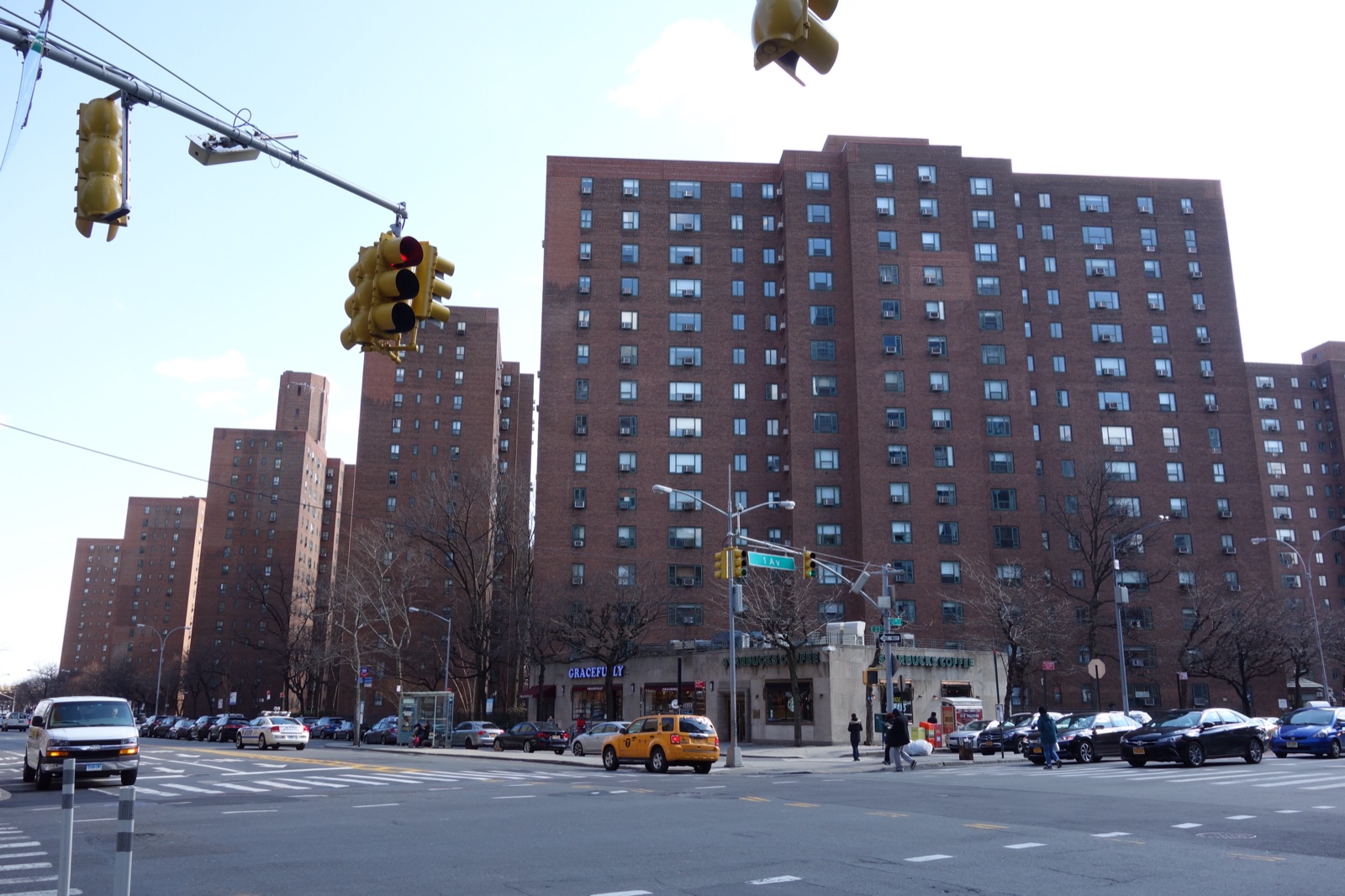
What made the sale politically possible was a twenty-year agreement announced alongside it. Five thousand of the roughly 11,241 apartments were locked below market for twenty years, with about 1,400 “Roberts” units getting five additional years of protection and annual increases capped at five per cent from 2020, when the J-51 abatement expired.44 The city’s own release set the income bands: ninety per cent of the covered units for households earning no more than $128,210 for a family of three, ten per cent for households at no more than $62,150, and no new tenant paying more than thirty per cent of income in rent.44 Translated into rents by the reporting at the time, that is about $3,205 a month for a two-bedroom at the upper band and up to $1,553 at the lower.45 Blackstone also agreed not to build new units on the site and not to convert to condominiums, and covered stabilised apartments were to be re-rented to income-qualified tenants at restricted rents on vacancy rather than deregulated.44
The city’s contribution was reported as $225 million, $221 million and $220 million by different outlets and has two components. The larger is a $143,718,750 subordinate acquisition loan from the New York City Housing Development Corporation: twenty years, zero per cent interest, and forgiven annually at $7,185,937.50 — which is to say never repaid. The Real Deal reviewed the term sheet directly, and a mayoral spokesperson explained the structure as an enforcement device, on the grounds that structuring it as a loan gives the city significantly more authority if the affordability agreement is broken.46 The smaller is a $77 million mortgage recording tax waiver.9
A third element got less attention. The term sheet included the city’s agreement to support transferring more than a million square feet of unused air rights off the site, in exchange for the no-new-construction and no-condo commitments — a clause Gothamist noted was in the documents but went curiously unmentioned at the press conference.9
And the stain on the public side is the city’s own auditor. The administration credited the deal with 100,000 apartment-years of affordability. In January 2018 the Independent Budget Office found that most of the units in question would have remained rent-regulated anyway, and credited the agreement with 36,000 apartment-years of additional affordability — roughly a third of the claim.51 Deputy Mayor Alicia Glen had told the 2015 announcement that the deal was saving taxpayers a lot of money. The IBO report as published could not be retrieved as readable text for this brief; the finding is taken from Patch’s contemporaneous account, which quotes it directly.51
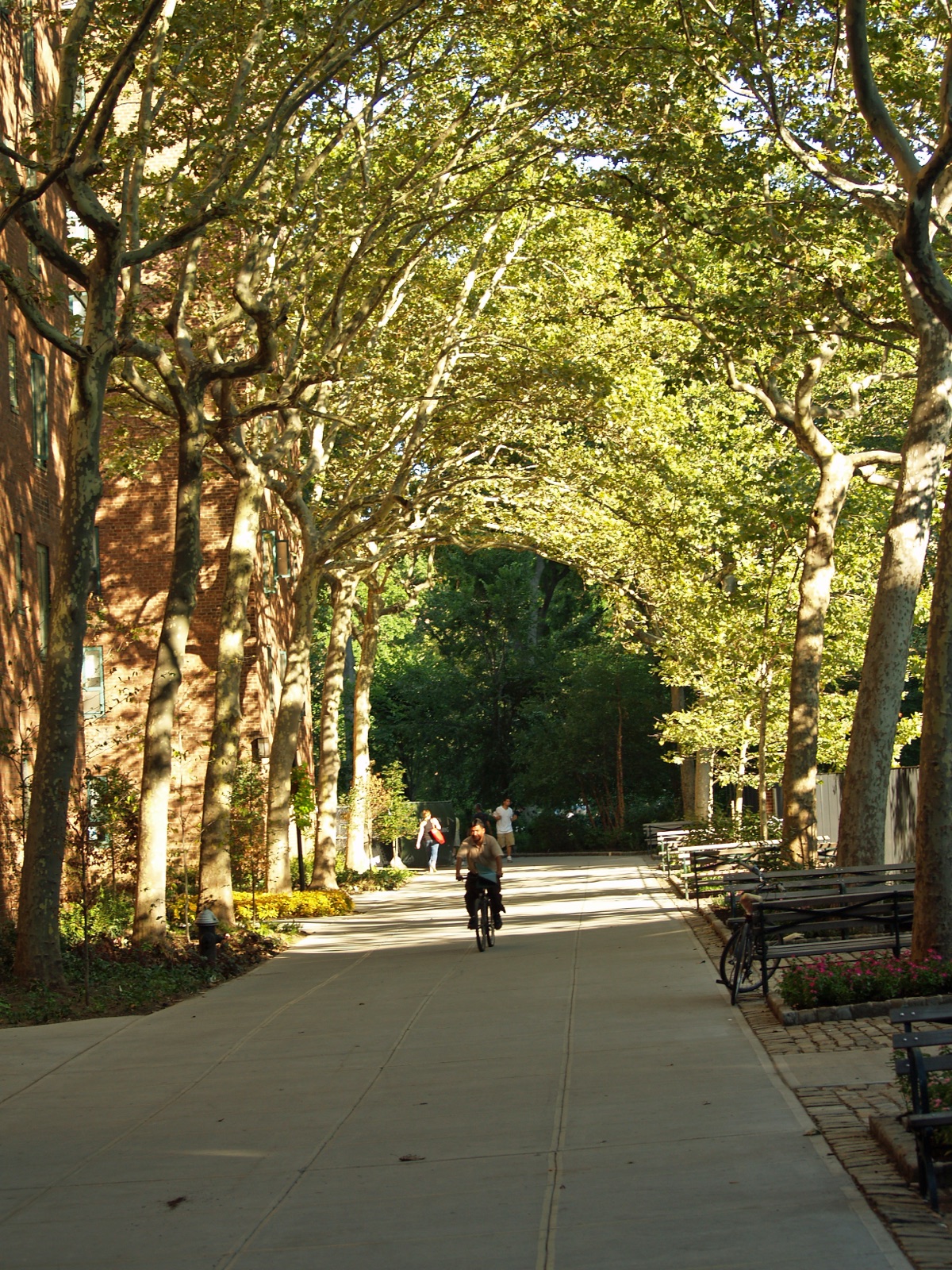
Same eighty acres, both times
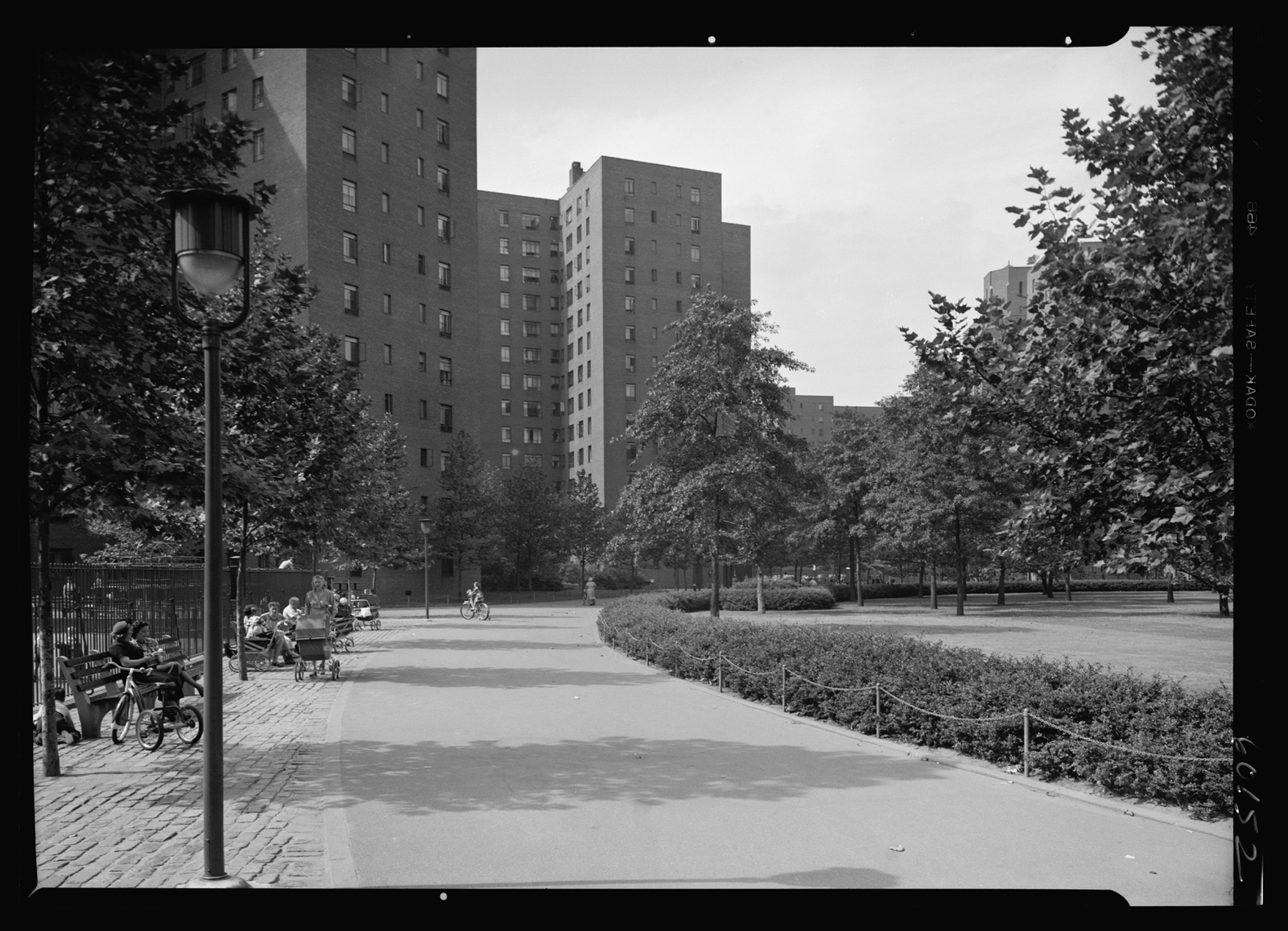
Nothing about the buildings changed. Everything about the capital did.
A tree-lined path inside Stuyvesant Town in August 2008 — between the two sales, while the first one was failing.Photo: David Shankbone, CC BY-SA 3.0, via Wikimedia Commons
Then the law removed the plan entirely
Blackstone bought with a residual version of the same upside every previous owner had underwritten: the roughly six thousand apartments not covered by the affordability agreement could still be deregulated as they came empty, and the Roberts protections expired in June 2020. In June 2019 the state legislature passed the Housing Stability and Tenant Protection Act and closed that door.
The Second Circuit’s own summary of the statute is the clearest one available. HSTPA repealed vacancy decontrol and high-income decontrol outright — both 1993 exits, gone. It repealed the statutory vacancy bonus and the longevity bonus. It capped recoupment of individual apartment improvements at $15,000 in aggregate over fifteen years with no more than three increases in that window, and made those increases expire after thirty years rather than becoming permanent. It capped major capital improvement increases at two per cent, amortised them over twelve to twelve and a half years, and restricted eligibility.53 The exits were removed and the tools for reaching them were shrunk at the same time.
Here the third correction is due, because the popular telling collapses two entirely separate lawsuits into one. The federal case is a constitutional takings challenge to HSTPA filed in July 2019 by the Community Housing Improvement Program and the Rent Stabilization Association, with a companion as-applied case. It was dismissed at first instance, affirmed by the Second Circuit on 6 February 2023 under the Penn Central test, and the Supreme Court denied certiorari on 2 October 2023 and again on 20 February 2024.53,54,55 Blackstone was never a party to it. It does not appear in the Second Circuit’s caption, and no source shows it funded the challenge.
The Stuy Town case is a different one, in state court. The tenants association sued Blackstone arguing that under HSTPA and the property’s J-51 history, about 6,200 apartments the owner planned to deregulate from mid-2020 had to stay stabilised. Justice Robert Reed ruled for the tenants, reported in early January 2023.52 Blackstone appealed, and then withdrew the appeal by filed stipulation on 23 and 24 February 2024 — days after the second cert denial, and unrelated to it.56,57 So the accurate sentence is that Blackstone dropped its own appeal of a state-court ruling in the tenants association’s lawsuit in late February 2024, not that it abandoned a Supreme Court case it was never in.
The consequence is total. Every apartment in Stuyvesant Town and Peter Cooper Village is now rent-stabilised.59 The plan that both the 2006 buyers and the 2015 buyers underwrote — convert roughly half the units to market rents — no longer exists as a legal possibility. Blackstone’s stated cumulative capital investment in the property has been reported four different ways from the company’s own statements and its reporting: $300 million in January 2023, $375 million in February 2024, more than $425 million and $460 million in December 2025 pieces published a day apart.57,58,59
- At the 2006 sale, per the Times3nearly three quarters
- At the 2006 sale, per Multifamily Executive10about 80%
- What the 2006 offering memo targeted for 201812under 30%a target, not a reading
- Actually reached by July 20091060%
- After the appeal was withdrawn, Feb 202457,59all of it
The two 2006 readings disagree by seven points and neither publisher explains why; both are printed because both were reported at the time. What matters is the direction between them. The deal was underwritten on the stabilised share falling below thirty per cent, it had reached sixty by the middle of 2009, and every apartment in the complex is stabilised today — so the quantity the whole $5.4 billion rested on moved the opposite way from the plan, and then stopped being a variable at all.
What happened when the loan came due
The reel this brief grew from was posted on 14 December 2025 and framed the refinancing as a test still to come. It had already happened. The $2.7 billion Fannie Mae loan matured in December 2025, and a $3.15 billion mortgage originated by Wells Fargo closed on 26 November 2025 and was recorded the following week.58,59 The new loan is larger than the one it replaced, which is what a lender does when it is comfortable, in a property class where comfort has been scarce.
Scarce is the word. Using Ariel Property Advisors’ transaction data, buildings that are at least seventy-five per cent rent-stabilised traded at a citywide average of $270,000 a unit in 2019 and $163,000 a unit in 2025 — a forty per cent decline. Price per square foot fell from $399 to $209, and Manhattan’s per-foot decline was sixty-one per cent.60 Cumulative operating expenses for stabilised buildings rose about forty per cent since 2019 while the rent increases the Rent Guidelines Board approved totalled sixteen per cent — a twenty-four point gap that compounds every year it persists.61
Against that, no current appraised value, occupancy figure or net operating income for Stuy Town has been published for 2024, 2025 or 2026, and no write-down attributable to HSTPA appears anywhere in the record. There is no evidence the property is being marketed. What can be said with sources is narrower and still meaningful: a lender wrote a bigger cheque against the same asset ten years on, in a sector whose average valuation fell by forty per cent over the same period.
What transfers
Sponsor equity is not a fee, it is a brake. Fifty-six million dollars against a six-billion dollar bill meant the people making the decisions had almost nothing to lose by being wrong, and the Times said so plainly in October 2009: Tishman Speyer itself stood to lose only the $56 million it had put in, while its partners, investors and lenders would take a far bigger hit.15 When you are looking at a capital stack, the useful question is not what the leverage ratio is. It is what the sponsor loses in the bad case, and whether that is enough to make them refuse the deal at the price.
A business plan that depends on a legal interpretation is a legal position, not a real estate position. The whole $5.4 billion rested on reading “by virtue of” to mean “solely by virtue of”, which the state housing agency and the entire industry had done for a decade and a half. Underwriting an entitlement — a rezoning, an abatement, a deregulation pathway — means underwriting an outcome that a court or a legislature can reverse without compensating anybody, and the reversal arrives on its own schedule rather than the fund’s.
Interest-only debt does not defer risk, it concentrates it at maturity, and a reserve fund is a countdown clock with a number on it. The 2006 structure had no amortisation and no mechanism to refill the reserve; the moment the conversion pace fell behind plan, the only question left was the date. Anyone can compute that date from the balance and the burn, and it should be the first thing computed rather than the thing discovered in a servicer’s report.
And complexity in the stack is a cost that only shows up in the bad case. Eleven levels of mezzanine debt bought nothing extra when things were fine and produced four and a half years of injunctions, competing foreclosures, allegations of a nine-hundred-million-dollar misstatement and a litigation settlement before the asset could be sold at all. A simpler stack cannot save a bad basis. A complicated one guarantees that a bad basis takes years to resolve, and that everyone junior discovers what an intercreditor agreement actually says at the worst possible moment.
Common questions
- How much did Stuyvesant Town sell for in 2006 and in 2015?
- Tishman Speyer and BlackRock Realty paid $5.4 billion in November 2006, about $70 million above the runner-up bid from Apollo and the Dermot Company. Blackstone and Ivanhoé Cambridge paid $5.3 billion in December 2015 — the net negotiated price. The $5.45 billion figure reported at that closing includes full payment of transfer taxes, which Real Estate Weekly is the only outlet to explain. The all-in cost of the 2006 deal, including fees, was about $6.3 billion.
- Why did the 2006 Stuyvesant Town deal fail?
- Because the income never came close to covering the debt, and the plan to fix that was illegal. Rental income covered forty per cent of debt service from the first day, against a $3 billion interest-only senior mortgage and $1.4 to $1.5 billion of mezzanine debt. The gap was funded from a reserve. The business plan was to deregulate roughly half the apartments as they came empty, and in October 2009 the New York Court of Appeals held in Roberts v. Tishman Speyer that J-51 tax benefits had barred that deregulation all along. The reserve ran out and the partnership missed a $16 million payment on 8 January 2010.
- How much did investors lose on Stuyvesant Town?
- The only published aggregate is $2.4 billion in losses for the original equity and mezzanine investors, an estimate by Anthony La Malfa of BDO quoted in Real Estate Weekly on 16 December 2015. Nobody else printed a total. Individual losses are documented: CalPERS wrote off $500 million and fired BlackRock as a manager over it, the Florida Retirement System wrote off $250 million, and the Church Commissioners for England lost £40 million. The senior lenders were repaid in full after the 2015 sale.
- Did Blackstone drop a Supreme Court appeal over Stuy Town in 2024?
- No — that conflates two different cases. The federal constitutional challenge to New York’s 2019 rent law was brought by industry groups, dismissed, affirmed by the Second Circuit in February 2023, and denied certiorari in October 2023 and February 2024. Blackstone was never a party to it. What Blackstone did drop, by filed stipulation on 23 and 24 February 2024, was its own appeal of a New York State ruling in the tenants association’s J-51 lawsuit over about 6,200 apartments. Different case, days apart.
- Who owns Stuyvesant Town now, and is it still rent-stabilised?
- Blackstone and Ivanhoé Cambridge, the real estate arm of Québec’s public pension manager, have owned it since December 2015. Every apartment in the complex is rent-stabilised — the 2019 Housing Stability and Tenant Protection Act repealed vacancy and high-income decontrol, and the tenants association’s J-51 case closed the remaining path when Blackstone withdrew its appeal in February 2024. A $3.15 billion Wells Fargo mortgage refinanced the matured Fannie Mae loan on 26 November 2025.
Sources
- MetLife (SEC Form 8-K, Ex. 99.1) — MetLife Announces Agreement to Sell Peter Cooper Village and Stuyvesant Town (2006-10-17)
- MetLife (SEC Form 8-K, Ex. 99.2) — MetLife Completes Sale of Peter Cooper Village and Stuyvesant Town (2006-11-17)
- The New York Times — $5.4 Billion Bid Wins Complexes in New York Deal (2006-10-18)
- Gothamist — Winning Bid For Stuy Town Had Extra $70 Million (2006-10-18)
- Congressional Oversight Panel — February Oversight Report: Commercial Real Estate Losses and the Risk to Financial Stability (2010-02)
- The New York Times — Partners Near Default on Stuyvesant Town (2010-01-07)
- Commercial Observer — Four Things to Know About the 2006 Sale of Stuyvesant Town–Peter Cooper Village (2016-01-27)
- City Journal — The Deal of a Lifetime (2013-05-31)
- Gothamist — How Stuy Town Got A Tourniquet While Blackstone Gets Billions (2016-03-31)
- Multifamily Executive — Stuyvesant Town and Peter Cooper Village on Verge of Default (2009-09-10)
- Commercial Property Executive — Manhattan's Peter Cooper Village/Stuyvesant Town Under New Management (2012-08-30)
- The Real Deal — This 2006 Stuy Town memo predicted money wonderland (2015-11-09)
- NY Court of Appeals (via Cornell LII) — Roberts v. Tishman Speyer Properties, L.P., 13 N.Y.3d 270 (2009-10-22)
- NY Appellate Division, 1st Dept (via Justia) — Roberts v Tishman Speyer Props., L.P., 62 AD3d 71 (2009-03-05)
- The New York Times — Ruling Adds to Troubles at Stuyvesant Town (2009-10-22)
- Cleary Gottlieb Steen & Hamilton — Impact of Roberts v. Tishman Speyer Properties, L.P. on New York Real Estate Practice (2009-10-28)
- PR Newswire — Stuyvesant Town Class Action Parties Reach Settlement (2012-11-29)
- PR Newswire — Court Approves Largest Tenants Settlement in U.S. History (2013-04-10)
- Multifamily Executive — StuyTown Loans Transferred to Special Servicer (2009-11-11)
- The Real Deal — Stuy Town loan default confirmed (2010-01-08)
- HousingWire — BlackRock, Tishman Miss Stuy Town Debt Payment (2010-01-08)
- NPR — Creditors Take Over $5.4B NYC Housing Complexes (2010-01-25)
- Marketplace — Returning the keys to Stuyvesant Town (2010-01-25)
- The Real Deal — Ackman looks for a magic trick (2010-10-01)
- DNAinfo — Stuyvesant Town Now Reportedly Worth Half of 2006 Value, Appraisal Says (2010-11-08)
- Bloomberg — Stuyvesant Town Lenders Plan Foreclosure as Ackman Bankruptcy Bid Halted (2010-09-17)
- Bloomberg — Pershing, Winthrop Realty Lose Bid to Stop Stuyvesant Town Foreclosure (2010-09-29)
- Commercial Observer — Stuy Town Foreclosure Called Off Following Deal With Wily Bill (2010-10-26)
- Bloomberg — California Pension Fires BlackRock Unit as Fund Manager on Stuyvesant Loss (2010-10-04)
- Civil Society News — Church of England loses £40m on property investment (2010-02-08)
- CityRealty (relaying Bloomberg) — Florida Pension $250 Million at Risk in Stuyvesant Town–Peter Cooper Deal (2009-09-01)
- HousingWire — CWCapital Tightens Grip on Stuy Town (2012-08-29)
- HousingWire — Stuy Town Residents Accuse Special Servicer of Thwarting Sale (2012-10-16)
- Real Estate Weekly — Investors set out to untangle web of Stuy Town debt (2014-05-21)
- Commercial Observer — Auction for Stuy Town Canceled as CWCapital Grabs Deed in Lieu of Foreclosure (2014-06-06)
- Courthouse News Service — Billion-Dollar Fight Over NY’s Stuyvesant Town (2014-07-08)
- Commercial Observer — Mezzanine Lending: The Stuyvesant Town Saga (2014-09-08)
- Trepp (via EACC New York) — Stuyvesant Town Appraised Value Increased (2014-10-16)
- Bloomberg — Appaloosa Sues CWCapital Over Stuyvesant Town Interest (2015-11-12)
- The Real Deal — Investors sue CWCapital, Wells Fargo over Stuy Town sale (2015-11-12)
- Real Estate Weekly — Lenders withdraw case in latest Stuy Town suit (2015-12-16)
- The Real Deal — Blackstone partners with Ivanhoé Cambridge in $5.3B StuyTown deal (2015-10-19)
- The Real Deal — How Stuy Town was won (2015-10-29)
- City of New York (via NYC HDC) — Mayor, Local Elected Officials and Tenant Leaders Announce 20-Year Agreement with Blackstone and Ivanhoé Cambridge (2015-10-20)
- World Socialist Web Site — New York City announces sale of Stuyvesant Town–Peter Cooper Village (2015-10-26)
- The Real Deal — Sweet deal: Blackstone won't have to pay back city's $144M Stuy Town loan (2015-11-05)
- Affordable Housing Finance — $2.7 Billion Loan Announced for Stuyvesant Town Purchase (2015-12-07)
- Blackstone (press release) — Blackstone and Ivanhoé Cambridge Assume Ownership of Peter Cooper Village / Stuyvesant Town (2015-12-18)
- Real Estate Weekly — Blackstone, Ivanhoé close on $5.45B Stuy Town buy (2015-12-24)
- PERE — $3bn in loans tied to Stuy Town pay off (2016-01-14)
- Patch — De Blasio Overstated Housing Savings In Stuy Town Sale: Report (2018-01-05)
- Gothamist — Stuy Town–Peter Cooper Village tenants group wins lawsuit securing rent regulation for their units (2023-01-06)
- US Court of Appeals, 2nd Circuit (via Justia) — Community Housing Improvement Program v. City of New York, No. 20-3366 (2023-02-06)
- CoStar — Supreme Court Denies Challenge to New York's Rent Regulations Law (2023-10-02)
- Selendy Gay — Supreme Court Declines Landlord Challenge in Major Victory for Rent Stabilization in New York (2024-02-22)
- ST-PCV Tenants Association — Blackstone Withdraws Appeal of Our Lawsuit to Keep All Apartments Here Rent Stabilized (2024-02-24)
- The Real Deal — Blackstone ends rent stabilization fight at Stuy Town (2024-02-26)
- Connect CRE — Blackstone, La Caisse Obtain $3.15B Refi on StuyTown–Peter Cooper Village (2025-12-11)
- The Real Deal — Blackstone refinances Stuy Town with $3B loan (2025-12-12)
- Rosenberg & Estis — Rent-Stabilized Multifamily Values Are Down; Property Tax Assessments Need to Catch Up (2026-04-24)
- Forbes — 2019 Law That Created Housing Instability For NYC’s Tenants, Landlords (2026-05-21)
- Fortune — What the $5 billion Stuyvesant Town deal says about the real estate market (2015-10-20)