
Case study Nº 28
The exit went to zero. The yield only rises.
Apollo’s $1.02 billion investment in Starwood’s SREIT — closed 3 August 2026, five weeks after the fund suspended nearly all redemptions — bought 41.5 per cent of a 120-property affordable-housing joint venture, plus a guaranteed minimum annual yield that increases over time and is never given a number. The fund’s own two same-day filings disagree on when the buyback window closes, and the monthly exit its investors were promised had already been re-marked four times: 2 per cent of NAV, then 0.33, then 0.5, then none.
Ben Fan, with Darryl WengAugust 6, 202615 min readWatch the reel
Apollo’s investment, closed 3 Aug 2026
$1.02B
The stake it bought
41.5%
On 3 August 2026, funds managed by Apollo put $1.02 billion into a joint venture holding approximately 120 of Starwood Real Estate Income Trust’s affordable housing properties, taking 41.5 per cent of the equity plus a guaranteed minimum annual yield that rises over time — a yield whose number appears nowhere in the record.1,2 SREIT needed the money because the exit it sold its investors had been re-marked four times in four years: 2 per cent of NAV a month at launch, 0.33 in May 2024, 0.5 in June 2025, and — five weeks before this deal was signed into existence — none.3,4,5 Jump to the four marks ↓
The reel this brief grew from survives its fact-check almost intact: the billion dollars (precisely $1.02 billion), the 41.5 per cent, the roughly 120 properties, the guaranteed yield with Starwood covering any shortfall, the buyback option, the $14.6 billion of liabilities and the $4 billion due within twelve months are all in SREIT’s own filings.1,3 It contains one reversal, and the reversal is instructive: what it renders as SREIT having “raised” redemptions in April is the opposite event. On 29 April 2026 the fund suspended nearly all redemptions — the sharpest of the four turns this study walks through — and cut its distribution rate in the same filing.4,10
The record adds what no retelling carried: the guaranteed yield has no published number; the fund’s two same-day filings disagree about when the buyback window closes; and the counterparty had run this exact play, at nearly identical terms, on a healthier landlord four months earlier.1,2,19
| The deal at a glance | Number |
|---|---|
| Closed | 3 August 2026, disclosed by 8-K the next afternoon1 |
| The investment | $1.02 billion, for Class B units — 41.5% of the joint venture’s equity1 |
| The portfolio | Approximately 120 affordable housing properties, from a fund holding 23,500 affordable units1,4 |
| Control | SREIT keeps 58.5%, full management, and consolidates — Apollo is a “redeemable noncontrolling interest”1 |
| The yield | A guaranteed annual minimum, “investment-grade rated,” rising over time — no number disclosed; shortfalls are SREIT’s to pay1 |
| The buyback, per the 8-K | Callable years five to ten at a price capping Apollo’s IRR at 7%1 |
| The buyback, per the prospectus | Years five to twelve “and at certain intervals thereafter,” at Apollo’s “target return”2 |
| The cost of waiting | Minimum yield payments, make-whole contributions, obligations that grow yearly — and possible “governing rights” to Apollo2 |
| Use of proceeds | Repaying “a significant portion of the Company’s credit facility” — the unsecured line stood at $1.52 billion drawn, at SOFR + 2.5%1,3 |
| Why now | Redemptions suspended 29 April 2026; $4.0 billion of debt due within twelve months against $211.1 million of cash3,4 |
| The queue | $999 million of unmet redemption requests at end-August 2025 — nearly all of the sector’s remaining backlog15 |
| The fund, three ways | $22.4 billion gross asset value · $18.74 billion GAAP assets · $8.06 billion NAV3,4 |
| The rehearsal | Realty Income–Apollo, March 2026: $1.0 billion for 49%, return capped at 6.875%19 |
A machine built on a monthly promise
SREIT is a non-traded REIT — a real estate fund sold not on an exchange but through financial advisors, priced once a month at its own estimate of net asset value. Launched in 2018, it grew into one of the two giants of the format, alongside Blackstone’s BREIT.13 The pitch was a solved paradox: private real estate’s returns with a standing offer of liquidity — investors could ask for up to 2 per cent of the fund’s NAV back in any month, 5 per cent in any quarter.3 By 30 September 2022 the machine held $14.58 billion of net asset value, a Class I share marked $27.63, and the paradox was about to be tested.7

The bet under the structure was articulated best by its critics. A NAV REIT’s repurchase plan is not a bank deposit; it is a capped queue, and the cap is the product’s honest fine print. “This nice benefit came to be thought of as an unlimited one,” John Grady of the industry’s own trade association put it when the caps were later cut. “It’s not. It never was.”18 When interest rates spiked in 2022, both readings met the same wave: requests hit 2.2 per cent of NAV in October, 3.2 in November, 4.2 in December. The board waived the cap once and paid October in full; November was prorated to 63 per cent, December to 20.6 The week the gates first closed, Sternlicht told an NYU conference: “It isn’t a run on the bank. This isn’t FTX.”17
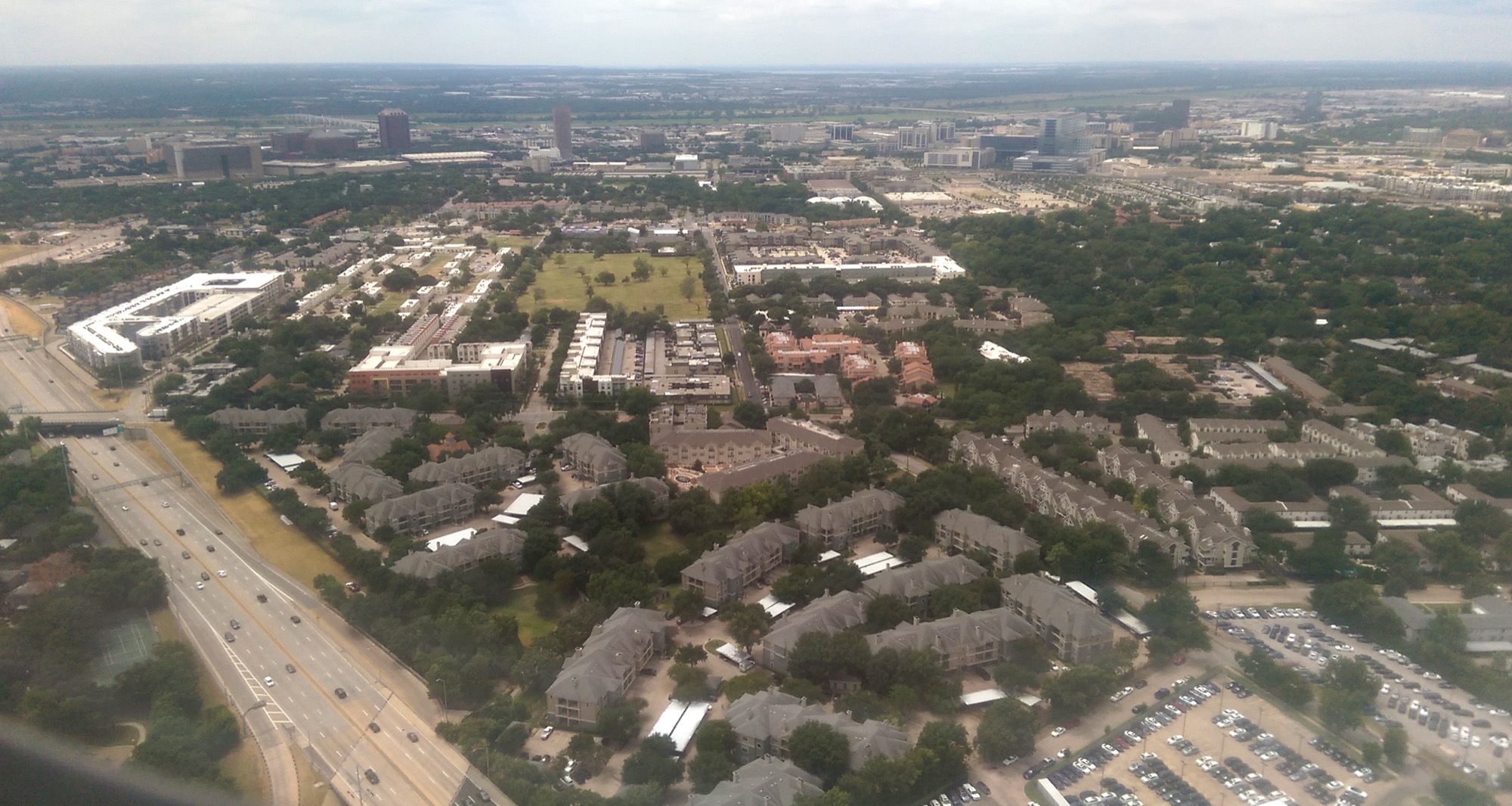
What made SREIT distinctive inside that wave was the affordable book. From October 2020 through mid-2022 it assembled regulated-rent portfolios by the dozen — four properties in Jacksonville, sixteen across Florida, nine more, plus Southeast, Mid-Atlantic, Boston, Phoenix and national pools — until it counted roughly 23,500 affordable units among its 63,000.4,8 The May 2024 stockholder letter made the thesis explicit, in a sentence that reads differently now: “Affordable housing rents cannot go down, and growth is set annually by the government based on a combination of inflation and local income growth.”5 Government-anchored rents, near-full occupancy, formulaic increases: the steadiest cash flow in the fund. The rents could not go down, and that made them the thing worth selling.
Three sizes of the same fund
The reel calls SREIT a “$22 billion fund,” and so does nearly every headline — including the fund’s own letters.4,13 The number is real, and it is doing work. It is the gross value of the real estate plus other assets, by the fund’s own footnoted definition — before a dollar of the debt that finances it.4 GAAP writes the same fund down at $18.74 billion of total assets. And the fund its investors actually own — assets minus $14.68 billion of liabilities — marked $8.06 billion of net asset value on 31 March 2026, down from $14.58 billion at the September 2022 peak.3,7 A Class I share: $27.63 then, $19.65 now.3,7
- Gross asset value4$22.4BThe fund’s own headline figure — “598 income-producing properties valued at $22.4 billion” — defined in its footnote as gross fair value plus other assets, before debt. This is the number the reel and most coverage use.
- Total assets, GAAP3$18.74BThe balance sheet’s version of the same portfolio, at depreciated book value.
- Net asset value3$8.06BWhat stockholders own once $14.68 billion of liabilities is subtracted — the base every repurchase cap is a percentage of, down 45 per cent from the 2022 peak.
None of the three is wrong; they measure different things, and the gap between them is the fund’s leverage made visible. But the caps that governed investors’ exits are percentages of the smallest number, while the headline is the largest — and a $1.02 billion investment that reads modest against “$22 billion” bought 41.5 per cent of a portfolio carved from a fund whose entire equity is $8.06 billion.1,3,4
What Apollo bought into
The rents could not go down, and that made them the thing worth selling.
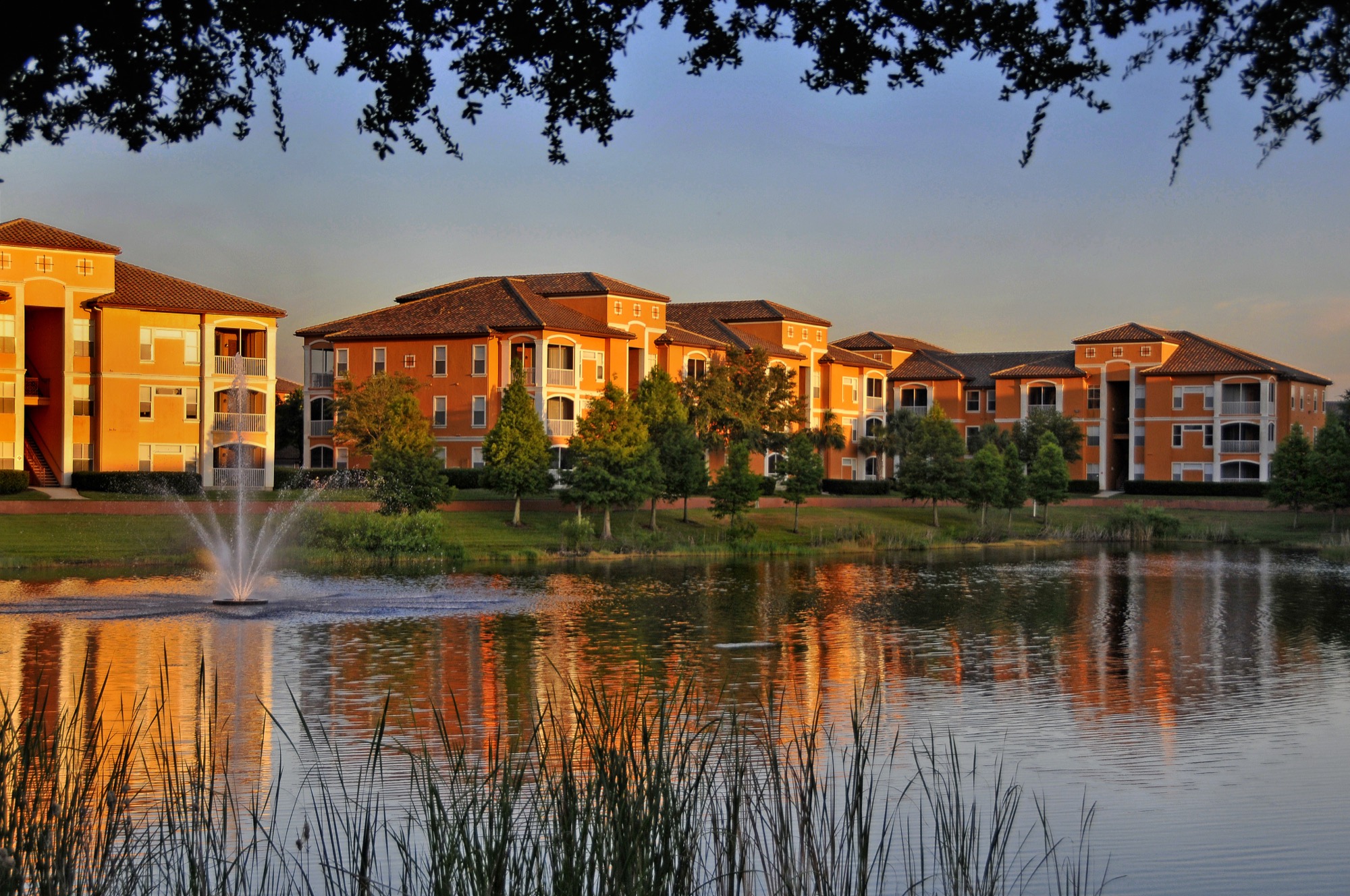
La Palazza, a garden-style complex in Orlando's MetroWest — illustrative of the Florida apartment stock at the heart of SREIT's affordable book, not one of the joint venture's 120 properties, whose identities the filings do not disclose.Photo: Rogerhamelin, CC BY-SA 3.0, via Wikimedia Commons
The exit, re-marked
One promise, four filings. The monthly repurchase cap — the share of the fund’s NAV investors could take back in any month — as SREIT’s own board re-set it, from the 2018 design to the April 2026 suspension. The drift is the whole story: the $1.02 billion exists because the last mark is zero.
Monthly repurchase cap, share of NAV
Suspended
100% below 2%
No repurchase requests accepted, except on death, disability, or accounts under $5,000 — each capped at $5 million a month.
- 20182%
- 23 May 20240.33%
- 6 Jun 20250.5%
- 29 Apr 2026Suspended
Every mark is the fund’s own filing: the plan terms and their amendments from the 10-Q’s share-repurchase note, the May 2024 cut and its $33 million equivalence from the board’s letter, the suspension from the April 2026 8-K.3,4,5 The quarterly cap traveled 5% → 1% → 1.5% → suspended over the same span. The suspension’s two carve-outs are real but not an exit: each is capped at $5 million a month, against a fund whose investors once could ask for 2 per cent of $14 billion.4,7
| When | Mark | Value |
|---|---|---|
| 2018 | The design | 2% |
| 23 May 2024 | The board cuts | 0.33% |
| 6 Jun 2025 | Partially restored | 0.5% |
| 29 Apr 2026 | Suspended | Suspended |
29 Apr 2026, Suspended, Suspended.
The exit, re-marked
The plan as designed was generous by the format’s standards: 2 per cent of NAV per month, 5 per cent per quarter, at the fund’s own monthly mark.3 For four years it was never tested — the fund only grew. Then requests crossed the line in October 2022 and never came back under it: by management’s own account, they peaked in January 2023 and stayed above the caps every month for years.5,6
The design had an honest reading all along, stated best by the industry’s own lawyer-lobbyist: the benefit was never unlimited, and was never meant to be.18 But nobody sells a queue as a queue.
On 29 April 2026 the queue stopped being a queue. No repurchase requests accepted — death, disability and sub-$5,000 accounts excepted, five million dollars a month each — and the distribution cut from 6.3 to 4.7 per cent in the same filing.4,10 The next 10-Q stated the corner plainly: $4.0 billion of debt due within twelve months, $211.1 million of cash, and about 3 per cent of each stockholder’s request satisfied in each of January, February and March.3 Its outlook paragraph reads like a mood: management expected “the war with Iran to conclude, oil prices to subside, inflation to stabilize, and for Kevin Warsh to be seated as Fed Chair.”3
Fourteen weeks after the suspension, the lifeline closed. A fund that would not sell buildings at a discount sold 41.5 per cent of its steadiest portfolio instead — for money whose real price is the subject of the next chapter.1
- 20182%
- 23 May 20240.33%
- 6 Jun 20250.5%
- 29 Apr 2026Suspended
Every mark is the fund’s own filing: the plan terms and their amendments from the 10-Q’s share-repurchase note, the May 2024 cut and its $33 million equivalence from the board’s letter, the suspension from the April 2026 8-K.3,4,5 The quarterly cap traveled 5% → 1% → 1.5% → suspended over the same span. The suspension’s two carve-outs are real but not an exit: each is capped at $5 million a month, against a fund whose investors once could ask for 2 per cent of $14 billion.4,7
Apollo rehearsed this in March
The buyer’s side of this deal is not opportunism; it is inventory. Four months before closing with Starwood, Apollo announced an almost structurally identical transaction with Realty Income — a healthy, investment-grade net-lease landlord: $1.0 billion for 49 per cent of a joint venture holding about 500 single-tenant retail properties, the sponsor keeping control and a buyback option in years seven to fifteen, with Apollo’s annual return capped at 6.875 per cent.19 The press release names the machine: a “capital solutions” practice that claims more than $100 billion of bespoke structures originated since 2020.19
The product has a house style. When Apollo put $2 billion of preferred equity into AT&T’s wireless business in 2023, the release sold it as “investment-grade rated securities” for insurance and institutional clients — the same phrase SREIT’s 8-K reaches for in describing Apollo’s guaranteed yield.1,22 What the product wants is contractual, senior-feeling cash flow from an asset that cannot surprise it. Regulated affordable housing — rents set by government formula, occupancy near permanent — is about as close as real estate comes.5 Which Apollo entity actually wrote the check, the filings never say: only “funds managed by and affiliates of Apollo Global Management.”1
The sector precedent sets the pricing context. When Blackstone’s BREIT was the gated giant in January 2023, the University of California’s investment office put in $4 billion — common shares, but with Blackstone contributing $1 billion of its own holdings to backstop an 11.25 per cent minimum annualized net return over six years, taking a 5 per cent promote above it.20 One analysis of that structure found Blackstone still profited as long as BREIT returned above 8.7 per cent — a guarantee the guarantor expected never to fund.21 Rescue capital for gated funds, in other words, has a going rate somewhere between 7 and 11 per cent, and every version of it is described by its recipient as a vote of confidence. The reel calls Apollo’s version “not cheap money.” Forbes’s headline called it a bailout; The Real Deal cast it as Rowan riding to Sternlicht’s rescue.10,12 The one number that would settle what it actually costs is the one number nobody published.
Two filings, one day, two clocks
Here is what the record does publish. The joint venture owns approximately 120 affordable housing properties. Apollo’s $1.02 billion bought Class B units — 41.5 per cent of the equity — while SREIT keeps 58.5 per cent, full management control, and consolidates the venture, booking Apollo as a “redeemable noncontrolling interest” with no gain or loss on formation.1 Apollo receives distributions from the portfolio’s cash, and SREIT guarantees a minimum annual yield on Apollo’s investment — a yield that “increases over time,” whose payment “will be the responsibility of the Company,” and whose rate appears in no filing, no release, and no press account.1,2 If the buildings underperform the promise, the fund pays the difference anyway. That is the reel’s sharpest point, and it is verbatim from the 8-K.1
Then the record disagrees with itself. The 8-K — the version every summary ran with — describes a call option exercisable between the fifth and 10th anniversaries at a price capping Apollo’s IRR at 7 per cent, with a warning attached: “The longer Apollo remains in the Joint Venture, additional financial obligations will be imposed on the Company.”1 The prospectus supplement, filed the same day, writes the window as the fifth through the 12th anniversary “and at certain intervals thereafter,” prices the exit at Apollo’s “target return” rather than restating the 7 per cent, and enumerates what waiting costs: minimum yield payments, make-whole contributions, contingent obligations that increase each year — and, if the fund cannot satisfy them, “Apollo may be entitled to governing rights with respect to the joint venture’s portfolio.”2 Of the deal’s first-week coverage that this study’s research pass could read, only one trade outlet carried the risk factor’s version at all.11 The friendly clock made the news. The binding one is in the document written for a plaintiff’s lawyer.
The stain on the wider story is not subtle, and it belongs here briefly. Through four years of gates the manager kept earning — $20.4 million of management fees in the first quarter of 2026 alone, at the waived rate of 1.0 per cent of NAV — while plaintiffs’ firms built a cottage industry soliciting arbitration claims against the brokers who sold the fund, and tender-offer shops repriced trapped shares at a quarter off.3,14,23 None of that is adjudicated wrongdoing, and this study treats the solicitations as evidence only of themselves. But a fund whose investors cannot leave, paying its manager on the gross of a promise it suspended, is the picture the FTX line was meant to preempt — and three and a half years later the door it defended is closed.4,17
The sequence
2018
Starwood Real Estate Income Trust launches: a non-traded REIT sold through financial advisors, priced monthly at net asset value, with a repurchase plan offering investors up to 2% of NAV back per month and 5% per quarter. The promise is the product — private real estate with a monthly door out.3,13
2% / month
30 Sep 2022
The peak. Net asset value reaches $14.58 billion; a Class I share marks $27.63. Rates have been rising since March, and the door is about to get crowded.7
$14.58B NAV
Oct–Dec 2022
Requests exceed the cap three months running — 2.2% of NAV in October, 3.2% in November, 4.2% in December. The board waives the limit once, then the plan prorates: 100% of October requests are honored, 63% of November’s, 20% of December’s.6
100% → 63% → 20%
7 Dec 2022
Sternlicht defends the gates the week they first close: “We’re not a hedge fund. We can’t liquidate our properties overnight at attractive prices. We have to manage liquidity. It isn’t a run on the bank. This isn’t FTX.”17
Jan 2023
Redemption requests peak, by management’s own later account — and stay above the plan’s limits every month that follows.5
23 May 2024
The board cuts the cap to 0.33% of NAV per month and 1% per quarter — about $33 million a month at the April NAV, by the letter’s own arithmetic — rather than sell into “a near-bottom market.” The manager waives 20% of its fee until the limits are fully restored. They never are.3,5
≈$33M / month
6 Jun 2025
A partial reopening: 0.5% per month, 1.5% per quarter — a quarter of the original promise — with roughly $850 million queued. Sternlicht, via the WSJ: “We’re not going to have fire sales.”3,16
0.5% / month
Aug 2025
The rest of the non-traded REIT sector clears its backlog — roughly $56 billion of redemptions fulfilled industry-wide. SREIT still owes $999 million, 11.6% of its NAV, nearly all of the queue that remains anywhere, on Stanger’s data.15
$999M queued
Mar 2026
Tender-offer firms circle the trapped: Saba Capital and Cox Capital offer to buy SREIT shares at roughly a 25 per cent discount to NAV. Selling to them is the only exit the plan no longer provides.14
19 Mar 2026
Apollo rehearses. It closes a $1.0 billion investment for 49% of a joint venture holding ~500 Realty Income retail properties — sponsor keeps control, call window in years seven to fifteen, Apollo’s return capped at 6.875%.19
$1.0B for 49%
29 Apr 2026
The suspension. No repurchase requests accepted except on death, disability, or accounts under $5,000, each capped at $5 million a month. The same filing cuts the Class I distribution rate from 6.3% to 4.7%. The reel’s “raised redemptions in April” is this event, reversed in transcription.3,4,10
Exit: $0
11 May 2026
The 10-Q prices the corner the fund is in: $4.0 billion of debt due within twelve months against $211.1 million of cash, and roughly 3% of each stockholder’s repurchase request satisfied in each of January, February and March.3
$4.0B due · $211M cash
3 Aug 2026
The lifeline closes. Apollo puts $1.02 billion into a Delaware joint venture holding approximately 120 of SREIT’s affordable housing properties, for a 41.5% stake and a guaranteed minimum annual yield that increases over time. Goldman structures; eight banks arrange; Paul Weiss and Centerview sit across the table.1,9
$1.02B
4 Aug 2026
Two filings, one day. The 8-K gives the buyback window as the fifth to the 10th anniversary at a capped 7% IRR. The prospectus supplement runs it to the 12th, adds make-whole contributions, and names the endgame if Starwood cannot pay: “Apollo may be entitled to governing rights with respect to the joint venture’s portfolio.” Apollo itself publishes nothing.1,2
What transfers
The first lesson is the reel’s closing line, sharpened by the record: a fund that promises monthly liquidity on assets that take quarters to sell has not eliminated the mismatch, it has priced it into a queue — and the cap on the queue, not the headline NAV, is the product. SREIT’s cap was re-marked four times in four years and never once upward past a quarter of its original promise. Read any semi-liquid fund’s repurchase plan the way this study reads SREIT’s: as the only sentence in the prospectus that says what happens when everyone wants out.
The second is about fund sizes. “$22 billion” and “$8 billion” describe the same fund on the same day; one is the real estate gross of debt, the other is what the investors own. Marketing reaches for the first, obligations are levied on the second, and the distance between them is leverage. Whenever a fund’s size is quoted, ask which of its three sizes is talking.
The third is that rescue capital is a manufactured product, not an act of conviction. Apollo ran the same structure on a healthy landlord in March at a 6.875 per cent cap; Blackstone’s gated giant was recapitalized in 2023 at a guaranteed 11.25; Starwood’s version sits somewhere between, at a guaranteed minimum the record declines to name. The terms that matter in every version are the same three: who guarantees the yield, what exercising the exit costs, and what happens if the guarantor cannot pay. In this deal those answers are: the fund, a rising price on two inconsistent clocks, and “governing rights” to Apollo.
And the last is about documents. This deal produced one 8-K written to be quoted and one risk factor written to be enforceable, on the same afternoon, from the same issuer — and they differ on the length of the most important window in the deal. The counterparty published nothing at all, which is its own disclosure: only one side of this trade had anything it was required to explain. When a deal’s two tellings disagree, the one drafted against litigation is the deal. The other one is the reel.
Common questions
- What exactly did Apollo get for its $1.02 billion?
- Class B units representing 41.5 per cent of the equity in a Delaware joint venture holding approximately 120 of SREIT’s affordable housing properties, regular distributions from the portfolio’s cash, and a guaranteed minimum annual yield — described in the 8-K as investment-grade rated — that increases over time, with any shortfall paid by SREIT itself. SREIT keeps 58.5 per cent, full management control, and consolidates the venture, booking Apollo’s stake as a redeemable noncontrolling interest. The rate of the guaranteed yield is disclosed nowhere.
- Why did SREIT need a $1.02 billion lifeline?
- Because its liquidity had run out at both doors. Investor redemptions were suspended almost entirely on 29 April 2026 after three and a half years of requests exceeding the fund’s caps, and the balance sheet carried $4.0 billion of debt due within twelve months against $211.1 million of cash as of 31 March 2026. The proceeds went to repaying a significant portion of the fund’s credit facility — its unsecured line stood at about $1.52 billion drawn at SOFR plus 2.5 per cent — cutting interest expense and buying time without selling buildings into a weak market.
- Is SREIT really a $22 billion fund?
- Only in one of its three sizes. $22.4 billion is the gross value of its 598 properties plus other assets, before debt, by the fund’s own footnoted definition — the figure its letters and most headlines use. GAAP total assets were $18.74 billion. Net asset value — what stockholders actually own after $14.68 billion of liabilities — was $8.06 billion on 31 March 2026, down from a $14.58 billion peak in September 2022. The repurchase caps that governed investors’ exits were always percentages of the smallest number.
- What happens if Starwood never buys Apollo out?
- The deal gets more expensive every year, on the fund’s own telling. The 8-K describes a call option between the fifth and 10th anniversaries at a price capping Apollo’s IRR at 7 per cent, and warns that the longer Apollo stays, the more obligations accrue. The prospectus supplement filed the same day goes further: the window runs to the 12th anniversary and beyond, missing the fifth-anniversary exit triggers escalating minimum yield payments, make-whole contributions and other contingent obligations — and if SREIT cannot satisfy them, Apollo may become entitled to governing rights over the portfolio.
- Is this a bailout?
- The word does real work and the record supports most of it. Forbes ran the headline “Big Real Estate Investment Fund Gets $1.02B Bailout”; The Real Deal framed Marc Rowan as riding to Barry Sternlicht’s rescue. Structurally it is rescue-shaped capital from a production line: Apollo closed a nearly identical joint venture with Realty Income — a healthy landlord — four months earlier at a 6.875 per cent capped return, and Blackstone’s gated BREIT was recapitalized in 2023 with an 11.25 per cent guaranteed minimum. What distinguishes SREIT’s version is that its guaranteed yield has no published number, and that the deal was signed five weeks after the fund suspended its investors’ redemptions.
Sources
- Starwood Real Estate Income Trust (SEC Form 8-K, Item 7.01) — Formation of Joint Venture with Apollo Global Management — the $1.02 billion, the 41.5%/58.5% split, the ~120 affordable housing properties, the guaranteed minimum yield that increases over time, the 5th-to-10th-anniversary call at a capped 7% IRR, and the advisor list (2026-08-04)
- Starwood Real Estate Income Trust (SEC Form 424(b)(3), Supplement No. 6) — Prospectus supplement filed the same day — the risk factor that runs the call window to the 12th anniversary, adds make-whole contributions and escalating obligations, and says Apollo "may be entitled to governing rights" if the payments cannot be met (2026-08-04)
- Starwood Real Estate Income Trust (SEC Form 10-Q, Q1 2026) — The quarter before the deal — $8.06 billion NAV, $19.65 per Class I share, $18.74 billion GAAP assets, $14.68 billion liabilities, $4.0 billion due within twelve months against $211.1 million of cash, and roughly 3% of each repurchase request satisfied in January, February and March (2026-05-11)
- Starwood Real Estate Income Trust (SEC Form 8-K and stockholder letter) — The suspension — effective 29 April 2026 no repurchase requests accepted except on death, disability, or accounts under $5,000; the distribution cut; and the letter’s own portrait of the fund: 598 properties at $22.4 billion, 63,000 apartment units, 23,500 of them affordable (2026-04-29)
- Starwood Real Estate Income Trust (stockholder letter, SEC exhibit) — The May 2024 letter cutting the cap to 0.33% — the $33-million-a-month equivalence, the fee waiver, "we cannot recommend being an aggressive seller of real estate assets today," and the affordable-housing thesis: "Affordable housing rents cannot go down" (2024-05-23)
- Starwood Real Estate Income Trust (SEC Form 10-K, FY2022) — The first breach, month by month — October 2022 requests at 2.2% of NAV waived and paid in full, November’s 3.2% prorated to 63%, December’s 4.2% prorated to 20% (2023-03-17)
- Starwood Real Estate Income Trust (SEC Form 10-Q, Q3 2022) — The peak — $14.58 billion of net asset value and $27.63 per Class I share at 30 September 2022 (2022-11-14)
- Starwood Real Estate Income Trust (SEC Form 10-K, FY2025) — The debt stack the lifeline lands on — $13.94 billion of total indebtedness, the ~$1.6 billion unsecured line at SOFR plus 2.5% maturing May 2027, and the named Florida affordable-housing portfolios acquired 2020–2022 (2026-03-20)
- Bisnow (Matt Wasielewski) — Apollo gives Starwood SREIT a $1B boost — the balance-sheet framing, the $999 million still queued while the rest of the sector cleared $56 billion, and Apollo’s 2026 real estate context including the $9 billion Athene handoff (2026-08-05)
- The Real Deal (Holden Walter-Warner) — Apollo puts forth $1B in affordable housing JV with Starwood — "Marc Rowan is riding to Barry Sternlicht’s rescue," the 71%-multifamily portrait, and the distribution cut from 6.3 to 4.7 per cent (2026-08-05)
- AltsWire (Mari Nicholson) — Starwood REIT sells 41.5% of affordable housing portfolio to Apollo — the one trade account in the deal’s first week to carry the prospectus risk factor: escalating obligations and possible governance rights (2026-08-04)
- Forbes (Erik Sherman) — Big real estate investment fund gets $1.02B bailout — the mainstream verdict, in the headline (2026-08-08)
- Bisnow — Starwood halts redemptions at SREIT, says now is not the time to force sales — the fund launched in 2018, the caps breached from late 2022, and the freeze of the "$22B real estate fund" (2026-04-30)
- The Real Deal — Starwood freezes SREIT redemptions as liquidity crunch deepens — NAV down 6 per cent in a year, and the tender offers circling trapped shareholders at roughly 25 per cent discounts (2026-05-01)
- Bisnow, citing Robert A. Stanger & Co. data — Nontraded REITs have erased the backlog of redemptions, with one exception — $56 billion fulfilled sector-wide; SREIT alone still owed $999 million at the end of August 2025, 11.6 per cent of its NAV (2025-10-10)
- Bisnow — SREIT investors line up for $850M in withdrawals as Starwood lifts cap slightly — the June 2025 partial restoration to 0.5% monthly and 1.5% quarterly, and Sternlicht to the WSJ: "We’re not going to have fire sales" (2025-06-10)
- The Real Deal — "This isn’t FTX": Sternlicht waves off REIT withdrawal panic — the December 2022 defense of the gates, the week they first closed (2022-12-07)
- Urban Land Magazine (ULI) — Does Starwood’s redemption cap spell failure for NAV REITs? — John Grady on the design itself: "This nice benefit came to be thought of as an unlimited one. It’s not. It never was." (2024-07-18)
- Apollo Global Management (press release) — Realty Income and Apollo to establish strategic partnership — the March 2026 rehearsal: $1.0 billion for 49% of a ~500-property JV, a call window in years seven to fifteen, Apollo’s return capped at 6.875%, from a capital solutions practice claiming over $100 billion originated since 2020 (2026-03-19)
- Blackstone (press release) — UC Investments creates strategic venture with Blackstone to invest $4 billion in BREIT — the sector’s first rescue-shaped deal: an 11.25% minimum annualized net return supported by a $1 billion Blackstone backstop, and a 5% promote above it (2023-01-03)
- ImpactAlpha (Imogen Rose-Smith) — University of California’s rescue of Blackstone’s REIT — the arithmetic under the guarantee: Blackstone still profits so long as BREIT returns more than 8.7%, and the guaranteed 11.25% is a return UC "paid for the privilege" of (2023-02-22)
- Apollo Global Management (press release) — Apollo funds to invest $2 billion in preferred equity of AT&T Mobility II — the same product in another industry, sold in the same words: "investment-grade rated securities" for insurance and institutional clients (2023-06-05)
- Stoltmann Law (client solicitation) — Commercial real-estate fund hemorrhages cash, announces band-aid at investors’ expense — one of several plaintiffs’ firms soliciting FINRA arbitration claims against brokers who sold SREIT; solicitation, not adjudication, and cited as evidence only of itself (2024-06-12)