
Case study Nº 18
Savills bought the bank in a day. The bankers unlock in 2032.
Savills’ $1,112.5 million acquisition of Eastdil Secured — announced 12 March 2026, closed 3 August — is the rare deal whose every number sits in a regulatory filing: the 9.9x multiple, the five-year revenue swing from $862 million to $367 million and back, the 85 senior employees who owned 39 per cent. The filing also prices what the retellings skip: a retention architecture nearly a third the size of the price, and consideration shares the partners cannot touch until 2030, 2031 and 2032.
Ben Fan, with Darryl WengMarch 22, 202615 min readWatch the reel
The 2019 buyout, as reported
$400M
The 2026 enterprise value
$1.1B
Seven years apart, the same firm changed hands twice. In 2019 Wells Fargo sold Eastdil Secured to its own management, backed by Temasek and Guggenheim, at a valuation the trade press put above $400 million and no party ever confirmed — the seller’s release says only that terms were not disclosed.7,12,13 In March 2026 Savills paid an enterprise value of $1,112.5 million, disclosed to the pound in its own regulatory announcement, because a London listing leaves nothing undisclosed.1 Between those two numbers sits everything this study is about: a fee machine’s violent cycle, and a price that is mostly a bet on 85 people staying. Jump to the money ↓
The reel this brief grew from deserves a note before the corrections, because for once there are almost none: nearly every number it recites — the price, the multiples, the share drop, the rankings, the 85 partners and their 39 per cent — checks out against Savills’ own announcement, several verbatim. When a deal’s record is a regulated public filing, the retellings converge on it. The room’s previous study found a campus whose numbers all traced to a decorator’s marketing page; this one is the control case in the other direction.
What the record adds is underneath the numbers: the five-year revenue swing the multiple was struck against, the raid history that explains why nearly a third of a billion dollars of retention machinery travels beside the price, and a closing — 3 August 2026 — that the reel, posted in March, could only gesture at.
| The deal at a glance | Number |
|---|---|
| Announced | 12 March 2026 — the same morning as Savills’ full-year results1,19 |
| Enterprise value | $1,112.5 million — 9.9x Eastdil’s 2025 underlying EBITDA1 |
| Consideration | $921.25M: $552.75M cash + $368.50M in 27,658,880 Savills shares1 |
| The cash, funded by | A bridge of up to $800M from Lloyds and NatWest1 |
| Eastdil, 2025 | $633M revenue, $113M underlying EBITDA, 18% margin1 |
| Eastdil, 2023 — the trough | $367M revenue, $38M EBITDA, 10% margin1 |
| Who owned Eastdil | 85 employees 39%; Guggenheim 32%; Temasek 25%; Wells Fargo 3%1 |
| The retention architecture | ≈$195M incentive programme + $62.5M equity pool + lock-ups to 20321 |
| Announcement-day share move | Down 7.2 per cent4,27 |
| Four days later | Peel Hunt upgrades to Buy, target 1,400p25 |
| The combined ranking | No. 2 globally, No. 1 in the US, deals above $100M (MSCI)1 |
| Completed | 3 August 2026 — rebranded Eastdil Secured Savills that day2 |
| The 2019 buyout valuation | “More than $400 million” — reported, never officially disclosed12,13 |
The original real estate investment bank
Eastdil is what happened when a 27-year-old put Wall Street’s clothes on property brokerage. Ben Lambert founded it in 1967 as a wholly owned division of Eastman Dillon, Union Securities — fifteen people in New York, calling themselves a real estate investment bank when no such phrase existed.8,9,11 The furniture of the next six decades is the proof the phrase stuck: the Irvine Ranch financing of 1977, then the largest land deal in American history; the $1.4 billion sale of the GM Building to Harry Macklowe in 2003, executed by Roy March, who had joined as an intern in 1978; the EOP towers sold to the same Macklowe for Blackstone in 2007 — the deal Lambert himself gave this room’s other study its epitaph for: “The music stopped, and there was no chair for Harry.”8,9,18 Google’s $1.77 billion purchase of 111 Eighth Avenue in 2010 ran through an Eastdil desk too.9
The corporate chapters matter because they price the story. Wells Fargo bought the firm in 1999 and merged Secured Capital — Van Konynenburg’s Drexel-alumni shop — into it in 2006, making Eastdil Secured; the Wachovia real estate team folded in after the crisis.1,8 In 2019 the bank sold to management, backed by Temasek and Guggenheim, keeping 3 per cent — at a price its own release pointedly declined to state. The $400 million everyone cites, including the reel, is Bloomberg-era trade reporting: almost certainly right, never once confirmed.12,13 Lambert died in February 2021, fifty-four years after the fifteen-person start.10 By 2024 the firm he left was the office market’s dominant seller — $8.08 billion of brokered sales, a 28 per cent share — and by early 2025 it had hired BDT & MSD to find it a partner.4,17
A 170-year-old buyer with a hole in its map
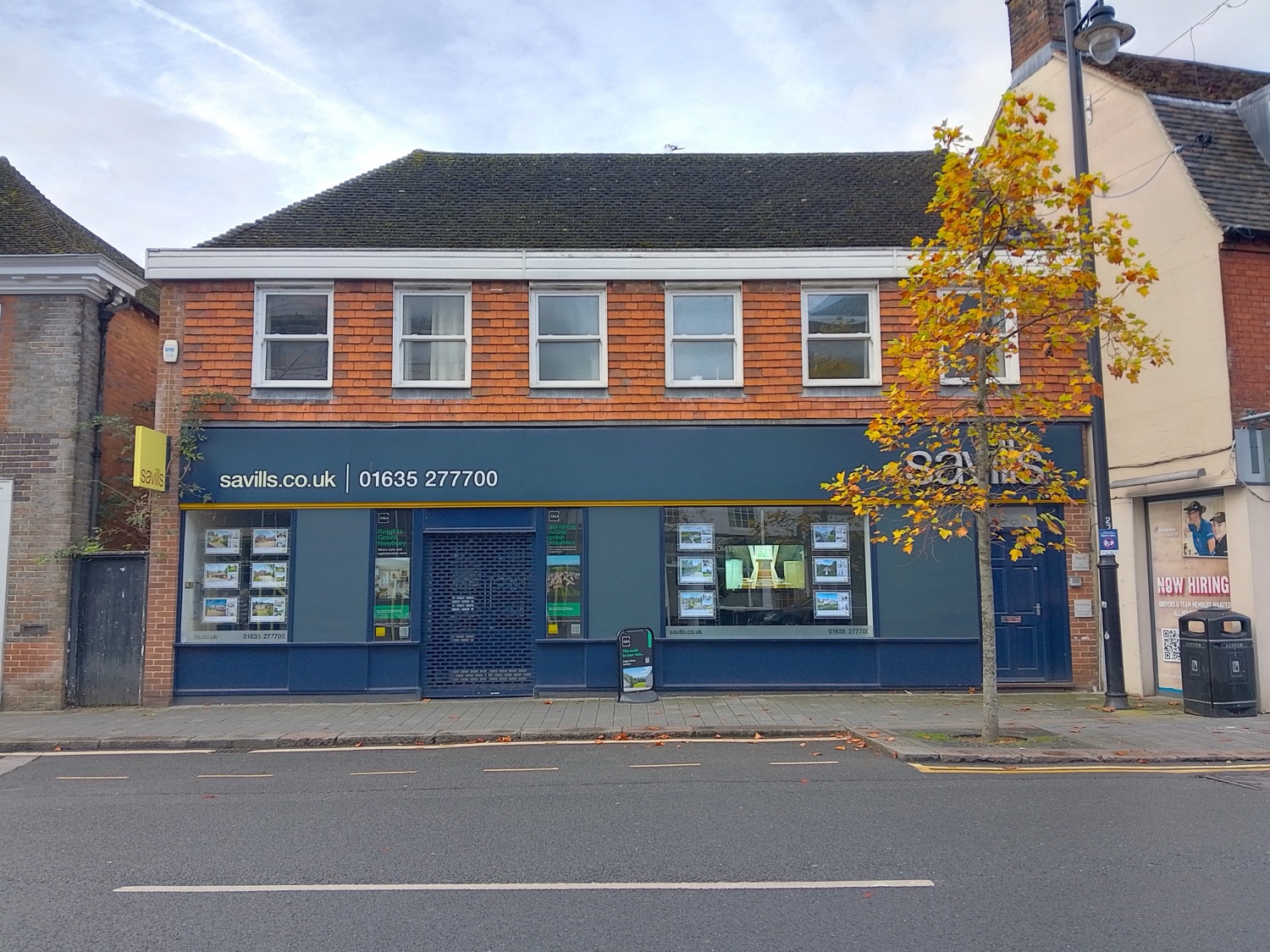
Savills is the deal’s opposite pole: founded by Alfred Savill in 1855 to sell the estates of the British nobility, listed in London, more than 40,000 people in some 70 countries — and, by design, decreasingly a brokerage at all.2,4 Its own headline KPI is called Balance: the share of group revenue that is non-transactional, 64 per cent in 2024 and 62 per cent in 2025 — the reel’s “60 per cent” actually undersold it.20 The strategy was already paying before the deal: underlying profit rose 38 per cent in 2024 alone.21 The two years before the deal were a quiet collection of exactly that kind of business: a Singapore facilities-management platform bought “to build a robust recurrent revenue business,” relocation-services firms in North America, a building consultancy in Ireland six days before the announcement.22,23,24
What the map lacked was the loud half: American capital markets, where Savills did tenant-rep leasing and almost nothing else. Simon Shaw — chief financial officer until he became group chief executive on 1 January 2026 — named the gap on the announcement call, ten weeks into the job: the deal delivers “the one thing that, candidly, a number of people in this room have been crying out for for years, which is a preeminent capital markets business in the United States.”4 The results he announced the same morning — £2,551 million of revenue, underlying profit up 11 per cent — were the platform; Eastdil was the missing wing.19
What the multiple was struck against
The RNS discloses five years of Eastdil’s books, and they are the most honest exhibit in the deal — a fee machine breathing with the rate cycle.
- 20211$862MThe everything-rally: $197 million of EBITDA at a 23 per cent margin.
- 20221$655M
- 20231$367MThe trough. Rates up, transactions frozen: EBITDA of $38 million at a 10 per cent margin — a fifth of 2021’s.
- 20241$485M
- 20251$633MThe year the price was struck against: $113 million of EBITDA, an 18 per cent margin, and a 9.9x multiple.
Peak to trough, revenue fell 57 per cent in two years and EBITDA fell 81 per cent — then recovered more than half the lost ground by 2025. The 9.9x multiple in the announcement is 9.9x that year; struck against 2023’s $38 million, the identical multiple would have described a firm worth about a third as much. In a cyclical fee business, the year of the mark is most of the price — which is a fact about every multiple anyone quotes, and the reason the RNS prints all five years rather than one.1
What $921 million buys
The asset walks out of the building every evening.
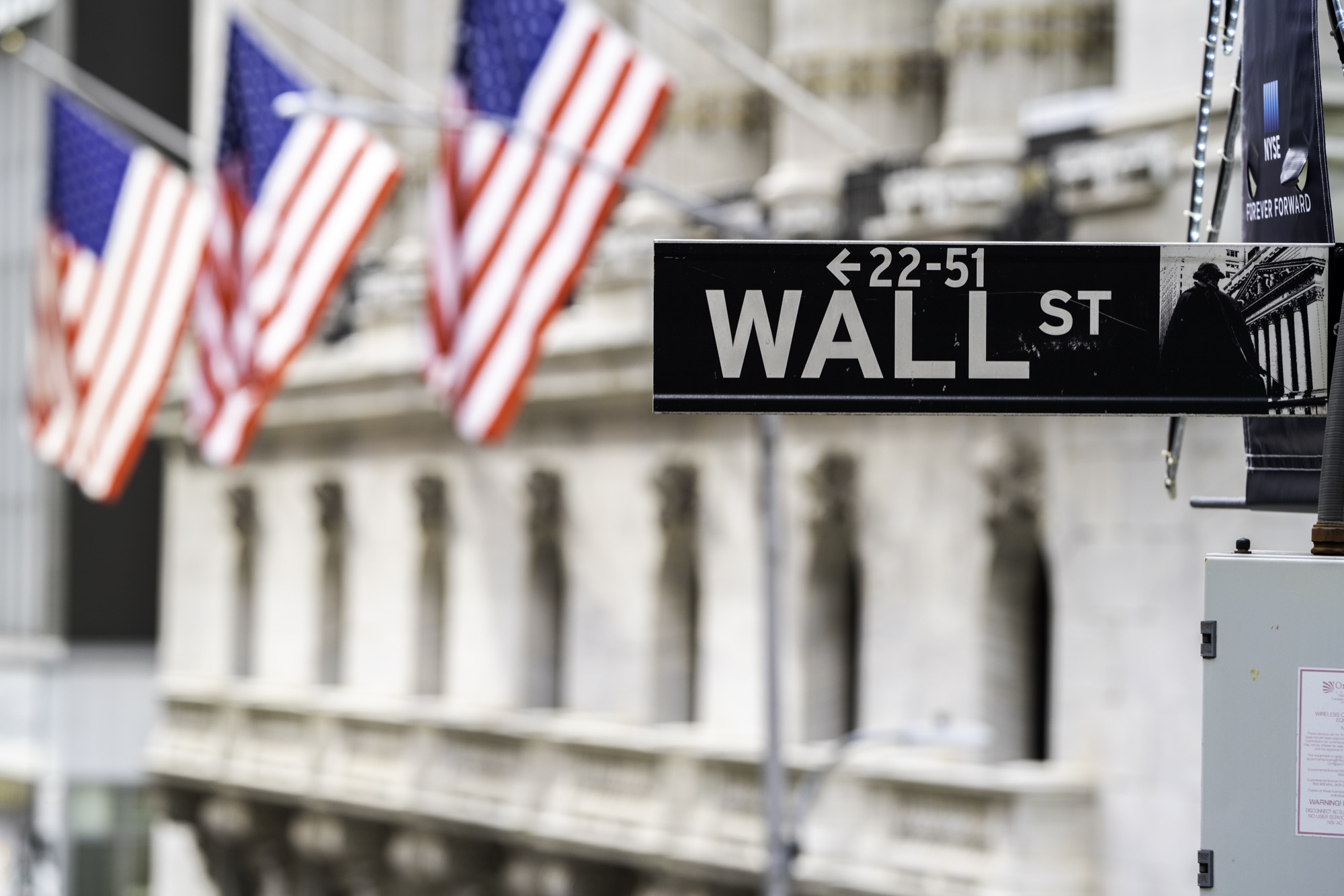
Wall Street, where Eastdil brought property brokerage in 1967. A real estate investment bank owns almost nothing but its people's relationships — which is why a third of a billion dollars of retention machinery travels beside this deal's price.Photo: Billie Grace Ward, CC0, via Wikimedia Commons
The price, opened
A $921 million consideration in two halves — and beside it, outside the price, the machinery that actually holds the firm together: two retention pools worth about $257 million, and share lock-ups that run to 2032.
The consideration, signed 12 Mar 2026
$921.25 million
What the 85 partners are worth if they leaveNot purchasable
Sourced, and not part of that total
Never published
- What the locked shares will be worth in 2030–2032Unknowable
- What the 85 partners are worth if they leaveNot purchasable
The two stacked lines are the price. The hatched asides are not: the debt gap is our subtraction of two disclosed figures, and the two retention pools sit outside the consideration entirely — money aimed not at the sellers but at the staying. The unpriced lines are the deal's real subject. Every figure is from Savills' own announcement, which is why this study has so few ranges in it.
| Line | Amount | How it is counted |
|---|---|---|
| Cash at completion | $552.75 million | sourced, and part of the total |
| New Savills shares | $368.50 million | sourced, and part of the total |
| Eastdil debt inside the enterprise value | ≈$191.25 million | sourced, but a different kind of number — not added to the total |
| Eastdil’s Special Incentive Programme, Mar 2025 | ≈$195 million | sourced, but a different kind of number — not added to the total |
| Savills’ new equity pool | $62.5 million | sourced, but a different kind of number — not added to the total |
| What the locked shares will be worth in 2030–2032 | Unknowable | never published |
| What the 85 partners are worth if they leave | Not purchasable | never published |
| The consideration, signed 12 Mar 2026 | $921.25 million | the sourced total |
The price, opened
The consideration is orthodox: $552.75 million of cash at completion, funded from a bridge of up to $800 million provided by Lloyds and NatWest, to be refinanced within a year through a term loan and US private placement notes.1 No equity raise, and — under the UK’s listing rules — no shareholder vote either.1
The market’s first read was the sceptical one: down 7.2 per cent by the close.4,27 Four days later Peel Hunt upgraded the stock to Buy — “a game changer” that “plugs a large US hole” — which is roughly the whole analyst debate in two data points.5,25
Sourced, and not part of that total
Never published
- What the locked shares will be worth in 2030–2032Unknowable
- What the 85 partners are worth if they leaveNot purchasable
The two stacked lines are the price. The hatched asides are not: the debt gap is our subtraction of two disclosed figures, and the two retention pools sit outside the consideration entirely — money aimed not at the sellers but at the staying. The unpriced lines are the deal's real subject. Every figure is from Savills' own announcement, which is why this study has so few ranges in it.
Closed, rebranded, ranked
The transaction completed on 3 August 2026, inside the announcement’s own Q2/Q3 guidance, and the firm was rebranded Eastdil Secured Savills with immediate effect.1,2,26 Roy March moved up to executive chairman; Van Konynenburg, the Secured Capital co-founder, became chief executive; James McCaffrey, the Europe head, became president, running international growth from London.1,3 On MSCI’s numbers the enlarged group is the world’s number-two adviser for commercial deals above $100 million — $251 billion of pro forma volume across 2021–2025 — and number one in the United States, on Eastdil’s standalone $139 billion.1 Savills’ guidance to its owners: at least £60 million of annual revenue synergies in the medium term, low-to-mid-teens earnings accretion in 2027, leverage back near 1x by the end of that year.1
The sequence
1855
Alfred Savill opens Savill and Son in London, selling the estates of the British nobility. A hundred and seventy years later the firm is on the London Stock Exchange with more than 40,000 people in about 70 countries.2,4
1967
Ben Lambert, 27, founds Eastdil as a wholly owned division of investment bank Eastman Dillon, Union Securities — fifteen people in New York, bringing investment-banking culture to property brokerage. It calls itself the first real estate investment bank.8,9,11
1977
Eastdil arranges the financing for the purchase of California’s Irvine Ranch — the largest American land deal of its era. Eastdil’s own history puts the price at $377 million; Lambert’s obituary says $337 million. The record keeps both.8,10
$377M or $337M
1999
Wells Fargo buys Eastdil outright. The firm keeps its name and its structure, and spends two decades as the bank’s deal shop.8,10
Sep 2003
Roy March — an Eastdil intern in 1978, president since 1996 — sells the General Motors Building to Harry Macklowe for a then-record $1.4 billion, on Conseco’s behalf.8,9
$1.4B
2006
Wells Fargo buys Secured Capital Corp — co-founded in 1990 by D. Michael Van Konynenburg and other Drexel Burnham alumni — and merges it with Eastdil to create Eastdil Secured. March becomes CEO, Van Konynenburg president, Lambert chairman.1,8
Feb 2007–2008
The firm’s fingerprints are on the cycle’s biggest trades — including selling Macklowe the EOP towers for Blackstone. Lambert’s epitaph for that one: “The music stopped, and there was no chair for Harry.” In 2009 the Wachovia real estate team folds in, taking the firm to 220 people.8,18
Dec 2010
Doug Harmon sells 111 Eighth Avenue to Google for $1.77 billion — the largest user purchase ever at the time. In 2016, Harmon and Adam Spies, the city’s top-producing sales team, leave for Cushman & Wakefield: the first great raid.9,14
$1.77B
Jun–Oct 2019
Wells Fargo sells. A management-led recapitalisation backed by Temasek and Guggenheim closes in October; Wells Fargo keeps a minority. Its release says terms were not disclosed — the $400 million valuation everyone quotes is trade-press reporting, never confirmed. Two months later Newmark poaches the young investment-sales bench.12,13,14
“$400M,” reported
Feb 2021
Ben Lambert dies, chairman to the end of his era — fifty-four years after founding the firm with fifteen people.10
Jan 2025
Green Street’s sales database crowns Eastdil the 2024 office-sales leader: $8.08 billion of brokered deals, a 28.0% share of the sector — up five points in the year the office market began clawing back.17
$8.08B · 28%
Feb–Apr 2025
The pivotal spring: Eastdil hires BDT & MSD to seek strategic partners in February. In March, Newmark raids its seven-person West Coast multifamily team — and Eastdil implements a one-time incentive programme of about $195 million for key personnel the same month. In April it sues the departed brokers over nine emailed “cheat sheets” of live deal terms.1,4,15,16
≈$195M armor
4 Dec 2025–6 Mar 2026
Savills’ recurring-revenue run closes its last gaps: Alpina facilities management in Singapore, Hoffman and Compustall relocation in North America, The Building Consultancy in Ireland — six days before the Eastdil announcement. Non-transactional work is 62 per cent of group revenue.19,20,22,23,24
12 Mar 2026
Simon Shaw — Savills CEO for ten weeks — announces full-year results and the Eastdil acquisition on the same morning: $1,112.5 million enterprise value, $921.25 million of consideration, 9.9x EBITDA. The shares fall 7.2 per cent by the close.1,4,19,27
$1.11B EV
16 Mar 2026
Four days after the fall, Peel Hunt upgrades Savills to Buy with a 1,400p target, calling the deal “a game changer” that “plugs a large US hole.”5,25
3 Aug 2026
The deal completes, on the guided timeline, and the firm is rebranded Eastdil Secured Savills the same day. The enlarged group ranks second globally and first in America for commercial deals above $100 million, on MSCI data. The employees’ shares begin their wait: equal thirds in 2030, 2031 and 2032.1,2
Closed
What transfers
The first lesson is that in a people business, the purchase price is the smaller document. The $921 million buys the brand, the system and the standing; the $195 million programme, the $62.5 million pool, the forfeiture clauses and the six-year lock-ups are the part of the deal aimed at the thing that actually produces the fees. Watch where the retention money goes and when it went on — Eastdil armored its people a full year before selling, in the same month a rival raided them — and you can read a firm’s honest assessment of its own walking risk, no matter what the press release says about culture.
The second is about multiples and the calendar. Savills paid 9.9x EBITDA — of 2025, an 18-per-cent-margin recovery year. The same firm two years earlier earned a fifth as much on revenue 42 per cent lower, and the same headline multiple struck then would have described a business worth roughly a third of the price. Neither year is the “true” one; a cyclical fee machine has no true year. That is why the RNS prints all five, and why any single multiple quoted about a transactional business — this room’s included — should prompt the same question: struck against which year?
The third is about what a public record does to a story. This reel scored almost perfectly, and the reason is structural: a listed acquirer’s regulatory announcement disclosed the price, the funding, the target’s five-year books, the cap table and the handcuffs — so every retelling drew from the same well. The previous study in this room chased numbers that lived only on a design firm’s marketing page. Same genre of claim, opposite epistemic footing. Before trusting a deal’s arithmetic, ask what kind of document it comes from — a filing someone could be sued over, or a page someone paid to have written.
And the last is the one the room keeps relearning: the biggest brokerage deal since JLL–HFF was not a brokerage buying buildings expertise. It was the industry’s most recurring-revenue firm paying a decade-high price for the most cyclical asset in the business — 85 people — and then spending a third of a billion dollars trying to make them stay. If the era of the pure-play brokerage is ending, as the reel says, this is what the ending looks like in documents: everyone wants both sides of the barbell, and the expensive side is the one that rides the elevator.
Common questions
- What exactly did Savills pay for Eastdil Secured, and how was it funded?
- An enterprise value of $1,112.5 million — 9.9x Eastdil’s 2025 underlying EBITDA of $113 million — with total consideration of $921.25 million after Eastdil’s existing debt. That split into $552.75 million of cash at completion, funded from a bridge facility of up to $800 million from Lloyds and NatWest, and $368.50 million satisfied in 27,658,880 new Savills shares, about 16 per cent of the enlarged company. No equity raise, and under the UK Listing Rules no shareholder vote was required.
- Did the deal actually close?
- Yes — on 3 August 2026, inside the Q2/Q3 guidance given at announcement, and the firm was rebranded Eastdil Secured Savills with immediate effect. Roy March became executive chairman, D. Michael Van Konynenburg chief executive, and James McCaffrey president. On MSCI Real Capital Analytics data, the enlarged group ranks second globally and first in the United States for commercial real estate transactions above $100 million.
- Why did Savills’ stock fall on the announcement?
- Shares dropped 7.2 per cent on 12 March 2026 — sticker shock at a near-decade-high price for a deeply cyclical fee business, announced by a chief executive ten weeks into the job. The analyst arc that followed is the fuller verdict: Peel Hunt called the price “certainly not a steal” on day one, then upgraded Savills to Buy four days later with a 1,400p target, calling the deal a game changer that plugs a large US hole. The bear case and the bull case were the same fact — Savills had no US capital markets business, and now it has the best one.
- Is the $400 million valuation of the 2019 buyout a real number?
- It is a reported number, not a disclosed one. When Wells Fargo sold Eastdil to its management — backed by Temasek and Guggenheim — in 2019, the bank’s own press release said terms were not disclosed. Bloomberg-era trade reporting put the valuation at “more than $400 million,” and that figure has been repeated ever since, including by the reel this study grew from. Against it, the 2026 enterprise value is roughly 2.8x — “nearly triple” is fair, but the baseline is folklore, and this study labels it that way.
- How does Savills keep Eastdil’s people from leaving?
- With documents, because the record shows exactly what happens otherwise: Eastdil lost its top New York team in 2016, its hotel team in 2018, its junior sales bench in 2019 and a seven-person West Coast team in March 2025 — the same month it implemented a one-time incentive programme of about $195 million for key personnel. The Savills deal adds a $62.5 million equity pool, and the 85 partners’ consideration shares unlock only in equal thirds on the fourth, fifth and sixth anniversaries of completion — 2030, 2031 and 2032 — with forfeiture provisions for anyone who leaves to compete.
Sources
- Savills plc (RNS significant transaction announcement) — Acquisition of Eastdil Secured — the $1,112.5 million enterprise value, the $921.25 million consideration in cash and 27,658,880 shares, the 9.9x multiple, the five-year financials, the 85-employee cap table, the retention programmes and the MSCI rankings (2026-03-12)
- Eastdil Secured Savills (press release) — Savills announces completion of the acquisition of Eastdil Secured — closed 3 August 2026, rebranded with immediate effect (2026-08-03)
- Eastdil Secured (press release) — Savills announces acquisition of Eastdil Secured — the announcement-day release, with Roy March’s and David Lipson’s statements (2026-03-12)
- Bisnow (Emily Wishingrad, Jarred Schenke, Ethan Rothstein) — Star-crossed: how Savills and Eastdil found each other — the 7% share drop, Simon Shaw’s “crying out for years” line, the BDT & MSD mandate of February 2025, and the rivals’ verdicts (2026-03-12)
- Property Week (Lewis Berrill) — The acquisition that “looked destined” — seventh to second in the global rankings, and the Peel Hunt, Shore Capital, Bloomberg Intelligence and Deutsche Numis verdicts (2026-03-17)
- Commercial Observer — What the Savills deal means for Eastdil — Shaw’s “No. 1 player” framing, Bob Knakal on the compensation cultures, and the anonymous “C player appear to be a B-plus player” line (2026-04-07)
- The Real Deal (Rich Bockmann) — Savills buying Eastdil Secured — the pre-announcement scoop, and the 2019 buyout “that valued the company at $400 million” (2026-03-11)
- Eastdil Secured (corporate history page) — Our history — 1967 with a team of 15, the 1977 Irvine Ranch financing, Wells Fargo in 1999, the 2006 Secured Capital merger, the Wachovia team in 2009, the 2019 recapitalisation (undated)
- The Real Deal (magazine) — Eastdil Secured: a $15 billion enigma — Lambert at 27, the Eastman Dillon origin, Roy March and the $1.4 billion GM Building sale of 2003, and Google’s 111 Eighth Avenue (2011-10-03)
- The Real Deal — Eastdil Secured co-founder Ben Lambert dies — the Nomura venture, the Wells Fargo years, and the Irvine Ranch at $337 million (2021-02-01)
- The Real Deal — Ben Lambert’s legacy — the founder who brought Wall Street to brokerage, and the first “real estate investment bank” (2021-02-02)
- Wells Fargo (press release) — Wells Fargo announces sale of Eastdil Secured — the 2019 management-led recapitalisation with Temasek and Guggenheim, the retained minority stake, and “terms of the transaction have not been disclosed” (2019-06-11)
- Bloomberg Law — Wells Fargo to sell Eastdil in deal valuing firm at $400 million — the reported figure, and the $244 billion of 2018 transactions (2019-06-11)
- The Real Deal — Newmark poaches Eastdil Secured sales team — the 2019 junior-bench raid, three years after Harmon and Spies left for Cushman & Wakefield, a year after the hotel team went (2019-08-28)
- The Real Deal — Newmark snags seven-person multifamily team from Eastdil — the March 2025 West Coast raid, more than $100 billion of closed transactions among them (2025-03-06)
- The Real Deal — Eastdil sues Newmark brokers over “stolen” deal documents — the nine emailed cheat sheets, and a firm that almost never sues its alumni doing exactly that (2025-04-04)
- Real Estate Alert (via Eastdil Secured) — Office sales claw back; Eastdil wins crown — $8.08 billion of 2024 office sales and a 28.0% share of brokered deals, on Green Street’s sales database (2025-01-28)
- Fortune (Devin Leonard), via the Internet Archive — Reckoning for a real estate mogul — Ben Lambert, chairman of Eastdil Secured, which sold Macklowe the EOP buildings for Blackstone: “The music stopped, and there was no chair for Harry” (2008-02-15)
- Savills plc (results announcement) — Results for the full year ended 31 December 2025 — revenue of £2,551 million and underlying profit of £145.3 million, announced the same morning as the Eastdil deal (2026-03-12)
- Savills plc (Annual Report and Accounts 2025) — The Balance KPI — 62% of group revenue non-transactional in 2025, 64% in 2024 — and the segment split beneath it (2026-03)
- Savills plc (results announcement) — Annual results 2024 — group revenue of £2.40 billion and underlying profit up 38 per cent (2025-03-13)
- Savills (press release) — The Alpina Holdings acquisition — a Singapore facilities-management platform, bought “to build a robust recurrent revenue business” (2025-12-04)
- Savills (press release) — Savills acquires Hoffman and Compustall — move management and technology relocation across North America (2025-08-04)
- RTÉ News — Savills Ireland buys The Building Consultancy — the second Irish acquisition in twelve months, six days before the Eastdil announcement (2026-03-06)
- Alliance News (via ADVFN) — Peel Hunt lifts Savills after “game changer” deal — the upgrade to Buy with a 1,400p target, four days after the shares fell (2026-03-16)
- Alliance News (via Morningstar) — Savills says 2026 view unchanged but notes significant uncertainty — trading marginally ahead, and completion expected around the end of July (2026-05-13)
- MergerSight — Savills’ $1.1bn acquisition of Eastdil Secured — the 7.2% announcement-day fall, and the 1.76x revenue and 9.9x EBITDA multiples restated (2026-04-15)