
Case study Nº 20
The bones were real, but the numbers belong to the architect
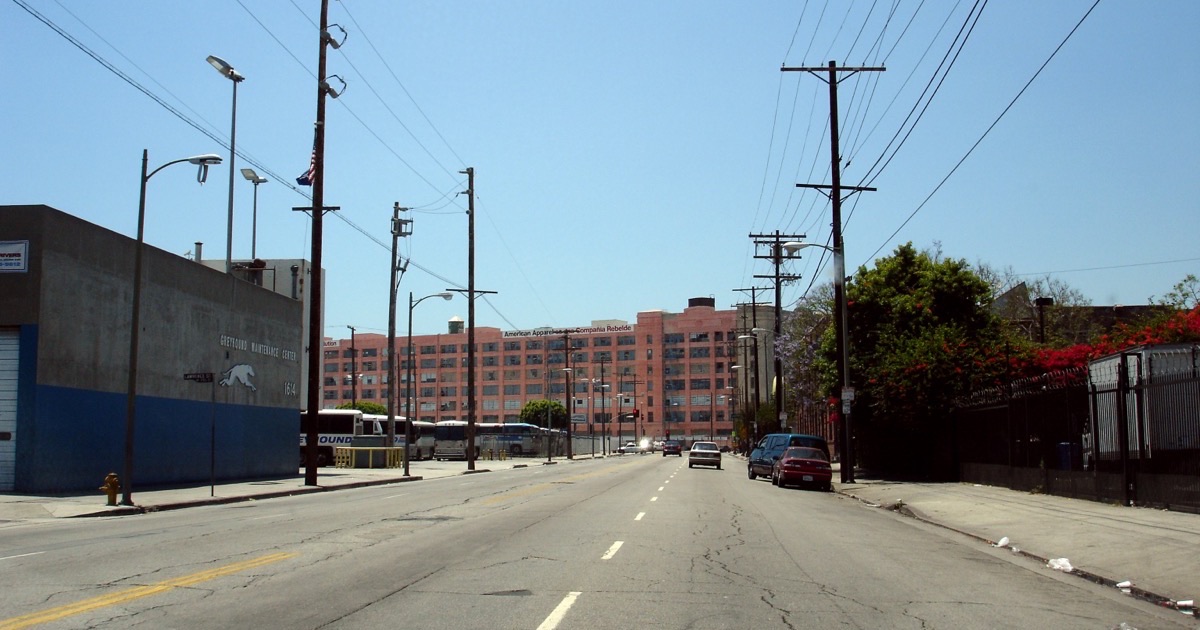
ROW DTLA is close to adaptive reuse’s best case — nine Southern Pacific warehouse buildings kept, a century-old produce market still trading inside a luxury repositioning, and a thousand apartments now approved on its parking lots. But every figure the retellings quote, from the doubled equity to the square feet of culture, traces to one undated page on the design architect’s own website — and the campus’s real financial record has published nothing at all since June 2017, when a $475 million floating-rate loan began its run toward a maturity nobody ever reported on.
Ben Fan, with Darryl WengApril 12, 202615 min readWatch the reel
The Evoq portfolio, bought Oct 2014
$357.4M
The architect’s number, undated
$718M
The retellings of ROW DTLA — the reel this brief grew from included — all quote the same arithmetic: a $357 million buy that became a $718 million property, an equity double, and a program of office, retail and culture measured to the square foot.22 Every one of those numbers lives on a single undated page: the portfolio site of RIOS, the project’s own design architect. The record behind the page is thinner and more interesting — a portfolio bought whole, a valuation reported once in 2017, a $475 million loan that matured into the pandemic unreported, and nothing since.1,8,9 Jump to the money ↓
The reel’s thesis deserves saying first, because it is right: the value at Seventh and Alameda really was in the bones. The buildings were kept, the grit was kept deliberately, and — rarest of all — the working produce market inside the deal was kept running, a century-old wholesale economy trading underneath a luxury repositioning. As adaptive reuse, ROW DTLA is close to the genre’s best case.
What the reel recites less well is the money, because on this project the money is largely unknowable — and the retellings have filled the silence with the developer’s decorators. This study separates the two: the operating story the record supports richly, and a financial story whose every public number stops in June 2017.
| The campus at a glance | Number |
|---|---|
| The Terminal Market opens | Fall 1917 — by the Southern Pacific, to John Parkinson’s designs1,3 |
| The campus | Nine buildings, 1,735,000 rentable square feet, about 30 acres26 |
| Bought 9 Oct 2014, inside the Evoq portfolio | $357.4 million — the company, not just the campus1,2 |
| The renovation budget | Never disclosed5,11 |
| The one big financing, Jun 2017 | $475M, Blackstone, three years, floating9,10 |
| The last public valuation, Jun 2017 | “Said to value the property at more than $700 million”8 |
| What happened at the loan’s 2020 maturity | Never reported |
| Office occupancy, mid-2019 | 82 per cent13 |
| Downtown office vacancy, spring 2023 | 23.9 per cent18 |
| The produce market’s daily sales, 2016 | About $10 million, per its association7 |
| Produce tenants’ rents under the new owner | Up 20–25% for about 70 tenants, on shorter leases7 |
| Smorgasburg, Sundays since Jun 2016 | 8,000–12,000 visitors weekly, still running20,21 |
| Approved next door, Feb–Jun 2026 | 1,000 apartments, 114 very-low-income, on the parking lots32,33,34 |
| The reel’s “equity more than doubled” | The design firm’s own page; no financial source exists22 |
The machine at the end of the tracks
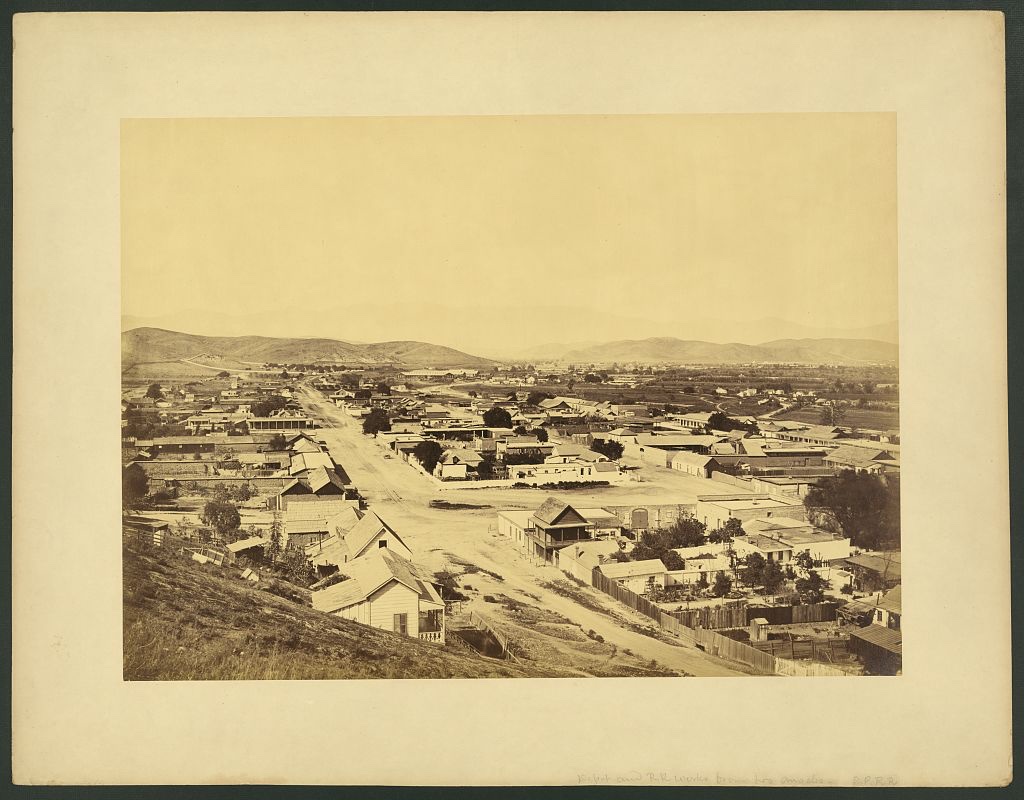
Los Angeles ate through this corner of downtown for a century before anyone called it a campus. The Southern Pacific built the Los Angeles Terminal Market at Seventh and Alameda beginning in 1917 — John Parkinson’s produce buildings first, the rest following until 1923 — and in its World War I-era opening as Union Terminal Annex it was the second-largest wholesale terminal in the world, with more than 100 firms including B.F. Goodrich and Owl Drug running whole operations inside it.1,3 The wholesale giants moved next door in 1986, into the purpose-built new market; the old stalls kept their smaller traders and kept selling.36 The vendors changed with the city — from the Italian and Greek families of mid-century to operations 95 per cent Latino-owned by the time the market turned one hundred.3
The complex’s other twentieth-century life was industrial: food distributor S.E. Rykoff, then — from 2000 — American Apparel, whose factory grew to 800,000 square feet and made the pink building at 747 Warehouse Street the largest garment operation in American retail’s imagination.1,30 The landlord over it all, Meruelo Maddux Properties, was downtown’s biggest — until it filed for Chapter 11 in March 2009 and re-emerged, renamed Evoq, with Alameda Square as the crown asset it could never quite afford to reinvent.1,29
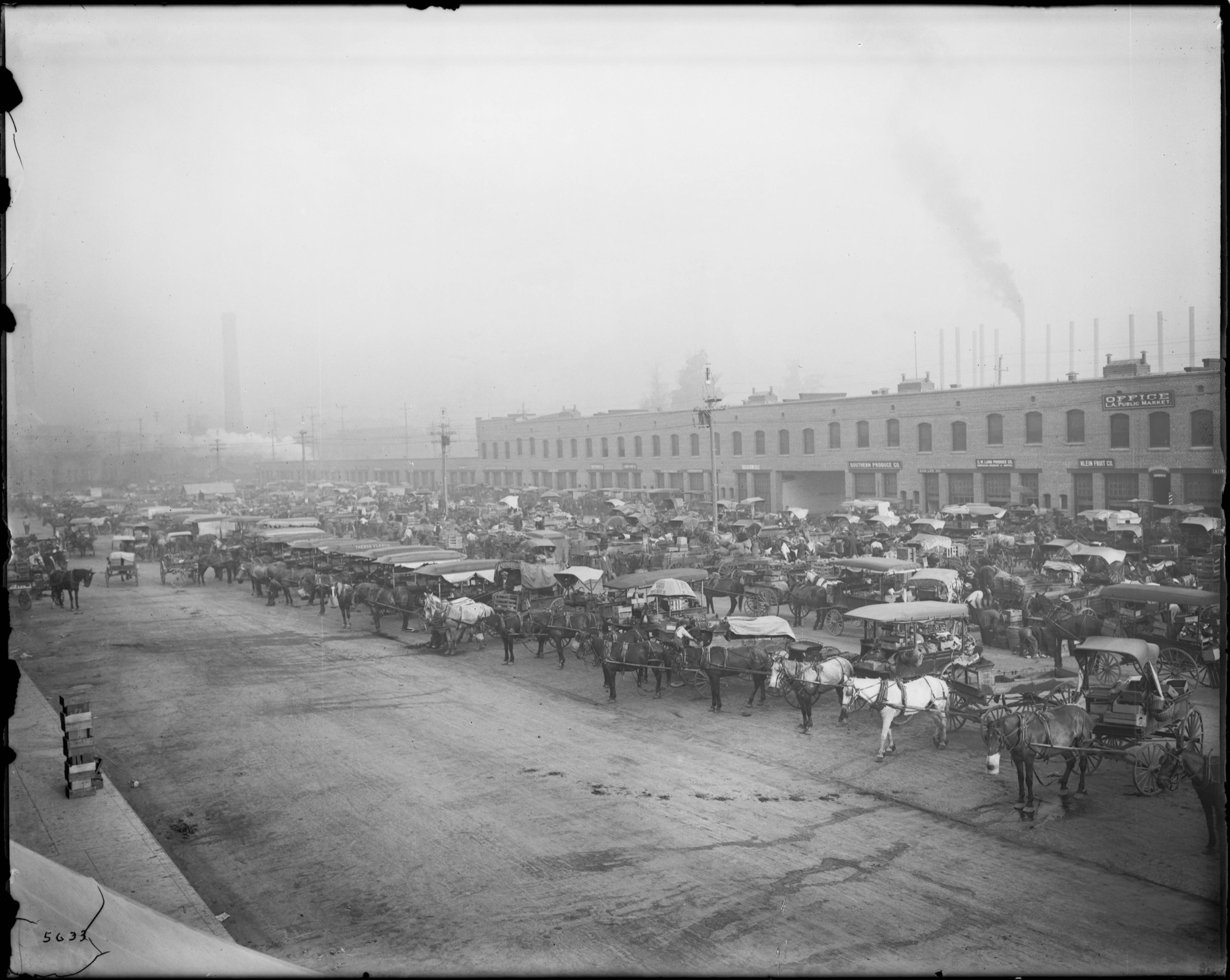
Alameda and Sixth, circa 1905
Everything above the market changed owners. The market kept selling.
Produce wagons at Central Market, Alameda and Sixth — one block north of the future Terminal Market site, in the district's wagon era. The photograph is of a neighboring market, and it is the working economy the ROW campus was built to house.Photo: California Historical Society / USC Libraries, public domain, via Wikimedia Commons
A company bought whole, a district renamed
The deal the reel compresses into “Atlas bought 30 acres” was a corporate acquisition: on 9 October 2014 a consortium led by Atlas Capital Group — founded in 2006 by Jeffrey Goldberger and Andrew Cohen — with Square Mile Capital Management and USAA Real Estate completed the $357.4 million purchase of Evoq Properties, the whole company, 32-acre Alameda Square inside it alongside other downtown parcels.1,2 Even the record’s hardest number, in other words, prices more than the campus. What drew Goldberger there is the origin story the design press loves and the record supports: dinner at Bestia in the Arts District, and a verdict — “the Meatpacking District of L.A.”4
The reinvention was deliberate understatement. Mark Rios’s brief to his own team was to keep “as much of the age and the old paint and the dirt and the grit as possible”; his warning to his client was that “what he had was such a gem, he had to be really careful not to ruin it.”4 The reel’s “no demolition required” is nearly true and not quite: upwards of 90 per cent of the building envelopes stayed,37 one building still carries the scars of a pre-Atlas retrofit attempt, and the campus’s biggest structure is entirely new — a ten-storey, 4,000-car garage, the largest of its kind in the county, which is what freed the yards for pedestrians.4,11,27 The design principal’s summary of the intent: “ROW DTLA was imagined as a stage for a vibrant urban community.”24,25 The name arrived with the renderings in January 2016; the budget never arrived at all — undisclosed in 2016, undisclosed in 2018, undisclosed today.5,6,11
The market it kept, and what keeping cost
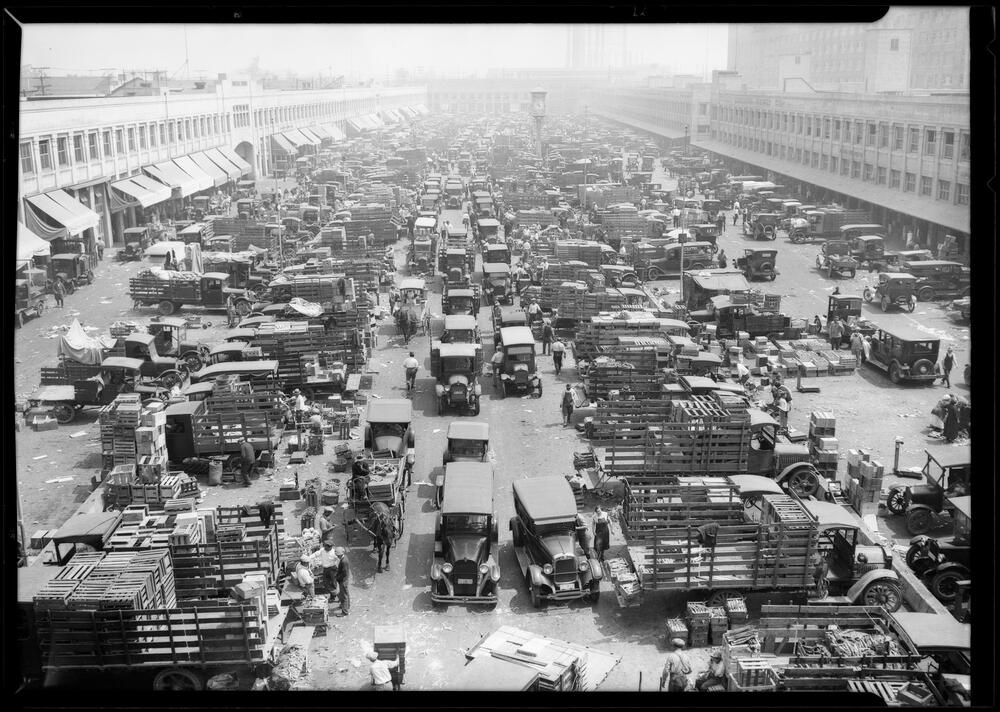
The reel’s best fact is real: the produce market never stopped. It opened in the fall of 1917 — not 1923, which is when the last buildings finished — and it was trading under Atlas’s ownership on its hundredth birthday, 85 vendors moving what its association estimated at $10 million of produce a day.3,7,36 Continuity was not free. In 2016 the Business Journal reported that about 70 market tenants had seen rents rise 20 to 25 per cent on leases cut from five years to one; named vendors described being priced toward the exits, and one who left watched his daily take collapse.7 Atlas denied pushing anyone: “We are committed to a vibrant operating produce market. It is an integral part of our overall vision.”7 Both things appear to have stayed true — the rents rose, and the market is still there, still listed among the campus’s tenants in 2025.19
The consumer-facing bet was slower and rougher than the retellings allow. Smorgasburg made Sundays work from June 2016 — 8,000 to 12,000 people a week, ten years running now — and by spring 2018 more than 40 hand-picked shops and restaurants had signed.12,20,21 Weekdays were the problem: Tartine’s 40,000-square-foot Manufactory, among the most ambitious restaurant projects in Los Angeles, opened in January 2019 and closed all but its bakery in December, its founder pointing at the offices upstairs — “several office spaces remain unoccupied at the Row, which sees its largest crowds during the Sunday Smorgasburg market.”14 Office occupancy touched 82 per cent that same summer — the pre-pandemic high-water mark the record carries — and then the downtown office market fell off its own cliff.13 ROW’s answer reads honestly in the leasing tape: about 390,000 square feet signed across 2022 and early 2023 against a submarket at 23.9 per cent vacancy, tenants from Revolve to HOK to Virgin Hyperloop — whose tenancy ended not with a lease but with the company itself shutting down.15,16,17,18 By late 2025 the roster ran to 35 shops and restaurants, Condé Nast upstairs, and Fashionphile taking its largest West Coast flagship.19
The campus, as priced by the record
Four numbers is the entire public financial history of ROW DTLA — and the last two are not prices. The reel's doubling is the distance between the first mark and the fourth: a 2014 purchase against the architect's undated restatement of a 2017 valuation.
What the campus was said to be worth
$718 million
Undated · The architect’s number22,23
2.0× $357.4 million
From RIOS’s own portfolio page, beside “2x return on invested equity,” the 400,000 square feet of retail and the 300,000 of culture the reel recites. It is an asset value, not an equity return; it matches the 2017 recapitalization moment; and no independent source has ever carried it.
- 9 Oct 2014$357.4 million
- Jun 2017$475 million
- Jun 2017More than $700M
- Undated$718 million
Four marks, and the figure ends where the public record does. The two hatched bars are not prices: one is a reported estimate of an undisclosed trade, the other a design firm's marketing page. A privately held campus carrying private-credit debt publishes no appraisals, answers to no servicer and files no dockets — so unlike this room's CMBS and courtroom studies, ROW DTLA's last nine years have no financial record at all. The silence is not health and it is not distress. It is structure.
| When | Mark | Value |
|---|---|---|
| 9 Oct 2014 | The Evoq portfolio, bought whole | $357.4 million |
| Jun 2017 | The Blackstone loan written against it | $475 million |
| Jun 2017 | The valuation reported at HOOPP’s 37.5% entry — What the sale of a minority stake to the Ontario healthcare pension plan was “said to value the property” at — a reported figure around an undisclosed price, and the last valuation of any kind in the public record. | More than $700M |
| Undated | The architect’s number — From RIOS’s own portfolio page, beside “2x return on invested equity,” the 400,000 square feet of retail and the 300,000 of culture the reel recites. It is an asset value, not an equity return; it matches the 2017 recapitalization moment; and no independent source has ever carried it. | $718 million |
Undated, The architect’s number, $718 million.
The campus, as priced by the record
Every retelling of ROW DTLA begins from $357 million, and it is worth seeing what that number actually bought: a company. Evoq — the renamed, post-bankruptcy Meruelo Maddux — sold whole, its downtown parcels together, for $12.96 a share.1,2 The campus never traded alone, which means the famous baseline of every return calculation on this project is itself an approximation.
It is the only arm’s-length trade in the whole story. Everything after it is either debt or somebody’s say-so.
- 9 Oct 2014$357.4 million
- Jun 2017$475 million
- Jun 2017More than $700M
- Undated$718 million
Four marks, and the figure ends where the public record does. The two hatched bars are not prices: one is a reported estimate of an undisclosed trade, the other a design firm's marketing page. A privately held campus carrying private-credit debt publishes no appraisals, answers to no servicer and files no dockets — so unlike this room's CMBS and courtroom studies, ROW DTLA's last nine years have no financial record at all. The silence is not health and it is not distress. It is structure.
A thousand apartments on the parking lots
The reel’s last claim is its most current, and it checks out with a docket number. In December 2024 Atlas filed to replace the campus’s surface parking at 787 S. Alameda with three eight-storey buildings — 1,000 apartments: 516 studios, 402 one-bedrooms, 82 twos, with 114 units restricted to very-low-income households under the density bonus.31,32 The City Planning Commission approved it on 12 February 2026 — applicant of record: Jeffrey Goldberger, Alameda Square Owner LLC — and on 5 June the City Council rejected the appeal against it.32,33,34 It is one arm of a bigger Atlas push on this stretch of Alameda: the company bought the L.A. Times printing plant across the street for about $240 million in 2019 and holds approvals to turn it into a $650 million studio campus.28 Whatever the unknowable financials say, the owner of eleven years is not behaving like a seller — and the “2024 exit” our own research queue once guessed at never happened. The campus was operating normally, and expansively, into mid-2026.26,35
The sequence
Fall 1917
The Los Angeles Terminal Market opens at Seventh and Alameda — John Parkinson’s produce buildings first, more structures following until 1923. Known in its World War I-era opening as Union Terminal Annex, it is the second-largest wholesale terminal in the world, with more than 100 firms operating on site.1,3,36
1986
The wholesale trade’s big volume moves next door into the newly built Los Angeles Wholesale Produce Market. The old Seventh Street Market keeps its stalls and its smaller vendors — and keeps trading.36
2000
American Apparel moves into the complex, eventually occupying 800,000 square feet at 747 Warehouse Street — for a decade and a half, the campus is the largest garment factory in the country’s imagination of downtown.30
Mar 2009
Meruelo Maddux Properties — downtown’s largest landlord and the produce district’s owner — files for Chapter 11. It re-emerges renamed Evoq Properties, with Alameda Square its biggest asset.1,29
9 Oct 2014
A consortium led by Atlas Capital Group, with Square Mile Capital Management and USAA Real Estate, completes the purchase of Evoq Properties for $357.4 million — the whole company, with the 32-acre Alameda Square inside it. Jeffrey Goldberger had scouted the district over dinner at Bestia and called it “the Meatpacking District of L.A.”1,2,4
$357.4M
Jan–Mar 2016
The campus re-emerges as ROW DTLA: RIOS designing around “the age and the old paint and the dirt and the grit,” Runyon Group hand-picking retail, 1.3 million square feet of creative office planned, about 100 stores — and a renovation budget never disclosed, then or since.4,5,6
May 2016
The other side of the reinvention: the Business Journal reports that about 70 produce-market tenants have seen rents rise 20 to 25 per cent on shortened leases. Atlas denies pushing anyone out: “We are committed to a vibrant operating produce market.” The market association pegs daily sales at $10 million.7
Jun 2016
Smorgasburg LA opens its Sunday market on the campus — soon the largest weekly open-air food market in Los Angeles, drawing 8,000 to 12,000 people a week.20,21
Jun 2017
The money event the record actually carries: Healthcare of Ontario Pension Plan buys 37.5 per cent of the project at a price said to value it above $700 million, and a $475 million three-year floating-rate loan from Blackstone Real Estate Debt Strategies refinances the debt. It is the last valuation of any kind the public record contains.8,9,10
$475M · >$700M
2017–2019
The campaign years: American Apparel’s 2,166 downtown workers are laid off as the company dies; Adidas, Weedmaps’ parent and dozens of shops sign; office occupancy touches 82 per cent in mid-2019. Tartine’s 40,000-square-foot Manufactory opens in January 2019 and closes all but its bakery in December — Chad Robertson: “several office spaces remain unoccupied at the Row, which sees its largest crowds during the Sunday Smorgasburg market.”13,14,30
82% leased
Jun 2020
The Blackstone loan’s initial three-year term runs out, into the first pandemic summer. What happened — extension, payoff, restructure — has never been reported anywhere. The record goes quiet exactly where it would have gotten interesting.9,10
Unreported
2022–2023
Against a downtown office market at 23.9 per cent vacancy, ROW leases about 390,000 square feet in fifteen months — Virgin Hyperloop’s HQ, Revolve, HOK, Joybird among them. Hyperloop’s tenancy ends when the company itself shuts down at the end of 2023.15,16,17,18
390K sq ft
Dec 2024
Atlas files for the campus’s next act: 1,000 apartments in three eight-storey buildings on the surface parking at 787 S. Alameda — 114 units restricted to very-low-income households under the density bonus, 516 studios, 402 one-bedrooms, 82 twos.31,32
1,000 units filed
2025–2026
Fashionphile takes a 32,000-square-foot flagship; Smorgasburg enters its tenth year; the City Planning Commission approves the apartments on 12 February 2026 and the City Council rejects the appeal against them on 5 June. Atlas — its own portfolio page still listing the campus — remains the owner it has been since 2014. The queue note behind this study guessed at a 2024 exit; there wasn’t one.19,20,26,32,33,34
Approved
What transfers
The first lesson is the one this study exists for: check where a number lives before you repeat it. The reel’s figures are not invented — every one of them is really published. They are published by the project’s own design firm, on an undated portfolio page, describing an asset value from 2017 as if it were an equity return in 2026. A statistic’s address is part of its meaning. “The architect says the building doubled” and “the equity doubled” are different sentences, and only one of them was ever true on any date the record can name.
The second is about what privacy does to a track record. This room’s distressed studies — Westfield, Century Plaza, the Spire — are legible precisely because their capital structures forced disclosure: servicers mark CMBS, courts file everything. ROW DTLA is the control case. Private equity over private credit produced eleven years of ownership with exactly four public numbers, and none since 2017. That opacity cuts both ways: nobody can prove the triumph the retellings assume, and nobody can prove the distress a 23.9-per-cent-vacancy downtown might suggest. When a deal’s outcome is unknowable, the honest telling says so — it does not borrow the decorator’s scoreboard.
The third is the reel’s own, sharpened rather than corrected: the bones were the value, and the boldest part of the bet was restraint. Atlas kept 90 per cent of the fabric, kept the grit as a design position, and — at rents its tenants publicly resented — kept a working wholesale produce market inside a luxury repositioning, where nearly any other developer would have cleared it. The campus’s next act, a thousand apartments on its own parking, densifies beside the market rather than over it. Whatever the unpublished spreadsheet says, the city got the rarer outcome: a century-old food economy still trading at the bottom of the buildings that were saved around it.
Common questions
- Did Atlas Capital really double its equity on ROW DTLA?
- No source supports that claim as stated. The figure traces to the portfolio page of RIOS, the project’s design architect, which pairs “2x return on invested equity” with “transforming a $357 million acquisition into a $718 million landmark development.” That is an asset-value comparison — the 2014 portfolio purchase price against a valuation matching the June 2017 recapitalization, when a pension fund’s 37.5 per cent entry was reported to value the property above $700 million. An asset doubling is not an equity return, the renovation budget was never disclosed, and no valuation of any kind has been published since 2017.
- Did Atlas sell ROW DTLA?
- No sale has ever been reported, and the evidence points the other way: Atlas Capital’s own portfolio page still lists the campus as a current holding, and Atlas — through its Alameda Square Owner LLC entity, with co-founder Jeffrey Goldberger as named applicant — filed and won the 2024–2026 entitlement for 1,000 apartments on the campus. The one ownership change on record is additive: the Healthcare of Ontario Pension Plan bought a 37.5 per cent minority stake in June 2017, alongside a $475 million Blackstone refinancing.
- Is the Seventh Street produce market still operating?
- Yes — continuously since the fall of 1917. The big wholesale volume moved next door to the purpose-built new market in 1986, but the old stalls kept trading through every owner: the Southern Pacific, Rykoff, Meruelo Maddux, Evoq and Atlas. Continuity had a price — around 2016, about 70 market tenants saw rents rise 20 to 25 per cent on leases shortened from five years to one — but the market was still listed among the campus’s tenants in late 2025, and its association estimated daily sales around $10 million in 2016.
- What did the 2014 deal actually buy?
- A company, not a site. The Atlas-led consortium — with Square Mile Capital Management and USAA Real Estate — bought Evoq Properties whole for $357.4 million, effective 9 October 2014. Evoq was the renamed, post-bankruptcy Meruelo Maddux, and its portfolio included 32-acre Alameda Square plus other downtown parcels. The campus never traded on its own, which means the baseline of every return story about ROW DTLA is an approximation over a larger deal.
- What is being built at ROW DTLA next?
- A thousand rental apartments on the campus’s surface parking at 787 S. Alameda Street — three eight-storey buildings holding 516 studios, 402 one-bedrooms and 82 two-bedrooms, with 114 units restricted to very-low-income households under the density bonus. The City Planning Commission approved it on 12 February 2026 and the City Council rejected an appeal that June. Across the street, Atlas also holds approvals to convert the former L.A. Times printing plant — bought for about $240 million in 2019 — into a $650 million production studio campus.
Sources
- Los Angeles Times (Roger Vincent) — L.A. commercial property landlord Evoq is sold for $357.4 million — the Atlas-led consortium with Square Mile Capital and USAA, the 32-acre Alameda Square inside the portfolio, and the complex’s Union Terminal Annex history (2014-08-18)
- EVOQ Properties (via PR Newswire) — Completion of the sale to the Atlas Capital and Square Mile-led group, effective October 9, 2014 — and Atlas Capital Group founded March 2006 by Jeffrey A. Goldberger and Andrew B. Cohen (2014-10-16)
- LA Weekly (Jean Trinh) — 100 years of changes at downtown’s historic Seventh Street Produce Market — the fall 1917 launch, John Parkinson, the 85 vendors, the shift to 95 per cent Latino ownership, and the rent increases under Atlas (2017-10-12)
- Los Angeles Times (Abigail Stone) — ROW DTLA: the vast complex transformed — Mark Rios on “keeping as much of the age and the old paint and the dirt and the grit as possible,” the Bestia scouting story, and the county’s largest parking structure (2017-10-01)
- Los Angeles Downtown News — Row DTLA’s vast old buildings and huge new vision — the new name, the 1.3 million square feet of creative office, about 100 stores, and a budget never revealed (2016-03-04)
- The Real Deal (Los Angeles) — Atlas and Runyon plan hip megadevelopment for Alameda Square — the first renderings, and the site “now called ROW DTLA” (2016-01-15)
- Los Angeles Business Journal — Market vendors fear moving from 7th Street Produce Market — the 20 to 25 per cent rent increases, the shortened leases, the named vendors, and Atlas’s denial (2016-05-22)
- The Real Deal (Los Angeles) — Atlas, Square Mile sell pricey stake in the Row — the transaction said to value the property at more than $700 million (2017-06-06)
- The Real Deal (Los Angeles) — Canadian pension fund closes on 37.5% interest in the Row — HOOPP’s entry, and the $475 million three-year floating-rate loan through Blackstone Real Estate Debt Strategies (2017-06-16)
- ConnectCRE (Dennis Kaiser) — Blackstone backs ROW DTLA with $475M loan — arranged by HFF to refinance the existing debt (2017-06-21)
- Los Angeles Downtown News (Nicholas Slayton) — Reinventing the Row — the 1917–1923 complex, the 10-story 4,000-car garage, 100,000 square feet of office leasing in twelve months, and a budget still undisclosed (2018-06-13)
- Bisnow (Joseph Pimentel) — Row DTLA aiming to be downtown’s retail destination — more than 40 retailers signed, and Runyon Group’s “we handpick who we want here” (2018-04-26)
- The Real Deal (Los Angeles) — Weedmaps’ parent signs for 115,000 square feet — and the Miro lease that brought office occupancy to 82 per cent (2019-07-10)
- Los Angeles Times (Food) — The Manufactory at ROW DTLA closes abruptly after less than a year — Chad Robertson on the empty offices and the weekday foot traffic that never came (2019-12-16)
- Bisnow (Los Angeles) — Virgin Hyperloop moves its global headquarters into ROW DTLA — about 50,000 square feet on a four-year lease (2022-08-29)
- The Verge — Hyperloop One is shutting down — the tenant’s end, by corporate death rather than lease (2023-12-21)
- JLL (newsroom) — Office leasing continues at ROW DTLA — more than 300,000 square feet signed since January 2022, from Virgin Hyperloop to Revolve to HOK (2023-04-04)
- Los Angeles Business Journal (Denise Kozlowski) — The Real Estate Quarterly: difficulty leasing — downtown vacancy at 23.9 per cent, and JLL’s Jaclyn Ward on ROW’s 390,000 square feet of leasing against the tide (2023-04-24)
- Commercial Observer — Fashionphile inks 32K SF lease at Row DTLA — the nine-building, 1.7-million-square-foot district, with Revolve and Condé Nast among the tenants (2025-10-01)
- LAist (Gab Chabrán) — Smorgasburg LA reopens Sunday with 13 new vendors — the market’s tenth year at ROW DTLA (2026-01-09)
- KCRW — Smorgasburg LA — the largest weekly open-air food market in Los Angeles, drawing 8,000 to 12,000 guests every Sunday (undated)
- RIOS (project page) — ROW DTLA — the design firm’s own case study: “transforming a $357 million acquisition into a $718 million landmark development,” “2x return on invested equity,” 400,000 square feet of retail, 300,000 square feet of arts and cultural programming, and 91% occupancy — the page the retellings’ numbers trace to (undated)
- RIOS (essay) — The value of placemaking in urban development — the $357 million-to-$718 million framing restated by the design firm in 2025 (2025-06-03)
- RIOS (essay) — Revealing the story while honoring the past — the firm’s own account of preserving “faded signage, timeworn concrete, and a gritty patina” (2019-05-01)
- ROW DTLA (site) — The story of ROW — design principal Sebastian Salvador: “ROW DTLA was imagined as a stage for a vibrant urban community” (2020-11-17)
- Atlas Capital Group (portfolio page) — ROW DTLA — nine buildings, 1,735,000 rentable square feet, approximately 30 acres, and a produce market responsible for 1 per cent of the produce on American tables — listed as a current holding (undated)
- STRUCTURE magazine — Reinvigorating a historic giant — the $25 million retrofit of Building 2, designed 1918 by John Parkinson for the Los Angeles Union Terminal Company, and an ownership change mid-design (undated)
- Los Angeles Times (Roger Vincent) — A $650-million studio project proposed for downtown L.A. — Atlas’s $240-million purchase of the L.A. Times printing plant across Alameda, and the 8th & Alameda Studios plan (2021-05-19)
- Los Angeles Times — Meruelo Maddux faces Chapter 11 — downtown’s largest landlord, heavily invested in the produce district, files for bankruptcy protection (2009-03-27)
- Los Angeles Downtown News — Layoffs and changes for American Apparel — the 2000 arrival, the 800,000 square feet, and the 2,166 downtown workers laid off after the Gildan sale (2017-04-13)
- Urbanize LA (Steven Sharp) — Rendering revealed for 1,000 apartments planned at 787 S. Alameda — three eight-storey buildings, 114 affordable units, on the campus’s surface parking (2025-08-04)
- Los Angeles Department of City Planning (CPC-2025-4306-DB-PR-ZV) — Recommendation report — 1,000 dwelling units in three 8-story buildings, 114 restricted to very low income households, 844,278 square feet, applicant Jeffrey Goldberger, Alameda Square Owner LLC (2026-02-12)
- Urbanize LA (Steven Sharp), via the Internet Archive — City Planning Commission approves 1,000 DTLA apartments at 787 S. Alameda St. (2026-02-13)
- Urbanize LA — L.A. City Council upholds approval of the 787 S. Alameda project, rejecting the appeal against it (2026-06-05)
- ROW DTLA (via Business Wire and Morningstar) — ROW DTLA partners with Reel Estate Partners on film, photo and event locations — the campus operating normally in mid-2026 (2026-05-26)
- Produce Blue Book — Assessing the future of the Los Angeles produce market — the 1917 opening, and the 1986 “new market” built next door that took most of the wholesale volume (2018-11-29)
- ZC Sustainability (project page) — ROW DTLA — the preservation figure: “upwards of 90% of the existing buildings’ envelope and structure” retained, with the new garage freeing the site from parking (undated)