
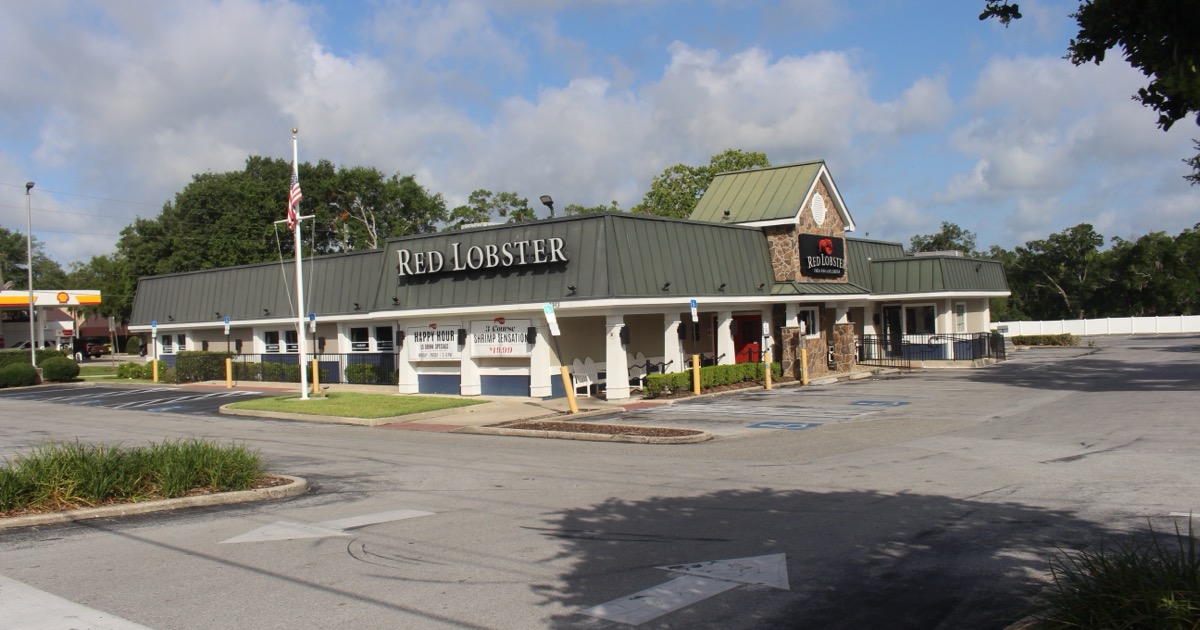
Case study Nº 10
Red Lobster was bought for $2.1B — and $1.5B of it came from selling its own restaurants
Golden Gate Capital paid for Red Lobster largely with Red Lobster’s buildings, on cross-defaulted leases that compounded for twenty-five years. A decade later the company filed for bankruptcy owing $190.5 million a year in rent — and its own 124-page filing never once uses the words “sale-leaseback”.
Ben Fan, with Darryl WengJanuary 5, 202613 min readWatch the reel
Price paid, Jul 2014
$2.1B
Raised from the buildings
$1.5B
Golden Gate Capital bought Red Lobster for $2.1 billion and, on the same day, sold more than five hundred of its restaurants for $1.5 billion.1,2 Darden said so in its own announcement: the proceeds “will be used to support the financing of Golden Gate Capital’s purchase”.1 The company was very largely bought with its own buildings, and then it rented them back. Jump to the money ↓
Ten years later the company filed for bankruptcy owing $190.5 million a year in rent, on leases its own court filing describes as “priced above market rates”.15 That is the story as it is usually told, and the arithmetic holds up: every number the reel version carries survived checking, including the twenty-five-year terms, the two per cent compounded escalators and the bundled leases.
The part that does not hold up is the causation, and it fails in an interesting direction. The phrase “sale-leaseback” does not appear anywhere in the 124-page declaration Red Lobster’s chief executive swore to on the day it filed.15 The company names the rent as a problem and never names the deal that wrote it.
| The deal at a glance | Number |
|---|---|
| Seller, announced 16 May 2014 | Darden Restaurants, which had owned it since 19951 |
| Buyer | Golden Gate Capital, through RL Acquisition, LLC1,3 |
| Price | $2.1 billion1 |
| Restaurants included | 7054 |
| Sale-leaseback, closed 28 Jul 2014 | ~$1.5 billion · more than 500 properties2 |
| Sale-leaseback buyer | American Realty Capital Properties, later VEREIT2 |
| Capitalisation rate | 7.9% cash · 9.9% GAAP2 |
| Lease term | ~25-year weighted average2 |
| Rent escalation | 2% a year, compounded2 |
| Lease structure | Cross-defaulted master lease pools2 |
| Golden Gate's own equity cheque | Never published, by anyone |
| Lease obligations, 2023 | $190.5 million · $64M+ on underperforming stores15 |
| Locations leased at filing, May 2024 | 687 — 247 in master leases, 440 individual15 |
| Chapter 11 filed | 19 May 2024, Middle District of Florida15,16 |
The activists asked for this
The idea did not come from the buyer. In October 2013 Barington Capital went public with a letter urging Darden to break itself up and separate its real estate, which it valued at up to $4.4 billion, and named a sale-leaseback as one of the routes worth exploring.5 Two months later Starboard Value disclosed a 5.6 per cent stake and called Darden’s own plan insufficient.6 By April 2014 Starboard had filed a detailed primer valuing the property at about $4 billion “and possibly far more”.7
Then Darden did a version of what they had asked for, and both of them attacked it. The objection was not to monetising real estate; it was that this particular structure moved the value to the buyer rather than to Darden’s own shareholders. Starboard’s arithmetic, published six days after the announcement, backed the $1.5 billion of property out of the $2.1 billion price and concluded that the restaurant business itself had gone for about $600 million — or, once the tax inefficiency of the structure was counted, that the value received was “a paltry $100 million, or less than 1x EBITDA”.8
Darden rejected that publicly, saying Starboard’s analysis contained $107 million of costs that were never incurred and undervalued the consideration by nearly half a billion dollars, and that the transaction was struck at about nine times trailing earnings against comparable deals nearer eight.9 In October, shareholders elected all twelve of Starboard’s nominees and removed the entire board.10 The argument was settled by vote rather than by evidence, and the numbers on both sides are still sitting in the record where each side left them.
- The headline, per Darden1$2.1 billionWhat Golden Gate agreed to pay for the whole company
- The property, per ARCP2$1.5 billionSold the same day the purchase closed
- The operating business, per Starboard8~$600 millionThe price with the real estate backed out of it
- The value received, per Starboard8$100 millionThe same figure again after the structure’s tax cost — Darden disputed this one hardest
Four numbers for one transaction, and the gap between the top and the bottom is entirely a question of what you count. Darden’s answer was that the deal was struck at about nine times trailing earnings, and that Starboard’s version charged it $107 million of costs that were never incurred.9 The record does not resolve it, and this brief does not either.
The asset, and the liability
It was bought with its own buildings.
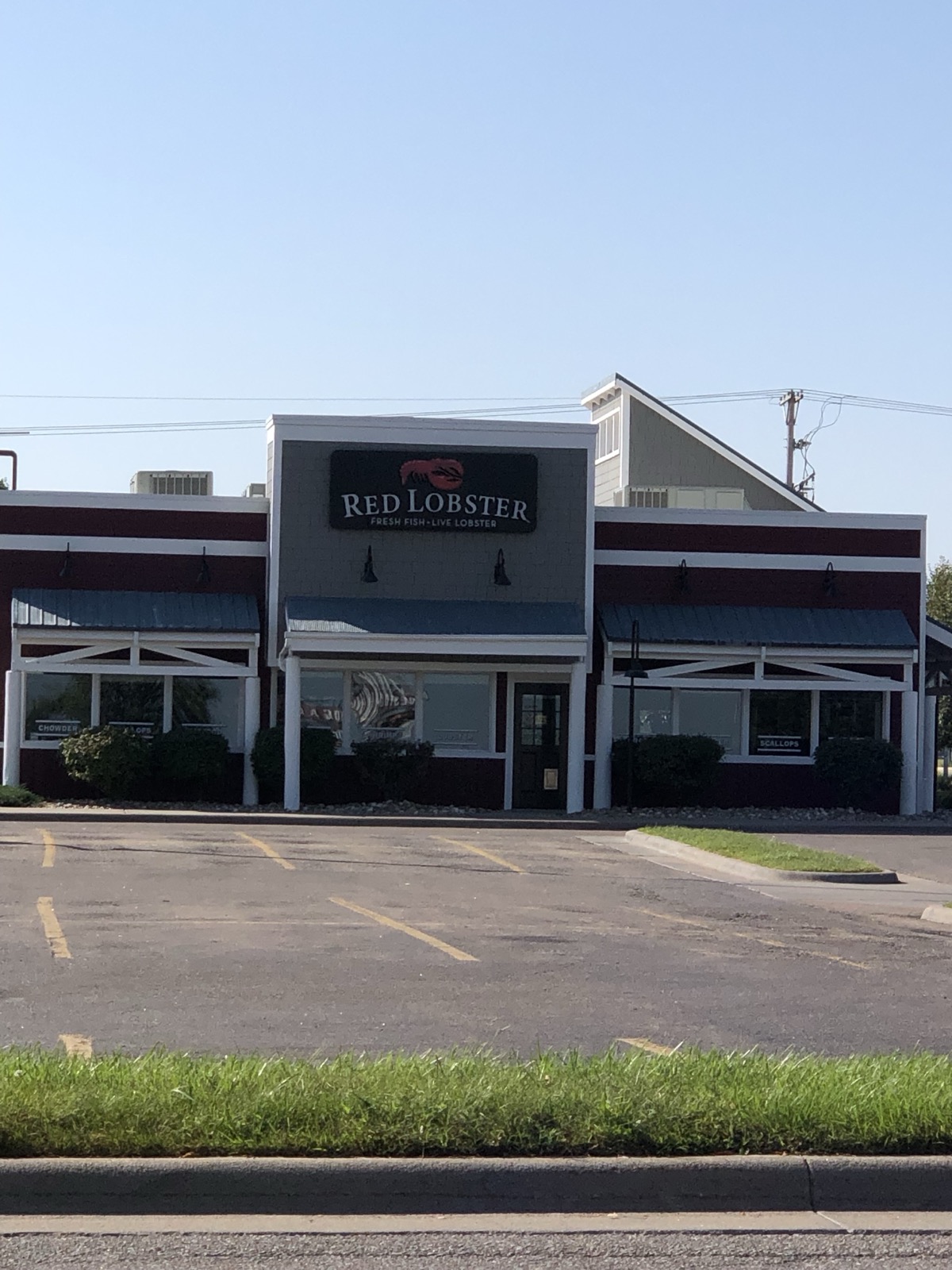
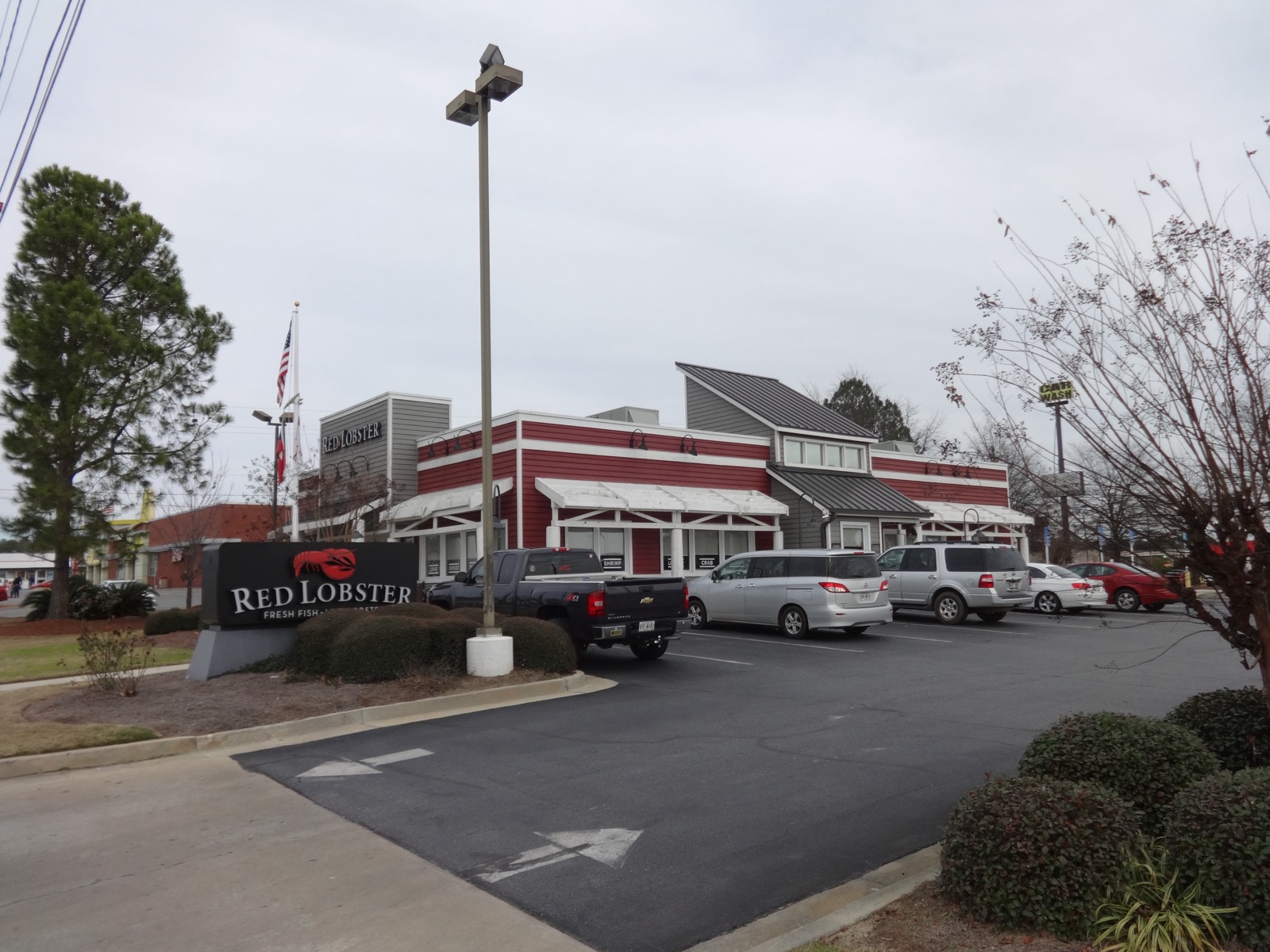
A Red Lobster exterior. The freestanding suburban restaurant on its own lot is the asset that was sold in 2014 and the rent that was owed on it afterwards.Photo: Paige Baird, CC BY 2.0, via Wikimedia Commons
What $2.1 billion was made of
A headline price is not a cheque. This one was assembled, and the assembly is the whole mechanism.
The ledger, opened
Two-thirds of the purchase price came from selling the restaurants the purchase was buying. What is left is a number nobody has ever published.
The price Darden was paid, Jul 2014
$2.1 billion
What the rent had become by 2023$190.5 million
- Raised by selling 500+ properties, the same day2~$1.5 billion
- Everything else — debt and equity together8 ⁘~$600 million
Sourced, and not part of that total
Never published
- The acquisition debt inside that residual1Never sized
- Golden Gate's own equity chequeNever published
One sourced part, one subtraction, two lines the record does not carry, and two rents that are a different kind of number from everything above them. A sale-leaseback is not visible in a purchase price at all — it shows up years later, in an operating line.
| Line | Amount | How it is counted |
|---|---|---|
| Raised by selling 500+ properties, the same day | ~$1.5 billion | sourced, and part of the total |
| Everything else — debt and equity together | ~$600 million | inferred from the sourced total, drawn hatched |
| The acquisition debt inside that residual | Never sized | never published |
| Golden Gate's own equity cheque | Never published | never published |
| The rent that came with it, first year | ~$118 million | sourced, but a different kind of number — not added to the total |
| What the rent had become by 2023 | $190.5 million | sourced, but a different kind of number — not added to the total |
| The price Darden was paid, Jul 2014 | $2.1 billion | the sourced total |
The ledger, opened
Start with the part that is documented to the dollar, because it is the part that made the rest possible.
On the day the purchase closed, American Realty Capital Properties completed a $1.5 billion purchase of more than five hundred Red Lobster properties at a 7.9 per cent cash capitalisation rate.2 Darden had said three months earlier, in the announcement of its own sale, that Golden Gate had executed the agreement and that the proceeds “will be used to support the financing of Golden Gate Capital’s purchase of Red Lobster”.1 The seller described the mechanism plainly, at the time, in a press release.
- Raised by selling 500+ properties, the same day2~$1.5 billion
- Everything else — debt and equity together8 ⁘~$600 million
Sourced, and not part of that total
Never published
- The acquisition debt inside that residual1Never sized
- Golden Gate's own equity chequeNever published
One sourced part, one subtraction, two lines the record does not carry, and two rents that are a different kind of number from everything above them. A sale-leaseback is not visible in a purchase price at all — it shows up years later, in an operating line.
The lease was built not to be broken
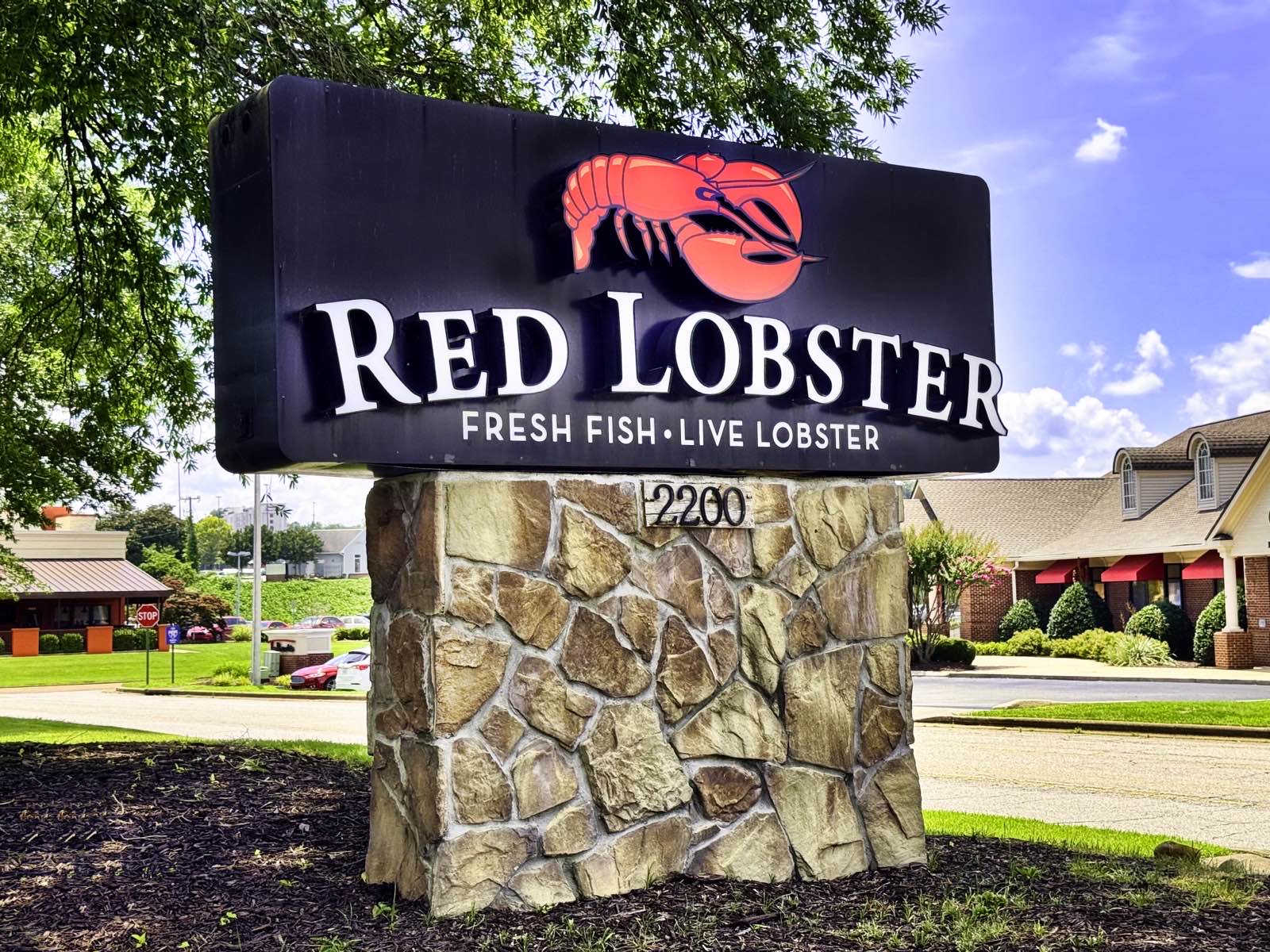
The reel version of this story says the leases were bundled, so closing one restaurant is not as simple as ending one lease. That is exactly right, and the buyer said so itself, in the release announcing the closing. Its president, David S. Kay:“Our team structured the transaction with multiple homogeneous long-term master lease pools which are cross defaulted and contain restrictions on leverage and assignability.”2
Read that as a landlord protecting a cash flow and it is unremarkable. Read it as an operator’s constraint and it is the whole trap. Cross-default means the pool is one obligation: failing on the weak restaurants inside it puts the healthy ones at risk too, so the tenant cannot quietly shed the bad locations and keep the good. A twenty-five-year weighted-average term with two per cent compounded escalations means the rent only ever goes one way, on a clock nobody can stop.2 Ten years on, the filing recorded 247 of the leased locations sitting inside master leases and 440 held individually — the master leases being the ones that cannot be picked apart.15
What the filing actually says
Then the story arrives at the part everyone knows, and the record turns out to be more careful than the retelling.
The shrimp are real. In May 2023 the former chief executive made Ultimate Endless Shrimp a permanent $20 menu item “despite significant pushback from other members of the Company’s management team”, and the company’s own filing puts the cost of that decision at $11 million — the same figure Thai Union disclosed in its own earnings.13,15,17 The promotion was announced to the public that June as being “here to stay, all day, every day”.13
But $11 million does not bankrupt a company with $1.5 billion of annual sales, and the filing does not claim it did. What it claims is broader: “a difficult macroeconomic environment, a bloated and underperforming restaurant footprint, failed or ill-advised strategic initiatives, and increased competition”.15 Guest counts were down about thirty per cent against 2019. Cash had fallen from roughly $100 million in May 2023 to under $30 million months later.15
And under the heading Unfavorable Leases & Underperforming Locations, the filing says the thing this whole study is about, in one sentence:“A material portion of the Company’s leases are priced above market rates.”15
What it never does is join the two ends. Across 124 pages the words “sale-leaseback” do not appear once, and the 2014 transaction is mentioned exactly once, as a single sentence of corporate history: “In May 2014, Darden sold Red Lobster in a leveraged buyout transaction to Golden Gate Capital.”15 No causal language, no reference back to it from the leases section. The company told the court its rent was above market and declined to say where the rent came from.
That silence is worth sitting with rather than reading through. A first-day declaration is sworn, written by restructuring professionals, and read by every creditor in the case — including the landlords. It is not the document in which a debtor volunteers that its own former owner created the problem. The inference the press drew is reasonable and the filing will not make it, and an honest brief has to report both of those facts rather than pick the tidier one.
The record has a stain
On 13 May 2024, six days before the filing, 93 restaurants were closed and vacated — in the filing’s own words, deemed non-performing because of rent costs and/or financial performance.15 Staff at several locations reported learning of it the morning it happened, some of them having worked the Mother’s Day shift the day before. A liquidation auction of equipment from dozens of the closed restaurants went public in the same few days.
A WARN Act class action was filed in Florida on 17 May, two days before the petition; the Chapter 11 filing triggered an automatic stay, and the case was later dismissed without prejudice on procedural grounds rather than on its merits. Court filings put employment at roughly 36,000 people across the United States and Canada at the time of filing.15 By the time the company emerged in September it was about 545 restaurants and roughly 30,000 employees.19
The rent did not go away with the bankruptcy. In December 2025, more than a year after emergence, the company cut about a tenth of its corporate staff and around two hundred restaurant employees, and pointed at the legacy leases that survived the restructuring. The mechanism outlived the company that signed it and the process meant to clear it.
The sequence
Oct 2013
Barington Capital goes public with a letter urging Darden to break itself up and separate its real estate, valuing the property at up to $4.4 billion and naming a sale-leaseback as one route. The idea starts with an activist, not with the buyer.5
23 Dec 2013
Starboard Value discloses a 5.6% stake in Darden and calls the company’s own separation plan insufficient.6
Apr 2014
Starboard files a detailed primer valuing Darden’s real estate at about $4 billion “and possibly far more”.7
16 May 2014
Darden announces the sale of Red Lobster to Golden Gate Capital for $2.1 billion, and says in the same release that Golden Gate has executed a $1.5 billion sale-leaseback whose proceeds will be used to support the financing of the purchase.1
$2.1B price · $1.5B sale-leaseback
22 May 2014
Starboard nominates twelve directors and argues that once the real estate is backed out, the operating business went for about $600 million — or $100 million after the tax inefficiency, less than one times earnings.8
28 Jul 2014
The deal closes. American Realty Capital Properties completes the $1.5 billion purchase of more than 500 properties at a 7.9% cash capitalisation rate, on master lease pools that are cross-defaulted, with a weighted average term of about twenty-five years and 2% compounded annual rent escalations.2,3
$1.5B for 500+ properties
4 Aug 2014
Darden rebuts, saying Starboard’s analysis contains $107 million of costs that were never incurred and undervalues the consideration by nearly half a billion dollars.9
10 Oct 2014
Darden shareholders elect all twelve Starboard nominees, removing the entire incumbent board.10
Oct 2016
Golden Gate sells a stake to Thai Union Group for $575 million.11
$575M
Aug 2020
Golden Gate exits entirely. Thai Union, an investor group and management acquire the remaining stake; terms are not disclosed.12
Jun 2023
Ultimate Endless Shrimp is made a permanent $20 menu item. The bankruptcy filing later records that the decision was taken in May 2023 by the former chief executive “despite significant pushback from other members of the Company’s management team”, and cost $11 million.13,15
−$11M
Jan 2024
Thai Union announces it will divest and takes an impairment charge of about $530 million.14
−$530M impairment
13 May 2024
93 restaurants are closed and vacated, described in the filing as non-performing because of rent costs and/or financial performance. Staff at several locations report finding out the same morning.15
19 May 2024
Red Lobster Management LLC and fourteen affiliates file for Chapter 11 in the Middle District of Florida, with $294 million of funded debt and $100 million of debtor-in-possession financing from lenders led by Fortress.15,16
$294M funded debt
5 Sep 2024
The court approves the plan and the sale to RL Investor Holdings, over the objection of the United States Trustee.18
16 Sep 2024
Red Lobster exits Chapter 11 with about 545 restaurants and roughly 30,000 employees. Damola Adamolekun becomes chief executive.19
What transfers
A sale-leaseback is not a trick and it is not free money. It is an exchange of an asset for cash plus a fixed obligation, and the reason it is so often a bad trade for an operator is that the two sides of it are recognised at different times. The cash arrives at once, on the day of the deal, where everyone can see it. The obligation arrives a little at a time, for twenty-five years, in an operating line, growing at a rate written into the contract by someone whose job was to protect it.
The specific things that made this one dangerous are all readable in the buyer’s own press release, on the day it closed. Cross-defaulted pools remove the tenant’s ability to close its worst locations without endangering its best. A compounding escalator removes any relationship between the rent and the business’s ability to pay it. A twenty-five-year term outlasts the strategy, the management, the owner and — here — the first bankruptcy.
And there is a discipline in how to say what happened. The rent was real, it was above market by the company’s own account, and it plainly contributed. But the company under oath listed four other causes first and never named the transaction at all, and the sale-leaseback was demanded by activists before it was executed by a buyer. Judge a structure by what it does over its life, not by the headline on the day it is signed — and when the record declines to draw the line you want to draw, say that it declined.
Common questions
- What was the Red Lobster sale-leaseback?
- In July 2014, on the same day Golden Gate Capital completed its $2.1 billion purchase of Red Lobster from Darden Restaurants, American Realty Capital Properties bought more than 500 Red Lobster properties for about $1.5 billion and leased them straight back to the company. Darden’s own announcement said the proceeds would be used to support the financing of Golden Gate’s purchase — meaning the company was very largely bought with its own real estate.
- Did the sale-leaseback cause Red Lobster’s bankruptcy?
- The company never said so. Its 124-page first-day declaration, sworn on 19 May 2024, does not use the words “sale-leaseback” anywhere, and mentions the 2014 buyout in a single sentence of corporate history with no causal language. It does say that “a material portion of the Company’s leases are priced above market rates” and that 2023 lease obligations were $190.5 million, over $64 million of it on underperforming stores. The direct link between the two is an inference the press drew and the filing declines to make.
- What were the Red Lobster lease terms?
- A weighted average term of about twenty-five years, rent escalating 2% a year compounded, at a 7.9% cash capitalisation rate on the $1.5 billion sale. The buyer’s president described the structure as “multiple homogeneous long-term master lease pools which are cross defaulted” — meaning restaurants were bundled, so a tenant could not simply close its weakest locations without putting the rest of the pool at risk.
- How much of its own money did Golden Gate Capital actually put in?
- Nobody has ever published it. Subtracting the $1.5 billion sale-leaseback from the $2.1 billion price leaves about $600 million, which is the calculation Starboard Value performed publicly in May 2014 — but that residual contains both borrowed money and Golden Gate’s own equity. Darden named the lenders as Deutsche Bank, Jefferies and GE Capital, and no filing or release states how much they lent, so the actual equity cheque is smaller than $600 million by an amount that has never been disclosed.
- Was Endless Shrimp really what sank Red Lobster?
- It cost $11 million, by the company’s own sworn account, after the former chief executive made the $20 promotion permanent in May 2023 over internal objections. But the filing lists it under “marketing and operational missteps”, not as the cause of the bankruptcy, and puts a difficult macroeconomic environment, a bloated restaurant footprint, failed strategic initiatives and increased competition ahead of it — alongside guest counts down about 30% against 2019.
Sources
- Darden Restaurants, Inc. via SEC (company release) — Darden Announces Sale of Red Lobster to Golden Gate Capital for $2.1 Billion — including the sale-leaseback whose proceeds finance the purchase (2014-05-16)
- American Realty Capital Properties, Inc. via SEC (company release) — American Realty Capital Properties Closes $1.5 Billion Red Lobster Sale-Leaseback Transaction — cap rates, lease terms, escalators and the cross-defaulted master lease pools (2014-07-28)
- Darden Restaurants, Inc. via SEC (Form 8-K, Item 2.01) — Completion of the sale of Red Lobster to RL Acquisition, LLC (2014-07-28)
- Darden Restaurants, Inc. via SEC (Form 10-Q) — Quarterly report for the period ended 23 November 2014 — realised net proceeds and the gain recognised on the Red Lobster sale (2014-12)
- Reuters via Yahoo Finance — Barington Capital calls for Darden breakup, real estate spinoff (2013-10-17)
- Starboard Value LP via SEC (Schedule 13D) — Starboard discloses a 5.6% stake in Darden Restaurants (2013-12-23)
- Starboard Value LP via SEC (Schedule 13D/A) — A Primer on Darden’s Real Estate — the investor presentation valuing the property at about $4 billion (2014-04-03)
- Starboard Value LP (investor release) — Starboard Nominates Slate of Twelve Highly Qualified Director Candidates — the arithmetic backing the real estate out of the price (2014-05-22)
- Darden Restaurants, Inc. (company release) — Darden Addresses Inaccurate And Misleading Statements By Starboard And Provides The Facts On Value Achieved With Red Lobster Sale (2014-08-04)
- Darden Restaurants, Inc. via SEC (Form 8-K, Item 5.07) — Certified results of the 2014 annual meeting — all twelve Starboard nominees elected (2014-10-16)
- SeafoodSource — Thai Union buys USD 575 million stake in Red Lobster (2016-10-11)
- Golden Gate Capital (company release) — Thai Union, Investor Group Led by International Restaurant Executives and Red Lobster Management Acquire Red Lobster (2020-08-31)
- Red Lobster (company release) — Red Lobster Announces: Iconic First “Ultimate Endless Shrimp” Is Here to Stay, All Day, Every Day (2023-06-26)
- SeafoodSource — Thai Union to divest from Red Lobster, take USD 530 million impairment charge (2024-01-16)
- Declaration of Jonathan Tibus, Chief Executive Officer (Case 6:24-bk-02486-GER, Doc 6) — Declaration in support of the Chapter 11 petitions and first-day relief — 124 pages, filed in the U.S. Bankruptcy Court for the Middle District of Florida (2024-05-19)
- Red Lobster (company release) — Red Lobster Files Voluntary Chapter 11 Petitions to Strengthen Financial Position and Maximize Value for Stakeholders (2024-05-19)
- NPR — Red Lobster files for bankruptcy after an all-you-can-eat shrimp deal went wrong (2024-05-20)
- CNBC — Red Lobster cleared to exit Chapter 11 bankruptcy protection (2024-09-05)
- Fortress Investment Group (company release) — Red Lobster Exits Bankruptcy; Damola Adamolekun appointed CEO (2024-09-16)