
Case study Nº 17
A failed savings and loan bought 4,800 acres for $19.5M — then spent 20 years on the paperwork
HomeFed Corporation was the reorganised corpse of the eighth-largest thrift in America, carrying $266 million of tax losses. It bought raw San Diego scrub at $4,000 an acre in 1998 and paid $93,750 an acre for entitled land next door in 2015 — and the number that would say whether the strategy worked has never been published.
Ben Fan, with Darryl WengFebruary 3, 202613 min readWatch the reel
Paid, Oct 1998
$19.5M
Paid next door, Jul 2015
$150M
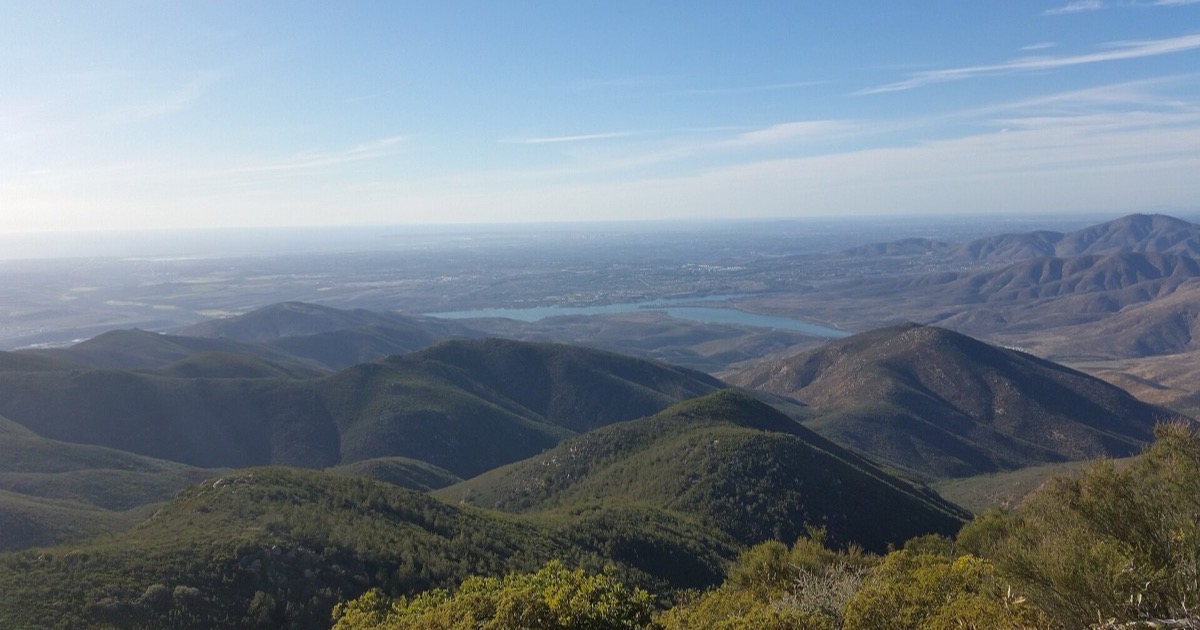
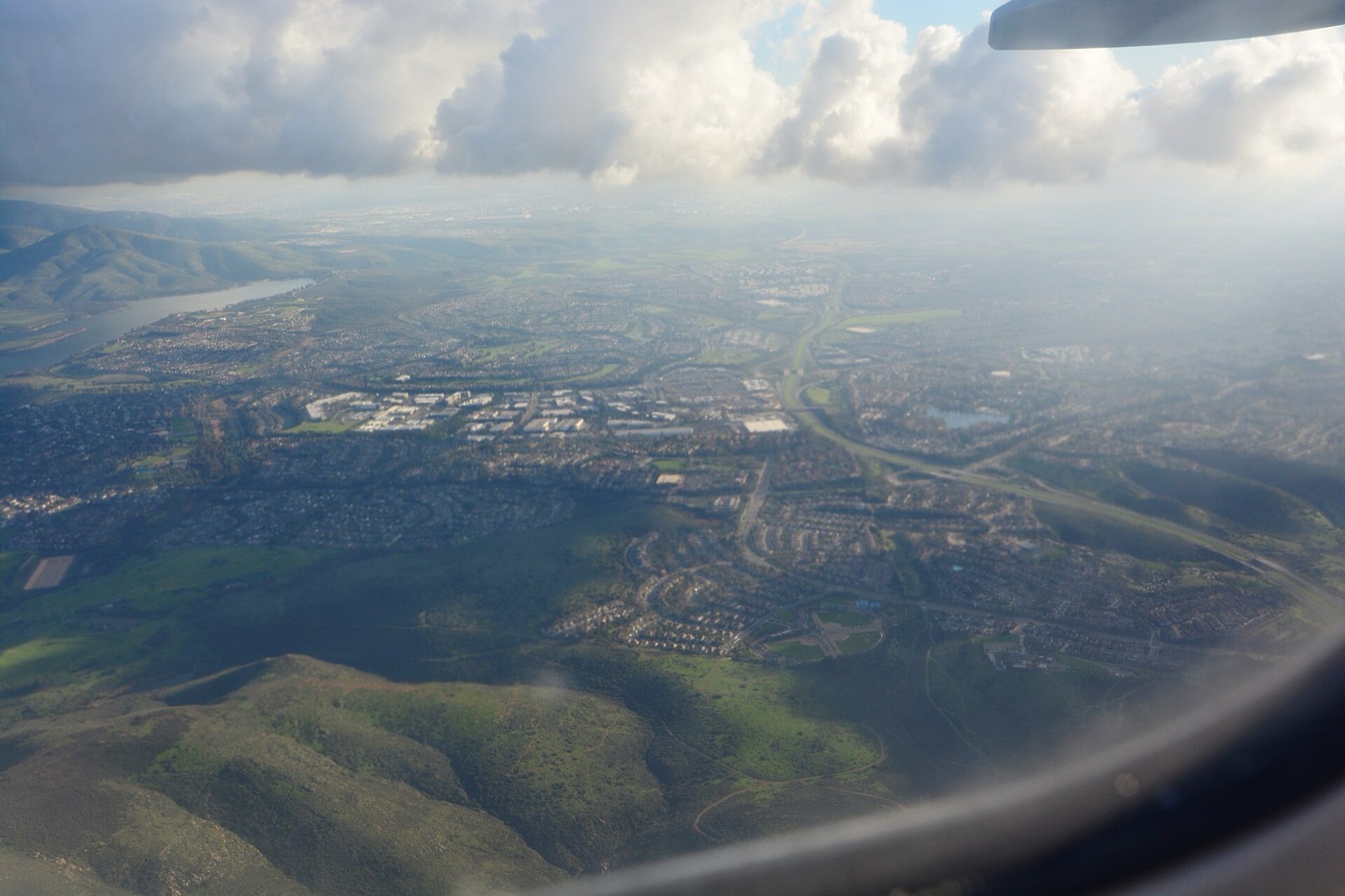
In October 1998 a company bought about 4,800 acres of south San Diego County for $19,500,000 — roughly $4,000 an acre.1 Seventeen years later it paid $150,000,000 for 1,600 acres next to it, about $93,750 an acre.6 The dirt was the same. The paperwork was not. Jump to the money ↓
That is a twenty-three-fold difference in price per acre, and it is the cleanest illustration in American real estate of what an entitlement is worth. But it is not the same land sold twice — the 2015 parcel is a different, adjacent piece that arrived already permitted for about 2,640 single-family lots.6 What the pair actually shows is what raw and entitled ground in one ranch traded for, seventeen years apart, which is a better piece of evidence than a resale would be.
And the buyer was not a vulture fund. It was a dead bank.
| The deal at a glance | Number |
|---|---|
| Buyer | Otay Land Company LLC — HomeFed Corporation and Leucadia1 |
| What HomeFed was | The reorganised holding company of a seized savings and loan1,2 |
| Tax losses it carried in | $266,245,000 federal, $219,324,000 of it from the failed bank1 |
| Purchase, 14 Oct 1998 | ~4,800 acres for ~$19,500,000 · about $4,000/acre1 |
| Adjacent purchase, Jul 2015 | ~1,600 entitled acres for $150,000,000 · about $93,750/acre6 |
| Sold, Apr 2003 | ~1,445 acres for $22,500,0004 |
| Builder cash into Escaya, 2016–2017 | $50,000,000 from Brookfield, Lennar and Shea8 |
| EB-5 raised for Escaya infrastructure | $125,000,000 from 250 investors8 |
| HomeFed’s cut of each home sold | A percentage of the retail sale price8 |
| First homes closed | January 2018 — 19 years after the purchase8 |
| Total entitlement spend over 20 years | Never published |
The buyer was a dead bank with a tax asset
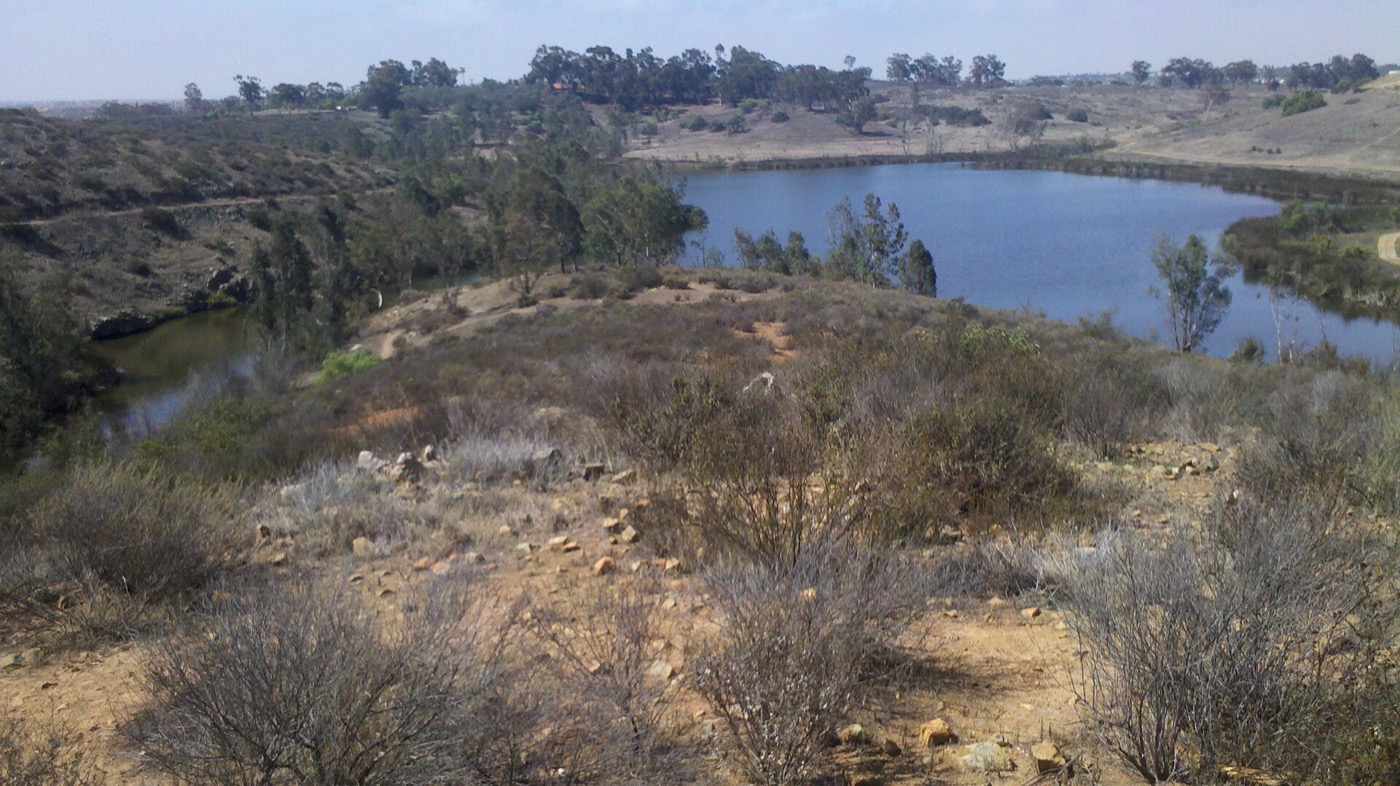
On 6 July 1992 regulators seized HomeFed Bank, then the eighth-largest thrift in the United States, with $13.5 billion of assets and $1.05 billion of losses over the preceding two years.2 Its chairman, Kim Fletcher: “I’m very sorry for what has happened. This is certainly not the way we planned it.”2
The bank was gone. The holding company was not. HomeFed Corporation filed for bankruptcy the same year and emerged in 1995 under a plan principally funded by Leucadia, which took an initial 41.2 per cent and later went to 89.6.1 What that shell carried was not property. It was $266,245,000 of federal net operating losses — and in 1997 the IRS granted a private letter ruling permitting $219,324,000 of the failed bank’s own losses to be reattributed to the parent.1
Read the 1998 purchase with that in hand and the structure explains itself. A company holding a quarter of a billion dollars of expiring tax losses needs future taxable income to put against them, and it needs that income to arrive before the losses expire — which, per the same filing, they began doing in 1999 and finished doing in 2018. Land that takes two decades to entitle, and then produces large gains, is close to a purpose-built answer.
No source found anywhere describes this buyer as a vulture fund. That framing is a fair description of the behaviour and a poor description of the entity, and the real one is more interesting: the vehicle was the corpse of a savings and loan, and the fuel was its losses.
What four thousand dollars an acre buys
Nothing about the ground changed. Everything about the paperwork did.
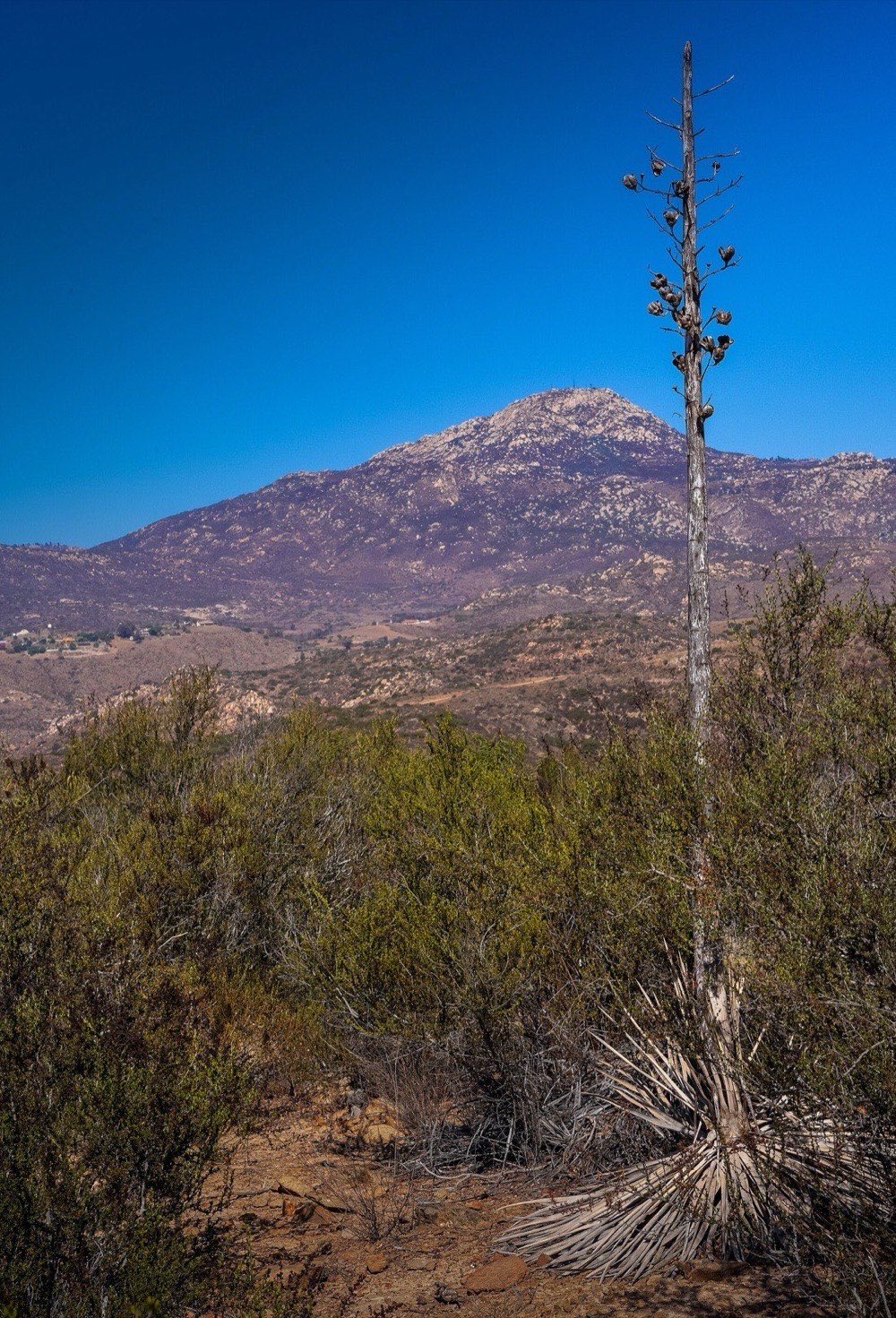
Chaparral in the Otay Mountain Wilderness, near but not inside Otay Ranch. This is the kind of terrain the 1998 purchase covered.Photo: BLM California, public domain, via Wikimedia Commons
The permit is the product
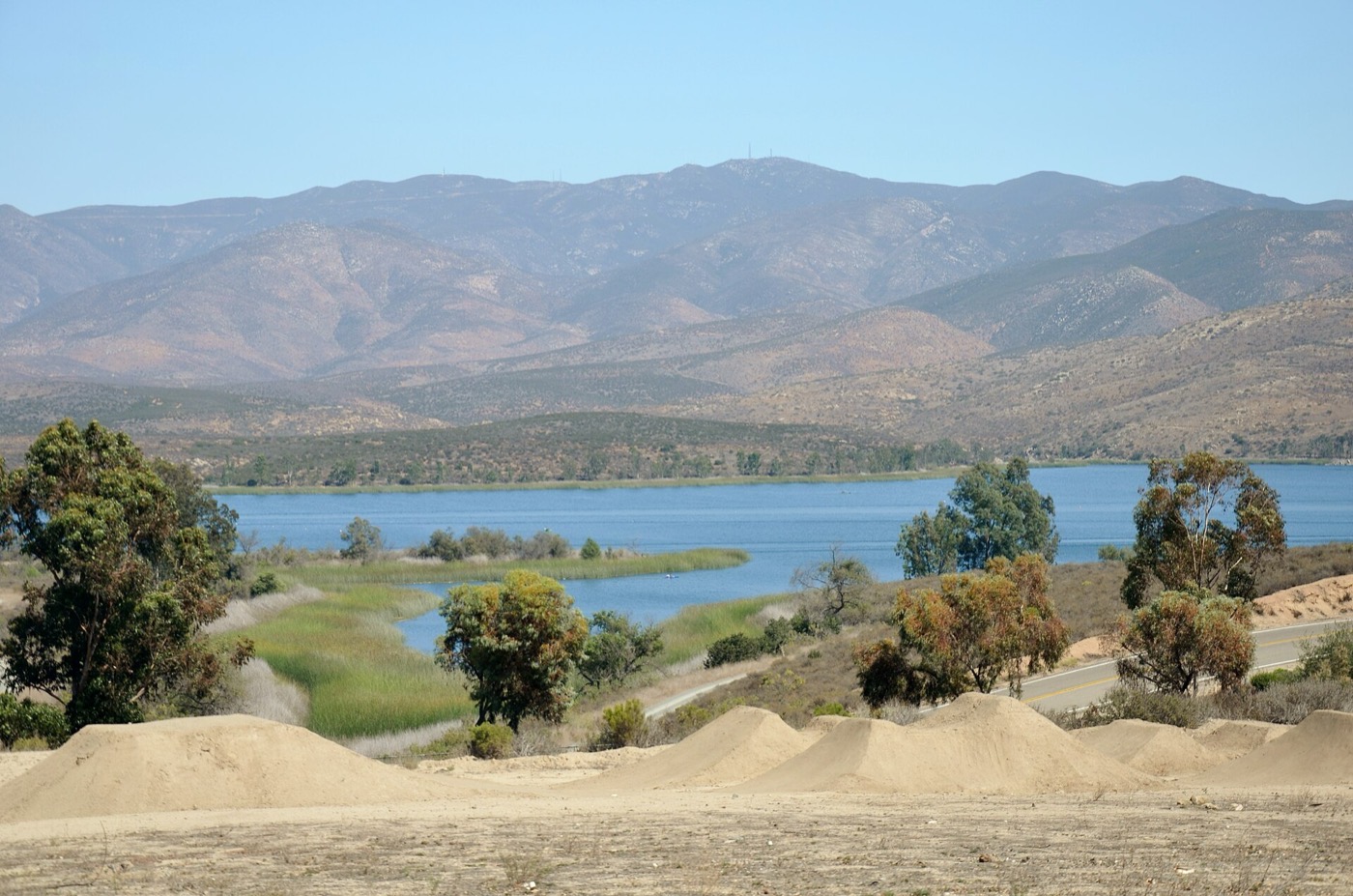
A useful thing to understand about this business is that the seller never builds anything. HomeFed’s output is a legal condition, not a structure. The land arrives as scrub with a general plan attached — Chula Vista and the county had approved one for the whole 22,900-acre ranch in 1993, five years before HomeFed bought in6 — and leaves as a recorded map with a specified number of permitted dwellings on it, graded, with sewers and roads.
Two things paid for that work, and neither was HomeFed’s equity. The infrastructure was funded with $125,000,000 raised from 250 foreign investors at $500,000 each through the EB-5 visa programme.8 EB-5 money is patient and cheap because the return the investor is buying is a green card rather than a yield, which makes it close to ideal for roads and sewers — assets that produce no income and that no ordinary lender wants to fund. HomeFed has kept going back: its own later statements describe $171 million raised for the next village and approval to seek up to $249.6 million for the one after.
Then the houses. In January 2017 three builders — Brookfield, Lennar and Shea — put $50,000,000 of cash into the Village of Escaya joint venture, against HomeFed’s contribution of land valued at $20,000,000 and $13,200,000 of completed infrastructure.8 The builders take the construction risk. HomeFed takes reimbursement of its infrastructure costs up to a $78,600,000 cap, plus what its filings call contract service revenue — a percentage of the retail sale price of every home sold.8
That is worth stating precisely, because the reel calls it a share of the profit. It is not. It is a share of the price, which is a materially better deal: it pays whether or not the builder makes money.
- Bought raw, Oct 19981~$4,000/acre$19.5M over about 4,850 acres
- Sold non-developable, 20065~$13,000/acre$1.5M over 115 acres
- Sold, Apr 20034~$15,600/acre$22.5M over about 1,445 acres
- Bought entitled, Mar 20156~$58,600/acre$3.75M over about 64 acres, entitled for 62 homes and 26 industrial acres
- Bought entitled, Jul 20156~$93,750/acre$150M over about 1,600 acres, entitled for roughly 6,900 units
Every figure here is our own division — a sourced price over a sourced acreage — and the parcels are not equivalent: some are developable, some are mitigation land that can never be built on, and the two 2015 purchases arrived already permitted. That is the point rather than a caveat. The spread between the top and the bottom of this ladder is not appreciation. It is the difference between ground you may not build on and ground you may.
What the record shows, and what it stops short of
The ledger, opened
Everything this company paid for the land is on the record. Almost nothing it earned from the land is — because the last public accounting closes in 2019, before a single village was finished.
Every disclosed dollar paid for Otay Ranch land
$173.25 million
Every disclosed dollar back out of it · $80.05 million
Contract service revenue through build-outNever published
- Bought entitled, Jul 2015 — about 1,600 acres6$150 million
- Bought raw, Oct 1998 — about 4,800 acres1$19.5 million
- Bought entitled, Mar 2015 — about 64 acres6,7$3.75 million
Every disclosed dollar back out of it · $80.05 million
Sourced, and not part of that total
Never published
- Total entitlement, engineering and legal spend, 1998–2019Never published
- Contract service revenue through build-outNever published
Three purchases that sum exactly, four dispositions that sum exactly, and the two largest figures in the story — what it cost to do the work, and what the work ultimately paid — drawn as what they are. The last public accounting of a twenty-year project closes nineteen months after the first house sold.
| Line | Amount | How it is counted |
|---|---|---|
| Every disclosed dollar paid for Otay Ranch land — Bought entitled, Jul 2015 — about 1,600 acres | $150 million | sourced, and part of the total |
| Every disclosed dollar paid for Otay Ranch land — Bought raw, Oct 1998 — about 4,800 acres | $19.5 million | sourced, and part of the total |
| Every disclosed dollar paid for Otay Ranch land — Bought entitled, Mar 2015 — about 64 acres | $3.75 million | sourced, and part of the total |
| Every disclosed dollar back out of it — Builder cash into the Escaya venture, 2016–2017 | $50 million | sourced, and part of the total |
| Every disclosed dollar back out of it — Sold about 1,445 acres, Apr 2003 | $22.5 million | sourced, and part of the total |
| Every disclosed dollar back out of it — Eminent domain and two smaller sales, 2004–2017 | $7.55 million | sourced, and part of the total |
| Every disclosed dollar paid for Otay Ranch land — Contract service revenue, the three years it was disclosed | $79.25 million | sourced, but a different kind of number — not added to the total |
| Every disclosed dollar paid for Otay Ranch land — EB-5 raised for infrastructure | $125 million | sourced, but a different kind of number — not added to the total |
| Every disclosed dollar paid for Otay Ranch land — Total entitlement, engineering and legal spend, 1998–2019 | Never published | never published |
| Every disclosed dollar paid for Otay Ranch land — Contract service revenue through build-out | Never published | never published |
| Every disclosed dollar paid for Otay Ranch land | $173.25 million | the sourced total |
| Every disclosed dollar back out of it | $80.05 million | the sourced total of the second structure |
The ledger, opened
What was paid is exact, and almost all of it was paid seventeen years after the story starts.
$19.5 million bought the raw ground in 1998. $150 million bought the entitled ground next door in 2015, plus $3.75 million for a smaller entitled piece in March.1,6 The company that had spent a decade and a half arguing for permits then paid, per acre, twenty-three times what it had paid for the land it was still arguing about.
Joseph Steinberg told the 2017 annual meeting what that had felt like:“Two years ago, we emptied our piggy bank, and then some, and paid $150MM for 1,600 acres of entitled land in Otay Ranch adjacent to the land we purchased in 1998.”9 Defending the price at the time, he had argued the demand was only deferred: millennials had delayed marriage and children,“but this will not be an indefinite delay and many still aspire to own a single-family home”.10
- Bought entitled, Jul 2015 — about 1,600 acres6$150 million
- Bought raw, Oct 1998 — about 4,800 acres1$19.5 million
- Bought entitled, Mar 2015 — about 64 acres6,7$3.75 million
Every disclosed dollar back out of it · $80.05 million
Sourced, and not part of that total
Never published
- Total entitlement, engineering and legal spend, 1998–2019Never published
- Contract service revenue through build-outNever published
Three purchases that sum exactly, four dispositions that sum exactly, and the two largest figures in the story — what it cost to do the work, and what the work ultimately paid — drawn as what they are. The last public accounting of a twenty-year project closes nineteen months after the first house sold.
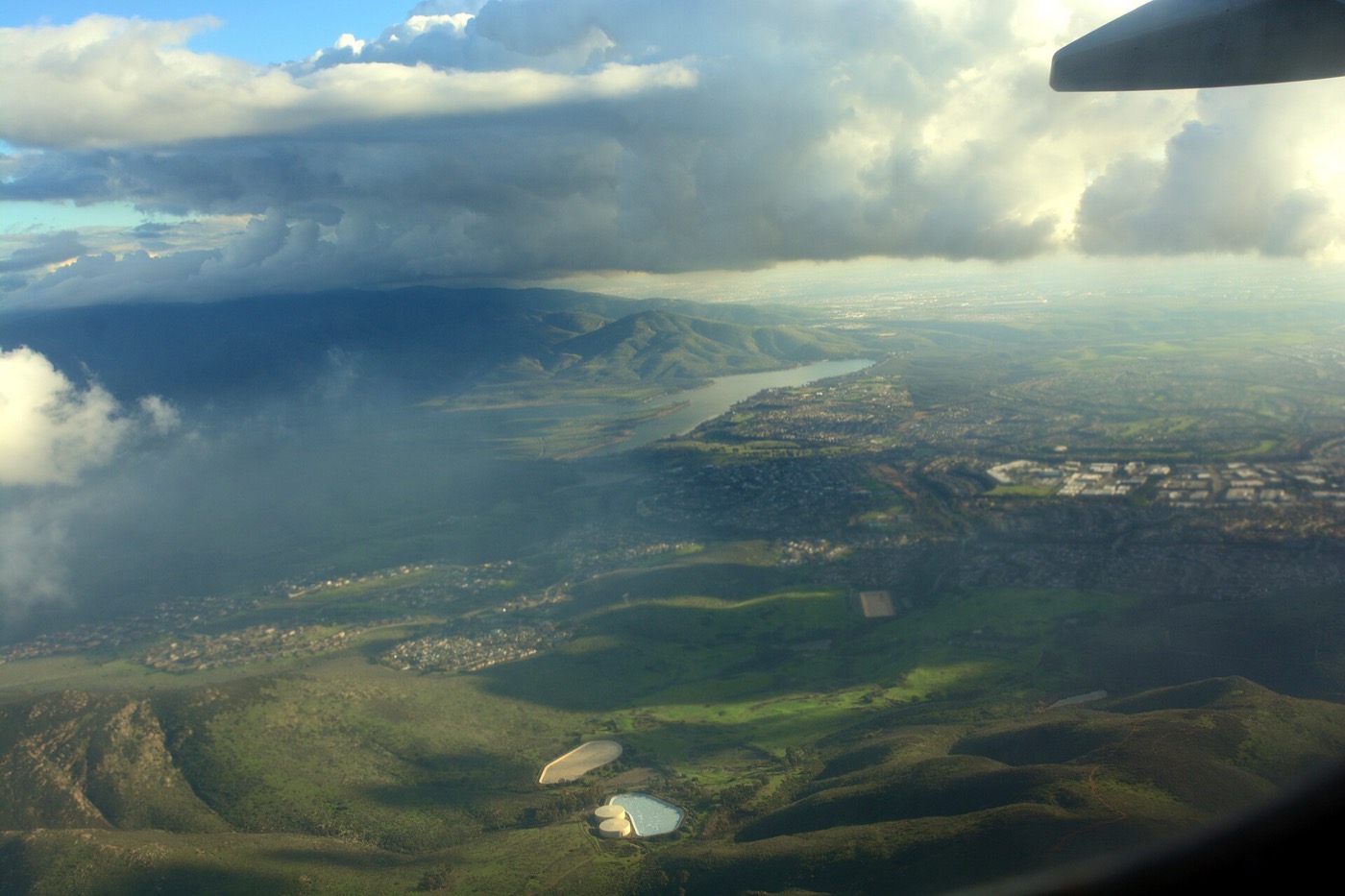
The record has a stain
HomeFed found contamination on about thirty acres of its own undeveloped land, remediated it by February 2013, sued to recover the cost — and lost, in February 2015. The defendants then sought roughly $13,500,000 in legal fees against it, which the court denied that August.6 Separately, while building Escaya’s access road, the company found groundwater carrying petroleum byproducts and soil vapour carrying methane and volatile organic compounds in a section where homes were to go.8
The sharper record is the exit. When Jefferies — which already held about seventy per cent — bought out the rest in 2019, minority shareholders approved it overwhelmingly. Two sued anyway, and in July 2020 the Delaware Court of Chancery refused to dismiss the case, finding that Jefferies “did not commit itself to the dual protections” that make a controller buyout presumptively fair “before engaging in substantive economic discussions concerning the transaction that anchored later negotiations and undermined the ability of the special committee to bargain effectively”.12 The largest minority holder had told the committee’s own banker it thought the price “inadequate” while judging it better than nothing.12 The case settled for $15 million rather than going to judgment.
And the wider ranch has been fought over hard — the Center for Biological Diversity, the Sierra Club and the California Attorney General among those litigating over wildfire risk and habitat. Those suits were aimed at other landowners’ outlying villages, not HomeFed’s. That is not luck. HomeFed’s parcels sat in the already-planned core of a ranch whose general development plan had been approved in 1993; the fights were over the wildland edges other developers were still trying to entitle.6 Buying inside the line somebody else had already drawn is part of the strategy, not an accident of it.
The sequence
Nov 1988
The Baldwin Company buys more than 19,000 acres of Otay Ranch for $150 million — the largest San Diego County land deal of its era.3
$150M
6 Jul 1992
Regulators seize HomeFed Bank, the eighth-largest thrift in the country, with $13.5 billion of assets and $1.05 billion of losses over two years. Its holding company files for bankruptcy the same year.1,2
1993
Chula Vista and San Diego County approve a General Development Plan for the 22,900-acre Otay Ranch planning area — five years before HomeFed buys anything.6
1995
HomeFed Corporation emerges from bankruptcy, funded principally by Leucadia, which takes 41.2%.1
1996
The Baldwin Company enters Chapter 11. Its Otay Ranch land disperses.13
1997
An IRS private letter ruling lets HomeFed Corporation reattribute $219,324,000 of the dead bank’s net operating losses to itself. Total carryforward: $266,245,000 federal.1
$266M of tax losses
14 Oct 1998
Otay Land Company LLC is formed and buys about 4,800 acres inside Otay Ranch for approximately $19,500,000 — roughly $4,000 an acre. HomeFed and Leucadia put in $10 million each.1
$19.5M for ~4,800 acres
Apr 2003
Otay Land Company sells about 1,445 acres for $22,500,000 — more, in cash, than the entire 1998 purchase cost. The proceeds redeem Leucadia’s preferred interest.4
$22.5M back
15 Jan 2004
Eminent domain proceedings with Chula Vista conclude on 439 acres of mitigation land.4
~$5.8M
Jul 2015
HomeFed buys about 1,600 adjacent acres for $150,000,000 — roughly $93,750 an acre. Unlike the 1998 land, this parcel arrives already entitled for about 2,640 single-family lots and 4,300 multi-family units.6
$150M for ~1,600 acres
Jan 2017
Three builders — Brookfield, Lennar and Shea — put $50,000,000 of cash into the Village of Escaya joint venture. HomeFed contributes land and infrastructure rather than building houses.8
$50M from builders
Feb 2017
An EB-5 vehicle raises $125,000,000 from 250 foreign investors at $500,000 each to fund Escaya’s infrastructure.8
$125M of EB-5
Jan 2018
The first homes close at Escaya — nineteen years and three months after the land was bought.8
1 Jul 2019
Jefferies takes HomeFed private at two Jefferies shares per HomeFed share. The last public accounting of the project closes with it.11
13 Jul 2020
The Delaware Court of Chancery refuses to dismiss a minority-shareholder suit over that buyout, finding Jefferies negotiated before committing to the protections that would have made the deal presumptively fair.12
What transfers
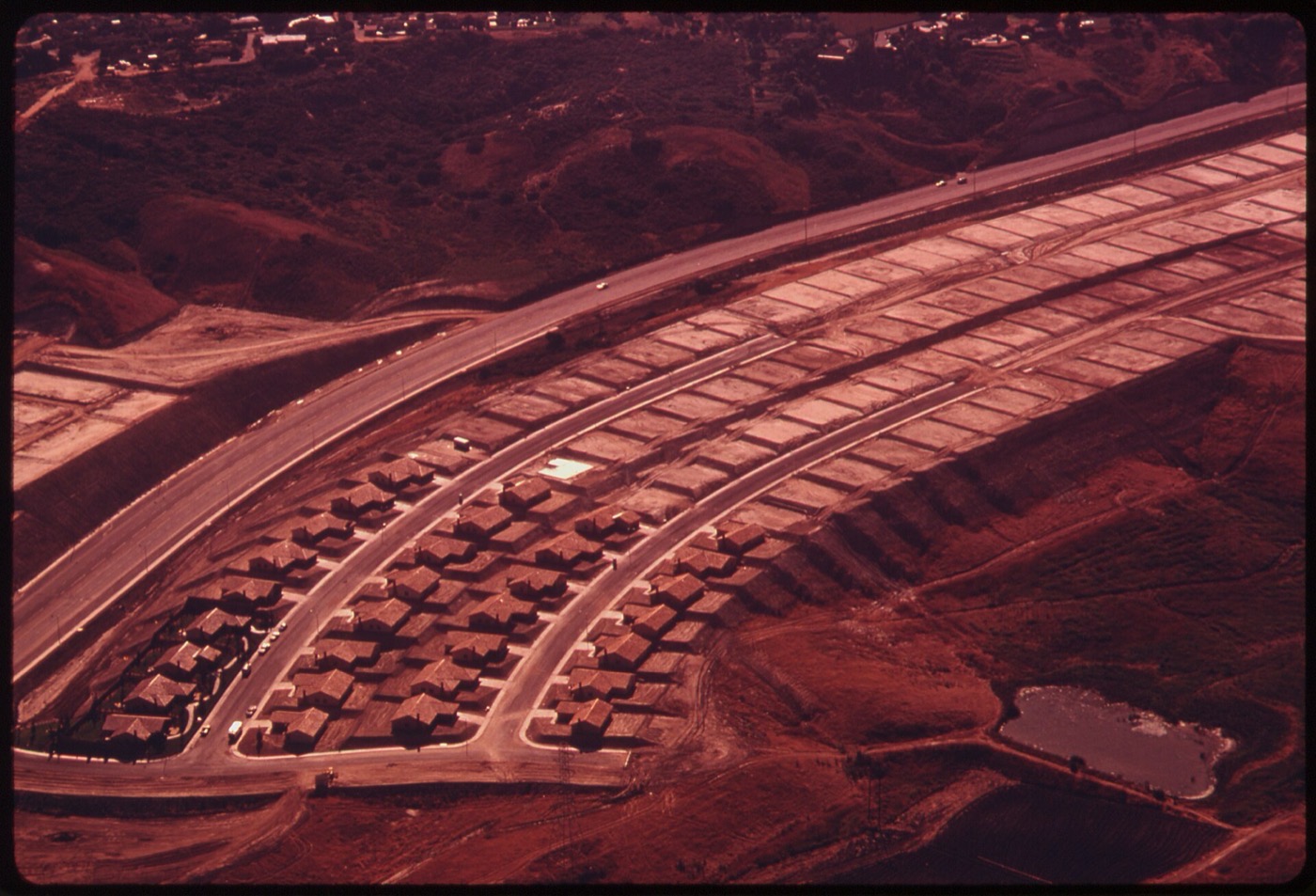
The mechanism is simple to state and nearly impossible to copy. Buy ground that cannot be built on, at a price that reflects that. Spend two decades converting a legal condition rather than a physical one. Sell the finished condition to somebody whose business is building, and keep a percentage of what they sell.
What makes it hard is not the idea. It is the balance sheet required to hold unproductive land for twenty years through two recessions while paying property tax on it, and the political tolerance to spend that long in hearings. HomeFed could do it because it was not really a property company at the start — it was a tax-loss carryforward with a corporate wrapper and a patient controlling shareholder, which is a very unusual thing to be, and the reason the strategy was available to it and not to a normal developer.
Two smaller lessons travel further. Fund the part that earns nothing with the cheapest money you can find, and be honest about why it is cheap — EB-5 capital is patient because the investor is buying immigration, not yield, which is exactly why it suits sewers. And when you take a participation, take it on the sale price rather than the profit: the builder’s margin is the builder’s problem, and a percentage of revenue pays in a year when a percentage of profit does not.
Then the caution. Twenty-one years after this began, the company stopped filing, and with it went any public answer to the only question that matters: what the work cost and what the participation eventually paid. A strategy this long-dated is judged on a number that, in this case, nobody outside Jefferies has ever seen.
Common questions
- Who bought 4,800 acres of San Diego for $19.5 million in 1998?
- Otay Land Company LLC, formed on 14 October 1998 by HomeFed Corporation and Leucadia, each contributing $10 million. HomeFed was not a vulture fund: it was the reorganised holding company of HomeFed Bank, the eighth-largest savings and loan in the United States, which regulators seized in July 1992 after it lost $1.05 billion in two years. HomeFed Corporation emerged from bankruptcy in 1995 under Leucadia’s control carrying $266,245,000 of federal net operating losses.
- How much did the land appreciate?
- The 1998 purchase was about $4,000 an acre. In July 2015 HomeFed paid $150 million for roughly 1,600 adjacent acres, about $93,750 an acre — roughly twenty-three times as much per acre. But this is not the same land resold: the 2015 parcel arrived already entitled for about 2,640 single-family lots and 4,300 multi-family units, while the 1998 land was raw. The comparison shows what permitted and unpermitted ground in the same ranch traded for seventeen years apart.
- What is EB-5 and how was it used at Otay Ranch?
- EB-5 is a federal programme granting US residency to foreign investors who put capital into qualifying projects. HomeFed raised $125,000,000 from 250 investors at $500,000 each through a vehicle formed in February 2017, and used it to fund infrastructure at the Village of Escaya. The capital is cheap and patient because the return the investor is buying is immigration status rather than yield, which suits assets like roads and sewers that produce no income of their own.
- Did HomeFed build the houses?
- No, and that was the point. In January 2017 three builders — Brookfield, Lennar and Shea — contributed $50,000,000 of cash to the Village of Escaya joint venture against HomeFed’s contribution of land valued at $20,000,000 and $13,200,000 of finished infrastructure. The builders took the construction risk. HomeFed took reimbursement of its infrastructure costs up to a $78,600,000 cap, plus a percentage of the retail sale price of every home sold — a share of revenue, not of profit, which pays whether or not the builder makes money.
- Did the strategy actually work?
- The public record cannot say. Disclosed contract service revenue — the percentage of each home’s sale price — ran $13.2 million in 2016, $35.85 million in 2017 and $30.2 million in 2018. Then Jefferies took HomeFed private on 1 July 2019 and the filings stopped, at a point when 393 of Escaya’s eventual roughly 992 homes had sold and the next village had not begun. Total entitlement spend across the two decades, total property tax carried, and cumulative participation revenue through build-out were never published.
Sources
- HomeFed Corporation via SEC (Form 10-K405, FY1998) — The reorganisation, Leucadia’s stake, the $266 million of net operating losses, and the October 1998 purchase of 4,800 acres for approximately $19,500,000 (1999-03-31)
- Los Angeles Times — Homefed Seized by Regulators — the eighth-largest thrift in the country, $13.5 billion of assets, $1.05 billion of losses in two years (1992-07-07)
- Los Angeles Times — Developer Buys 19,000-Acre Otay Ranch for $150 Million (1988-11-10)
- HomeFed Corporation via SEC (Form 10-K, FY2003) — The 2003 sale of 1,445 acres for $22,500,000, the eminent domain conclusion, and the redemption of Leucadia’s preferred interest (2004-03-10)
- HomeFed Corporation via SEC (Form 10-K, FY2010) — Annual report — the 2006 sale of 115 acres of non-developable land (2011-02-17)
- HomeFed Corporation via SEC (Form 10-K, FY2015) — The 1993 General Development Plan, the March 2015 purchase of 64 acres, and the July 2015 purchase of approximately 1,600 entitled acres for $150,000,000 (2016-02-29)
- HomeFed Corporation via SEC (Form 8-K, Exhibit 10.1) — Purchase and Sale Agreement with SSBT LCRE V LLC for the Otay Ranch property (2015-07-06)
- HomeFed Corporation via SEC (Form 10-K, FY2018) — The Village of Escaya joint venture, the $50,000,000 of builder cash, the $78,600,000 cost cap, the percentage-of-sale-price contract service revenue, and the $125,000,000 EB-5 raise (2019-03-18)
- HomeFed Corporation via SEC (Form 8-K, Exhibit 99.1) — Chairman’s remarks to the 2017 annual meeting — “we emptied our piggy bank, and then some” (2017-08-07)
- Bisnow — HomeFed Chair: Don’t Worry About $150M Otay Ranch Price (2015-07-22)
- HomeFed Corporation via SEC (definitive merger proxy, DEFM14A) — The Jefferies take-private — the 2.0 exchange ratio and the Houlihan Lokey fairness opinion valuing the whole portfolio at $606.8 to $791.2 million (2019-05-20)
- Delaware Court of Chancery (Chancellor Andre G. Bouchard) — In re HomeFed Corporation Stockholder Litigation, Consol. C.A. No. 2019-0592-AGB — motions to dismiss denied (2020-07-13)
- San Diego Reader — Promise Breakers — the Baldwin Company’s Otay Ranch bankruptcy (2002-08-08)