
Case study Nº 04
MGM raised about $20B selling its casinos — and signed the clause that broke Red Lobster
MGM’s master lease calls itself “one indivisible lease”, and a default on any property is a default on all of them — the same trap that made Red Lobster’s rent inescapable. MGM paid every dollar through the 2020 closures anyway. What differed was not the lease.
Ben Fan, with Darryl WengNovember 24, 202514 min readWatch the reel
Rent owed, first year
$550M
Rent owed, 2025
$2.29B
In April 2016 MGM began paying $550 million a year to a landlord it controlled.1 By 2025 it was paying about $1.8 billion across five leases to landlords it does not control, and carrying $54.7 billion of undiscounted future lease payments that appear nowhere on its balance sheet as debt.14 In between it raised something close to twenty billion dollars. Jump to the money ↓
Fintok has already published the version of this story that ends badly. Red Lobster was sold in 2014 largely with the proceeds of selling its own restaurants, on leases bundled into cross-defaulted pools, and filed for bankruptcy a decade later owing $190.5 million a year in rent its own court filing called above market.
MGM did the same thing on purpose, at roughly ten times the scale, and it worked. The interesting part is why — and it is not that MGM’s lease was gentler. The clause that made Red Lobster’s leases inescapable is in MGM’s, in almost the same words.
| The separation at a glance | Number |
|---|---|
| MGM Growth Properties IPO, 25 Apr 2016 | 57.5M shares · ten properties · $10B gross book value1,3 |
| MGM's retained stake at close | 73.3% of the operating partnership3 |
| Master Lease, initial annual rent | $550 million, ten-year term1 |
| Cross-default | “One indivisible lease” — default on any part is default on all2 |
| Bellagio, Nov 2019 | $4.25 billion · $245M/yr · thirty years7 |
| MGM Grand and Mandalay Bay, Feb 2020 | $4.6 billion · $292M/yr · thirty years6 |
| Aria and Vdara, Sep 2021 | $3.89 billion14 |
| VICI buys MGM Growth Properties, Apr 2022 | $17.2 billion · about $4.4 billion of cash to MGM12,13 |
| Rent paid during the 2020 closures | 100%, on time, no renegotiation11 |
| Buybacks since the start of 2021 | $6.2 billion by Nov 202316 |
| Aggregate triple-net rent, 2025 | About $1.8 billion a year across five leases14 |
| Future minimum lease payments, undiscounted | $54.7 billion14 |
| A consolidated total of everything raised | Never published |
The same clause, in almost the same words
Read the Master Lease MGM signed in April 2016 and the mechanism is stated without euphemism. It is, in its own text, “one indivisible lease”, and:“An Event of Default with respect to any portion of the Leased Property is an Event of Default as to all of the Leased Property.”2
That is the Red Lobster trap exactly. A tenant cannot hand back the properties that are losing money and keep the ones that are not, because failing on one is failing on all of them. It is the clause that makes a portfolio of leases behave like a single obligation, and it is why closing a weak location does not relieve the pressure — the landlord has arranged matters so the weak locations are carried by the strong ones or not at all.
Ten properties went in at the start, against $10 billion of gross book value, at $550 million of rent a year, escalating two per cent annually for the first stretch of the term.1,3 Then more properties were added and the rent went up with each one: $650 million after Borgata, $756.7 million after National Harbor, $946.1 million by April 2019.3,4
- At the IPO, Apr 20161$550.0MTen properties
- Borgata added, Aug 20163$650.0M
- National Harbor added, Oct 20174$756.7M
- Escalator, Apr 20184$770.3MNothing was added; the rent rose anyway
- Three properties added, Apr 20194$946.1M
- Mandalay Bay removed, Apr 20205$827.8MThe only fall, and it took moving a resort into a different structure
- Springfield added, Oct 20215$872.8M
This is one lease, not the whole obligation — by 2025 MGM has five, and the aggregate is about $1.8 billion.14 What it shows is the shape of the instrument. Rent rises when property is added, rises again when nothing is added, and falls exactly once, because a resort was moved into a different vehicle. There is no other way down.
What was sold, and what stayed
The buildings left. The business that needs them did not.
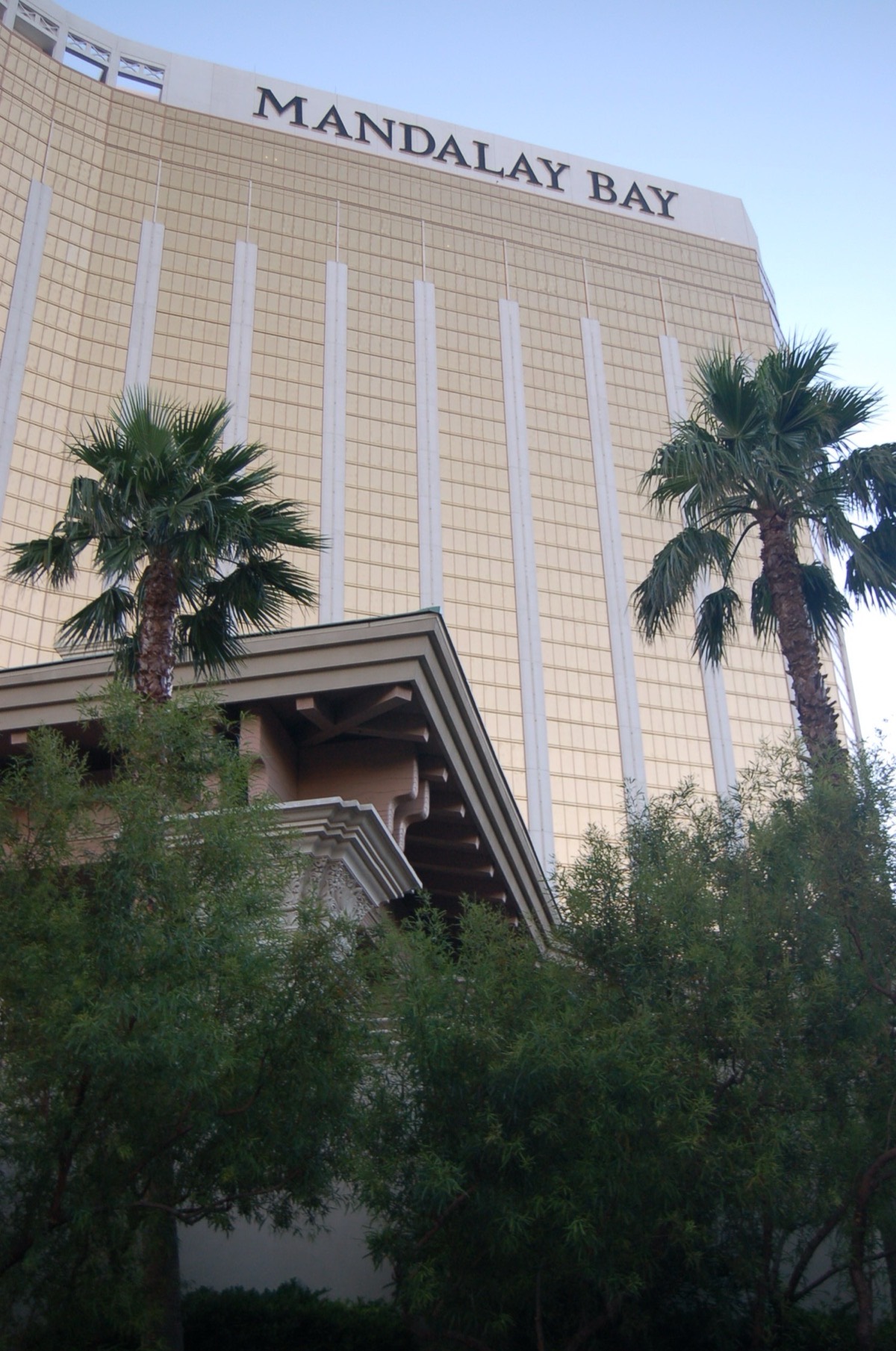
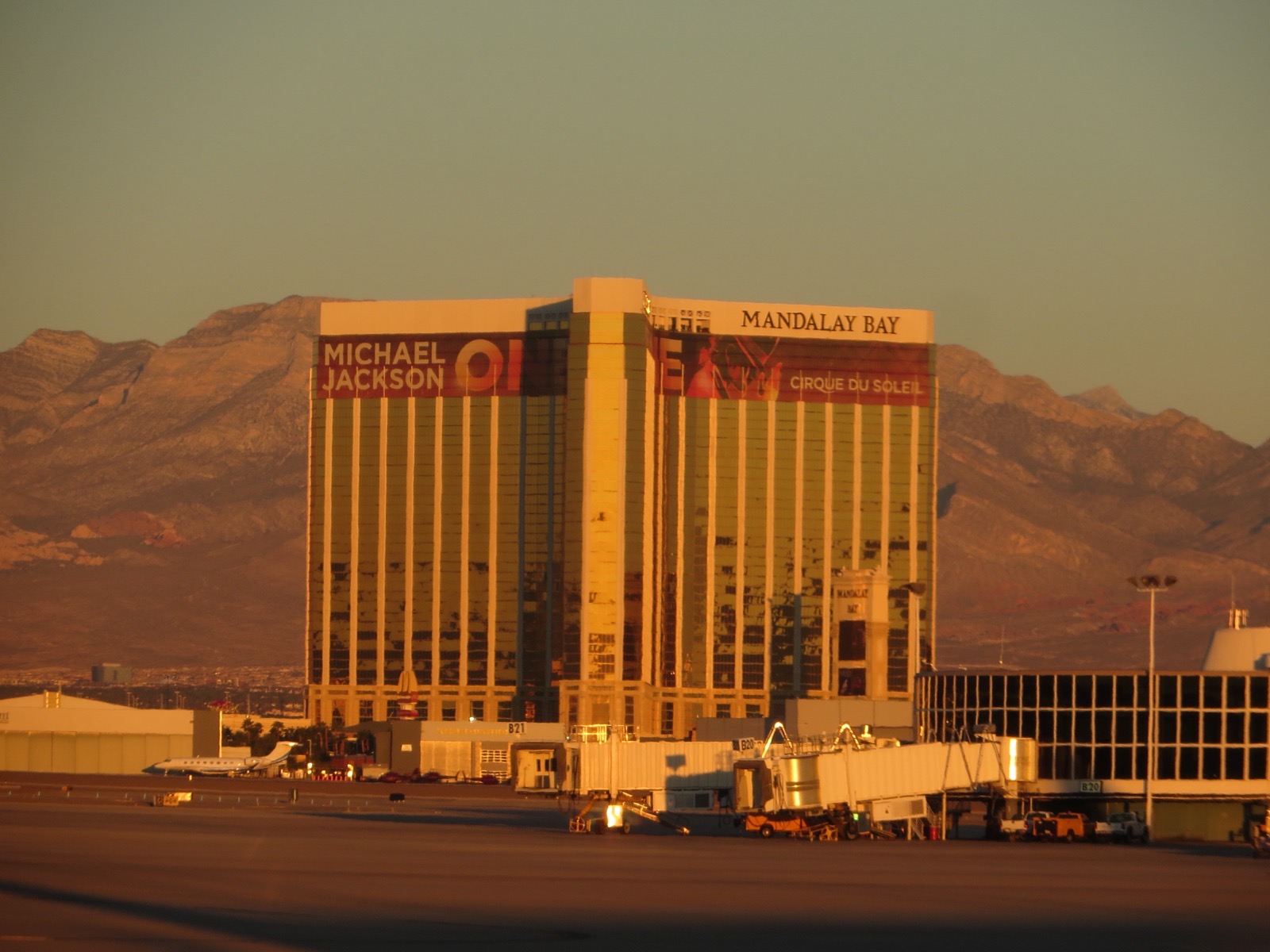
Mandalay Bay from street level. Its real estate was contributed to MGM Growth Properties in 2016 and moved into a Blackstone joint venture in 2020; MGM has operated it throughout.Photo: S. Clyde, public domain, via Wikimedia Commons
What it raised, and what nobody has added up
The ledger, opened
Nine transactions across nine years, of six different kinds. MGM has published a consolidated total for three of them.
Every disclosed dollar raised from real estate, summed here
$20.9 billion
An independent verdict on whether this created valueDoes not exist
- MGM Grand and Mandalay Bay to a Blackstone joint venture, Feb 20206$4.6 billion
- VICI buying MGM Growth Properties, Apr 202212,13$4.4 billion
- Bellagio to Blackstone, Nov 20197$4.25 billion
- The Cosmopolitan real estate, May 202214 ⁘~$4 billion
- Aria and Vdara to Blackstone, Sep 202114$3.89 billion
- The MGM Growth Properties IPO, Apr 20163$1.1 billion
- MGM Springfield, Oct 202113$400 million
Sourced, and not part of that total
Never published
- A consolidated total published by MGM9$8.2 billion, for three deals
- An independent verdict on whether this created valueDoes not exist
Seven sourced transactions and one estimate, summed here because nobody else has summed them. The two lines that are not money raised are the point: an outright sale that created no obligation at all, and the obligation the other seven created.
| Line | Amount | How it is counted |
|---|---|---|
| MGM Grand and Mandalay Bay to a Blackstone joint venture, Feb 2020 | $4.6 billion | sourced, and part of the total |
| VICI buying MGM Growth Properties, Apr 2022 | $4.4 billion | sourced, and part of the total |
| Bellagio to Blackstone, Nov 2019 | $4.25 billion | sourced, and part of the total |
| The Cosmopolitan real estate, May 2022 | ~$4 billion | inferred from the sourced total, drawn hatched |
| Aria and Vdara to Blackstone, Sep 2021 | $3.89 billion | sourced, and part of the total |
| The MGM Growth Properties IPO, Apr 2016 | $1.1 billion | sourced, and part of the total |
| MGM Springfield, Oct 2021 | $400 million | sourced, and part of the total |
| Circus Circus, sold outright, Dec 2019 | $825 million | sourced, but a different kind of number — not added to the total |
| Annual rent created by the transactions above | ~$1.8 billion a year | sourced, but a different kind of number — not added to the total |
| A consolidated total published by MGM | $8.2 billion, for three deals | never published |
| An independent verdict on whether this created value | Does not exist | never published |
| Every disclosed dollar raised from real estate, summed here | $20.9 billion | the sourced total |
The ledger, opened
Seven transactions raised money against the real estate, and they are not the same kind of transaction as each other.
An IPO of a controlled REIT. Three joint ventures with Blackstone. Two outright real-estate sales. A merger in which the REIT itself was bought. The largest single cheque was $4.6 billion and the smallest $400 million, and the total, summed here because nobody else has summed it, is about $20.9 billion.3,6,7,12,13,14
- MGM Grand and Mandalay Bay to a Blackstone joint venture, Feb 20206$4.6 billion
- VICI buying MGM Growth Properties, Apr 202212,13$4.4 billion
- Bellagio to Blackstone, Nov 20197$4.25 billion
- The Cosmopolitan real estate, May 202214 ⁘~$4 billion
- Aria and Vdara to Blackstone, Sep 202114$3.89 billion
- The MGM Growth Properties IPO, Apr 20163$1.1 billion
- MGM Springfield, Oct 202113$400 million
Sourced, and not part of that total
Never published
- A consolidated total published by MGM9$8.2 billion, for three deals
- An independent verdict on whether this created valueDoes not exist
Seven sourced transactions and one estimate, summed here because nobody else has summed them. The two lines that are not money raised are the point: an outright sale that created no obligation at all, and the obligation the other seven created.
The test came in March 2020, and it passed
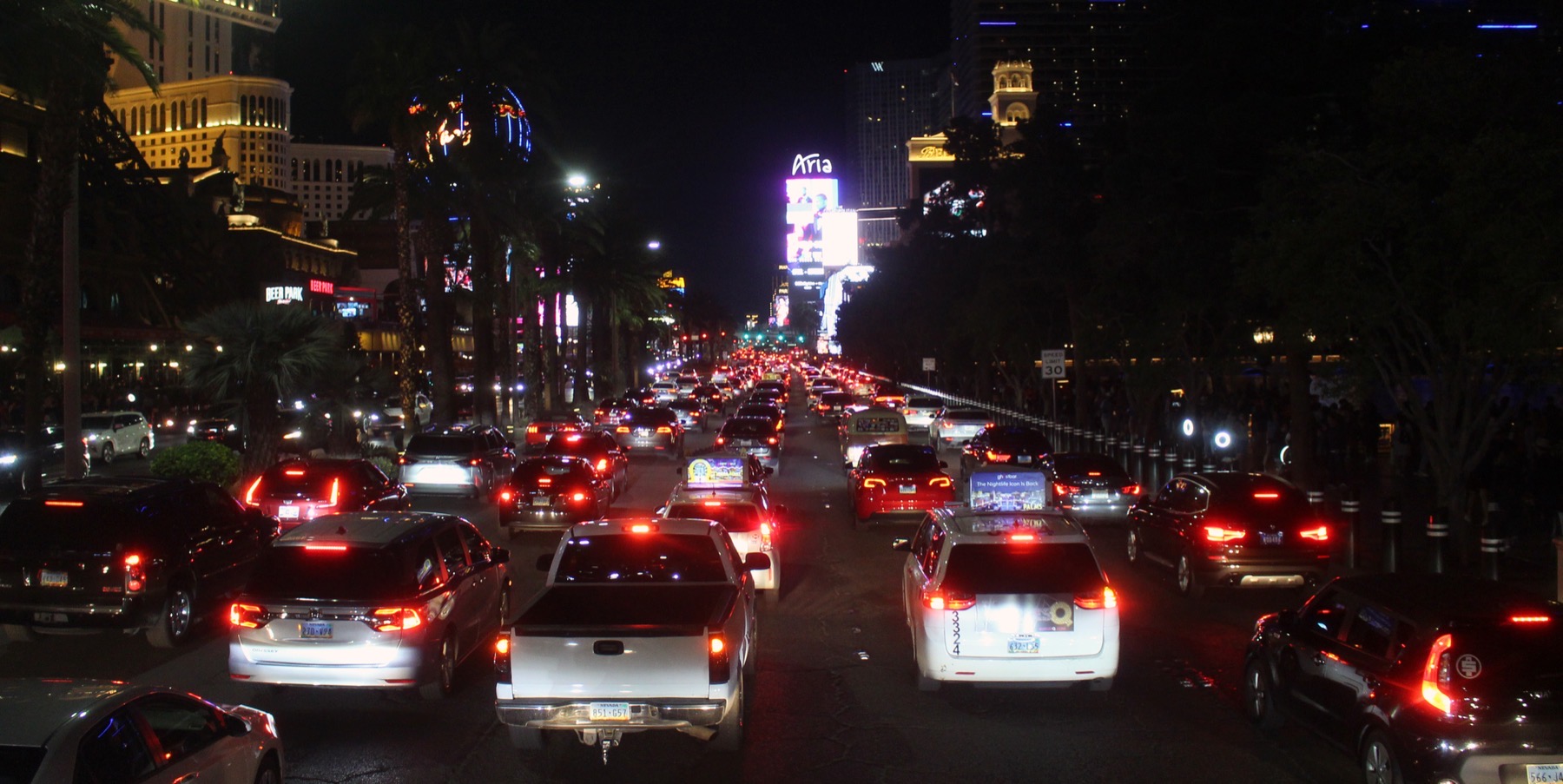
On 17 March 2020 every MGM property in the United States closed. Revenue went to nearly nothing — the filing’s own words are that the properties were“effectively generating no revenue”.10 The rent did not move. This is precisely the scenario that ends a cross-defaulted triple-net tenant.
MGM paid all of it. From the landlord’s side, in August:“we continue to receive our rental payments in full and on time”, and MGP was “not engaged in any conversations with MGM to modify the economic terms of our leases”.11 No deferral, no abatement, no renegotiation.
The reason is the whole lesson, and it is not that the rent was small. MGM had access to capital: it drew on its revolver, raised debt, and in April 2020 amended its credit facility for covenant relief, pledging its operating partnership units and agreeing to keep at least $600 million of liquidity available.10 A company that can still borrow can pre-fund a year of fixed obligations inside a fortnight. A restaurant chain owned by a private equity firm, carrying acquisition debt on top of its rent, cannot. The instrument was identical. The buffer was not.
Ratings agencies were not reassured, and they said so in terms that name the mechanism. Fitch cut MGM in March 2020 citing “decreased financial flexibility following the recent sale-leaseback transactions”, which it said reduced the company’s ability to monetise assets and increased its rent obligations to unaffiliated parties. A year later S&P lowered MGM, MGM China and MGP together on lease-adjusted leverage. The rent was paid and the structure was still treated as a real constraint — contained, not absent.
Where the money actually went
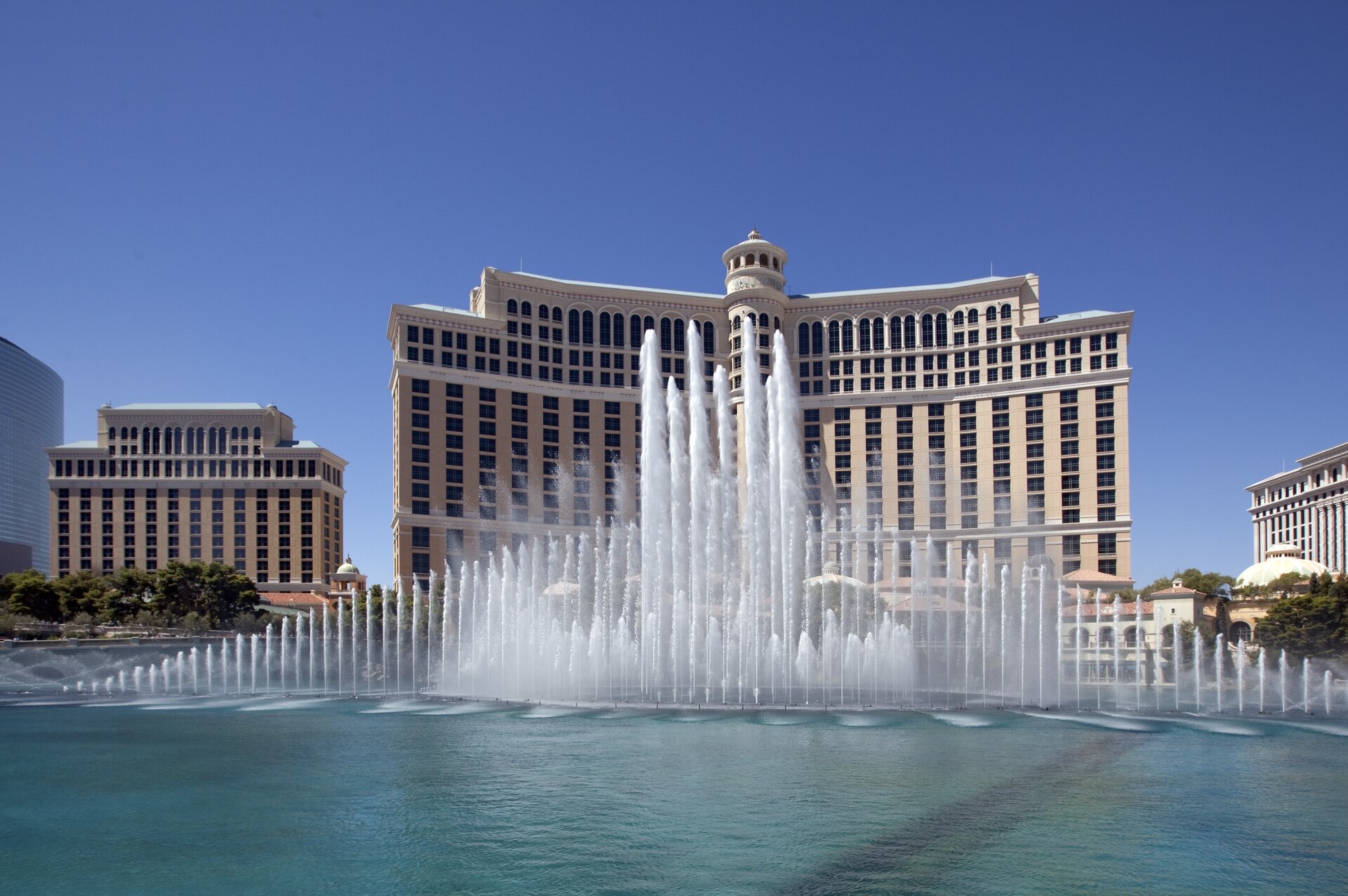
The reel says the proceeds lowered MGM’s cost of capital, paid down debt, stabilised margins and funded international expansion. The record supports one of those cleanly, one partly, and one not at all.
Debt paydown is real and documented: $3.1 billion retired in the fourth quarter of 2019 out of $8.2 billion of net proceeds, itemised by the chief financial officer.9 That is the “fortress balance sheet” the Bellagio announcement promised.8
Buybacks are the larger and later answer, and the sequence matters. MGM said in January 2020 that a substantial portion of the MGM Grand proceeds would go to repurchases and dividends — and then the pandemic arrived, 2020 buybacks collapsed, and the two $700 million unit redemptions that followed were assigned to the revolver and to general corporate purposes. By November 2023 the company was reporting $6.2 billion of buybacks since the start of 2021.16 The share count is down substantially. That is where the money went, two years later than the story usually implies.
International expansion has no sourced link at all. MGM Osaka’s own disclosed funding is a yen credit facility — borrowing, not proceeds. Anyone connecting the Bellagio to Japan is drawing a line the filings do not.
The sequence
25 Apr 2016
MGM Growth Properties completes its IPO and takes ten properties worth $10 billion of gross book value. The Master Lease begins at $550 million a year, and its own text calls itself “one indivisible lease”.1,2
$550M of rent begins
Aug 2016
Borgata is added; rent rises to $650 million.3
$650M
Oct 2017
MGM National Harbor is added; rent rises to $756.7 million.4
$756.7M
Apr 2019
Park MGM, Empire City and Northfield Park are added; rent reaches $946.1 million.4
$946.1M
15 Oct 2019
MGM announces it will sell the Bellagio real estate — not to its own REIT but to a Blackstone vehicle — and sell Circus Circus outright. The stated purpose is to “build a fortress balance sheet”.8
$4.25B + $825M
15 Nov 2019
The Bellagio sale closes: $4.25 billion, against $245 million of initial annual rent on a thirty-year term.7
$4.25B in · $245M/yr out
12 Feb 2020
MGM reports $8.2 billion of total net cash proceeds from three transactions and $3.1 billion of debt retired in the fourth quarter. It is the only consolidated proceeds figure the company has ever published, and it covers three of the nine deals.9
$8.2B · $3.1B of debt retired
14 Feb 2020
MGM Grand Las Vegas and Mandalay Bay go into a joint venture with Blackstone at $4.6 billion, creating $292 million of new annual rent. Mandalay Bay leaves the original Master Lease, cutting it by $133 million.5,6
$4.6B in · $292M/yr out
17 Mar 2020
Every MGM property in the United States closes by state order. Revenue goes to nearly nothing. The rent does not move.10
Apr 2020
MGM amends its credit facility for covenant relief, pledging its operating partnership units as collateral and agreeing to hold at least $600 million of liquidity including revolver availability. The rent is unaffected by any of it.10
4 Aug 2020
The landlord confirms what happened: “we continue to receive our rental payments in full and on time”, and there are no discussions to modify any economic lease term.11
100% paid
4 Aug 2021
VICI agrees to buy MGM Growth Properties for $17.2 billion. MGM takes about $4.4 billion of cash and keeps roughly 1%.12
$4.4B to MGM
28 Sep 2021
MGM sells the Aria and Vdara real estate to Blackstone for $3.89 billion, on the same day it pays $2.125 billion to buy out its CityCenter partner.14
$3.89B in
29 Apr 2022
The VICI merger closes. A new master lease begins at $860 million a year.13
$860M/yr
17 May 2022
MGM buys the Cosmopolitan’s operations for $1.625 billion while its real estate goes to a Stonepeak-led partnership; the lease begins at $200 million a year.14
$200M/yr
8 Nov 2023
MGM reports $6.2 billion of share buybacks since the start of 2021. This, rather than debt paydown or overseas expansion, is where the money demonstrably went.16
$6.2B of buybacks
Dec 2025
Five triple-net leases now total about $1.8 billion a year by MGM’s own reckoning, $2.29 billion by its GAAP operating lease cost — and $54.7 billion of undiscounted future minimum lease payments sit off the balance sheet.14
$54.7B of future rent
The record has a stain
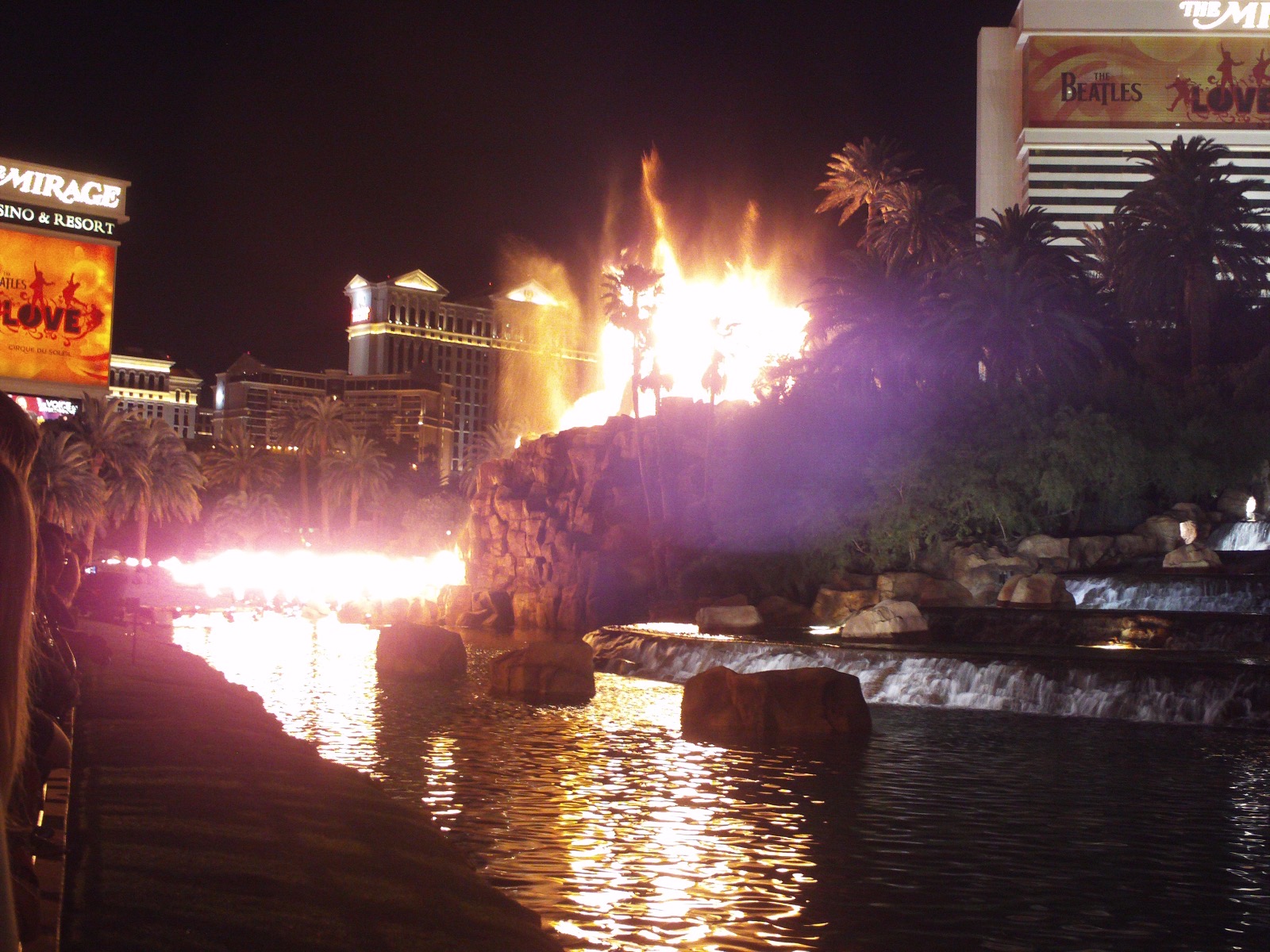
In August 2020 MGM made 18,000 permanent layoffs, out of a United States workforce of roughly 68,000 before the pandemic, after an initial furlough of about 63,000. That was the same month its landlord was telling investors the rent had been paid in full and on time.11 No source draws a causal line between those two facts, and this brief will not draw one either — but they are the same summer, and a reader is entitled to see them next to each other.
There is also a question about whose idea this was. In March 2015 the activist investor Land & Buildings publicly pushed MGM to convert to a REIT. The campaign failed: the full incumbent board was re-elected that May and the activist dropped its board bid. MGM announced substantially the same real-estate logic five months later, on its own terms.12 Whether that was a delayed capitulation, independent arrival at the same conclusion, or something between is not settled by anything in the record.
What transfers
Read beside Red Lobster, this study says something more useful than either study says alone. The instrument does not determine the outcome. The same structure — triple-net, long-dated, escalating, cross-defaulted — produced a bankruptcy in one case and a defensible strategic repositioning in the other.
What differed was everything around it. MGM sold assets it could still fill at premium rates in a market with genuine scarcity, kept access to capital markets that let it pre-fund a year of rent inside a fortnight, and used the proceeds on debt and equity rather than to fund the purchase price of the company itself. Red Lobster’s buyer used the proceeds to buy Red Lobster, which meant the rent was there from day one with nothing on the other side of it.
So the question to ask of any sale-leaseback is not whether the terms are good. It is what the proceeds are for, and what the tenant will be holding when revenue stops for a quarter. Rent is indifferent to that answer; it arrives either way. And note the one transaction here that created no obligation at all — MGM sold Circus Circus outright and walked away. That is the alternative, and it is always available. Choosing not to take it is the decision.
The last thing to say is what is missing. MGM has never published what it raised in total, and no independent party has assessed whether the separation created value or merely moved it from one pocket to another. Nine years and roughly twenty billion dollars in, the answer to “did this work” rests on a claim made by the chairman of the entity being sold, on the day it was sold.12
Common questions
- What did MGM actually sell?
- The real estate under its casinos, in nine transactions across nine years. It began by contributing ten properties to a REIT it controlled, MGM Growth Properties, at its April 2016 IPO. It then sold the Bellagio ($4.25B, 2019), put MGM Grand Las Vegas and Mandalay Bay into a Blackstone joint venture ($4.6B, 2020), sold Aria and Vdara ($3.89B, 2021), took about $4.4 billion of cash when VICI bought MGM Growth Properties outright ($17.2B, 2022), and leased back the Cosmopolitan’s real estate the same year. Contrary to the common summary, the Bellagio never went into MGM’s own REIT.
- How much did MGM raise in total?
- No one has published a consolidated figure. MGM’s own only stated total is $8.2 billion, and that covers just three of the nine transactions — Bellagio, Circus Circus and MGM Grand. Summing every disclosed price gives roughly $20.9 billion, but that sum is a construction rather than a company disclosure, and one of its components (the Cosmopolitan real estate at about $4 billion) is a reported estimate rather than a published number.
- Is MGM’s lease really the same as Red Lobster’s?
- The critical clause is. MGM’s 2016 Master Lease describes itself as “one indivisible lease” and states that an Event of Default on any portion of the leased property is an Event of Default on all of it — the cross-default that stopped Red Lobster from closing its weakest restaurants without endangering the rest. Both are triple-net, long-dated and escalating. By 2025 MGM’s exposure is spread across five separate leases with different landlords, each internally cross-defaulted but not against each other, which is a more diversified position than either the original 2016 structure or Red Lobster’s.
- Did MGM pay its rent when the casinos closed in 2020?
- Yes, in full and on time, with no deferral or renegotiation. Every MGM property in the United States closed by state order on 17 March 2020, and $621 million of rent was still owed for the rest of the year. Its landlord confirmed in August that payments continued in full and that no discussions to modify lease terms were taking place. It held because MGM was carrying about $3.9 billion of domestic liquidity, much of it a drawn revolver — a buffer a private-equity-owned restaurant chain does not have. Fitch downgraded MGM anyway, citing the sale-leasebacks by name.
- What does MGM pay in rent now?
- About $1.8 billion a year across five triple-net leases, by MGM’s own reckoning in its 2025 annual report, or $2.29 billion by the broader GAAP operating lease cost that also captures ground and equipment leases — the company publishes both figures and reconciles them nowhere. Undiscounted future minimum lease payments stood at $54.7 billion at the end of 2025, none of it carried on the balance sheet as debt.
Sources
- MGM Growth Properties LLC via SEC (Form 8-K) — IPO closing, the ten-property contribution and the Master Lease — $550 million of initial annual rent on a ten-year term (2016-04-25)
- MGP Lessor, LLC and MGM Lessee, LLC via SEC (Master Lease, Exhibit 10.1) — The Master Lease itself — “one indivisible lease”, and an Event of Default on any portion is an Event of Default on all of it (2016-04-25)
- MGM Growth Properties LLC via SEC (Form 10-K, FY2016) — Annual report — MGM’s retained 73.3% of the operating partnership after the overallotment, and the Borgata addition (2017-03-06)
- MGM Growth Properties LLC via SEC (Form 10-K, FY2019) — Annual report — the rent trajectory through the Park MGM, Empire City and Northfield Park additions (2020-02-27)
- MGM Growth Properties LLC via SEC (Form 10-K, FY2020) — Annual report — Mandalay Bay leaving the Master Lease and the rent reset that followed (2021-02-23)
- MGM Growth Properties Operating Partnership LP via SEC (Form 8-K) — The MGM Grand Las Vegas and Mandalay Bay joint venture with Blackstone — $4.6 billion, and $292 million of initial annual rent on a thirty-year term (2020-02-14)
- Blackstone Real Estate Income Trust via SEC (Form 8-K) — The Bellagio sale-leaseback — $4.25 billion, $245 million of initial annual rent, thirty-year term (2019-11-15)
- MGM Resorts International (company release) — MGM Resorts announces agreement to monetize the Bellagio real estate assets — “build a fortress balance sheet” (2019-10-15)
- MGM Resorts International via SEC (Exhibit 99.1) — Fourth quarter 2019 results — $8.2 billion of total net cash proceeds and $3.1 billion of debt retired (2020-02-12)
- MGM Resorts International via SEC (Form 10-Q, Q1 2020) — Quarterly report — every domestic property closed from 17 March 2020 and “effectively generating no revenue”, and the April credit-facility amendment (2020-05-08)
- MGM Growth Properties LLC via SEC (Exhibit 99.1) — Second quarter 2020 results — “we continue to receive our rental payments in full and on time” (2020-08-04)
- MGM Resorts International via SEC (Exhibit 99.1) — VICI to acquire MGM Growth Properties — $17.2 billion, and MGP’s chairman on the valuation since its IPO (2021-08-04)
- MGM Resorts International via SEC (Form 10-K, FY2022) — Annual report — the VICI merger consideration, the new master lease, and total operating lease cost (2023-02-24)
- MGM Resorts International via SEC (Form 10-K, FY2025) — Annual report — five triple-net leases totalling about $1.8 billion a year, $2.29 billion of operating lease cost, and $54.7 billion of undiscounted future minimum lease payments (2026-02-11)
- VICI Properties Inc. via SEC (Form 10-K, FY2025) — Annual report — MGM as 36 to 37% of VICI’s contractual rent, and an estimated $1.1 billion due in 2026 (2026-02-25)
- MGM Resorts International (company release) — Third quarter 2023 results — $6.2 billion of buybacks since the beginning of 2021 (2023-11-08)