
Case study Nº 26
The wire outlived the smelter and now writes the lease.
Two ex-Bitcoin miners signed the biggest lease headlines of 2026 on land nobody wanted: Hut 8’s Beacon Point — 524 Texas acres bought for $17.5 million to mine bitcoin — now carries $19.6 billion of 15-year leases from an unnamed trillion-dollar tenant, and TeraWulf’s dead Kentucky aluminum smelter, bought for $200 million with its 482 MW interconnect still humming, carries a direct 20-year, ~$19 billion Anthropic lease. The interconnect thesis is real and SEC-documented. The superlatives are unit errors: annualized honestly, the "five times Digital Realty" lease is a third of Digital Realty’s backlog, and America’s "biggest landlords" earn about a fifth of Prologis. Only the dirt has actually traded.
Ben Fan, with Darryl WengJuly 31, 202617 min readWatch the reel
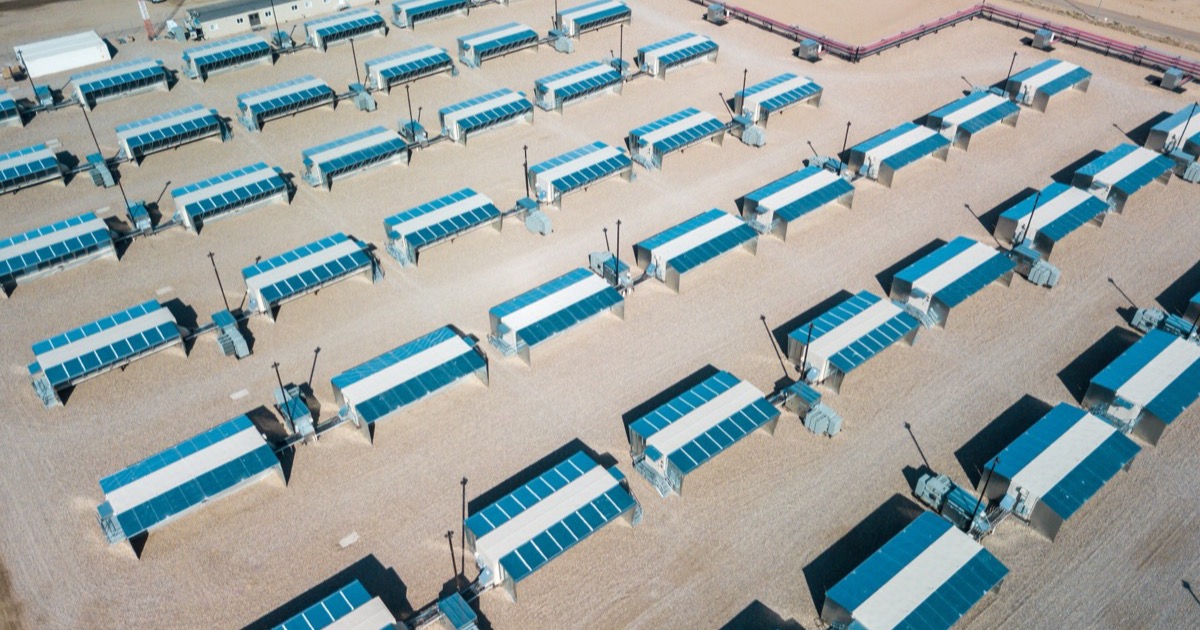
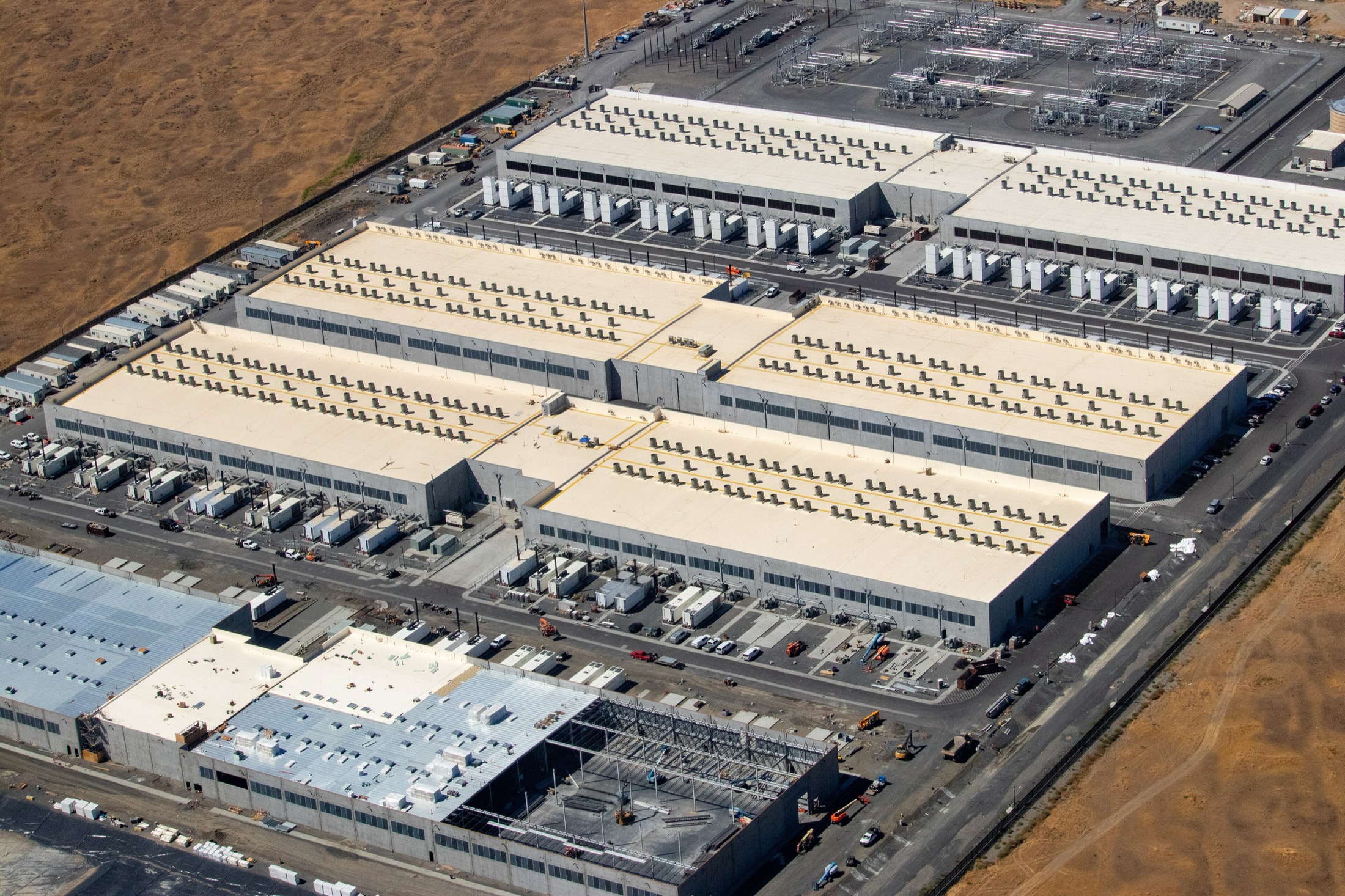
The dead smelter site with its wire, Feb 2026
$200M
The 20-year lease signed on it, five months later
$19B
In February 2026, TeraWulf paid Century Aluminum $200 million — plus a 6.8% slice of the venture — for roughly 750 acres at Hawesville, Kentucky: a smelter that died of electricity prices in 2022, and the 482 megawatts of live transmission that never stopped humming at its fence.6,8 In July, Anthropic signed a 20-year lease on that dirt expected to generate about $19 billion.1 The two numbers are different substances — a price paid, and rent promised across two decades on a campus not yet built — and this study keeps them apart everywhere the reel runs them together. Jump to the marks ↓
The reel’s thesis survives this room’s checks better than any superlative in it. The interconnect premium is real, priced, and datable, and because both companies are SEC reporters, almost every number here comes from a filing. Hut 8’s Texas campus is Beacon Point in Nueces County — 524 acres bought for $17.5 million in late 2025 to mine bitcoin on — now carrying two 15-year leases of $9.8 billion each (352 MW apiece, the reel’s garbled “three 152”) from an unnamed tenant its 10-Q calls “a multi-trillion-dollar market capitalization, high-investment-grade technology company.”13,16,17 TeraWulf’s lease is Anthropic, directly, at the dead Kentucky smelter — 401 MW on the nose, about $19 billion over 20 years — signed one quarter after the company reported exactly the $34.0 million of revenue the reel cites.1,3 What fails is the frame: “America’s two biggest landlords” and “five times Digital Realty’s backlog” both compare fifteen-and-twenty-year contract totals against other people’s annual figures — and when everything is put in one unit, both claims invert.20,22
Small corrections first, then the units. The record says ~750 acres at Hawesville, not 790 — about 250 of them buildable.5,6 The second Hut 8 lease landed 11 days before the reel, the Anthropic lease 25 days before.1,16 And the campus names deserve printing, because a filing rarely smiles: TeraWulf’s Kentucky landlord entity is Raylan Data LLC, at the Justified Data campus — somebody at a bitcoin miner named a $19 billion lease after Elmore Leonard’s Kentucky lawman.1
| The trade at a glance | Number |
|---|---|
| Beacon Point, the dirt | 524 acres, Nueces County TX — $17.5M cash, Nov–Dec 2025, bought to mine bitcoin13,15 |
| Beacon Point, the wire | 1,000 MW interconnection agreement with AEP Texas; first energization Q1 202715 |
| Beacon Point, the leases | 2 × 15-year, $9.8B, 352 MW — same unnamed tenant, "rated AA- or higher"; campus $19.6B, renewals to $50.2B16,18 |
| Hawesville, the dirt | ~750 acres + 482 MW of maintained transmission — $200M cash + 6.8% equity to Century Aluminum6,8 |
| Hawesville, the lease | Anthropic PBC, direct: ~401 MW, 20 years, ~$19B (~$33B with renewals), delivery late 2027–early 20281,2 |
| The build still owed | TeraWulf: $3.5–4.0B of its own capex plus >$10B tenant investment · Hut 8: $4.25B Baa2 notes for phase 1 alone8,18 |
| The landlords’ actual year | TeraWulf FY2025: $168.5M revenue, $661.4M net loss · Hut 8 portfolio NOI claim: ~$1.75B/yr at stabilization4,20 |
| The comparison the reel makes | Digital Realty’s "record $1.9B backlog" — which is annualized rent, not a contract total22 |
| The comparison in one unit | ~$653M/yr (Hut 8 lease) and ~$950M/yr (Anthropic lease) vs $1.9B/yr (DLR backlog) — the "5×" inverts16,1,22 |
| The queue that makes it valuable | 2,060 GW waiting; median request-to-operation above 5 years; 13% of 2000–2020 requests ever finished24 |
| The bottleneck behind the queue | Transformer lead times ~128–144 weeks; Bloomberg: more than half of planned 2026 US data centers may slip38 |
| The jobs ledger at Hawesville | 600+ smelter jobs lost in 2022 · 80–100 permanent data-campus jobs projected7,8 |
The machine that died of its own electricity
Hawesville was the highest-purity aluminum smelter in the country and Hancock County’s anchor employer until 27 June 2022, when Century Aluminum idled it “as a direct result of skyrocketing energy costs” and WARN-noticed more than 600 workers. The idling was announced as nine to twelve months; it never reversed.7 What did not die was the infrastructure: Big Rivers Electric, the local cooperative, told Kentucky regulators it “continues to operate and maintain 482 MW of transmission capacity available to the site” — four years of a live, high-capacity grid connection with nothing on the other end of the wire.8 That is the asset the reel is talking about, and the record prices it twice in five months: $200 million plus equity for the dirt in February; twenty years of Anthropic’s rent — about $19 billion, $33 billion if both renewals hit — by July. The company’s own definition, given to the local station that asked: “expected contracted lease revenue over the initial 20-year lease term, assuming full buildout and operations.”1,2,6,12
The filings also carry what the celebration leaves out. Anthropic’s payments are “expected to be supported by an investment-grade credit” that no document identifies — a sharp contrast with TeraWulf’s 2025 Fluidstack leases at Lake Mariner, its campus on the site of a former New York coal plant, where Google is named, and where the “backstop” is itself an option: if Fluidstack defaults, Google may pay a termination fee or assume the lease at a discount.1,9,10,29 The utility contract underneath runs 15 years against a 20-year lease, with power costs passing through to TeraWulf at market — the landlord, not the AI lab, holds the electricity risk that killed the smelter.8 And the town’s arithmetic is its own ledger: the smelter employed six hundred; the campus projects eighty to a hundred permanent jobs, and about $7 million a year for the schools.8
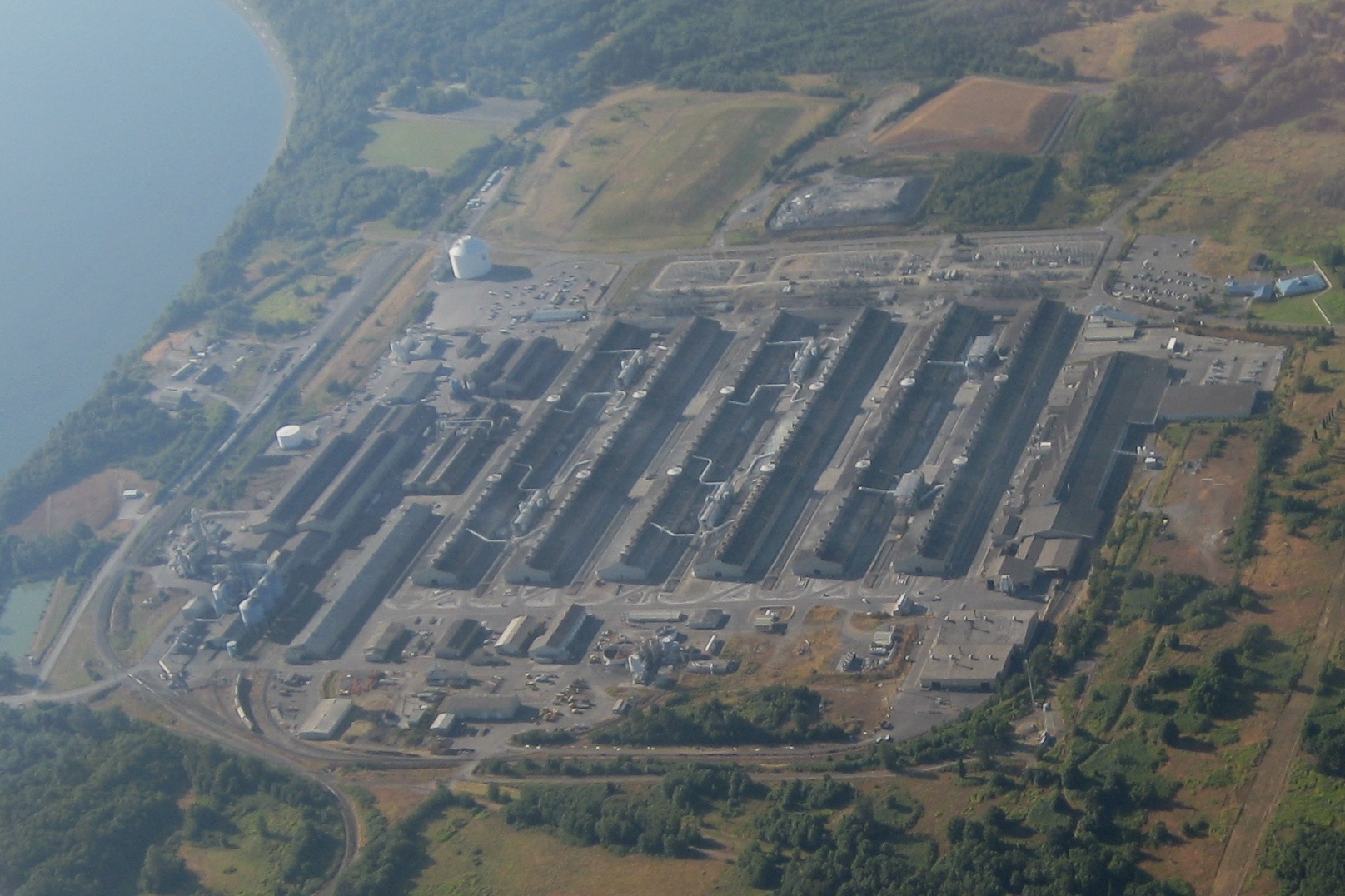
Hawesville is the sharpest instance of a national repricing the reel gestures at correctly. Alcoa is marketing ten idle smelters to data-center developers; its old Eastalco works in Maryland is already a 2,100-acre campus.26 The shuttered 1,884 MW Homer City coal plant in Pennsylvania is becoming a ~4.4 GW, $10 billion gas-and-data campus.25 The reason is measured by Berkeley Lab: over 2,060 gigawatts of generation and storage were waiting in interconnection queues at the end of 2025, the median project that finished in 2025 had waited more than five years, and only 13% of the capacity that applied between 2000 and 2020 ever reached operation. A live wire skips the line the whole economy is standing in.24
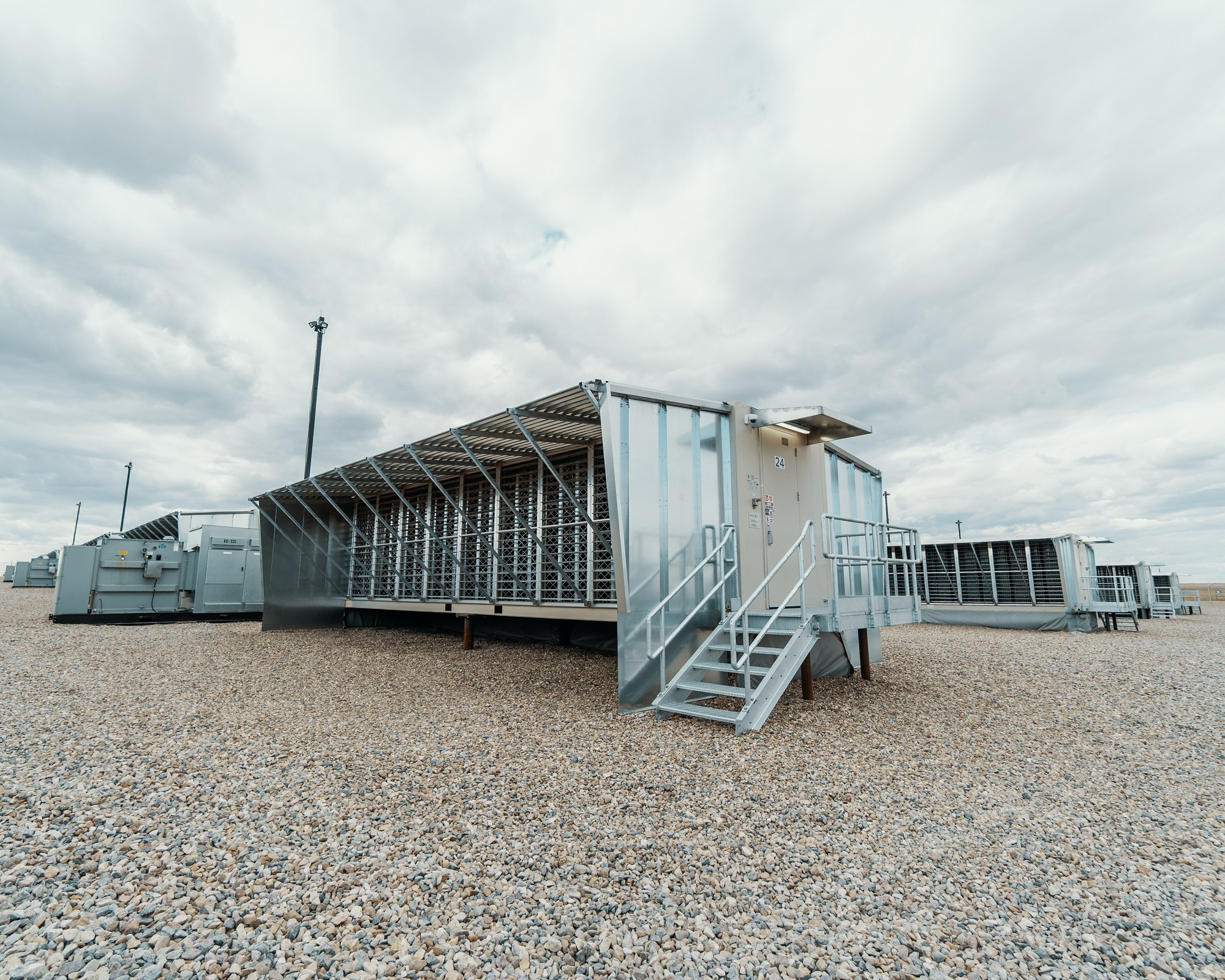
The campus that was meant to mine
Beacon Point is the same thesis run from the other side, and its paper trail is the best thing in this record. Hut 8 bought 524 acres near Corpus Christi in November and December 2025 for $17.5 million — “originally underwritten on a speed-to-power thesis” to serve American Bitcoin Corp., the mining affiliate whose chief strategy officer, per a securities filing that reproduces the story of its founding over thin-crust pizza at a Trump golf club, is Eric Trump.13,15,21 Then demand broadened, and the site “was repositioned to AI”: an interconnection agreement with AEP Texas for a full gigawatt, a first data hall redesigned mid-flight from 224 MW to 352 around NVIDIA’s DSX architecture, and a 15-year, $9.8 billion lease signed by the end of March 2026 — disclosed in May — with a tenant the filings will only describe: high-investment-grade, rated AA- or higher, market capitalization in the trillions.14,15,17,18 On 20 July the same tenant doubled to 704 MW, fully contracting the campus: $19.6 billion of base-term value, $50.2 billion if every option is exercised, first phase-two hall due in the second quarter of 2028.16
Read as a portfolio, the company’s own ledger ties out to the dollar — River Bend in Louisiana (the first lease, $7.0 billion, which the reel folds into its Texas story) plus Beacon Point’s two makes $26.6 billion of contracted value across 949 MW, with claimed average annual NOI “of more than $1.75 billion” once everything is built and stabilized.19,20 Against that future sits the present tense: Hut 8’s entire FY2025 revenue was $235.1 million, and the building of phase one alone required $4.25 billion of 6.129% project notes — money that, at Baa2 and non-recourse, the market priced as investment-grade largely because of who signs the rent cheques.18,20 The campus meant for bitcoin found something better to do with its wire. The wire, not the boxes on it, is what the AA-rated tenant came for.
Beacon Point, marked to record
One campus in four numbers from its own filings — of which only the first is a completed trade. The rest is debt raised against the promise, rent contracted across fifteen years, and a ceiling that exists only if every option is exercised.
What Beacon Point has actually traded at
$50.2B
If renewed · The renewal ceiling16
The number the headlines prefer: three five-year options per lease, every one exercised, ending in the 2050s. Contingent revenue drawn hatched for exactly that reason.
- Nov–Dec 2025$17.5M
- Jun 2026$4.25B
- Jul 2026$19.6B
- If renewed$50.2B
All four figures are the company’s own, from the 10-K, the notes pricing, and the two lease releases.13,16,18 Three of four are drawn hatched because they are not prices: debt raised, rent contracted, and rent contingent. No multiple is printed across the set — dividing a 15-year rent total by a dirt price is the arithmetic this study exists to refuse.
| When | Mark | Value |
|---|---|---|
| Nov–Dec 2025 | The land is bought | $17.5M |
| Jun 2026 | The market lends against phase 1 — Debt, not a price: 6.129% senior secured notes due 2042, rated Baa2, non-recourse to Hut 8 — the cost of turning dirt and an interconnect into six data halls. | $4.25B |
| Jul 2026 | The campus fully contracts — A 15-year rent total, not a valuation: two leases of $9.8B each including 3% annual escalators, from one unnamed tenant. Payment begins as halls deliver, from Q3 2027. | $19.6B |
| If renewed | The renewal ceiling — The number the headlines prefer: three five-year options per lease, every one exercised, ending in the 2050s. Contingent revenue drawn hatched for exactly that reason. | $50.2B |
If renewed, The renewal ceiling, $50.2B.
Beacon Point, marked to record
The reel’s whole thesis lives in the gap between this mark and the others. $17.5 million bought the acreage; what made it leasable for billions was the thing that came with the position — an executed interconnection agreement with AEP Texas for 1,000 MW, in a country where the median wait for that kind of connection now exceeds five years.15,24 “The building was never the asset” is the reel’s line; the filings agree, and add the number.
The last mark is the one the coverage quotes and the study draws faintest. $50.2 billion requires every renewal option across both leases to be exercised — commitments running to mid-century by a tenant no filing names, in an industry whose own leader allowed that “there will be an overbuild.”16,30 Between the $17.5 million that was paid and the $50.2 billion that might be, every intermediate number is a different substance, and the reel’s error was treating them as one.
- Nov–Dec 2025$17.5M
- Jun 2026$4.25B
- Jul 2026$19.6B
- If renewed$50.2B
All four figures are the company’s own, from the 10-K, the notes pricing, and the two lease releases.13,16,18 Three of four are drawn hatched because they are not prices: debt raised, rent contracted, and rent contingent. No multiple is printed across the set — dividing a 15-year rent total by a dirt price is the arithmetic this study exists to refuse.
The comparisons, in one unit
The reel’s market claims die quietly when every number is converted to dollars per year. Digital Realty’s “record $1.9 billion” is not a bookings haul and not a contract total — it is the annualized GAAP base rent of leases signed but not yet commenced, a stock that turns into revenue within about nine months; the quarter’s actual new bookings were a separate $307 million.22 Annualize Hut 8’s lease the same way — $9.8 billion over fifteen years — and it is roughly $653 million a year: the incumbent’s backlog is nearly three times the miner lease the reel says is “five times” it. The division is ours; the two figures it reconciles are both from the companies’ own releases.16,22 “America’s two biggest landlords” fails the same test against any conventional yardstick: Hut 8’s own portfolio claim is ~$1.75 billion of annual NOI at stabilization, about a fifth of Prologis’s $9.19 billion of actual 2025 revenue, from a landlord whose market cap is roughly $135 billion and which signed a record 67 million square feet of leases the same quarter.20,27,28 The cleanest contrast is the incumbent’s own land deal: two weeks before the reel, Digital Realty paid about $475 million for 1,440 acres near Kansas City whose first 600 MW of utility power arrives in early 2028 — the establishment buying its way into the same queue the miners never had to stand in.23
- Prologis — actual 2025 revenue, the real biggest-landlord scale28$9.19BAggregator figure, flagged as such; the company’s own Q2 2026 release adds a record 67M sq ft of leasing and a 5.8 GW power pipeline of its own.
- Digital Realty — annualized rent backlog, Q2 202622$1.9BThe number the reel calls a "bookings backlog" and says one miner lease quintuples. In its own unit, it is the largest backlog figure in the comparison.
- Hut 8 — portfolio average annual NOI, company claim at stabilization20≈$1.75BThe miners’ honest annual scale, by their own release — against $235.1M of actual FY2025 revenue, roughly 7× less, until the halls are built.
- TeraWulf–Anthropic lease — per year of the initial term1≈$950MOur division: ~$19B over 20 years. Real, contracted, and starting only as capacity delivers from late 2027 — against $168.5M of FY2025 revenue.
Every annualization is this study’s arithmetic, marked as such; every input is a company disclosure. In one unit, the reel’s “five times Digital Realty” inverts, and “America’s biggest landlords” becomes a claim about the length of contracts, not the size of landlords. What survives is still remarkable: two miners whose combined 2025 revenue was under $404 million hold contracted rent streams that, once built, would place them among the larger single-campus cash flows in American real estate.4,20
The bottleneck
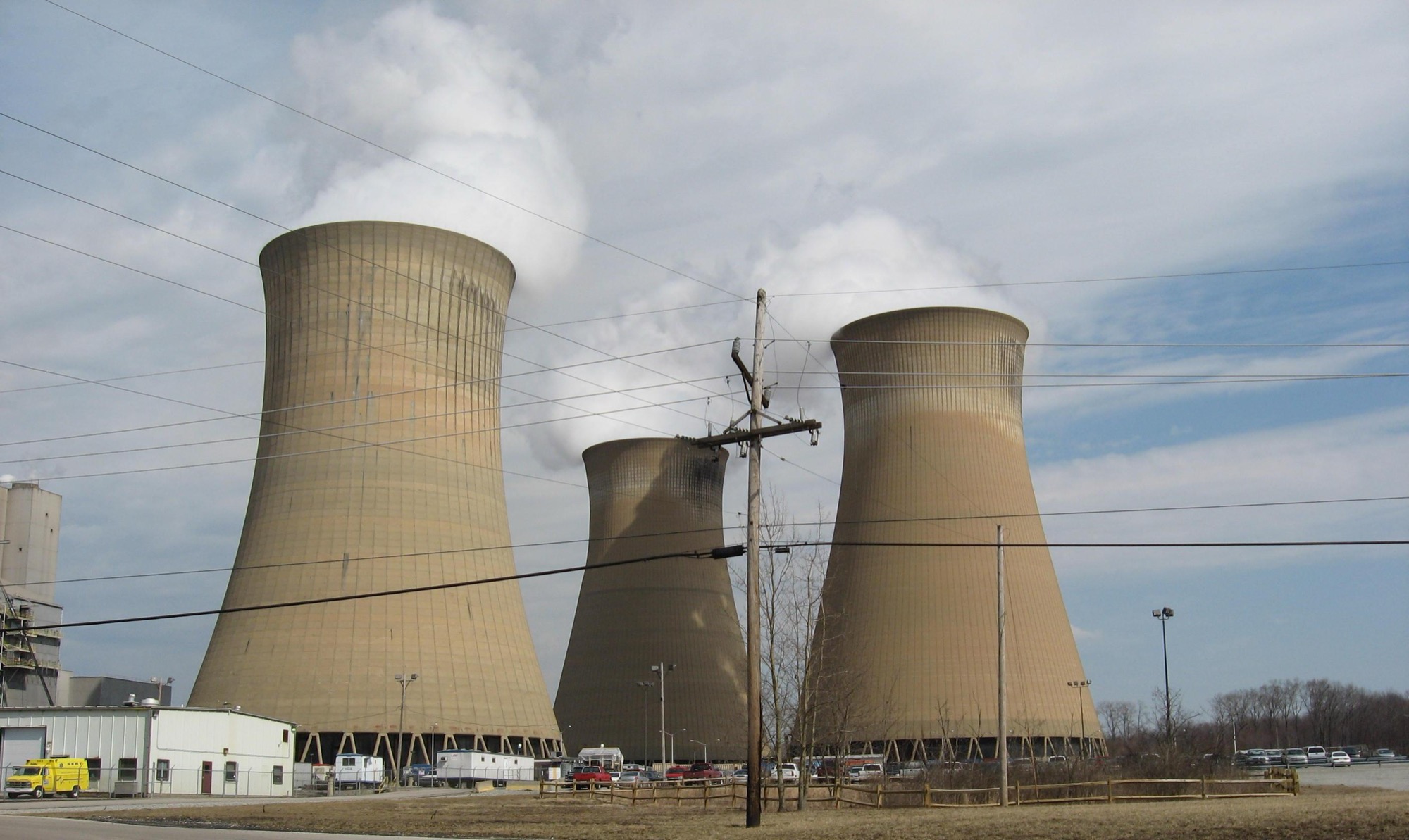
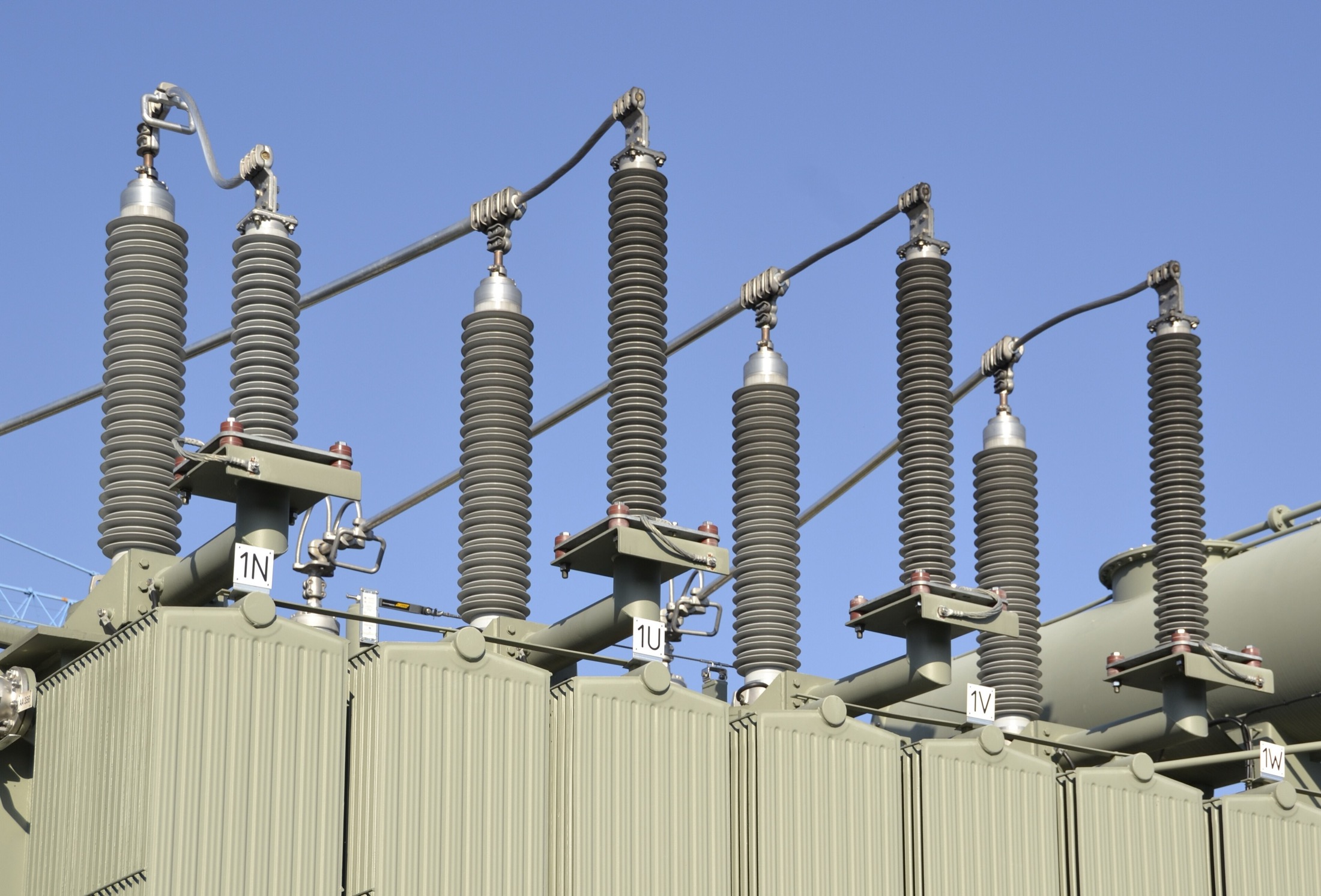
The queue is not for chips. It is for this.
Large power transformers now quote lead times of 128 to 144 weeks — the physical reason a live interconnect commands a premium, and the reason Bloomberg estimates more than half of the data centers planned for 2026 may slip.Photo: High Contrast, CC BY 3.0 de, via Wikimedia Commons
The other side of the trade
The honest version of this story keeps three uncomfortable files open. First, the pivot was forced, not foreseen: the miners’ class of 2022 includes Compute North and Core Scientific in bankruptcy, and by mid-2026 the halving had pushed listed miners’ average cash cost near $80,000 per coin against a $59,000 price — bitcoin itself had become the money-losing tenant.33,34,35 Second, the counterparty chain is circular in exactly the way skeptics of this cycle keep flagging — clouds backstopping their own customers’ landlords, vendors funding buyers — “the sellers keep subsidizing the buyers,” in Chanos’s phrase; The Register’s summary of the Anthropic lease was a startup “that’s never turned a profit” promising to be around in 2047.11,36 Third, the market is not confused about any of this: a quarter of TeraWulf’s float is sold short, its Q2 free cash flow ran near negative $1.22 billion as the buildout consumed capital, and eleven days after the reel, Texas’s governor ordered his grid regulators to scrutinize exactly this kind of load — Hut 8 answered with a press release the same day.32,37,39 The interconnect premium is real. It is also, for now, a premium on promises.
The sequence
Sep–Dec 2022
The counter-history the reel skips: Compute North, one of the largest mining-hosting operators, enters Chapter 11 owing up to $500 million; Core Scientific follows in December, down more than 98% from its $4.3 billion SPAC valuation — felled by bitcoin’s price and the cost of electricity. The miners’ power sites were distressed assets before they were trophies.33,34
27 Jun 2022
Century Aluminum idles the Hawesville smelter "as a direct result of skyrocketing energy costs," WARN-noticing more than 600 workers. Big Rivers Electric keeps 482 MW of transmission capacity maintained at the fence line — the wire outlives the machine it fed.7,8
Apr 2024
The halving cuts the block subsidy from 6.25 to 3.125 BTC. By mid-2026, CoinShares puts listed miners’ weighted average cash cost near $80,000 per coin against a $59,000 price — the arithmetic that makes landlord the better trade than miner.35
Nov–Dec 2025
Hut 8 buys 524 acres in Nueces County, Texas, for $17.5 million in cash — underwritten "on a speed-to-power thesis" to mine bitcoin for its affiliate American Bitcoin Corp., whose chief strategy officer is Eric Trump. In December, Hut 8 signs its first AI lease at River Bend, Louisiana, with Entergy power.13,15,19,21
$17.5M dirt
Feb 2026
TeraWulf buys the Hawesville site from Century Aluminum: $200 million cash plus a 6.8% minority slice of the data venture, for ~750 acres and "approximately 480 MW of existing power availability." The seller keeps equity in the thing its dead smelter becomes.5,6
$200M + 6.8%
Q1 2026
Beacon Point’s first lease is signed — a 15-year, $9.8 billion, 352 MW commitment from a tenant described in the 10-Q only as "a multi-trillion-dollar market capitalization, high-investment-grade technology company." Disclosure comes 6 May; the reel’s "May" is the announcement, not the signature. The hall had been redesigned from 224 MW to 352 around NVIDIA’s DSX architecture.14,15,17
$9.8B lease 1
Jun 2026
The market lends against the promise: $4.25 billion of 6.129% senior secured notes due 2042, rated Baa2, non-recourse to Hut 8, to build six data halls for a tenant "rated AA- or higher."18
$4.25B notes
6 Jul 2026
TeraWulf’s subsidiary Raylan Data LLC signs Anthropic PBC directly: ~401 MW at the Justified Data campus for 20 years — ~$19 billion over the initial term, up to ~$33 billion with renewals — payments "expected to be supported by an investment-grade credit" that no filing names. The same day, TeraWulf sells its Texas JV stake to Fluidstack for ~$530 million.1,2
$19B lease
20 Jul 2026
The reel’s trigger: the Beacon Point tenant doubles to 704 MW with a second 15-year, $9.8 billion lease, fully contracting the campus against its 1,000 MW AEP Texas interconnection. Campus base-term value: $19.6 billion; renewal ceiling: $50.2 billion; first phase-2 hall due Q2 2028.16
$19.6B campus
Jul–Aug 2026
The other side of the ledger reports in: TeraWulf’s Q2 shows a $1.94-per-share loss, revenue down year-over-year at $44.8 million, and free cash flow near negative $1.22 billion; a quarter of its float is sold short. Texas’ governor directs the PUCT and ERCOT to scrutinize data-center load, and Hut 8 answers with a same-day press release.2,32,37,39
What transfers
The first lesson is the reel’s own, sharpened: in a queue economy, the scarce input is position, not structure. Berkeley Lab’s five-year median wait is the moat; a maintained 482 MW interconnect at a dead smelter is a fast-pass the whole AI buildout will pay for. The reel’s closing advice — ask whether the dead site still holds its interconnect — is genuinely good diligence, and the record shows Alcoa’s CEO running the same screen from the other side of the table.
The second is the units discipline this room keeps relearning: never let a stock and a flow, or a total and an annual, share a sentence without conversion. A 15-year contract total set against an annualized backlog produced the reel’s most quotable line and its wrongest. The five-minute cure is division — and both companies hand you the divisor in their own releases.
The third is about what a signature is worth before the building exists. Everything above the dirt at Beacon Point — the Baa2 notes, the $19.6 billion, the $50.2 billion ceiling — is priced off an unnamed tenant’s credit and a delivery schedule running to 2028, in a market where Microsoft has already cancelled signed megawatts and the flagship campus of the boom capped its own expansion. Contracted is not collected. The gap between them is where both the upside and the 25% short interest live.
And the last is the town-scale ledger that number-stories flatten. Hawesville’s wire survived because a cooperative kept paying to maintain it after the smelter and its six hundred jobs died of power prices; the campus that inherits the wire projects eighty to a hundred. The interconnect was never stranded — the workers were. Both facts belong in the same story, and only one of them fits in a reel.
Common questions
- What did Hut 8 and TeraWulf actually sign?
- Hut 8 signed two 15-year, $9.8 billion leases — one by the end of March 2026 (disclosed in May), one on July 20 — each for 352 MW at its Beacon Point campus in Nueces County, Texas, with the same tenant, which its filings describe only as "a multi-trillion-dollar market capitalization, high-investment-grade technology company" rated AA- or higher. That fully contracts the campus’s 1,000 MW AEP Texas interconnection for $19.6 billion of base-term value, rising to $50.2 billion if all renewal options are exercised. TeraWulf’s subsidiary Raylan Data LLC signed Anthropic PBC directly on July 6: about 401 MW at the former Century Aluminum smelter in Hawesville, Kentucky, for 20 years — roughly $19 billion over the initial term, up to $33 billion with renewals — with capacity delivering from late 2027.
- Is the "dirt with a live grid connection" thesis actually true?
- Yes — it is the best-documented part of the story. Berkeley Lab’s queue data shows over 2,060 GW waiting for interconnection with a median wait above five years for projects completed in 2025, and only 13% of capacity that applied from 2000–2020 ever reached operation. Against that, Hut 8 paid $17.5 million for the Beacon Point acreage and secured a 1,000 MW interconnection agreement; TeraWulf paid $200 million (plus a 6.8% equity slice to the seller) for a site where the utility had maintained 482 MW of live transmission since the smelter closed in 2022. Transformer lead times of 128–144 weeks make new connections even slower than the queue alone suggests. The premium for an existing wire is real, large, and datable.
- Are these really "America’s two biggest landlords" with a lease "five times Digital Realty’s backlog"?
- No — both claims are unit errors. Digital Realty’s record $1.9 billion "backlog" is annualized base rent from signed-but-not-commenced leases; the Hut 8 lease’s $9.8 billion is a 15-year total. Annualized identically (~$653 million a year), the miner lease is about a third of Digital Realty’s backlog, not five times it. And by any conventional landlord yardstick — annual revenue, market cap — the miners are small: Hut 8’s own claimed portfolio NOI of ~$1.75 billion a year (at full stabilization, years away) is roughly a fifth of Prologis’s actual 2025 revenue of $9.19 billion. What is true: the contract totals are extraordinary relative to the companies’ size — TeraWulf’s FY2025 revenue was $168.5 million against a $19 billion lease.
- What are the real risks the celebration skips?
- Four show up in the record. Construction: the rent starts only as halls deliver (Q3 2027 through 2028 and beyond), behind a supply chain where more than half of planned 2026 US data centers may slip, per Bloomberg-sourced estimates. Counterparty: Anthropic has never reported a profit and its lease is supported by an unnamed "investment-grade credit"; the Google backstop on the earlier Fluidstack deals is an option to pay a termination fee, not a guarantee. Precedent: Microsoft cancelled a couple hundred megawatts of signed AI leases in 2025, and Stargate’s flagship campus capped its expansion on power delays. And structure: TeraWulf’s power contract runs 15 years under a 20-year lease with costs passing through to the landlord, whose Q2 2026 free cash flow was about negative $1.22 billion — one reason a quarter of its float is sold short.
- Was buying "the ugliest land in America" really a decade of foresight?
- The record says it was distress that ripened, not a plan. Miners bought power-rich sites because bitcoin economics demanded the cheapest electricity — and that same logic bankrupted Compute North and Core Scientific in 2022 and pushed the industry’s average cash cost of mining a coin to roughly $80,000 against a $59,000 price by 2026, after the 2024 halving cut the subsidy in half. Beacon Point itself was underwritten to mine bitcoin as late as 2025 and repositioned only when AI demand arrived. The miners’ genuine edge was tolerance: they were willing to own land next to power plants nobody else wanted, and to hold interconnects everyone else undervalued. The AI boom made that tolerance look like genius — the polite word for surviving your own forced pivot.
Sources
- TeraWulf (SEC 8-K) — The Anthropic lease, in the filing itself — subsidiary Raylan Data LLC leases ~401 MW of critical IT load at the Justified Data campus, Hawesville, Kentucky, to Anthropic PBC for 20 years, phased delivery late 2027 to early 2028, two five-year renewal options, payments "expected to be supported by an investment-grade credit" no document names (2026-07-06)
- TeraWulf (Q2 2026 earnings, SEC 8-K exhibit) — The only primary source for the ceiling — "approximately $19 billion of contracted revenue over the initial term and up to approximately $33 billion if Anthropic exercises both five-year extension options"; Q2 revenue $44.8 million, 71% of it HPC lease revenue (2026-08-05)
- TeraWulf (Q1 2026 earnings, SEC 8-K exhibit) — The reel’s "$34 million in revenue" quarter, exactly — Q1 2026 revenue of $34.0 million, including $21.0 million of HPC lease revenue, with ~$3.1 billion of cash on hand (2026-05-08)
- TeraWulf (FY2025 results, 8-K mirror) — The year before the lease — revenue $168.5 million, net loss $661.4 million, total liabilities $6.42 billion including $3.05 billion of long-term debt and $1.58 billion of convertible notes (2026-02-26)
- TeraWulf (acquisition press release, SEC-filed) — The site as bought — "a former industrial site in Hawesville... more than 250 buildable acres for compute capacity... approximately 480 MW of existing power availability" (2026-02-02)
- Century Aluminum (SEC 8-K) — The seller’s own record of the dirt — approximately 750 acres at Hawesville sold for $200 million cash plus a 6.8% non-dilutive minority interest in Raylan Data Holdings LLC (2026-02-02)
- Century Aluminum (idling announcement, SEC exhibit) — The death certificate — the Hawesville smelter idled from 27 June 2022 "as a direct result of skyrocketing energy costs," with more than 600 workers WARN-noticed the same day (2022-06-22)
- Big Rivers Electric Corp. (Kentucky PSC filing, Case 2026-00115) — The wire that waited — 482 MW of transmission capacity maintained at the closed smelter; TeraWulf’s estimated $3.5–4.0 billion capital investment plus >$10 billion from a tenant; 80–100 permanent jobs against the smelter’s 600; power costs passed through to TeraWulf on a market basis (2026-04-14)
- TeraWulf (Fluidstack leases, SEC 8-K exhibit) — The 2025 template — 200+ MW, 10-year agreements with Fluidstack at Lake Mariner worth ~$3.7 billion ($8.7 billion with extensions), with Google backstopping $1.8 billion of Fluidstack’s obligations and taking warrants for ~8% of TeraWulf (2025-08-14)
- TeraWulf (company site, Our Sites) — Lake Mariner in the company’s own words — built on the site of the former coal-fired power plant at Somerset/Barker, New York (undated)
- The Register — "AI startup that’s never turned a profit says it’ll totally be around in 2047" — the skeptic’s read of a 20-year lease signed by a pre-profit tenant that had just confidentially filed for an IPO, and the observation that no filing names the credit support (2026-07-07)
- WFIE 14 News (TeraWulf Q&A) — The company defines its own headline — the ~$19 billion "represents expected contracted lease revenue over the initial 20-year lease term, assuming full buildout and operations," and Anthropic is "the sole customer" for the 401 MW (2026-07-09)
- Hut 8 (FY2025 10-K) — The dirt, at cost — "In November and December 2025, the Company purchased a total of 524 acres of land in Nueces County, Texas for $17.5 million in cash consideration"; American Bitcoin managed-services start on 1 April 2025 (2026-02-25)
- Hut 8 (Q1 2026 earnings, SEC 8-K exhibit) — Phase 1 disclosed — "a 15-year, $9.8 billion lease for 352 MW of IT capacity with a high-investment-grade tenant" at Beacon Point (2026-05-06)
- Hut 8 (Beacon Point Phase 1 release) — The fuller Phase 1 record — tenant "Confidential, high-investment-grade company"; the campus "originally underwritten on a speed-to-power thesis to serve... American Bitcoin Corp." and repositioned to AI; the AEP Texas interconnection agreement for 1,000 MW; the data hall redesigned from 224 to 352 MW around NVIDIA’s DSX architecture; $655 million average annual NOI; renewals to ~$25.1 billion (2026-05-06)
- Hut 8 (Beacon Point Phase 2, SEC 8-K exhibit) — The reel’s lease — the same tenant doubles to 704 MW; campus base-term contract value $19.6 billion against 1,000 MW of utility capacity; renewal options to $50.2 billion; campus average annual NOI $1.31 billion; Phase 2 delivery from Q2 2028 (2026-07-20)
- Hut 8 (Q1 2026 10-Q) — The tenant’s only description anywhere — "a multi-trillion-dollar market capitalization, high-investment-grade technology company"; and the subsequent-events note that brackets Phase 1’s signing to on or before 31 March 2026 (2026-05-06)
- Hut 8 (Beacon Point notes pricing, SEC exhibit) — What the market lent against phase 1 — $4.25 billion of 6.129% senior secured notes due 2042, non-recourse to Hut 8, for six data halls on the Nueces County property, leased to a tenant "rated AA- or higher" (2026-06-04)
- Hut 8 (River Bend lease, SEC 8-K exhibit) — The first AI lease, for the record — River Bend is in Louisiana with Entergy, not Texas: an initial 330 MW of utility capacity with potential to scale by up to 1,000 MW more (2025-12-17)
- Hut 8 (Q2 2026 earnings, SEC 8-K exhibit) — The portfolio ledger — 949 MW of contracted IT capacity, $26.6 billion aggregate base-term contract value, "average annual NOI of more than $1.75 billion"; the arithmetic ties exactly to the three leases (2026-08-04)
- American Bitcoin Corp. (SEC Form 425, reproducing Wired) — The campus’s first intended customer, sourced from a securities filing — Eric Trump as Chief Strategy Officer, the thin-crust pizza at the Jupiter golf club, and American Bitcoin’s 1 April 2025 launch (2025-08-01)
- Digital Realty (Q2 2026 results) — What the reel’s comparison number actually measures — "a record total backlog of $1.9 billion of annualized GAAP base rent at 100% share" from signed-but-not-commenced leases; the quarter’s new bookings were a separate $307 million annualized (2026-07-23)
- Digital Realty (Kansas City land release) — The incumbent buys dirt without a live wire — ~1,440 acres at Astra Enterprise Park near Kansas City for ~$475 million, with 600 MW of utility power due by early 2028 rising to two gigawatts at full delivery (2026-06-22)
- Lawrence Berkeley National Laboratory (Queued Up, 2026 edition) — The queue, measured — over 2,060 GW seeking connection at the end of 2025; median duration from interconnection request to commercial operation above 5 years for 2025-built projects; only 13% of 2000–2020 requests ever reached operation (2026-06)
- Utility Dive — The coal-plant version of the same trade — the shuttered 1,884 MW Homer City plant in Pennsylvania becoming a ~4.4 GW, $10 billion gas-powered data-center campus on 3,200 acres (2025-04-03)
- DataCenterDynamics — The pattern goes industry-wide — Alcoa’s CEO: "We have ten sites that we’re focused on selling into that space," with the Eastalco smelter in Maryland already a 2,100-acre data-center park (2026-02-25)
- Prologis (Q2 2026 results) — The actual biggest landlord’s quarter, for scale — a record 67 million square feet of leases signed and a 5.8 GW data-center power pipeline of its own (2026-07-16)
- StockAnalysis (Prologis page) — The anchor figures the superlative must beat — Prologis market capitalization ~$135 billion; 2025 revenue $9.19 billion (aggregator data, flagged as such) (undated)
- DataCenterDynamics — What the Google "backstop" actually is — if Fluidstack defaults, "Google has the option to pay a lease termination fee or take on the lease as a tenant on a discounted rate": an option, not a guarantee of contract value (2026-03-30)
- TechCrunch — Signed is not forever — Microsoft cancelled data-center leases totaling "a couple hundred megawatts" in early 2025, per TD Cowen, while its CEO allowed that "there will be an overbuild" (2025-02-25)
- The Register — The flagship precedent — OpenAI and Oracle abandoned the planned expansion of the Stargate Abilene campus beyond its initial phases as power negotiations stalled (2026-03-07)
- Hut 8 (press release via StockTitan) — The politics arrive — Hut 8 "affirms its commitment to responsible data center development" in answer to Texas Governor Abbott’s directive to the PUCT and ERCOT on grid reliability and community impacts (2026-08-10)
- CNBC — The counter-history, part one — Core Scientific’s Chapter 11 of December 2022, down more than 98% from a $4.3 billion SPAC valuation, felled by bitcoin’s price and electricity costs (2022-12-20)
- CoinDesk — The counter-history, part two — Compute North, one of the largest mining-hosting operators, in Chapter 11 owing up to $500 million to at least 200 creditors (2022-09-22)
- Hoge (mining-margins analysis) — Why the pivot was forced — the April 2024 halving; hashprice near post-halving lows (~$28.94/PH/day, June 2026); CoinShares’ weighted average cash cost near $80,000 per coin against a $59,000 price (2026-06-27)
- Harvard Program on Negotiation — The circularity critique, collected — Morningstar on vendors funding customers, Bespoke’s "self-referential" warning, and Chanos: "the sellers keep subsidizing the buyers" (2026-06-15)
- MarketBeat (TeraWulf short interest) — How the market prices the promise — 104.4 million TeraWulf shares sold short as of mid-July 2026, 25.04% of the float (2026-07-15)
- Manufacturing Magazine (aggregating Wood Mackenzie, Bloomberg) — The physical bottleneck — large-power-transformer lead times near 128–144 weeks; Eaton’s 228 GW data-center backlog; Bloomberg’s April 2026 estimate that more than half of planned 2026 US data centers may be delayed or cancelled (2026-06-07)
- StocksToTrade (TeraWulf Q2 note) — The quarter after the champagne — a $1.94-per-share loss against a $0.31 estimate, revenue down year-over-year, and free cash flow near negative $1.22 billion as the buildout consumed capital (2026-08-10)