
Case study Nº 22
Nobody has ever added up what Hudson Yards cost New York
The city borrowed $3 billion against a neighbourhood that did not exist and promised the district would pay for itself. The only systematic tally of what it cost beyond that was made by two academics — and two of the figures the city publishes about itself do not match its own audited books.
Ben Fan, with Darryl WengMay 20, 202614 min readWatch the reel
Borrowed against a district that did not exist
$3B
Cost beyond that, per the only tally
$2.2B
New York borrowed $3 billion to build a subway line and a park for a neighbourhood that had not been built yet, and told bondholders the district would pay for itself.1,2 Fourteen years later the only systematic attempt at a total found $2.2 billion of city money spent beyond those bonds.6 It was made by two academics, because no government body has ever published one. Jump to the money ↓
That absence is the story. Hudson Yards is the largest private development in American history and one of the most written-about, and the question of what it cost the public has no official answer — only an academic estimate, a set of press figures that are larger and unexplained, and two numbers the city publishes about itself that do not match the city’s own audited books.
It matters now rather than historically, because Related is asking for roughly $2 billion more, on the same mechanism, to build the western half.8
| The public side, at a glance | Number |
|---|---|
| Bonds issued, 2006 and 2011 | $3.0 billion2 |
| No. 7 subway extension, budgeted Jul 2004 | $2.1 billion1 |
| Overruns and spillovers the city absorbed | $400 million6 |
| Cost beyond the bonds, per Fisher and Leite | $2.2 billion6 |
| Of which tax breaks | $1.404 billion6 |
| Of which interest support from the general fund | $359 million — and see below6 |
| An official total, from any government body | Has never been published |
| HYIC receipts, FY2025 | ~$529 million5 |
| Remitted to the city, FY2025 | $394 million5 |
| Asked for Hudson Yards West | ~$2 billion, as a PILOT-backed bond structure8 |
The promise was that it would pay for itself
The mechanism was tax increment financing, and the pitch was elegant. The city would issue bonds through a corporation created for the purpose, spend the proceeds on a subway extension and a park, and repay the bonds out of the new property taxes that the subway and park would call into existence. No general-fund money. The district would fund itself.1
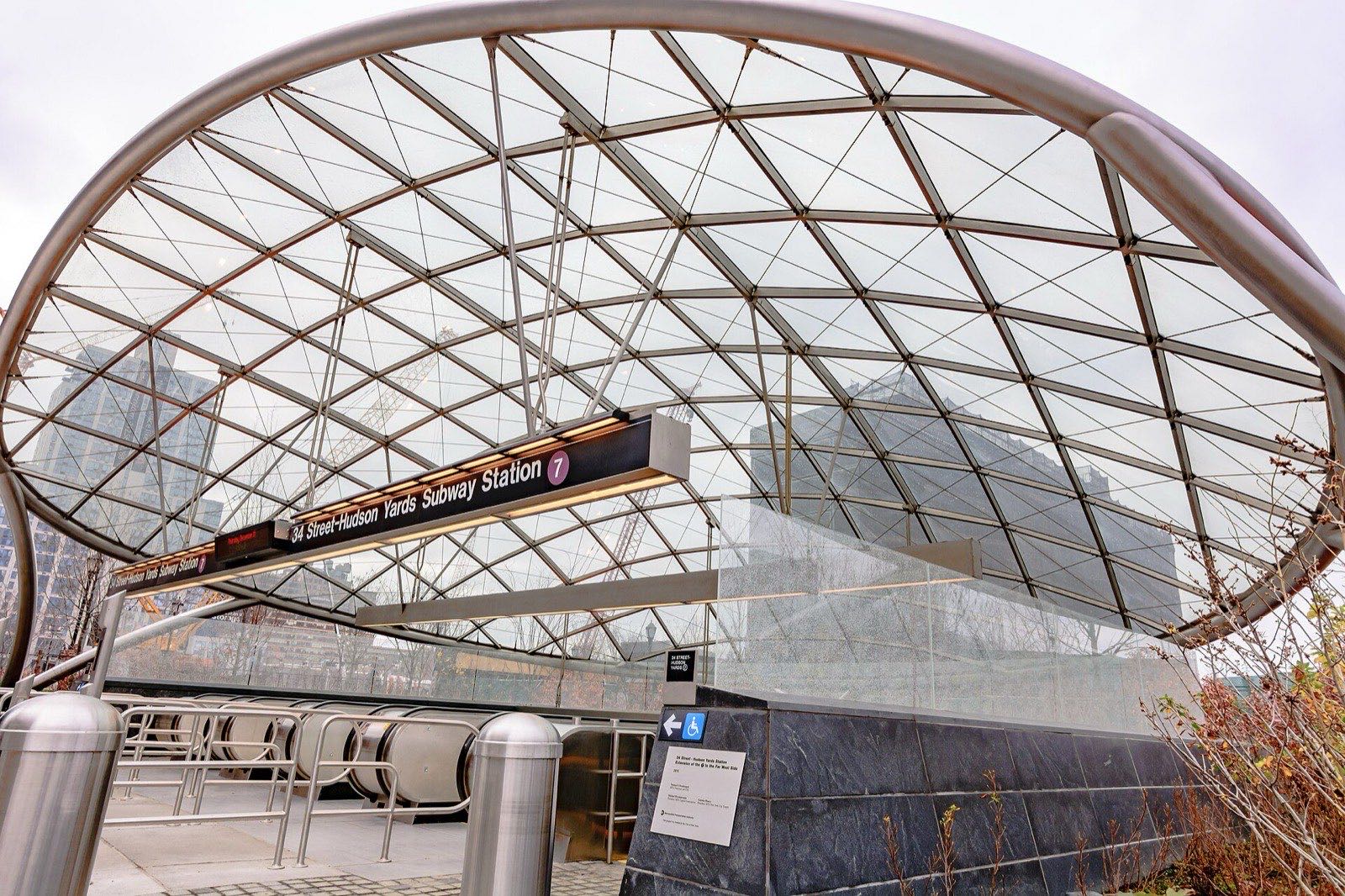
The subway opened in September 2015, against a plan that had budgeted $2.1 billion for it.1 The overruns did not stay inside the structure: the city absorbed $218 million of them, plus $182 million of spillovers it had not planned for at all — a new public school and the Culture Shed — out of its own capital budget.6
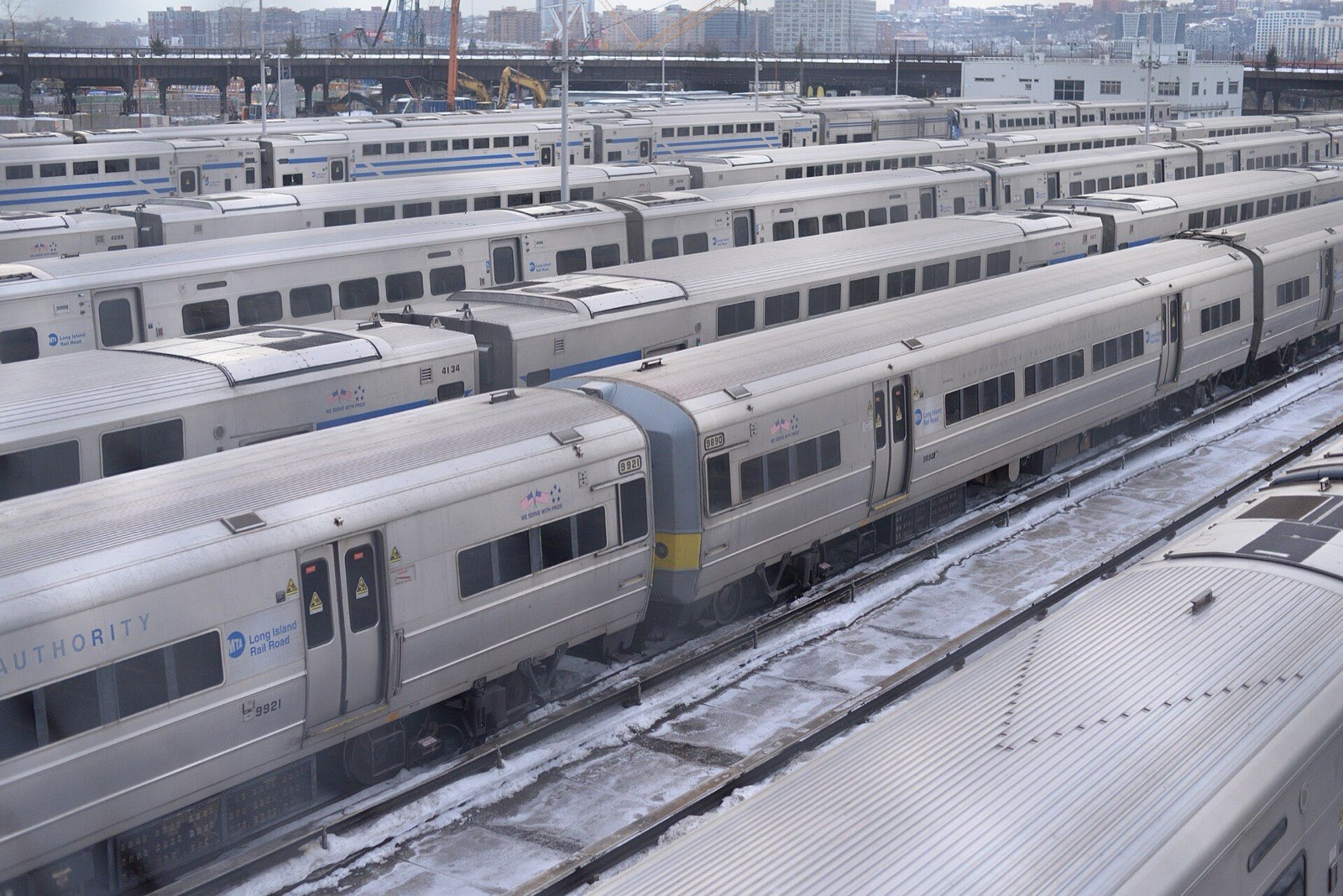
What the pitch did not survive was the timing. The bonds were sold in 2006 and 2011; the towers that would pay for them did not open until 2016 and later. In the gap, the interest still came due, and the city paid it out of the general fund — the thing the structure was designed to avoid. Those payments are called interest support, and they are where the arithmetic starts coming apart.
The number the city cannot agree with itself about
Start with how far off the estimate was. The 2007 bond statement told investors that interest support would cost the city $7.4 million through 2015. The actual figure was $359 million — over forty times more than expected, in the study’s own words.6 That is not a project running slightly behind. It is a forecast that was wrong by an order of magnitude on the one number the structure’s whole promise depended on.
And $359 million is the figure every source that matters uses: the Independent Budget Office, the Comptroller’s own newsletter restating it six years later, the press, and the New School study that folds it into its total.6
Add up the interest-support line items in the corporation’s own audited financial statements, year by year, and you get about $188 million.4 Not a rounding difference — a gap of roughly $171 million between a figure the city repeats and a figure the city audits. No document anyone has found bridges the two.
The same shape appears on the way back. The Comptroller’s office has stated that HYIC transferred $863 million to the city across fiscal 2017 to 2023. Summing the payments in that office’s own published audited statements for the identical period gives about $750 million.3,4 The gap is roughly $113 million, and it is the same size in an earlier restatement of the same figure, which suggests a real reconciling item somewhere rather than an error — but nobody has published what it is.
Neither gap means anyone is lying. Cash and accrual accounting differ; a refunding can route money through a separate entity; capitalised interest drawn from bond proceeds before a line item existed would not appear where a later reader looks for it. Any of those could explain it. The point is that none of them has been published, and that a project whose defining promise was fiscal self-sufficiency has never had its fiscal record reconciled in public.
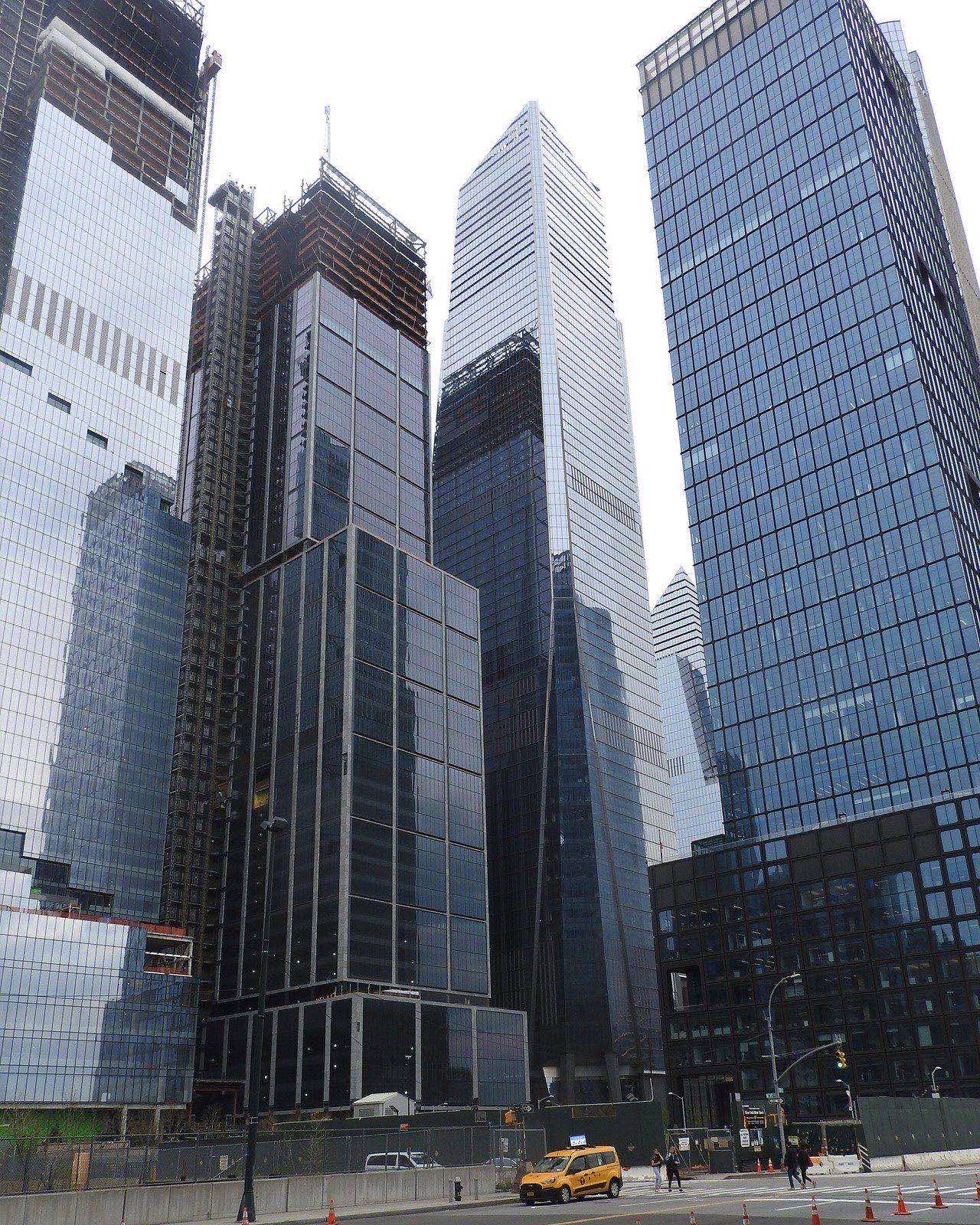
What the borrowing bought
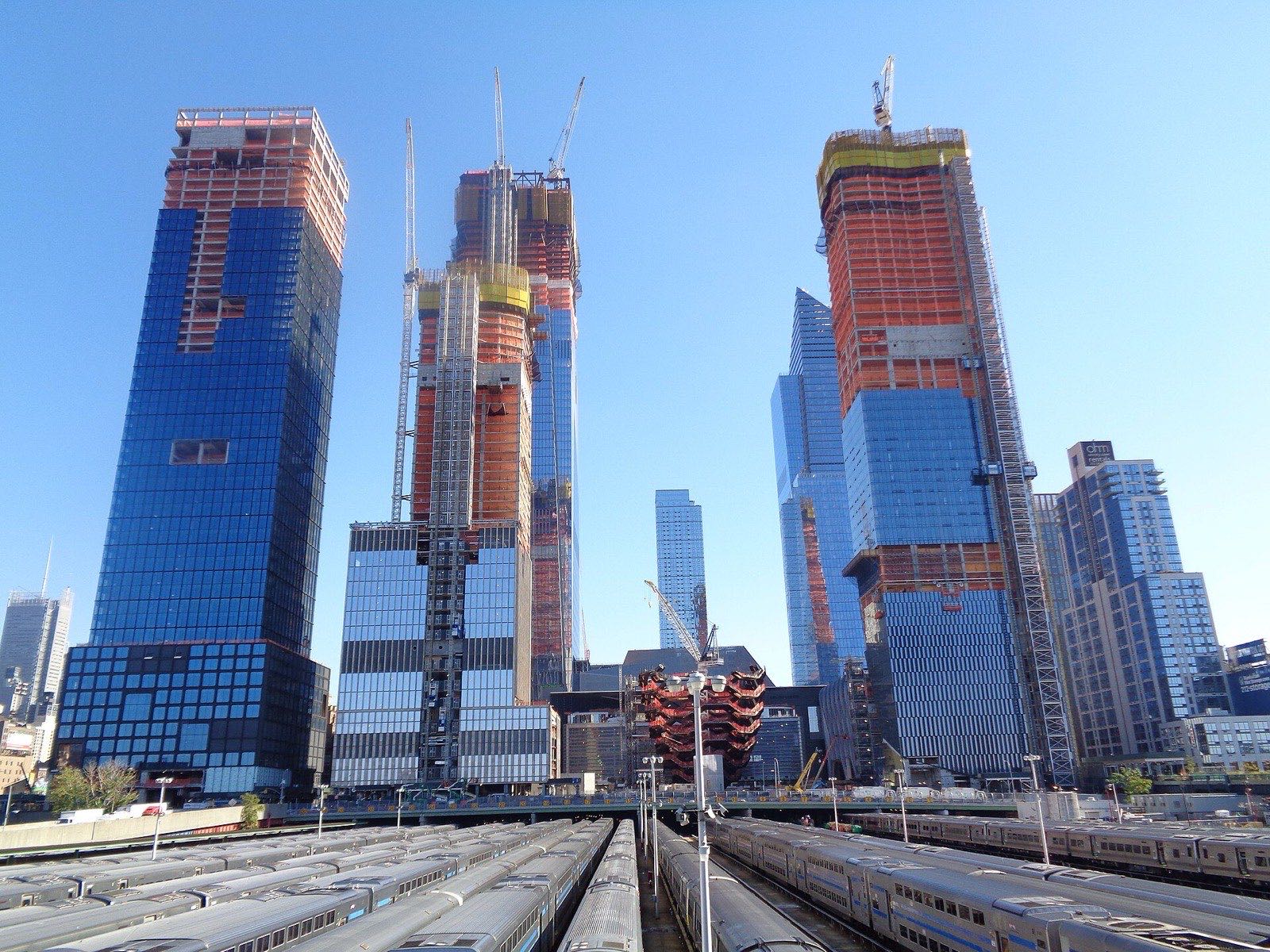
The public money went in first, and it went in before there was anything to tax.
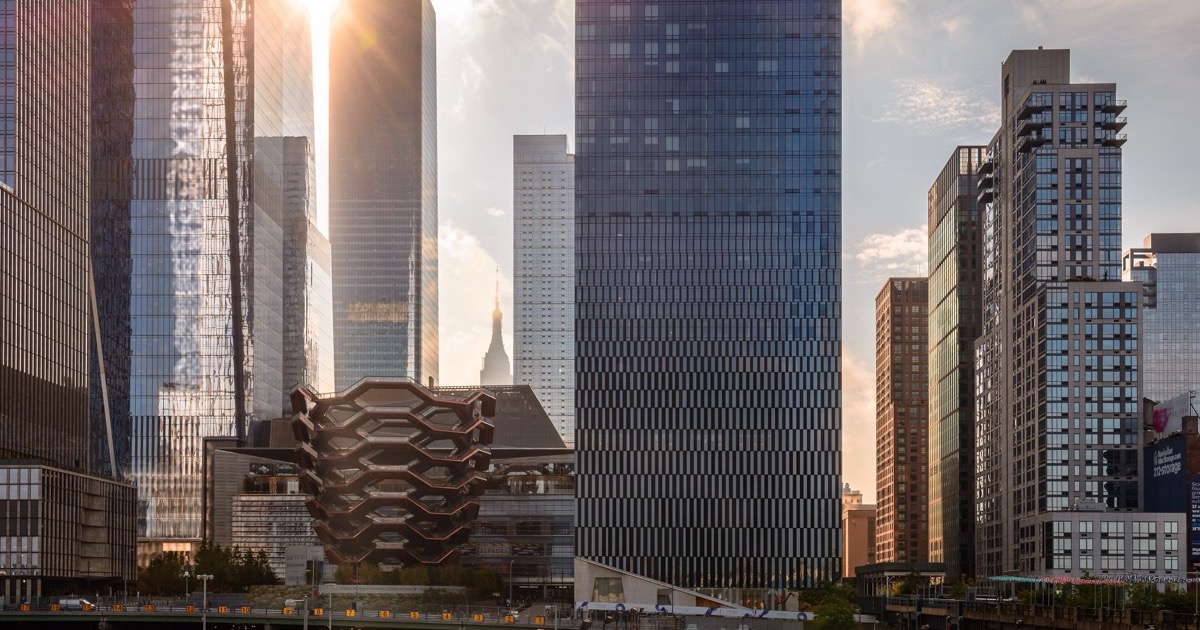
Hudson Yards towers from street level, one still under construction.Photo: Jim.henderson, CC BY 4.0, via Wikimedia Commons
What one tally actually contains
The ledger, opened
One estimate, made by two academics, of what Hudson Yards cost the city beyond the bonds it was told would pay for themselves. It is the only one that exists, and its own authors say it is not the whole of it.
Cost beyond the bonds, Fisher and Leite, Nov 2018
$2.2 billion
A total published by any government bodyDoes not exist
- Discounted property taxes on seven commercial towers, in present value6$1.037 billion
- Cost overruns and spillovers the city absorbed6$400 million
- 421-a residential abatements, 2009 to 2018 only6 ⁘$366.8 million
- Interest support paid from the general fund6$359 million
Sourced, and not part of that total
Never published
- Hotel tax breaks and construction sales-tax exemptions6Excluded by the authors
- A total published by any government bodyDoes not exist
Four parts that sum to the total, two that are real and belong to a different ledger, and two lines that are missing on purpose. The gap between this figure and the ones in the press is almost entirely the second group — borrowed money counted as spent money.
| Line | Amount | How it is counted |
|---|---|---|
| Discounted property taxes on seven commercial towers, in present value | $1.037 billion | sourced, and part of the total |
| Cost overruns and spillovers the city absorbed | $400 million | sourced, and part of the total |
| 421-a residential abatements, 2009 to 2018 only | $366.8 million | inferred from the sourced total, drawn hatched |
| Interest support paid from the general fund | $359 million | sourced, and part of the total |
| State tax credits to individual tenants | ~$44.5 million | sourced, but a different kind of number — not added to the total |
| The bonds themselves | $3.0 billion | sourced, but a different kind of number — not added to the total |
| Hotel tax breaks and construction sales-tax exemptions | Excluded by the authors | never published |
| A total published by any government body | Does not exist | never published |
| Cost beyond the bonds, Fisher and Leite, Nov 2018 | $2.2 billion | the sourced total |
The ledger, opened
Most of it is foregone tax rather than money paid out, which is why it never appeared in a budget line anyone had to vote on.
Discounted property taxes on seven commercial towers come to $1.037 billion in present value, from an Industrial Development Agency analysis the authors had to file a freedom-of-information request to see.6 Overruns and spillovers the city absorbed directly — subway and land costs, a new public school, the Culture Shed — add about $400 million.6
- Discounted property taxes on seven commercial towers, in present value6$1.037 billion
- Cost overruns and spillovers the city absorbed6$400 million
- 421-a residential abatements, 2009 to 2018 only6 ⁘$366.8 million
- Interest support paid from the general fund6$359 million
Sourced, and not part of that total
Never published
- Hotel tax breaks and construction sales-tax exemptions6Excluded by the authors
- A total published by any government bodyDoes not exist
Four parts that sum to the total, two that are real and belong to a different ledger, and two lines that are missing on purpose. The gap between this figure and the ones in the press is almost entirely the second group — borrowed money counted as spent money.
The number that has five versions
Because there is no official figure, the press supplied several, and they do not agree with each other or with the study they all cite.
- Fisher and Leite, Nov 20186$2.2 billionThe study itself: city cost beyond the bonds
- Gothamist, reporting the study$5.6 billionThe same study plus the $3 billion of bonds
- The Guardian$5.7 billionDescribed as tax breaks, bonds and other spending
- The New York Times~$6 billionThe subway, the park, interest, tax breaks and state credits, attributed partly to the study
A New School economist has said publicly that the largest of these is not his institution’s number: the $6 billion figure “is not in the New School’s 2018 report”, and it is “not clear how they add all of that up”. The difference between the top and the bottom of this ladder is not a disagreement about Hudson Yards. It is a disagreement about whether borrowed money that is being repaid counts as a cost, and nobody has adjudicated it because nobody official has ever tried.
The record has a stain
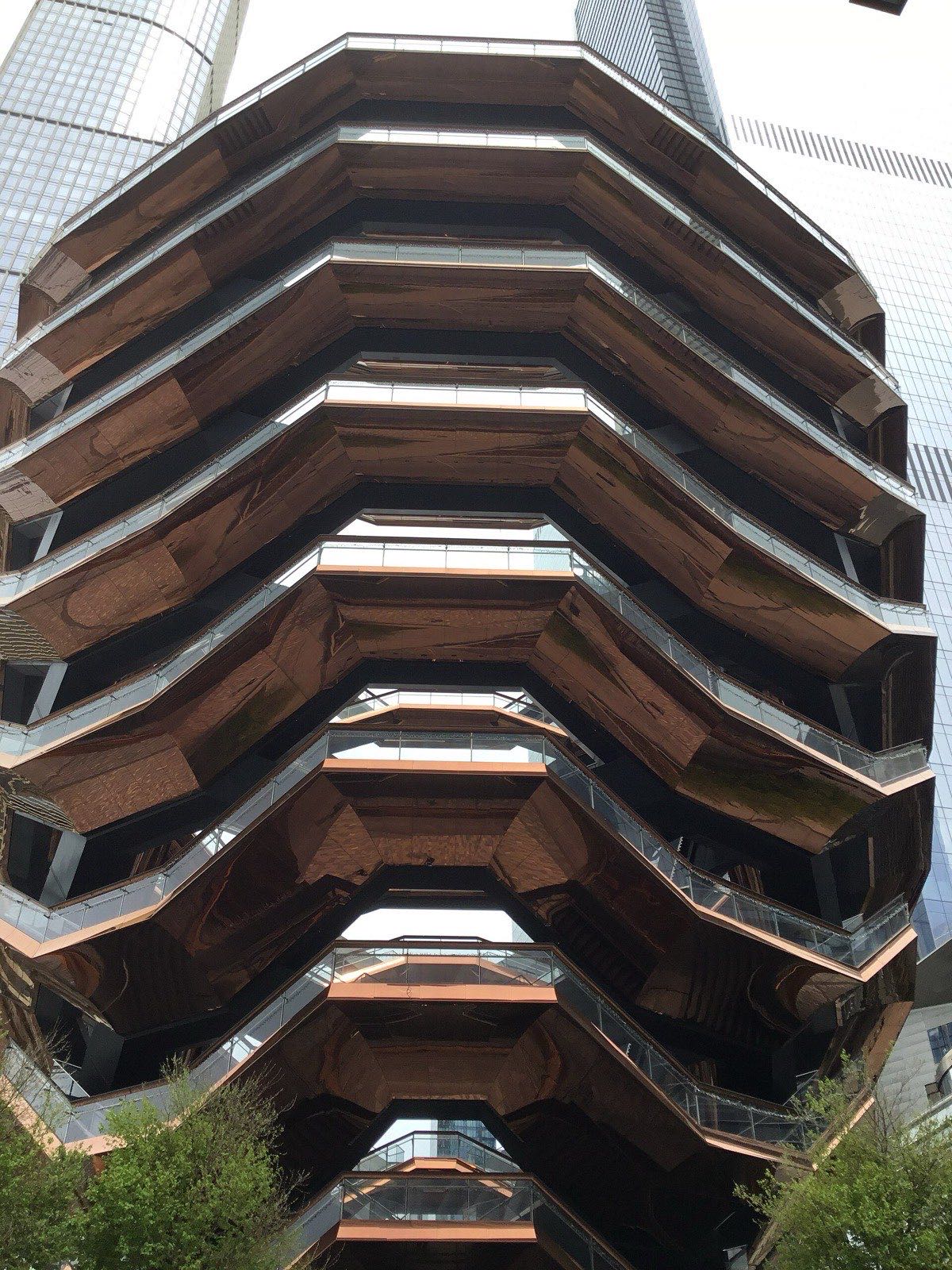
Four people have died by suicide at the Vessel since it opened in March 2019. The structure closed after the third death in January 2021, reopened that May with a rule against solo visitors, closed again after a fourth death in July 2021, and reopened permanently in October 2024 with floor-to-ceiling steel mesh and roughly half its stairways accessible. The chair of the local community board, after the fourth: “This was totally foreseeable and totally preventable.”
The private capital has its own record. More than a billion dollars of the equity came from the federal EB-5 programme, which offers foreign investors a visa route at a discounted threshold when they invest in areas of high unemployment. Hudson Yards qualified because New York State drew a targeted employment area that reached up through Central Park and into public-housing tracts in Harlem — stringing together non-contiguous census tracts until the average unemployment cleared the bar. Senator Chuck Grassley named the project on the Senate floor in October 2015 as “one of the most notorious examples” of that practice.10 A federal audit the following year found the pattern was national rather than unique: almost all sampled petitioners used the discounted route, and ninety per cent of those combined multiple tracts.11 Related’s answer has been that it used a federal programme and followed the applicable rules, which is true and is not a defence of the rules.
And the affordable housing negotiated in 2005 as the price of Council approval has substantially not arrived. The commitment was 3,347 new affordable units district-wide, including named public sites; the largest of them was still unbuilt fourteen years later.
The sequence
Jul 2004
City Planning presents the financing plan: the city will borrow against future property taxes from a district that does not exist yet, and the No. 7 subway extension will be paid for without the general fund. The word used is self-financing.1
$2.1B budgeted
Dec 2006
The Hudson Yards Infrastructure Corporation issues its first bonds — $2.0 billion.2
$2.0B borrowed
Oct 2011
A second issuance of $1.0 billion. Development has not yet produced the tax revenue the first bonds assumed.2
$1.0B borrowed
Sep 2015
The No. 7 extension opens to 34th Street–Hudson Yards, against a $2.1 billion plan. The city ends up absorbing $218 million of overruns and $182 million of spillovers — a new public school and the Culture Shed — out of its capital budget.1,6
$400M absorbed
Nov 2018
Fisher and Leite publish the only systematic attempt at a total: $2.2 billion of city cost beyond the bonds, in interest support, tax breaks, overruns and spillovers. The paper’s finding is that the project, “rather than being ‘self-financing,’ cost the city $2.2 billion”.6
$2.2B, beyond the bonds
Sep 2023
S&P upgrades the bonds and Comptroller Brad Lander, who had been a critic, says the revenue is running about $200 million a year ahead of expectation — and that he got it wrong.7
Jun 2025
The City Council approves a PILOT-backed financing structure for Hudson Yards West — roughly $2 billion of city-backed debt for a platform over the still-open western half of the yard.8
~$2B of city backing
Sep 2025
The Comptroller’s office objects that the structure is open-ended: “it could be anything as far as we know”.9
Jun 2025
HYIC’s receipts reach about $529 million for the fiscal year — $263 million of PILOTs, $187 million of TEPs — and $394 million is remitted to the city. The PILOT figure budgeted for 2027 arrives two years early.3,5
$394M back to the city
The same ask, on the empty half
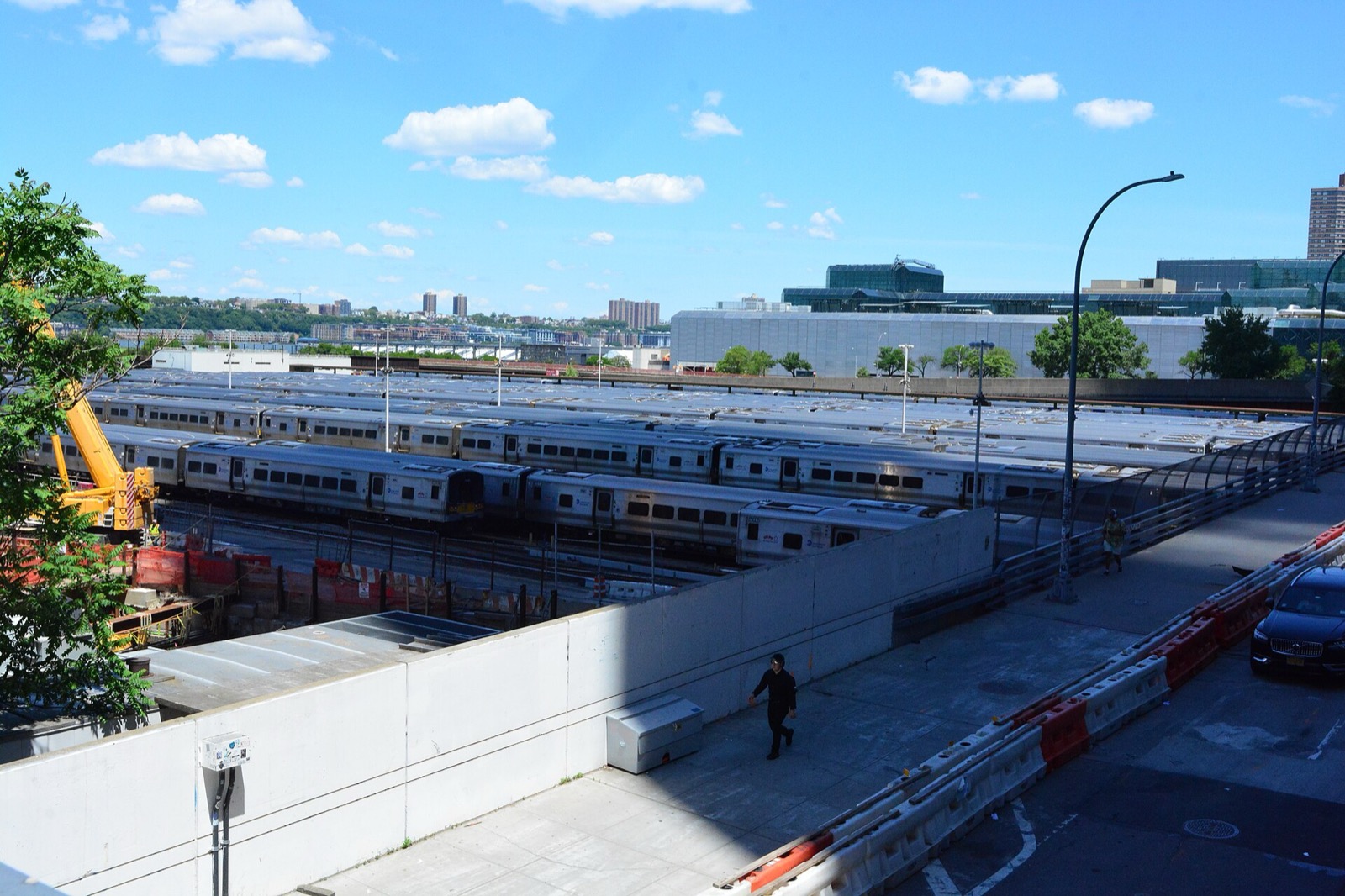
The eastern half is finished and the western half is still a rail yard. Related wants to deck it too, and the ask is the part most coverage gets wrong: the roughly $2 billion is not a cheque. It is the same PILOT structure — a city entity issues debt to build the platform, Related pays discounted property taxes, and those discounted taxes service the debt.8 The City Council approved that structure in June 2025. As of the most recent reporting the final tax exemption and bond issuance were still pending, and the current administration has said it is not actively engaged in moving the project forward.9
The case for it is that platforms earn nothing. A tower can be financed privately because it produces rent; a deck over live tracks produces nothing at all and no private lender will fund one alone. If the city wants four thousand homes, a school and a park on that site, it has to pay for the thing underneath them first. That is a real argument and the eastern half is evidence for it.
The case against it is the one the Comptroller’s office made: that the structure is “open-ended” — “it could be anything as far as we know”.9 Which brings the argument back to where this study began. The east side is the precedent being cited, and the east side has never been added up.
What transfers
Tax increment financing is a real tool and it is not a scam. The bonds here are investment grade, twice upgraded, and the district’s revenue is now running ahead of the budget set for it — the Comptroller who had been its most prominent critic said in 2023 that he had got it wrong.7 Judged as a bond, Hudson Yards is working.
But a bond is not the question. The question is what a city gives up and what it gets, and that requires a total. Tax increment financing is unusually good at hiding one, because almost none of its cost is an appropriation. A discounted assessment is not a cheque anyone signs. An abatement does not appear in a budget. Interest support does, but only in a line most people will never read. The costs are real, they are large, and they are structurally invisible.
So the transferable lesson is not that Hudson Yards was a giveaway or that it was a triumph. It is that twenty years and roughly $5 billion of public exposure later, the honest answer to “what did it cost” is that two academics made an estimate, the press made larger ones nobody can reconstruct, and the government made none. Before backing the second half, the arithmetic on the first half is the cheapest thing anyone could ask for.
And when you are handed a number for a project like this, ask which of these it is: money spent, money foregone, or money borrowed and being repaid. Those three do not add together, and almost every published figure about Hudson Yards is what happens when they are added anyway.
Common questions
- How much public money went into Hudson Yards?
- There is no official answer. New York issued $3 billion of bonds through the Hudson Yards Infrastructure Corporation in 2006 and 2011 to pay for the No. 7 subway extension and a park. The only systematic attempt to total the cost beyond those bonds is a 2018 New School working paper by Bridget Fisher and Flávia Leite, which found $2.2 billion in interest support, tax breaks, overruns and spillovers — and which says in its own footnote that it excluded hotel tax breaks and construction sales-tax exemptions, making that a floor. No government body — not HYIC, not NYC EDC, not the Comptroller — has ever published its own total.
- Why do people say Hudson Yards cost $6 billion?
- Because the press added the $3 billion of bonds to the New School’s $2.2 billion of costs, and in some versions added state tax credits and the subway on top. Every component is real, but they are different kinds of money: the bonds were borrowed and are being repaid out of district revenue, while the tax breaks and interest support are costs. A New School economist has publicly said the $6 billion figure is not his institution’s number and that it is unclear how it is arrived at.
- Did Hudson Yards actually pay for itself?
- As a bond, it is working now. The district’s PILOT revenue reached the level budgeted for 2027 two years early, the bonds have been upgraded twice, and HYIC remitted $394 million to the city in fiscal 2025. But it did not pay for itself as promised: the city made interest support payments from its general fund — the thing the structure was designed to avoid — and those payments exceeded even the worst-case scenario in the city’s own 2006 forecast.
- What is the $2 billion Related is asking for at Hudson Yards West?
- Not a cheque. It is a PILOT-backed bond structure, the same mechanism used on the eastern half: a city entity issues debt to build a platform over the still-open western rail yard, Related pays discounted property taxes, and those discounted taxes service the debt. The City Council approved the structure in June 2025; the final tax exemption and bond issuance were still pending as of the most recent reporting, and the Comptroller’s office objected that the arrangement is open-ended.
- What was the EB-5 controversy at Hudson Yards?
- More than a billion dollars of the private capital came through the federal EB-5 visa programme, which lets foreign investors qualify at a discounted investment threshold when they fund projects in areas of high unemployment. Hudson Yards qualified because New York State drew a targeted employment area that combined non-contiguous census tracts reaching into Harlem public housing. Senator Chuck Grassley named the project on the Senate floor in 2015 as one of the most notorious examples of the practice; a 2016 federal audit found the pattern was widespread nationally. Related has said it used a federal programme and followed the applicable rules.
Sources
- New York City Department of City Planning — Presentation of the Hudson Yards Infrastructure Corporation financing plan to the City Planning Commission — the No. 7 extension budget and the self-financing premise (2004-07-12)
- Hudson Yards Infrastructure Corporation (City of New York) — Bond Official Statements Archive — the 2006, 2011, 2017 and 2021 issuances (undated)
- Hudson Yards Infrastructure Corporation via the NYC Comptroller (audited financial statements) — Financial statements for the fiscal year ended 30 June 2025 — bonds outstanding, interest support and payments to the City (2025-09-25)
- Hudson Yards Infrastructure Corporation via the NYC Comptroller — Audited financial statements, all years — the underlying line items behind every figure the city quotes (undated)
- Hudson Yards Infrastructure Corporation (City of New York) — Current Activities and Operations — PILOT, TEP and PILOMRT receipts, and the surplus remitted to the City (undated)
- Bridget Fisher and Flávia Leite, Schwartz Center for Economic Policy Analysis, The New School (Working Paper 2018-2) — The Cost of New York City’s Hudson Yards Redevelopment Project — the only systematic attempt at a total (2018-11-05)
- The Real Deal — S&P Global upgrades Hudson Yards construction bonds — and Comptroller Brad Lander says he got it wrong (2023-09-29)
- The Real Deal — Related’s $2B card trick — how the PILOT structure funds the platform (2025-07-01)
- The New York Times — A $2 billion ask for Hudson Yards West, and the Comptroller’s objection that it is open-ended (2025-09-26)
- Senator Chuck Grassley, Chairman, Senate Judiciary Committee — Gerrymandering in the EB-5 program flies in the face of congressional intent — naming Hudson Yards on the Senate floor (2015-10-07)
- United States Government Accountability Office — GAO-16-749R — Immigrant Investor Program: targeted employment area designations nationally (2016-10-19)