
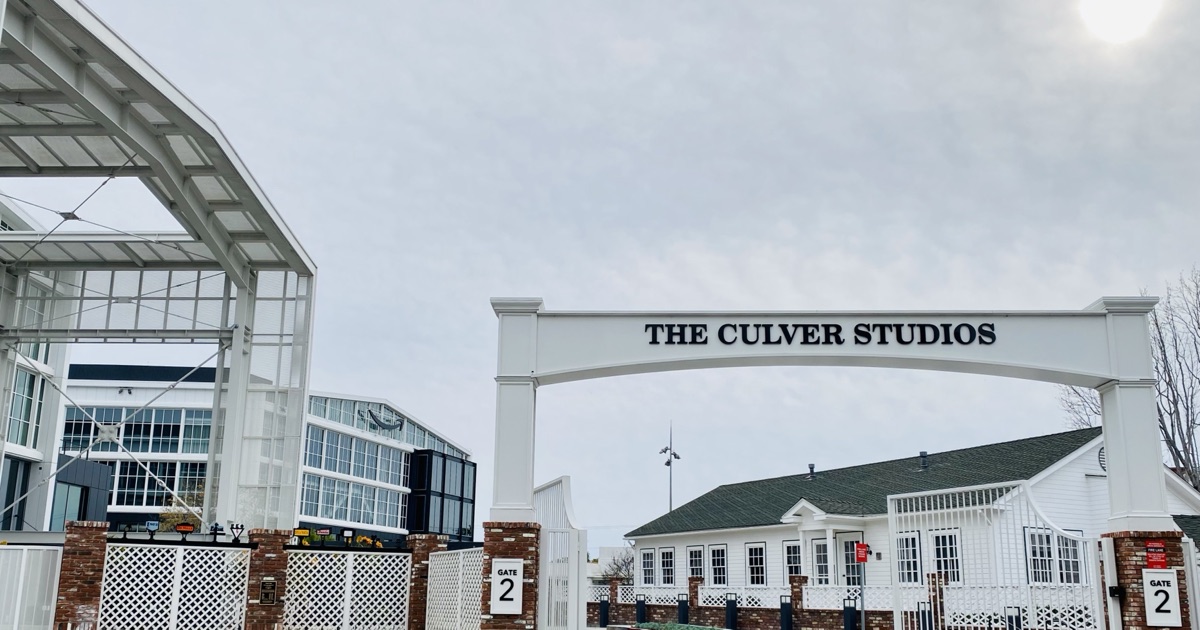
Case study Nº 23
The Culver Steps cost nearly $150 million to build — and it is asking about $150 million
Hackman Capital and Affinius turned a public parking lot in downtown Culver City into an Amazon-leased block that never had a vacancy. The record shows the plaza was the city's condition rather than the developer's gift, and that seven years of full occupancy produced an asking price roughly equal to the build cost — with a source on every figure.
Ben Fan, with Darryl WengJune 9, 202613 min readWatch the reel
Cost to build
$150M
Lender's appraisal, Aug 2024
$130M
Seven years of full occupancy in one of Los Angeles’ strongest submarkets, an Amazon lease running to 2031 — and in April 2026 the block went to market at a rumoured asking price roughly equal to what it cost to build.23 The only third-party valuation on the record is below both.20
The Culver Steps is the block everyone points at when they want to argue that public space pays. Four storeys of offices and shops on 1.16 acres of downtown Culver City, wrapped around a grand outdoor staircase, built where a public parking lot used to be, and leased end to end — Amazon upstairs, Erewhon and Sephora and Salt & Straw below.6,17 It is a genuinely good building, and the leasing worked.
The money is a quieter story. The project cost nearly $150 million to build.18 In August 2024 its own lender’s appraiser valued it at $130 million.20 In April 2026, fully leased, with an Amazon lease running to 2031, it went on the market at a rumoured $150 million.23 Seven years of perfect occupancy in one of Los Angeles’ strongest submarkets produced an asking price roughly equal to the build cost.
And the plaza that the story hangs on was not a developer’s act of restraint. The stair and the elevated plaza were in the drawings Culver City’s own council chose in December 2011, five years before Hackman Capital Partners bought into the deal at all.1,5 What follows is the record, in order, with the unflattering parts left in.
| The deal at a glance | Number |
|---|---|
| Site | 1.16 acres — Parcel B, a public parking lot1,6 |
| Design selected by council | 5 Dec 2011, unanimous1 |
| Land conveyed to the developer | Apr–May 2014, price not published3 |
| Hackman buys the development rights | 6 Dec 2016, price undisclosed5,6 |
| Groundbreaking, and opening | 8 Nov 2017 · 2019, month unreported7,10 |
| Size, as reported over time | 115,000–122,000 sq ft10,23 |
| Public plaza | 35,000 sq ft, above the city’s Town Plaza10 |
| Office tenant | Amazon, the whole component, to July 203112,23 |
| Fully leased | 22 Mar 2023, eleven retail tenants17 |
| Reported development cost, to Mar 2023 | Nearly $150 million18 |
| Debt, Aug 2024 | $75M, five years, 6.62% fixed20 |
| Lender’s appraisal, Aug 2024 | $130 million20 |
| Net operating income, full-year 2023 | $6.1 million, up 41%20 |
| Asking price, 29 Apr 2026 | ~$150 million (~$1,230/sq ft)23 |
| Culver City office vacancy, Apr–May 2026 | Nearly 23%, or above 30%24,26 |
The city had been trying to build this for twenty-five years
Start with who owned the dirt, because that is the part the retelling skips.
Parcel B was a public lot at 9300 Culver Boulevard, sitting between Trader Joe’s, the Culver Studios mansion and the Culver Hotel — the middle of downtown, unbuilt. On 5 December 2011 Culver City’s council, sitting also as its redevelopment agency board, voted unanimously to pick one of four submitted proposals: the Combined Properties and Hudson Pacific team, with a design by the Culver City architect Steven Ehrlich. Councilmember Meghan Sahli-Wells, writing at the time, relayed former mayor Gary Silbiger’s count that this was at least the third attempt to develop the plot in twenty-five years.1
The winning scheme is the building that exists. A grand staircase modelled on the Spanish Steps and the High Line, rising to an elevated plaza, with the massing pushed to the dull Washington Boulevard side so the view from the plaza points at the mansion and the hotel.1 Every element the reel credits to a later owner’s vision was in that December 2011 drawing set.
Then California dissolved its redevelopment agencies and the deal fell into a hole. By February 2013 the city and its successor agency’s oversight board had both approved the disposition and development agreement, and both were waiting on the state Department of Finance to let the transaction proceed under the Redevelopment Dissolution Act.2 The Center for Land Use Interpretation, which had staged an art installation on the vacant lot in 2013, described the result plainly: the agency that owned real estate in downtowns like this one was gone, and what it left behind was a legal ownership mess that held the site empty for years.4
The unwinding shows up in a city manager’s bulletin. On 21 April and 8 May 2014 the successor agency and its oversight board approved transferring Parcel B, 9300 Culver Boulevard, to the developer under the disposition agreement and the state-mandated long range property management plan — the same session that moved five downtown parking structures from the agency to the city.3 What the public got paid for the land is not in any source reachable here. The 2011 staff report had promised an economic report detailing the purchase price and a noticed public hearing before any sale.1 The number itself never surfaced in the reporting that followed, and its absence is part of the story rather than a gap to paper over.
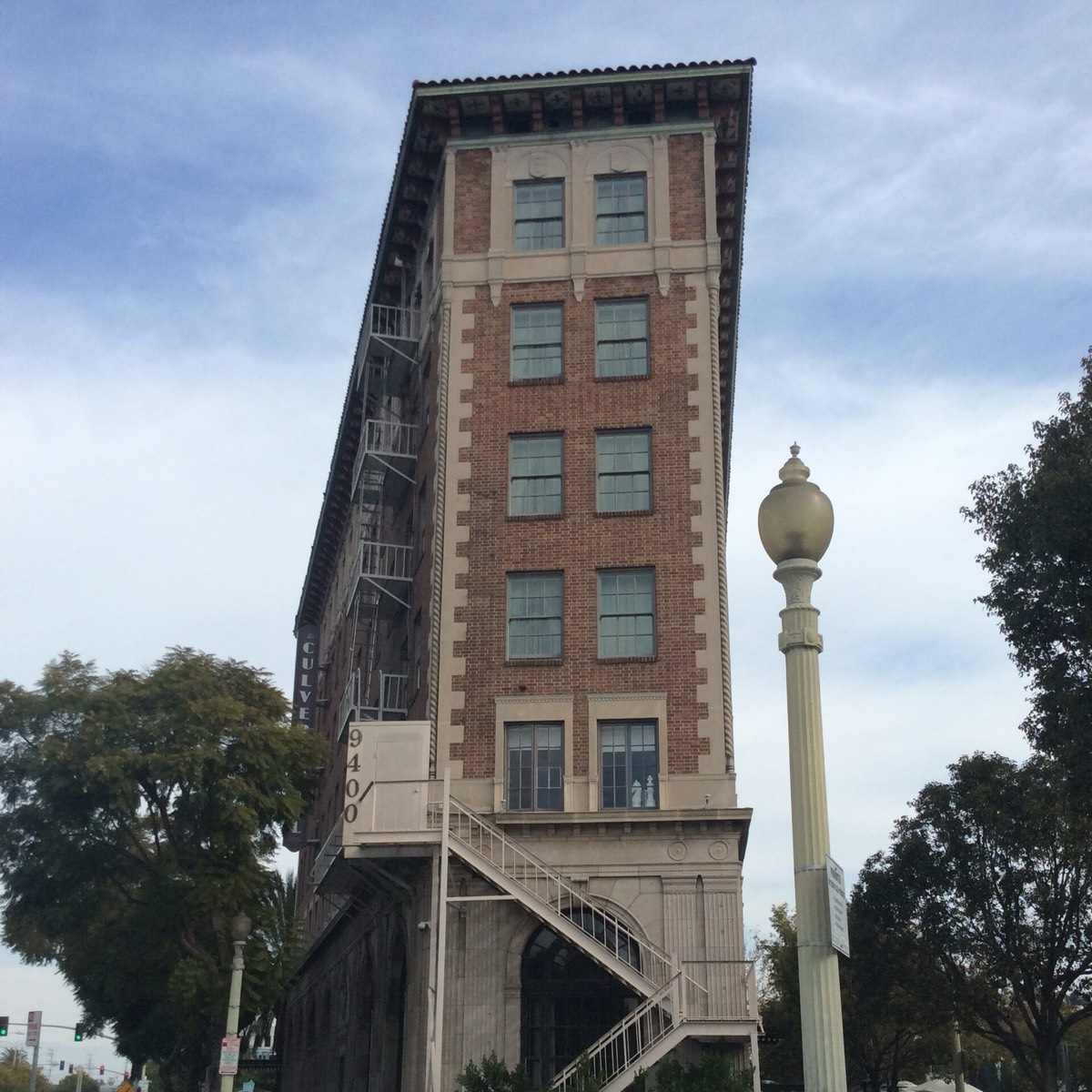
Hackman bought a finished idea
Michael Hackman’s firm did not conceive this project. It bought one that was already drawn, approved and stuck.
On 6 December 2016 Hackman Capital Partners acquired, through an affiliate, the rights to purchase and develop the 1.16-acre site, stepping into the role of Hudson Pacific and Combined Properties, who sold the development rights. The price was not disclosed.5,6 Hackman said at the time that the opportunity arose from discussions with the developers and the city about joint points of entry and exit for this site and Culver Studios, the fourteen-acre lot an affiliate had bought in 2014 — and that the project would be built around the city’s Town Plaza, a paved and landscaped gathering spot already there.6 That is the company’s own account of its own motive, and it is more candid than the version that survives online: the draw was adjacency, not a vision of the parking lot.
Construction began on 8 November 2017 on an eighteen-month schedule. The programme announced that day was roughly 40,000 square feet of retail and restaurant space, 75,000 square feet of creative office, and a 35,000-square-foot public plaza; the mayor of the day called it the crowning achievement of the downtown.7,8 Two subterranean levels would hold about 230 cars.6
Those square footages are worth watching, because they drift. The city’s project page still says 115,000 square feet total and 75,000 of office, and the architects’ own record still says 115,000 too.9,10 Hackman’s 2016 announcement said 116,000 rentable, with 70,000 of office and 46,000 of retail.6 By the 2023 leasing announcement the block was 120,000 square feet with 80,000 of office and 42,000 of retail.17 The 2024 loan documents described 121,000 square feet; the 2026 sale offering says about 122,000.20,23 Nobody is lying. Rentable area is a measured quantity that gets re-measured, and a case study that quotes one figure as though it were the figure is hiding an ordinary fact about real estate.
- Culver City's project page9115,000 sq ft75k office
- The architects' record10115,000 sq ft
- Hackman's announcement, 20166116,000 sq ft70k office · 46k retail
- Leasing announcement, 202317120,000 sq ft80k office · 42k retail
- Loan documents, Aug 202420121,000 sq ft
- Sale offering, Apr 202623122,000 sq ftabout
Seven thousand square feet appear over ten years without a brick being added. Rentable area is a measured quantity that gets re-measured, and the office and retail split moves by ten thousand feet in each direction between 2016 and 2023 while the total moves by four.
Where the tenant came from
The leasing did not follow the construction. It preceded it, and it came from next door.
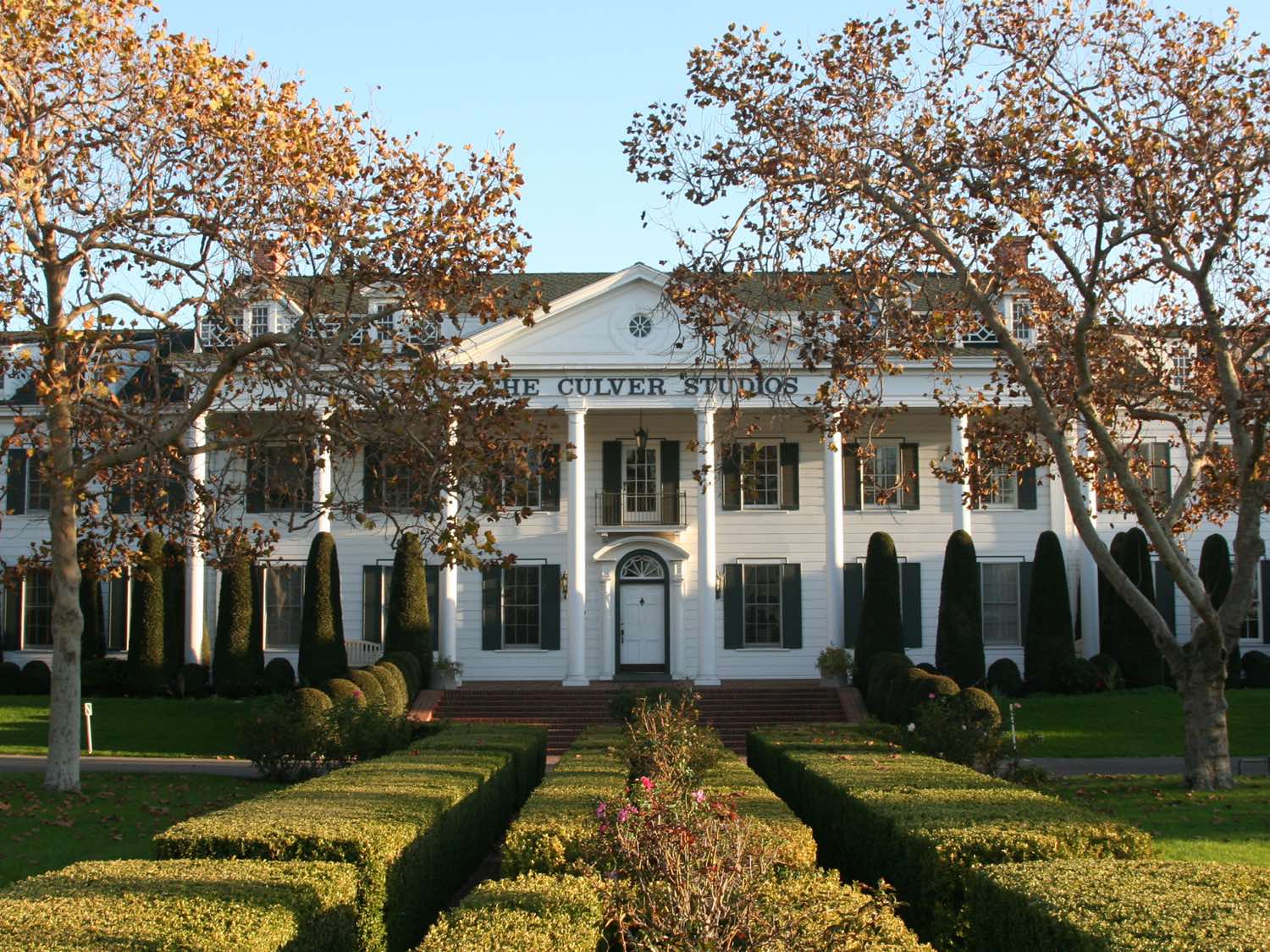
The Culver Studios mansion, photographed in November 2007. This is the fourteen-acre lot a Hackman affiliate bought in 2014 and Amazon took on a fifteen-year lease in 2018, across the street from the Culver Steps — which no photograph in this study shows, because no free-licensed one exists.Photo: Termer, CC BY-SA 3.0, via Wikimedia Commons
The tenant arrived a year before the building
The leasing did not follow the construction. It preceded it, and it came from next door.
In the autumn of 2017 Amazon took the entire 280,000-square-foot Culver Studios campus that Hackman had owned since 2014.12 In March 2018 — with the Culver Steps a hole in the ground and a year from delivery — Amazon Studios leased the whole office component, then measured at 75,000 square feet, for Amazon Studios, IMDb, Amazon Video and its worldwide advertising arm.11,12,15 Jeffrey Pion of CBRE represented the landlord; Kennedy Wilson had the retail.11 Hackman called Amazon a world-respected, award-winning content producer, and later, in an interview, his “dream tenant” — which is what a landlord says when it has just removed all of its leasing risk in one signature.12,14
The following month Amazon cut the ribbon on a fifteen-year lease of the Culver Studios lot, and by the New York Times’ account of that deal the two buildings together gave the company about 355,000 square feet of Culver City office space.13 Hackman had won it with a promise to spend $600 million on seven new buildings and other upgrades in three years.13 The expansion that followed added 413,000 square feet and two parking structures for 1,930 cars, at a reported $620 million.15
Hold the shape of that in mind. The Culver Steps did not attract Amazon. The studio lot attracted Amazon, and the Culver Steps was the overflow — a small office floorplate that happened to be across the street from a tenant already committing hundreds of millions of dollars to the block. That is a real skill, and it is a different skill from place-making.
The retail took five and a half years and a pandemic
The part that actually earned the building its reputation was slow, and it ran straight through 2020.
Salt & Straw opened a 1,250-square-foot ice cream shop on 19 November 2020; Mendocino Farms opened 3,000 square feet of sandwiches on 9 December; Philz Coffee was penciled for the following quarter. Hackman’s asset management executive pitched the outdoor space as an advantage in a Covid-conscious world where people were looking for open spaces to safely gather.16 That is the company’s framing of its own asset, and it was also, for once, obviously true — an outdoor staircase was a better thing to own in 2020 than an atrium.
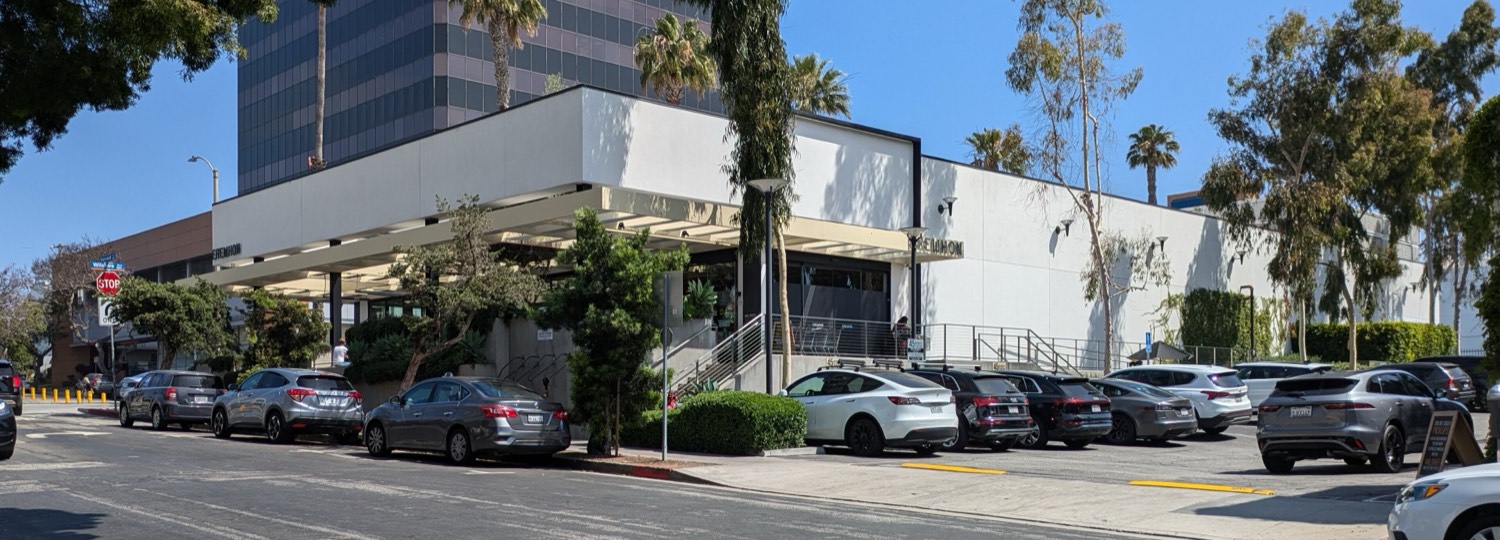
Full lease-up was announced on 22 March 2023, the day Erewhon opened: eleven retail and restaurant tenants across roughly 42,000 square feet, with Amazon Studios above.17 Commercial Observer put the elapsed cost at nearly $150 million over about five and a half years.18 Kennedy Wilson’s brokers said they had fielded more than 150 offers for the retail space, and cited Placer.ai foot-traffic data showing a 60% rise in 2022 over 2021.19 Erewhon’s own build-out was heavy enough to need a new elevator and a reworked truck dock, because the storefront had not been designed for a grocer.19 Reports of its size differ: 13,000 square feet in the 2023 coverage, about 15,000 in the 2024 loan reporting.19,20
What the financing shows that the leasing does not
Full occupancy is not a return. Every way of measuring what this block earns comes in under what its debt costs.
What the block earns on what it cost
4.1%
FY2023 · Yield on cost, on 2023 income18,20
$6.1 million of net operating income divided by the nearly $150 million spent. That is our arithmetic on two sourced figures; no source publishes it as a yield.
- Aug 20244.7%
- Aug 20245.7%
- FY20234.1%
- against6.62%
What the money costs: the $75 million five-year loan of August 2024, fixed, about 45% of it securitised. It is the only hard rate in the figure, and every reading of the building comes in under it.
The three readings are hatched because each is a division we performed on sourced figures rather than a number anyone published. The rate is not: it is in the loan.
| When | Mark | Value |
|---|---|---|
| Aug 2024 | Yield on the lender's own appraisal — The same $6.1 million against the $130 million Wells Fargo appraisal tied to the issuance — the only third-party valuation on the public record. | 4.7% |
| Aug 2024 | Yield on cost if the underwriting lands — The $8.6 million a year the lenders underwrote to, on the same cost. It is an expectation, not an outcome, and it still does not clear the line below. | 5.7% |
| FY2023 | Yield on cost, on 2023 income — $6.1 million of net operating income divided by the nearly $150 million spent. That is our arithmetic on two sourced figures; no source publishes it as a yield. | 4.1% |
| — | What the money costs: the $75 million five-year loan of August 2024, fixed, about 45% of it securitised. It is the only hard rate in the figure, and every reading of the building comes in under it. | 6.62% |
FY2023, Yield on cost, on 2023 income, 4.1%.
What the financing shows that the leasing does not
Three loans tell the arc, and the third one contains the only independent valuation on the public record.
Deutsche Bank lent $56.2 million against the construction in October 2017. Aareal Capital replaced it with $90 million in October 2020, in the middle of the pandemic and with the retail half-empty.18 Then in August 2024, with the block full, Deutsche Bank and Wells Fargo provided $75 million on a five-year term at a fixed 6.62%, about 45% of which was packaged into a commercial mortgage-backed security — a bond made of pooled commercial mortgages, sold to investors who take the loan’s risk.20,21
The numbers inside that loan are the interesting part. Wells Fargo’s appraisal tied to the issuance put the project’s value at $130 million, above $1,000 a square foot. Net operating income — rent after operating costs, before debt — had risen 41% from 2022 to reach $6.1 million at the end of 2023, and the lenders underwrote to an expectation of $8.6 million a year. Amazon had put more than $10 million of its own money into the space.20
Now do the arithmetic that nobody publishes. Against a build cost of nearly $150 million, $6.1 million of income is a yield on cost of roughly 4%.18,20 The debt on it costs 6.62%. A fully leased trophy asset with a household-name office tenant, in the submarket every broker calls a winner, was earning less on what it cost than the bank was charging to hold it. The block is not the problem; the 2017-to-2019 cost of building anything in Los Angeles is.
- Aug 20244.7%
- Aug 20245.7%
- FY20234.1%
- against6.62%
What the money costs: the $75 million five-year loan of August 2024, fixed, about 45% of it securitised. It is the only hard rate in the figure, and every reading of the building comes in under it.
The three readings are hatched because each is a division we performed on sourced figures rather than a number anyone published. The rate is not: it is in the loan.
The sequence
5 Dec 2011
Culver City’s council and redevelopment board unanimously pick the Combined Properties, Hudson Pacific and Ehrlich design for Parcel B — the grand stair and elevated plaza are in the winning drawings. A former mayor calls it the third attempt on this lot in twenty-five years.1
Feb 2013
California’s redevelopment agencies are gone and the Parcel B agreement is on standby, waiting on the state Department of Finance to clear it under the Redevelopment Dissolution Act. The lot stays empty for years.2,4
Apr–May 2014
The successor agency, on 21 April, and its oversight board, on 8 May, approve transferring Parcel B to the developer under the disposition agreement and the state-mandated property plan. The price is not in the public reporting.3
Land price never published
6 Dec 2016
Hackman Capital buys the development rights from Hudson Pacific and Combined Properties, stepping into a fully approved project. Price undisclosed.5,6
Price undisclosed
Oct–Nov 2017
Deutsche Bank lends $56.2 million against the construction in October; ground is broken on 8 November on an eighteen-month build. Amazon has just taken the Culver Studios lot next door.7,18
$56.2M construction loan
Mar–Apr 2018
Amazon leases the entire office component in March, a year before delivery, then cuts the ribbon in April on a fifteen-year lease across the street at The Culver Studios.11,12,13
2019
The Culver Steps opens, on a date the record fixes no more tightly than the year. Next door, Amazon’s $620 million, 413,000-square-foot studio expansion is under construction.10,15
Oct–Dec 2020
A $90 million loan from Aareal Capital replaces the construction debt in October. Salt & Straw opens on 19 November and Mendocino Farms on 9 December, into a pandemic.16,18
$90M refinancing
22 Mar 2023
Erewhon opens and the block is declared fully leased — eleven retail tenants, five and a half years and nearly $150 million after the start.17,18
~$150M spent
Aug 2024
A $75 million, five-year loan at 6.62% from Deutsche Bank and Wells Fargo; 45% of it is securitised. Wells Fargo’s appraisal values the block at $130 million.20
Appraised $130M
Jan 2026
Hackman defaults on the $1.1 billion Radford Studio Center mortgage and cedes the lot to a Goldman Sachs-led syndicate.22
$1.1B default
Apr 2026
A notice of default lands on the former Sony Pictures Animation campus a few blocks away, and on 29 April the Culver Steps goes on the market through Newmark at a rumoured $150 million.23,24
Ask ~$150M
21 May 2026
Hackman sues its own anchor grocer for more than $275,000 of unpaid rent while the block is being marketed as fully leased.27
>$275K claimed
The block is full and the landlord is not fine
By 2026 the Culver Steps had become the healthiest thing its owner had left, which is why it is for sale.
In January 2026 Hackman Capital and Affinius Capital — the joint venture of USAA Real Estate and Square Mile Capital, and the equity partner in the Culver Steps since it was developed — lost the Radford Studio Center. They had paid $1.85 billion for the ninety-nine-year-old Studio City lot in 2021 against a $1.8 billion appraisal, then defaulted on $1.1 billion of debt that matured in June 2025 and made no payment after. Occupancy was 63% that June, with 36% of leases expiring in August, and revenue was covering about 21% of the cost of servicing the loan. Hackman’s own statement stressed that it has substantial capital behind it, holds half its assets without debt, and keeps 55% of its studios outside the United States.22
In April a notice of default landed on 9050 Washington Boulevard, a 200,000-square-foot Art Deco campus a few blocks from the Culver Steps that Hackman and Affinius had bought in January 2021 for $160 million. Sony Pictures Animation left in 2024 after decades, the campus now appears empty, and about $101 million is owed on a Goldman Sachs-originated note — roughly $500 a square foot of debt on a vacant building.24,25 A lender also filed for foreclosure in Queens, where a Hackman-tied partnership is said to owe about $359 million on Kaufman Astoria Studios.24
On 29 April 2026 the Culver Steps went to market through Newmark. Green Street’s Real Estate Alert put a rumoured $150 million on it — about $1,230 a square foot. Amazon’s office lease runs to July 2031; Erewhon’s runs to May 2038.23 Newmark vice chairman Kevin Shannon called it a trophy product in a bull’s-eye location, and Hackman’s Mike Racine told CoStar that listing a fully occupied project was a natural next step for a mature property of this quality.26 Both statements are the sell side describing its own asset.
Then, on 21 May, Hackman filed a breach-of-contract complaint against Erewhon for more than $275,000 of unpaid rent — while marketing the block as fully leased. The lease was signed in June 2021, commenced in June 2023, and runs to May 2038 at about $86,500 a month rising to roughly $105,000, which is $6 a square foot a month rising to about $7.30 against a Los Angeles retail average below $3.27 Erewhon had been accused of the same thing by a different landlord in Studio City in 2022, and countersued.27 A curated tenant mix is a real asset. It is also a set of counterparties, and the reel’s line that each tenant made the others more valuable has to sit alongside the landlord suing the anchor mid-marketing.
What the submarket actually looks like
The bull’s-eye is real and the vacancy is real, and the sources do not agree on how bad the vacancy is.
CoStar reported in May 2026 that Culver City office vacancy stood at a record high of nearly 23%, with average asking rents around $52 a square foot, among the ten most expensive office submarkets in Los Angeles.26 The Real Deal, a month earlier, put Culver City above a 30% vacancy rate citing Colliers.24 Yardi’s data for calendar 2025 shows 28.94%, with asking rents down 8.97% year on year.28 A local outlet reported the rate as having surged past thirty percent.25 Those are different providers measuring different boundaries and, in some cases, availability rather than vacancy. The honest statement is a range: somewhere between roughly a quarter and a third of Culver City’s offices are empty, at the same moment as its best block is being priced at $1,230 a square foot.
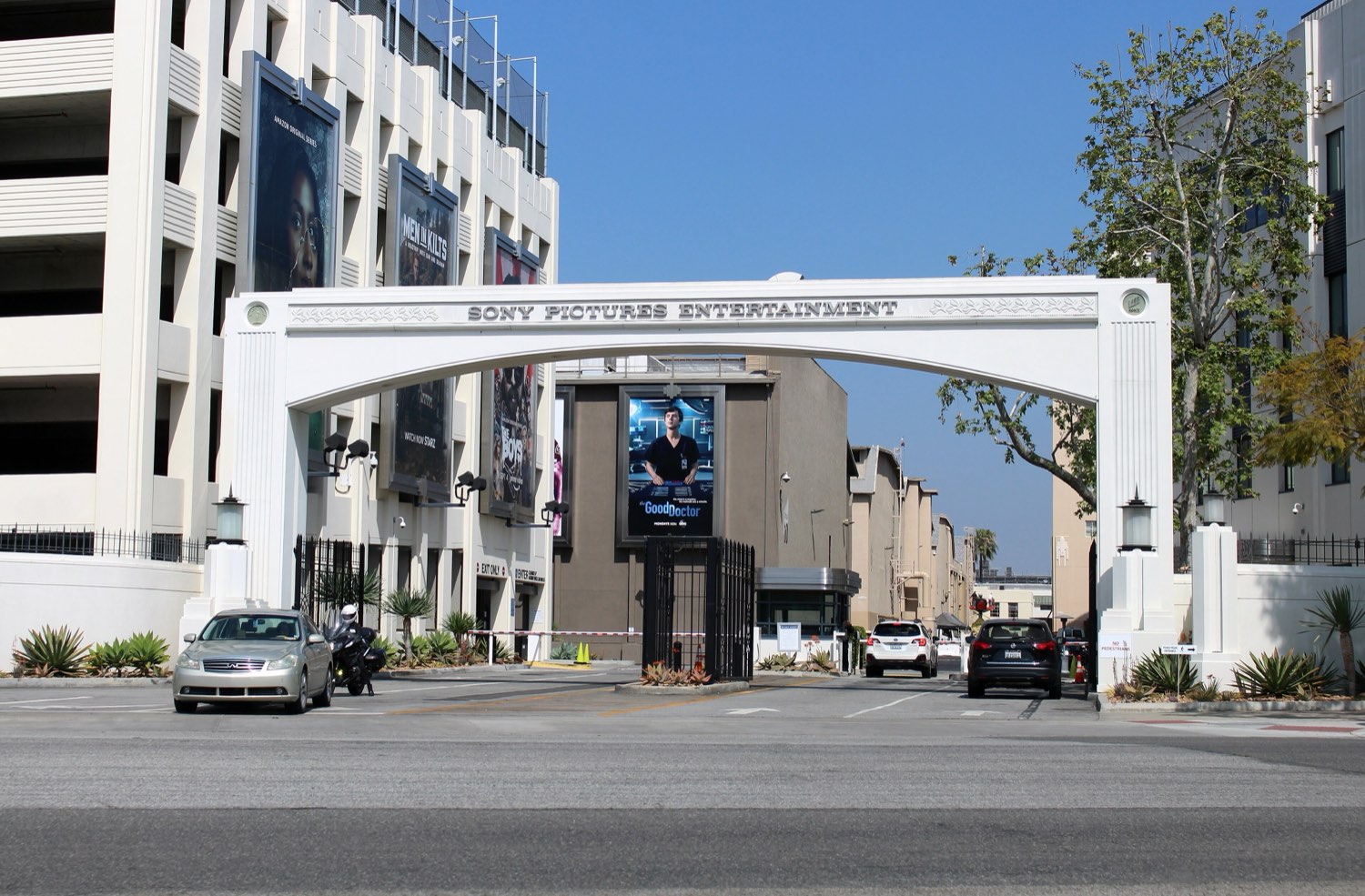
The wider frame from Kidder Mathews for the second quarter of 2026: Los Angeles direct office vacancy 16.4%, up from 16.0% the previous quarter, with negative net absorption of about 1.5 million square feet; West Los Angeles at 18.2% direct vacancy and the highest asking rents in the county at $5.05 a square foot a month.29
What keeps the Culver Steps out of that arithmetic is a single lease. Remove Amazon and the block is 80,000 square feet of empty office in a submarket that cannot fill the office it already has.
The ledger, opened
Put the sourced money in one column and the sourced outcome in the other.
| Money in, and what came back | Amount |
|---|---|
| Land — public parcel, conveyed Apr–May 2014 | Price never published3 |
| Development rights bought, 6 Dec 2016 | Undisclosed5,6 |
| Construction loan, Oct 2017 | $56.2 million18 |
| Refinancing, Oct 2020 | $90 million18 |
| Total development cost, to Mar 2023 | Nearly $150 million18 |
| Refinancing, Aug 2024 | $75 million at 6.62%20 |
| Lender’s appraisal, Aug 2024 | $130 million20 |
| Net operating income, full-year 2023 | $6.1 million (underwritten to $8.6M)20 |
| Asking price, 29 Apr 2026 | ~$150 million, no reported trade23 |
| Equity split between the partners | Never published |
Several of those lines cannot be summed honestly, and saying so is the answer. The land price is missing, so no total cost basis can be built. The equity contribution and its split between Hackman and Affinius have never been published, so no return can be computed. As of this writing no sale of the Culver Steps has been reported at all — the $150 million is what brokers told a trade publication the offering could fetch, and a rumoured ask is the weakest number in real estate, because it costs nothing to say.
What is verifiable is the pair of numbers either side of the build. Nearly $150 million spent by 2023; $130 million appraised in 2024; roughly $150 million asked in 2026.18,20,23 On the record as it stands, the Culver Steps is a fully leased, architecturally admired, Amazon-anchored block that is worth about what it cost — and that is the good outcome in this portfolio. The same partnership handed back a $1.85 billion studio and let a $160 million office campus fall into default in the same eighteen months.22,24
The reel’s closing line is that real estate value is built with foot traffic and tenant mix rather than concrete. Foot traffic and tenant mix are why this asset is saleable while its neighbours are not. They did not make it a $150 million win. They made it the one thing in the portfolio that did not lose.
What transfers
A public parcel comes with the public’s design already attached. The stair, the plaza and the orientation toward the hotel and the mansion were chosen by a city council from four competing proposals in 2011, and residents spent that winter arguing that the public seating had to be written into the binding agreement rather than trusted to a rendering.1 When a project on public land looks generous, read the entitlement before you credit the developer.
Buy the entitlement, not the idea. Hackman’s edge was never conceiving the Culver Steps; it was owning the studio lot next door, and then acquiring a stalled, fully approved project whose value depended entirely on that adjacency.5,6 The scarce thing was not the design. It was being the only buyer for whom the design was worth more than it cost.
One lease is not diversification. This block reads as a triumph of tenant mix, and the mix is genuinely good, but 80,000 of its 122,000 square feet is a single counterparty on a lease that ends in July 2031, in a submarket carrying somewhere between a quarter and a third vacancy.23,26,28 Price the day that lease expires, not the day it was signed.
Yield on cost is the number that survives a good story. Nearly $150 million spent, $6.1 million of income, debt at 6.62% — a fully leased trophy earning about 4% on what it cost.18,20 Full occupancy is not the same as a good return, and a building can be admired, busy, photographed constantly and still be worth roughly what it took to put up.
Common questions
- What was the Culver Steps site before it was built?
- It was Parcel B, a 1.16-acre public parking lot at 9300 Culver Boulevard, held by the Culver City Redevelopment Agency and then by its successor agency after California dissolved redevelopment agencies. Culver City’s council picked a winning design for the site in December 2011 — one of four proposals — and a former mayor described that as at least the third attempt to develop the plot in twenty-five years. The land was approved for transfer to the developer in 2014 under the disposition agreement and the state-mandated property plan. The price the public received for it does not appear in the available reporting.
- Who developed the Culver Steps, and did they design it?
- Hackman Capital Partners developed it with Affinius Capital, the joint venture of USAA Real Estate and Square Mile Capital, and completed it in 2019. They did not originate the design. The grand staircase, the elevated plaza and the building’s orientation were in the Ehrlich Architects scheme that Culver City’s council chose in December 2011, five years before Hackman bought the development rights from Hudson Pacific Properties and Combined Properties in December 2016 for an undisclosed price.
- How much space does Amazon lease at the Culver Steps?
- Amazon leases the entire office component. It was reported as 75,000 square feet when the lease was announced in March 2018, a year before delivery, and as 80,000 square feet in later reporting — rentable area was re-measured over time. The lease runs to July 2031, and Amazon has invested more than $10 million of its own money into the space. Separately, Amazon signed a fifteen-year lease on Hackman’s adjacent Culver Studios lot in 2018; the two together were reported to give it about 355,000 square feet of Culver City office space.
- Is the Culver Steps really worth $150 million?
- No sale has been reported. The $150 million figure is a rumoured asking price that Green Street’s Real Estate Alert attached to the April 2026 offering, equal to about $1,230 per square foot. The only independent valuation on the public record is a Wells Fargo appraisal tied to the August 2024 refinancing, which put the project at $130 million. Commercial Observer reported the development itself cost nearly $150 million by the time it was fully leased in 2023.
- Why is a fully leased building being sold?
- Because its owner is under pressure elsewhere. Hackman Capital and Affinius defaulted on a $1.1 billion mortgage at the Radford Studio Center in early 2026 and ceded the lot to a Goldman Sachs-led syndicate, after buying it for $1.85 billion in 2021. In April 2026 a notice of default was filed on the former Sony Pictures Animation campus a few blocks from the Culver Steps, with about $101 million owed on a vacant building bought for $160 million. The Culver Steps is the healthiest asset in that Culver City portfolio, which makes it the one worth monetising.
Sources
- Meghan Sahli-Wells (Culver City council member) — Combined Properties “Grand Staircase” Chosen for Parcel B (2011-12-09)
- Patch (Culver City) — Parcel B Development Still on Standby (2013-02-01)
- Culver City Observer — City Manager's Update, May 9, 2014 (2014-05-15)
- Center for Land Use Interpretation — A Hole in the Heart of Screenland (2018)
- Urbanize LA — Sleek Culver City Project Gets a New Developer (2016-12-08)
- Culver City Observer — Hackman Buys Parcel B (2016-12-22)
- Hackman Capital Partners (company release) — Hackman Capital Partners Breaks Ground on The Culver Steps Mixed-Use Development (2017-11-08)
- Urbanize LA — Finally: Construction Begins for the Culver Steps Development (2017-11-08)
- EYRC Architects — The Culver Steps — 9300 Culver Boulevard mixed-use development (Parcel B) (undated)
- City of Culver City — The Culver Steps — City Projects (undated)
- Los Angeles Business Journal — Amazon Studios Leasing 75K SF of Office Space at Culver Steps (2018-03-21)
- Hackman Capital Partners via PRWeb (company release) — Amazon Studios to Occupy Entire Office Portion of The Culver Steps (2018-03-23)
- ETCentric — Amazon Inks 15-Year Lease of the Historic Culver Studios Lot (2018-04-25)
- Commercial Observer, republished by Hackman Capital Partners — Michael Hackman on His Major Culver City Buys and Landing ‘Dream Tenant’ Amazon (2018-12-04)
- WestsideToday — New Details on Amazon's $620 Million Culver City Campus (2019-07-08)
- The Culver Steps (company release) — Salt & Straw and Mendocino Farms Debuting New Eateries at The Culver Steps (2020-11-30)
- Hackman Capital Partners (company release) — The Culver Steps Now Officially Fully Leased (2023-03-22)
- Commercial Observer — Erewhon Opens at Fully Leased Culver Steps Complex (2023-03-22)
- Bisnow — From Amazon To Erewhon: Hackman Capital's Culver Steps Fully Leased (2023-03-23)
- The Real Deal — Hackman, Affinius score $75M refi on Amazon-leased Culver Steps (2024-08-15)
- Commercial Observer — Hackman Capital Partners, Affinius Capital Land $75M Refi for L.A. Mixed-Use Property (2024-08-16)
- Commercial Observer — Hackman Loses Grip on L.A. Studio After $1.1B Default (2026-01-14)
- The Real Deal — Hackman, Affinius list Culver Steps, could command $150M, or $1.2K psf (2026-04-29)
- The Real Deal — Hackman defaults on $100M loan on creative office campus, faces foreclosure (2026-04-30)
- Culver City Crossroads — Steps for Sale — Hackman Defaults on Former Sony Animation Offices, Culver Steps Are on the Block (2026-05-04)
- CoStar News, republished by Hackman Capital Partners — Hackman Capital pushes LA pricing with Amazon-anchored ‘bull’s-eye’ block (2026-05-18)
- The Real Deal — Hackman sues Erewhon alleging unpaid rent to the tune of $275K (2026-05-28)
- CommercialCafe (Yardi Research data) — Culver City Office Price per Sqft and Office Market Trends (2025)
- Kidder Mathews — Los Angeles Office Market Report, Q2 2026 (2026-Q2)