
Case study Nº 25
The Chrysler Building’s ground rent was collateral before it was rent
In October 2006 Cooper Union borrowed $175 million against the land under the Chrysler Building, and in the same month replaced the lease’s market rent reset with a fixed schedule climbing to $55 million a year. The college’s audited statements carry that land at $600,000 and the lease on it at $735.6 million. Two owners of the tower have been emptied paying the difference.
Ben Fan, with Darryl WengJuly 24, 202615 min readWatch the reel
The leasehold, sold Mar 2019
$151M
The landlord’s book, 30 Jun 2018
$700.6M
Nine months apart, two parties valued the same skyscraper. RFR Holding and Signa paid $151 million for the right to run the Chrysler Building.5 Cooper Union, which owns the ground under it, carried its own interest in the same tower at $700.6 million — a figure its auditors derive entirely from the net present value of the rent that leaseholder owed.1 The document that made the building worth seven hundred million to a college is the document that made it worth a hundred and fifty to an investor. Jump to the money ↓
The usual telling is that a small art and engineering college got lucky with a piece of dirt, and that a greedy escalation clause destroyed two owners of a landmark. Both halves are close enough to be repeated everywhere, and the college’s own audited statements contradict the interesting part of each.
The escalation was not opportunism. It was collateral. In October 2006 Cooper Union borrowed $175 million against the land, and in the same month replaced the lease’s market rent reset with a fixed schedule a lender could underwrite. Everything that has happened at 405 Lexington Avenue since is that schedule arriving.
| The lease at a glance | Number |
|---|---|
| Who holds legal title to the land and the building | The Cooper Union, both1 |
| The land, on the college’s books | $600,000, at cost on the date of gift1 |
| The Chrysler Building asset, at fair value, 30 Jun 2018 | $700,600,0001 |
| The same asset, 30 Jun 2022 | $735,600,0002 |
| Lease entered | August 19991 |
| Lease scheduled to expire | 31 December 21471 |
| Base rent through 31 Dec 2017 | $7,750,000 a year1 |
| Base rent, 1 Jan 2018 to 31 Dec 2027 | $32,500,000 a year1 |
| Base rent, 1 Jan 2028 to 31 Dec 2037 | $41,000,000 a year1 |
| Base rent, 1 Jan 2038 to 31 Dec 2047 | $55,000,000 a year1 |
| From 1 Jan 2048, and every tenth year after | Reset to land value, never below $55,000,0001 |
| Paid on top of rent, year to 30 Jun 2018 | $20,669,817 in lieu of property taxes1 |
| The loan the lease was modified alongside | $175,000,000, MetLife, Oct 2006, 30 years at 5.87%1 |
| Chrysler Building income as a share of the college’s budgeted revenue, 2023 | 54.9%3 |
| Paid for the leasehold, Jul 2008 | $800 million for 90%5,12 |
| Paid for the leasehold, Mar 2019 | $151 million5 |
| Ground rent arrears at termination | About $21 million7 |
| What the building earns | Never published; less than the ground rent8 |
A college was endowed with land, not money
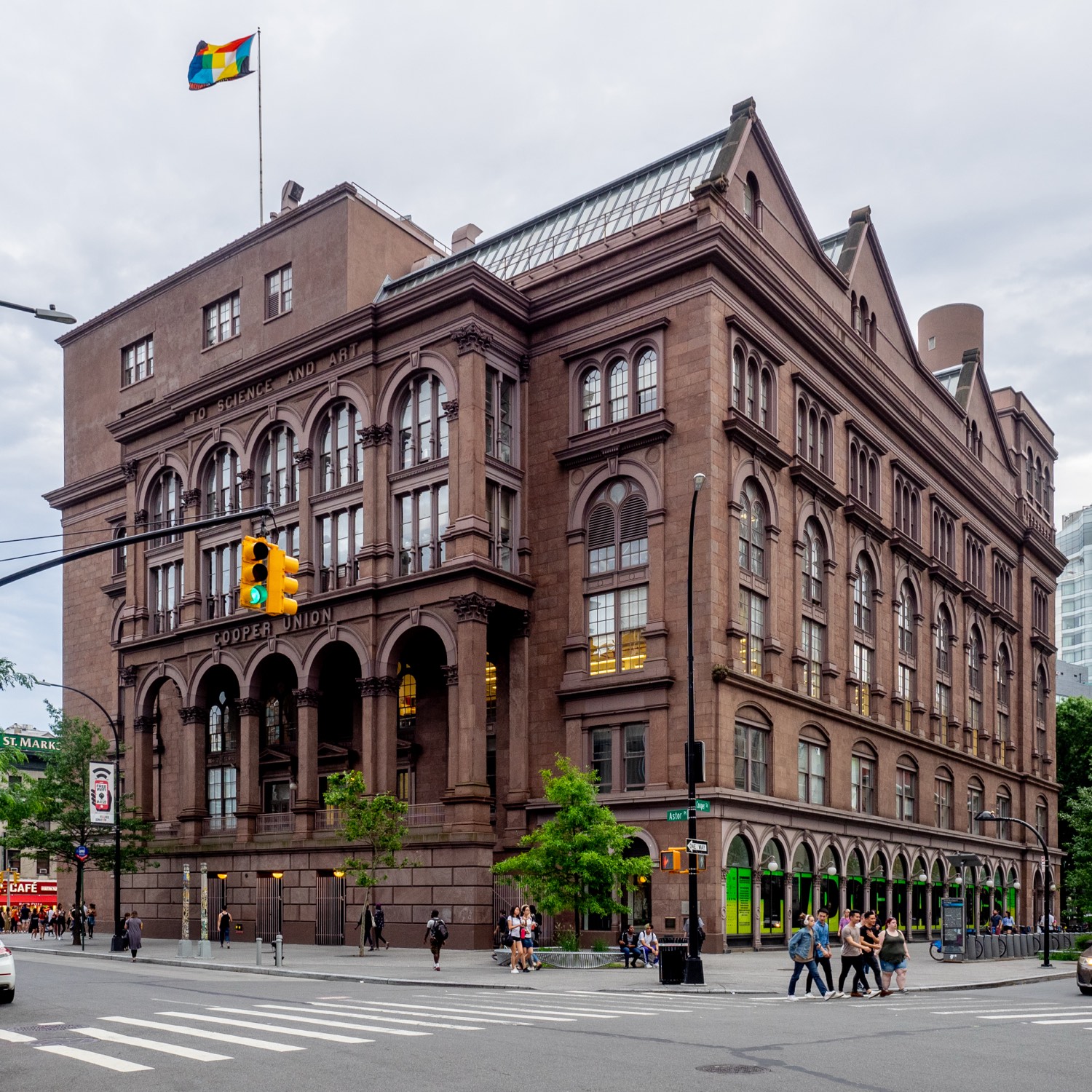
Peter Cooper opened his school in 1859 free to anyone who could pass the entrance examination, and he funded it in a way that reads as either visionary or reckless depending on the century. Instead of an investment portfolio he tied the college to land, on the reasoning that as its costs rose the rents underneath it would rise too, and the two would cancel out.4 His heirs later added the corner of Lexington Avenue and East 42nd Street.4
Seventy years after that gift, a skyscraper went up on it. The Chrysler Building opened in 1930 at 1,046 feet and seventy-seven storeys, briefly the tallest building in the world; the Chrysler family sold out in 1953 and it has passed through owners ever since.9 None of them owned the corner. The college did, and still does.
What the audited statement says, and what everybody reports
The standard summary of a ground lease is that you own the building and somebody else owns the land. It is a good enough description of the economics and it is not what the document says here. Cooper Union’s auditors put it in one sentence: “Legal title to both the land and building rests with The Cooper Union.”1
What a buyer acquires at 405 Lexington is a leasehold interest — the right to operate the tower, collect its rents and sell that right on without the college’s consent, in exchange for the payments the lease specifies.1 That distinction is technical right up to the moment it is not. A mortgage lender who is not paid forecloses, which takes months and produces an auction. A landlord whose leaseholder defaults beyond the notice and cure periods terminates, and the audited note spells out what follows: the leasehold interest ends, and every surviving tenant rental in the building becomes payable to Cooper Union.1 That clause, written in 1999, is exactly what happened in September 2024.
The reported expiry is off too. Coverage of the dispute described a lease“set to expire on the building in 2049”.5 The audited statements describe a lease scheduled to expire on 31 December 2147, with the fixed rent schedule running to 31 December 2047 and a reset every ten years from 1 January 2048.1 The nearest thing to 2049 in the document is a rent review. A hundred-year difference between the record and the retelling is worth noticing, because the length of the term is most of what a leasehold is worth.
Five numbers in one paragraph
The whole of the argument is contained in a single paragraph of the lease description, and it is worth seeing at once rather than in prose.
- Through 31 Dec 20171$7.75MPlus 10% of the tenant’s adjusted gross income above $50 million — a profit share that ended with this rate.
- 1 Jan 2018 – 31 Dec 20271$32.5M
- 1 Jan 2028 – 31 Dec 20371$41M
- 1 Jan 2038 – 31 Dec 20471$55M
- From 1 Jan 20481$55M floorReset every tenth year to the land’s fair value, never below the preceding rent.
Four contracted steps and a floor, all of them agreed in October 2006 and none of them indexed to anything the building does. The escalator is often described as a rent review; it is the opposite of one. What the 2006 modification removed was the review — a reset based on a percentage of the then fair value of the land — and what it put in place was a schedule that cannot fall, cannot be renegotiated by performance, and does not stop climbing until 2047. From 1 January 2048 it resets every tenth year to the fair value of the land considered vacant and unimproved, assuming a 1,194,000 square foot building at the land’s then current use, and in no event below the rent payable on the last day of the preceding period.1
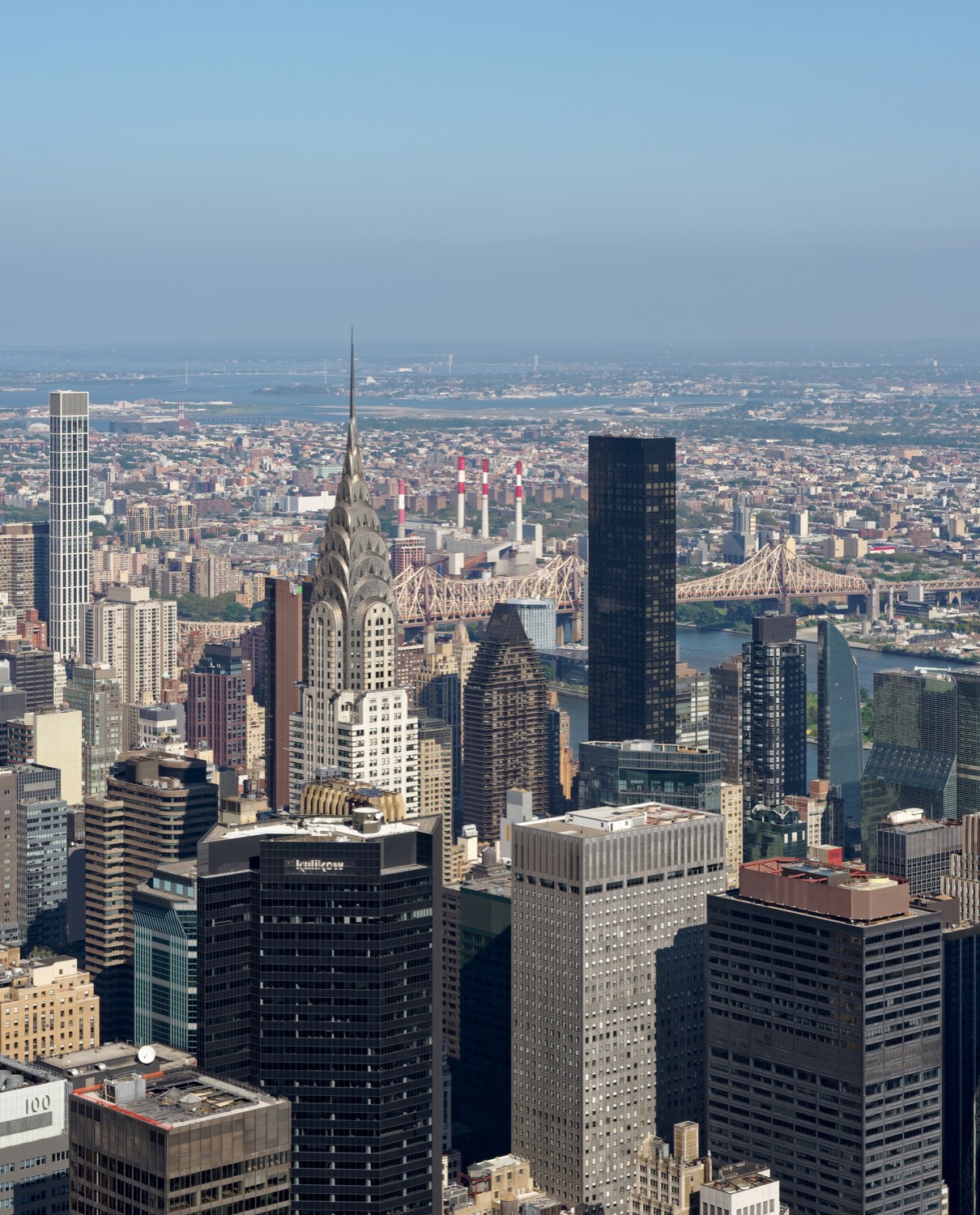
Seventy-seven storeys of somebody else’s asset
Legal title to both the land and building rests with The Cooper Union.
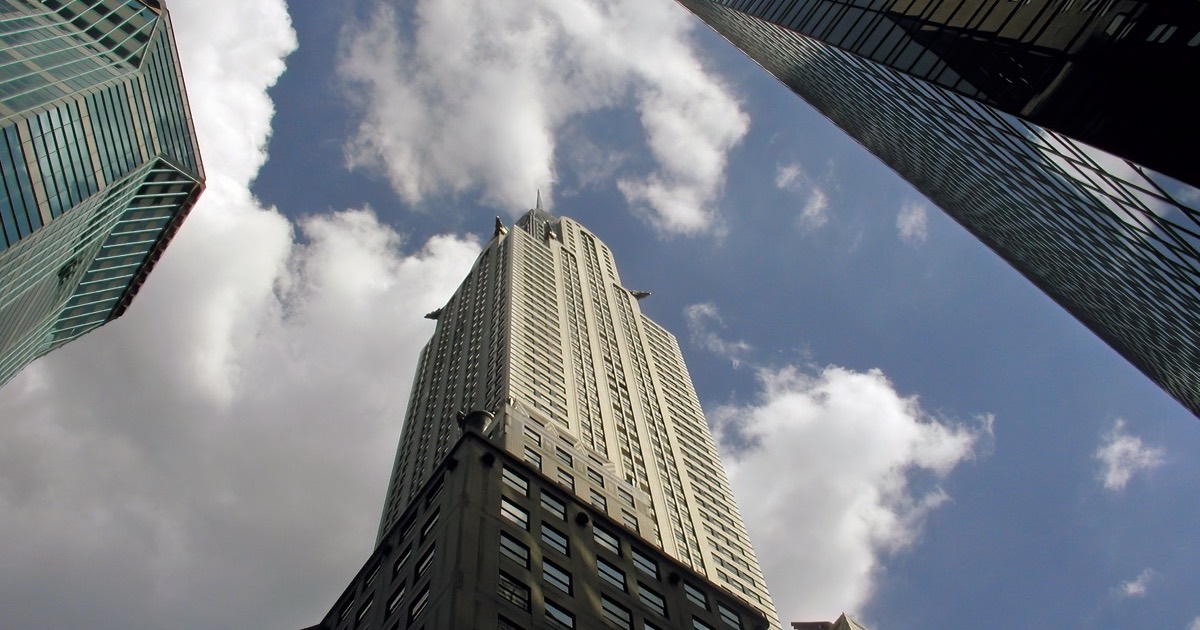
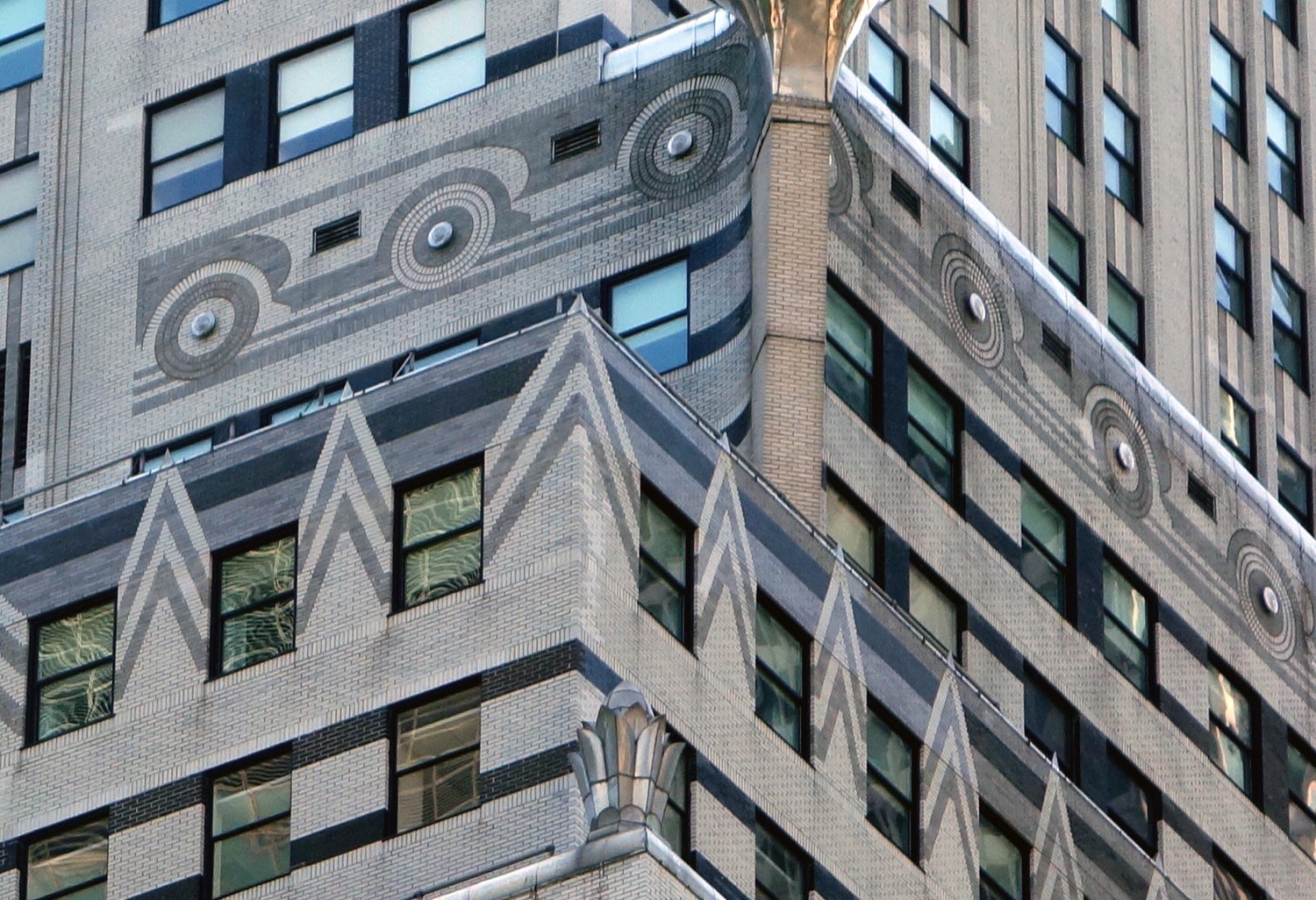
The crown from the Empire State Building. Everything below it stands on a corner the college was given, under a lease that runs to 2147.Photo: Jakub Hałun, CC BY 4.0, via Wikimedia Commons
October 2006: the loan and the lease were signed together
In the early 2000s Cooper Union’s new president decided the school needed a new academic building, and when the fundraising for it did not materialise the board borrowed instead.4 MetLife lent $175,000,000 in October 2006 — nonrecourse, thirty years, 5.87 per cent — and the collateral is described in the college’s own Note 8 with unusual precision: a first priority mortgage on the college’s fee interest in the Chrysler Building property, and an assignment of all of the college’s rights to the payment of basic rent, tax equivalency payments and other sums due under the lease.1
The lease note, three pages earlier in the same document, opens with the connection and then declines to explain it. “Contemporaneous with the October 2006 execution of the MetLife loan, The Cooper Union entered into a modification of the Chrysler Building lease. In lieu of a rent reset based upon a percentage of the then fair value of the land, the amended terms fixed the basic annual rent schedule…”1 The audited statements say the two happened together. They do not say the first caused the second, which is a normal thing for a financial statement to leave unwritten and an unusual gap to leave in the middle of the sentence that explains the most consequential clause in the document.
The reporting closes it. Commercial Observer, working through the Attorney General’s investigation into that loan, states it plainly: MetLife agreed to lend the school the funds, the loan was secured by a mortgage on the Chrysler Building land, and “it was because of that loan that the school renegotiated its lease with Tishman Speyer with terms amenable to MetLife”.4
Read the two together and the escalator stops being a landlord’s windfall and becomes an underwriting exhibit. A lender advancing $175 million against ground rent needs that rent to be knowable for the life of the loan. A reset pegged to the future fair value of Midtown land is not knowable. A schedule of $32.5 million, then $41 million, then $55 million, with a floor after that, is. The clause that eventually emptied two owners of the Chrysler Building was drafted to make a college’s mortgage financeable.
It did not save the college at the time. The Attorney General’s report called the loan part of a “complex and risky” plan whose key assumptions unravelled within two years, and concluded that the new building was finished but the school’s finances were broken in the process.4 41 Cooper Square opened in 2009 at $164 million. Cooper Union began charging tuition in 2014 for the first time in its history, settled with the Attorney General in 2015, and accepted an independent financial monitor for a ten-year term.4,11
And the leaseholder thought the deal was a bargain. In 2010 a Tishman Speyer spokesman told the Wall Street Journal that the rent due in 2018 represented a two-thirds discount to Midtown values, and added: “This discount was a great deal then, it’s a great deal now and it’s going to be even better in 2018 when it kicks in.”4 Two years earlier the same firm had sold ninety per cent of that bargain to Abu Dhabi for $800 million.5,12
One cheque, two halves, moving in opposite directions
The annual cheque, opened
A ground lease at 405 Lexington is not one payment but two, and only one of them was fixed. The base rent was contracted in 2006 and cannot fall. The payment in lieu of property taxes tracks the city's assessment, which falls when the building empties. Between 2018 and 2022 the first nearly quadrupled and the second went down.
Owed to Cooper Union, year to 30 Jun 2018
$28.9 million
Owed to Cooper Union, year to 30 Jun 2022 · $51.8 million
What the Chrysler Building earnsNever published
- Base annual rent to 31 Dec 20171$7,750,000
- Additional rent — 10% of adjusted gross income above $50 million1$441,603
- Payment in lieu of property taxes, year to Jun 20181$20,669,817
Owed to Cooper Union, year to 30 Jun 2022 · $51.8 million
Sourced, and not part of that total
Never published
- The tax equivalency payment in any future yearNot contracted
- What the Chrysler Building earnsNever published
Two audited years, four years apart, on the same scale. The 2018 bar is mostly a tax payment; the 2022 bar is mostly a rent that had nearly quadrupled while the tax payment shrank. Neither bar is the building's income, because that number has never been published — the closest thing in the record is a broker confirming, while trying to sell the lease, that it is smaller than the rent.
| Line | Amount | How it is counted |
|---|---|---|
| Owed to Cooper Union, year to 30 Jun 2018 — Base annual rent to 31 Dec 2017 | $7,750,000 | sourced, and part of the total |
| Owed to Cooper Union, year to 30 Jun 2018 — Additional rent — 10% of adjusted gross income above $50 million | $441,603 | sourced, and part of the total |
| Owed to Cooper Union, year to 30 Jun 2018 — Payment in lieu of property taxes, year to Jun 2018 | $20,669,817 | sourced, and part of the total |
| Owed to Cooper Union, year to 30 Jun 2022 — Base annual rent from 1 Jan 2018 | $32,500,000 | sourced, and part of the total |
| Owed to Cooper Union, year to 30 Jun 2022 — Payment in lieu of property taxes, year to Jun 2022 | $19,251,450 | sourced, and part of the total |
| Owed to Cooper Union, year to 30 Jun 2018 — Base annual rent contracted from 1 Jan 2028 | $41,000,000 | sourced, but a different kind of number — not added to the total |
| Owed to Cooper Union, year to 30 Jun 2018 — Base annual rent contracted from 1 Jan 2038 | $55,000,000 | sourced, but a different kind of number — not added to the total |
| Owed to Cooper Union, year to 30 Jun 2018 — The tax equivalency payment in any future year | Not contracted | never published |
| Owed to Cooper Union, year to 30 Jun 2018 — What the Chrysler Building earns | Never published | never published |
| Owed to Cooper Union, year to 30 Jun 2018 | $28.9 million | the sourced total |
| Owed to Cooper Union, year to 30 Jun 2022 | $51.8 million | the sourced total of the second structure |
The annual cheque, opened
Almost every account of this building quotes one number: the ground rent. It has never been the whole bill.
Because Cooper Union is a tax-exempt owner, the lease requires the leaseholder to pay the college an amount equivalent to the property taxes the site would owe if it were taxable, assessed by the city in the ordinary way.1 In the year to June 2018 that payment was $20,669,817 against a base rent of $7,750,000. The tax half was nearly three times the rent half, and it is the half nobody mentions.
- Base annual rent to 31 Dec 20171$7,750,000
- Additional rent — 10% of adjusted gross income above $50 million1$441,603
- Payment in lieu of property taxes, year to Jun 20181$20,669,817
Owed to Cooper Union, year to 30 Jun 2022 · $51.8 million
Sourced, and not part of that total
Never published
- The tax equivalency payment in any future yearNot contracted
- What the Chrysler Building earnsNever published
Two audited years, four years apart, on the same scale. The 2018 bar is mostly a tax payment; the 2022 bar is mostly a rent that had nearly quadrupled while the tax payment shrank. Neither bar is the building's income, because that number has never been published — the closest thing in the record is a broker confirming, while trying to sell the lease, that it is smaller than the rent.
Two owners, eleven years, the same clause
Tishman Speyer came to the Chrysler Building the way distressed assets are usually acquired: it bought the senior debt on the complex out of foreclosure in 1997 and took title the following year, then spent about $100 million by 2001 on the tower and the buildings around it.9 In July 2008 it sold ninety per cent of the leasehold to the Abu Dhabi Investment Council for $800 million and kept ten.5,12 The 2018 step was already in the lease, a decade out and fully disclosed, and the firm was on record two years later calling it a discount.4
By early 2019 the same leasehold was on the market and it traded in March for $151 million.5 RFR Holding and the Austrian group Signa Holding bought it. Every account of that trade gives the same reason for the price, and the reason is the lease: the rent had stepped ten months earlier and the next step was nine years out. Whether the loss belongs to Abu Dhabi at eighty per cent or some other figure depends on how the ten per cent Tishman Speyer retained is treated, and no party has published the split. What is not in dispute is that $800 million of 2008 money bought ninety per cent of a thing that sold whole for $151 million in 2019.
RFR’s plan was a partial hotel conversion, and it abandoned it as too expensive.10 Then the office market turned, and then in December 2023 Signa entered insolvency in Austria and put its fifty per cent stake up for sale, which left RFR holding an escalating ground lease alone.5 The firm says it has invested more than $240 million of its own capital in the property.5
The last ground rent payment was made in May 2024.7 Cooper Union issued a termination notice on 13 September, effective on the 27th, and took control of the building with Cushman & Wakefield managing it and tenants paying the college directly.6 RFR sued to block the eviction, arguing that the notice was improper, that the arrears figure was materially incorrect, and that the college’s handling of campus protests over Gaza amounted to mismanagement justifying a rent suspension.5,7 Justice Jennifer Schecter rejected the arguments and ordered RFR ejected on 29 January 2025.7 Documents filed on 29 April 2025 ordered an RFR entity to pay more than $18.81 million and return every lease and security deposit.8
The sequence
1859
Peter Cooper opens The Cooper Union in the Foundation Building on Cooper Square, free to all who can pass the entrance examination, and endows it with Manhattan land rather than money. His heirs later add the corner of Lexington Avenue and East 42nd Street.4
1930
The Chrysler Building opens on that corner — 77 storeys, 1,046 feet, briefly the tallest building in the world. It is built on land the college already owns, and on the college’s books that land carries the cost recorded on the date it was given: $600,000.1,9
$600,000 land, at cost
Aug 1999
Cooper Union enters the lease agreement that governs the tower today, scheduled to expire on 31 December 2147. Base rent is $7,750,000 a year through 2017, plus 10% of the tenant’s adjusted gross income above $50 million, plus an amount equal to the property taxes the site would pay if it were taxable.1
$7.75M base rent
Oct 2006
Cooper Union borrows $175,000,000 from MetLife — nonrecourse, 30 years, 5.87% — secured by a first mortgage on its own fee interest in the Chrysler Building and an assignment of every dollar of basic rent and tax equivalency payment. Contemporaneously, and in lieu of a rent reset based on the then fair value of the land, the lease is modified to fix a rising schedule through 2047.1,4
$175M borrowed
Jul 2008
Tishman Speyer sells a 90 per cent stake in the leasehold to the Abu Dhabi Investment Council for $800 million, keeping ten per cent. The 2018 step to $32.5 million is already written into the lease.5,12
$800M for 90%
2009
41 Cooper Square opens, designed by Thom Mayne, at a cost of $164 million. The Attorney General’s later investigation calls the loan that built it part of a “complex and risky” plan whose key assumptions unravelled within two years.4
$164M spent
2010
A Tishman Speyer spokesman tells The Wall Street Journal that the rent due in 2018 represents a two-thirds discount to Midtown values: “This discount was a great deal then, it’s a great deal now and it’s going to be even better in 2018 when it kicks in.”4
2 Sep 2015
The Attorney General settles his investigation into the college. The consent decree installs an independent financial monitor and obliges Cooper Union to plan a return to free tuition, three years after it began charging it for the first time in its history.4,11
1 Jan 2018
The step arrives. Base rent goes from $7,750,000 to $32,500,000 a year, and the profit share above $50 million of adjusted gross income ends with it.1
$32.5M base rent
Mar 2019
RFR Holding and Signa Holding buy the leasehold for $151 million. Abu Dhabi had paid $800 million for ninety per cent of it eleven years earlier.5,10
$151M
Dec 2023
Signa Holding enters insolvency proceedings in Austria and puts its 50 per cent stake in the building up for sale. RFR’s partner is gone.5
15 Feb 2024
The financial monitor reports to the Attorney General that Chrysler Building revenue was 54.9% of budgeted revenue in 2023, names its continuation as the college’s largest contractual challenge, and records that all payments are current as of 30 June 2023.3
54.9% of budget
May 2024
RFR makes its last ground rent payment. Arrears reach about $21 million.7
$21M unpaid
13 Sep 2024
Cooper Union issues a termination notice. It takes effect on 27 September and the college takes control of the building, appointing Cushman & Wakefield to manage it. Tenants begin paying rent to the college directly.6
Sep 2024
In the same month, Cooper Union makes tuition free for all graduating seniors — the first cohort since 2014 to leave without paying.13
29 Jan 2025
Justice Jennifer Schecter orders RFR ejected, ending the leasehold. RFR had argued the termination was improper and that the college’s handling of campus protests justified withholding rent; the court rejected both.7
29 Apr 2025
Court documents show an RFR entity ordered to pay Cooper Union more than $18.81 million and to return all leases and security deposits.8
$18.81M ordered
May 2025
Cooper Union hires Savills to market a new ground lease. Income from the office tenants still does not cover the ground rent, and about 15 per cent of the 1.2 million square feet is empty.8,10
7 Apr 2026
Cooper Union enters exclusive negotiations with Tishman Speyer — the firm that took the leasehold out of foreclosure in 1997 and sold ninety per cent of it in 2008 — for a ground lease of more than a hundred years. Any deal needs the Attorney General’s approval.9
The monitor named the risk, and it arrived that year
Because of the 2015 consent decree, Cooper Union’s finances are reported on annually by an independent monitor to its own board and to the New York Attorney General, which means there is a document that says out loud what this lease is to the college.11
The monitor’s report of 15 February 2024 puts revenue from the Chrysler Building lease and its tax equivalency payment at $50.4 million in 2023 — 54.9 per cent of budgeted revenue including endowment payout — against $51.8 million in 2022 and a forecast $51.1 million for 2024.3 More than half of a college’s money came from one lease on one building. The same report names the continuation of those payments as the largest contractual challenge the institution faces, attributes the decline since 2021 to vacancy lowering the assessment behind the tax payment, and records that all payments were current as of 30 June 2023.3
Three months after that report was filed, they stopped.
The monitor also credits the lease with the turnaround, and this is the part that makes the study uncomfortable rather than tidy: it names the contractual changes to the Chrysler Building lease first among the initiatives that moved Cooper Union from large structural deficits to sustainable operating surpluses.3 In September 2024 — the same month it terminated the lease — the college made tuition free for all graduating seniors, the first cohort since 2014 to leave without paying.13 The escalator that made the Chrysler Building unsellable at more than $151 million is the same escalator that is putting a free college back together.
What the building can earn, and what it owes
The reason none of this resolves with a new owner is arithmetic that has not changed since 2019. The tower is 1.2 million square feet, its vacancy was running near fifteen per cent when the college took it back, and its rents have struggled to break $100 a square foot, against $300 on the top floors of One Vanderbilt a few blocks west.7,8 Aby Rosen’s public estimate is that the building needs an infusion of more than $100 million on top of what RFR already spent.8
Set that against $32.5 million of ground rent today, $41 million from 2028, plus a tax equivalency payment that has recently run near $19 million and will rise again if the building fills up — because filling it up raises the assessment. A leaseholder who succeeds at leasing the building increases one of its two obligations by succeeding. That is not a trap anyone designed; it is what happens when a payment indexed to assessed value sits beside a payment indexed to nothing.
Cooper Union hired Savills in May 2025 to market a new ground lease, with the stated goal of maximising income while keeping the land.8 On 7 April 2026 its board entered exclusive negotiations with Tishman Speyer for a term of more than a hundred years — the same firm that took the leasehold out of foreclosure in 1997, sold ninety per cent of it in 2008 and held a minority interest until 2019.9 Any deal requires the New York Attorney General’s approval, which is the consent decree still doing its work.9
What the new rent will be is the whole question and it is not public. Cooper Union’s audited statements for the years since the termination are not posted, so what the college has actually collected while running the building itself — tenant rents net of the operating costs a landlord inherits, against a $175 million mortgage still secured on the fee — is not in the record either.
What transfers
The first thing is a reading habit. Every retelling of this building quotes the ground rent and stops. The lease has three revenue lines, one of which is larger than the headline rent for most of its history and moves in the opposite direction, and one of which was a profit share that quietly expired in 2017. A ground lease is a schedule, not a number, and the schedule is usually in the landlord’s audited statements rather than the buyer’s press release.
The second is about where escalation clauses come from. The instinct is to read a steep escalator as a landlord’s judgment about future rents. Here it was a lender’s requirement about certainty, and the two produce very different documents. A rent reset to fair value tracks the market in both directions. A fixed ladder tracks nothing, which is precisely why it can be borrowed against — and why, forty years into a hundred-and-fifty-year term, it can be paying a landlord handsomely for an asset no leaseholder can operate at a profit. Before signing under an escalator, the question is not whether it is affordable now. It is what the clause was drafted to secure, and whether that thing is still there.
The third is that both parties can be telling the truth. The college is not a villain: it was endowed with land in 1859, mortgaged it in 2006 on advice that the Attorney General later called risky, nearly lost the school over it, and is climbing back to free tuition on the rent that mortgage produced. The leaseholders are not fools either: the step was disclosed a decade in advance, and the buyer who paid $800 million for ninety per cent was on record calling the future rent a bargain. Everyone read the same lease. What none of them priced was that the tower would still owe 2006’s rent in a market that no longer paid 2006’s rents.
And the corner is still there. It has outlasted Walter Chrysler, three sets of owners and one bankruptcy in Austria, and it is on the books at the price recorded on the day it was given: six hundred thousand dollars.1
Common questions
- Who actually owns the Chrysler Building?
- The Cooper Union for the Advancement of Science and Art. Its audited financial statements state that legal title to both the land and the building rests with the college — the standard description of a ground lease, where the tenant owns the building and the landlord owns the land, is not what this document says. What a buyer acquires at 405 Lexington Avenue is a leasehold interest: the right to operate the tower, collect its rents and transfer that right on without the college’s consent, in exchange for the payments the lease specifies. Cooper Union was endowed with Manhattan land rather than money by Peter Cooper in 1859, and his heirs later added the corner at Lexington Avenue and East 42nd Street.
- What is the Chrysler Building ground rent, and why does it keep rising?
- Base rent was $7,750,000 a year through 31 December 2017, then $32,500,000 from 1 January 2018 to the end of 2027, then $41,000,000 to the end of 2037, then $55,000,000 to the end of 2047. From 1 January 2048 and every tenth year after, it resets to the fair value of the land considered vacant and unimproved, and can never fall below $55,000,000. That schedule was fixed by a modification executed in October 2006, contemporaneously with a $175,000,000 MetLife loan to Cooper Union secured by a first mortgage on the college’s fee interest and an assignment of the rent itself. The modification replaced a rent reset based on the then fair value of the land — a review that tracks the market in both directions — with a ladder that only goes up.
- Why did the Chrysler Building sell for only $151 million in 2019?
- Because the lease, not the building, was being priced. The Abu Dhabi Investment Council paid $800 million in July 2008 for a 90% stake in the leasehold, with Tishman Speyer retaining 10%. The step from $7.75 million to $32.5 million a year arrived on 1 January 2018, and the next step to $41 million was contracted for 2028. RFR Holding and Signa Holding bought the leasehold in March 2019 for $151 million. Every account of the trade attributes the discount to the ground rent. No party has published how the loss was split between the 90% and 10% holders.
- What is a tax equivalency payment, and why does it matter here?
- Because Cooper Union is tax-exempt, the site pays no property tax to New York City. The lease instead requires the leaseholder to pay the college an amount equal to what the taxes would be, based on the city’s assessment of the land and building. For years this was the larger half of the bill: $20,669,817 in the year to 30 June 2018, against base rent of $7,750,000. It also behaves differently — it falls when the building empties, because vacancy lowers the assessment. It was $19,251,450 in the year to June 2022, down from $20,960,240 the year before. So the half of the cheque tied to the building’s health shrank while the fixed half nearly quadrupled.
- How did Cooper Union take the Chrysler Building back from RFR?
- The 1999 lease provides that if the lessee defaults beyond the notice and cure periods, the leasehold interest terminates and all surviving tenant rentals in the building become payable to Cooper Union. RFR made its last ground rent payment in May 2024 and arrears reached about $21 million. Cooper Union issued a termination notice on 13 September 2024, effective 27 September, and took control with Cushman & Wakefield managing the property. RFR sued to block the eviction, arguing the notice was improper, the arrears figure materially incorrect, and that the college’s handling of campus protests justified suspending rent. New York State Supreme Court Justice Jennifer Schecter rejected those arguments and ordered RFR ejected on 29 January 2025; an order filed on 29 April 2025 required an RFR entity to pay more than $18.81 million.
- What happens to the Chrysler Building next?
- Cooper Union hired Savills in May 2025 to market a new ground lease while keeping the land, and on 7 April 2026 its board entered exclusive negotiations with Tishman Speyer for a term of more than a hundred years — the firm that took the leasehold out of foreclosure in 1997, sold 90% of it in 2008 and held a minority stake until 2019. Any agreement requires approval from the New York State Attorney General’s office under the 2015 consent decree. The rent under any new lease has not been made public, and Cooper Union’s audited statements for the years since the termination are not posted, so what the college has collected while operating the building itself is not yet in the record.
Sources
- The Cooper Union for the Advancement of Science and Art (audited, Grant Thornton) — Consolidated Financial Statements, June 30 2018 and 2017 — Note 3, the Chrysler Building lease, the fixed rent schedule, the tax equivalency payment, the land at historical cost; Note 8, the MetLife loan (2018-12-19)
- The Cooper Union for the Advancement of Science and Art (audited, Grant Thornton) — Consolidated Financial Statements, June 30 2022 and 2021 — the Chrysler Building carried at fair value, and the tax equivalency payment for both years (2022-12-20)
- Kroll Associates (Financial Monitor to the Cooper Union Board of Trustees and the New York State Attorney General) — Annual Report of the Financial Monitor — Chrysler Building revenue as a share of budgeted revenue, and the largest contractual challenge the college faces (2024-02-15)
- Commercial Observer (Chava Gourarie) — Cooper Union Makes Over $50M a Year From the Chrysler Building. But Is It Enough? — the MetLife loan, the lease renegotiated on terms amenable to the lender, and Tishman Speyer’s “two-thirds discount” (2019-02-19)
- Commercial Observer (Mark Hallum) — RFR Trying to Stop Ground Lease Termination on Chrysler Building — the termination, RFR’s $240 million capital claim, and the 1997 and 2008 trades (2024-09-27)
- The Cooper Union (Interim President Malcolm King) — Update on the Chrysler Building — the termination notice of 13 September 2024, effective 27 September, and the college taking control (2024-09-27)
- Bisnow (Ciara Long) — RFR Evicted From Chrysler Building, Ending Feud With Cooper Union — Justice Jennifer Schecter’s order, the $21 million, and the defence the court rejected (2025-01-30)
- Commercial Observer (Lois Weiss) — Chrysler Building On the Market as Its Landowner Seeks to Boost Income — the Savills marketing, the 29 April 2025 order, the vacancy, and rents against One Vanderbilt (2025-05-19)
- CoStar News (Andria Cheng) — Tishman Speyer moves closer to reclaiming New York’s Chrysler Building — the exclusive negotiations, and how Tishman Speyer took the building in the first place (2026-04-07)
- The Real Deal (Holden Walter-Warner) — Cooper Union marketing Chrysler Building ground lease — the arrears, the tenants, the vacancy and the abandoned hotel plan (2025-05-19)
- Office of the New York State Attorney General — A.G. Schneiderman Announces Comprehensive Reform Package To Resolve Cooper Union Investigation And Lawsuit — the consent decree and the independent financial monitor (2015-09-02)
- Al Jazeera — Abu Dhabi buys into Chrysler tower — the Abu Dhabi Investment Council’s 90% stake (2008-07-11)
- CNBC (Jessica Dickler) — Cooper Union college restores free tuition for graduating seniors (2024-09-04)