
Case study Nº 15
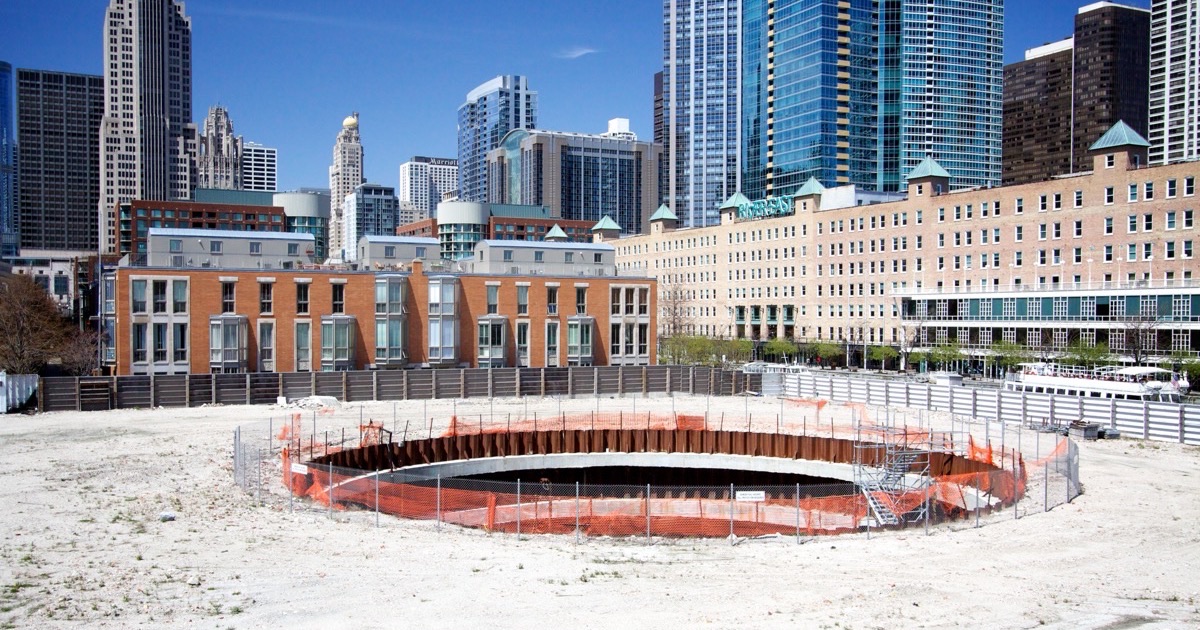
The only part of the Chicago Spire ever built now holds up its successor
The Spire got a $64 million site, a 2,000-foot design, $496 million of condo sales and a foundation — then its loan was raised four days before Lehman failed, judged at $82.9 million, and sold by the Irish state for about $35 million to Related, which used the paper to take the land. The tower rising there now stands on twenty of the Spire’s caissons, was financed by promising affordability, and cannot legally open until the park two developers promised is finally built.
Ben Fan, with Darryl WengJanuary 29, 202617 min readWatch the reel
The 2.2 acres, bought Jul 2006
$64M
The claim its loan became by Oct 2013
$96.5M
The land under the Chicago Spire traded at arm’s length exactly once in the whole cycle: $64 million, in July 2006, to a buyer who did no due diligence.1,3 Everything after that was paper — a loan that grew while the site produced nothing, was judged at $82.9 million, sold by the Irish state for about $35 million, and filed as a $96.5 million claim by the buyer who used it to take the land.1,10,15 The tower died in that arithmetic. The hole it left turned out to be the one part of the project that worked. Jump to the money ↓
The usual telling — the reel’s included — is a redemption story about engineering: a cursed hole, a clever developer, a discount. The engineering half survives contact with the record almost untouched, which is rare. The finance half is better than the telling. Related Midwest never bought the cursed dirt at a discount, because it never bought the dirt at all. It bought the dirt’s dead loan from the Irish state, at a price redacted from the court file, and let the loan do the rest.
And the site’s two eras rhyme more precisely than anyone retells. The Spire also promised to build DuSable Park. The Spire also pledged money to it, in its developer’s own cheerful words. The difference between a promise that sat fenced for another seventeen years and one with a park under construction is not sincerity — it is that the second promise was wired to the certificate of occupancy.
| The site at a glance | Number |
|---|---|
| The Spire, as designed | 2,000 feet, 150 storeys, 1,194 residences, each floor rotated 2.4°1,4 |
| The land, bought 20 Jul 2006 | $64 million — closed in eight days, no due diligence1,3 |
| What got built, 2007–2008 | 34 caissons to bedrock, a cofferdam, a 76-foot hole1,6,14 |
| Sales before the stop | 309 closed sales, $496 million; a $40M penthouse contract two weeks after Lehman1,5 |
| The deposits | All $17 million returned, December 20101 |
| The Anglo Irish loan | $54.5M → $69.5M on 11 Sep 2008 → judged at $82.9M in 20111 |
| What NAMA sold the loan for, Jul 2013 | About $35 million; redacted in the filings10,15 |
| The claim Related’s vehicle filed | $96,542,9751 |
| What keeping the site would have cost Kelleher | More than $109 million, by 31 Oct 2014 — missed11 |
| The successor tower | 72 storeys, 857 feet, 635 rentals — 127 affordable at 30–50% AMI24,28,32 |
| Its financing | ≈$500M, mostly IHDA tax-exempt bonds sold to Wells Fargo25,26 |
| The Spire structure it stands on | Twenty 10-foot rock caissons under the core, plus the cofferdam24,31 |
| DuSable Park, named 1987 | $10M from Related; must be finished before the tower’s certificate of occupancy21,28 |
| What Kelleher lost | $180 million of his own cash by his 2009 account; no total ever published6 |
A needle, bought overnight
The Spire began as someone else’s idea. In July 2005 Chicago developer Christopher Carley announced the Fordham Spire — 115 stories, $500 million, a Calatrava design whose mast would touch 2,000 feet.2 Carley could not close on the land. Garrett Kelleher — a Dubliner who had cut his teeth on Chicago buildings in the 1980s before building Shelbourne Development back home — could, and did, on 20 July 2006: $64 million for the 2.2 acres where the Chicago River meets the lake, financed with a $54.5 million loan from Anglo Irish Bank.1 His own description of the underwriting, delivered to a community meeting six months later, deserves quoting in full: “I looked at it on a Wednesday, and we closed it the following Thursday. Did no due diligence on the site whatsoever. I decided the site spoke for itself.”3
Under Kelleher the design grew to its final form — 150 storeys, 2,000 feet, 1,194 residences, each floor rotated 2.4 degrees so the tower twisted a full turn on its way up.1,4 Sales launched in January 2008 with a tour of Beijing, Singapore, Hong Kong, Dubai and London, Liam Neeson narrating the campaign, and a projected sellout of $3.4 billion against $2.3 billion of cost.6,16 For a while it worked: by mid-2009 the books showed 309 closed unit sales totalling $496 million, and two weeks after Lehman Brothers failed, Ty Warner — the Beanie Babies billionaire — signed a contract for the $40 million penthouse on floors 141 and 142.1,5 Floors, it is worth noting, that did not exist, above a foundation that barely did.
Four days before Lehman, the loan got bigger
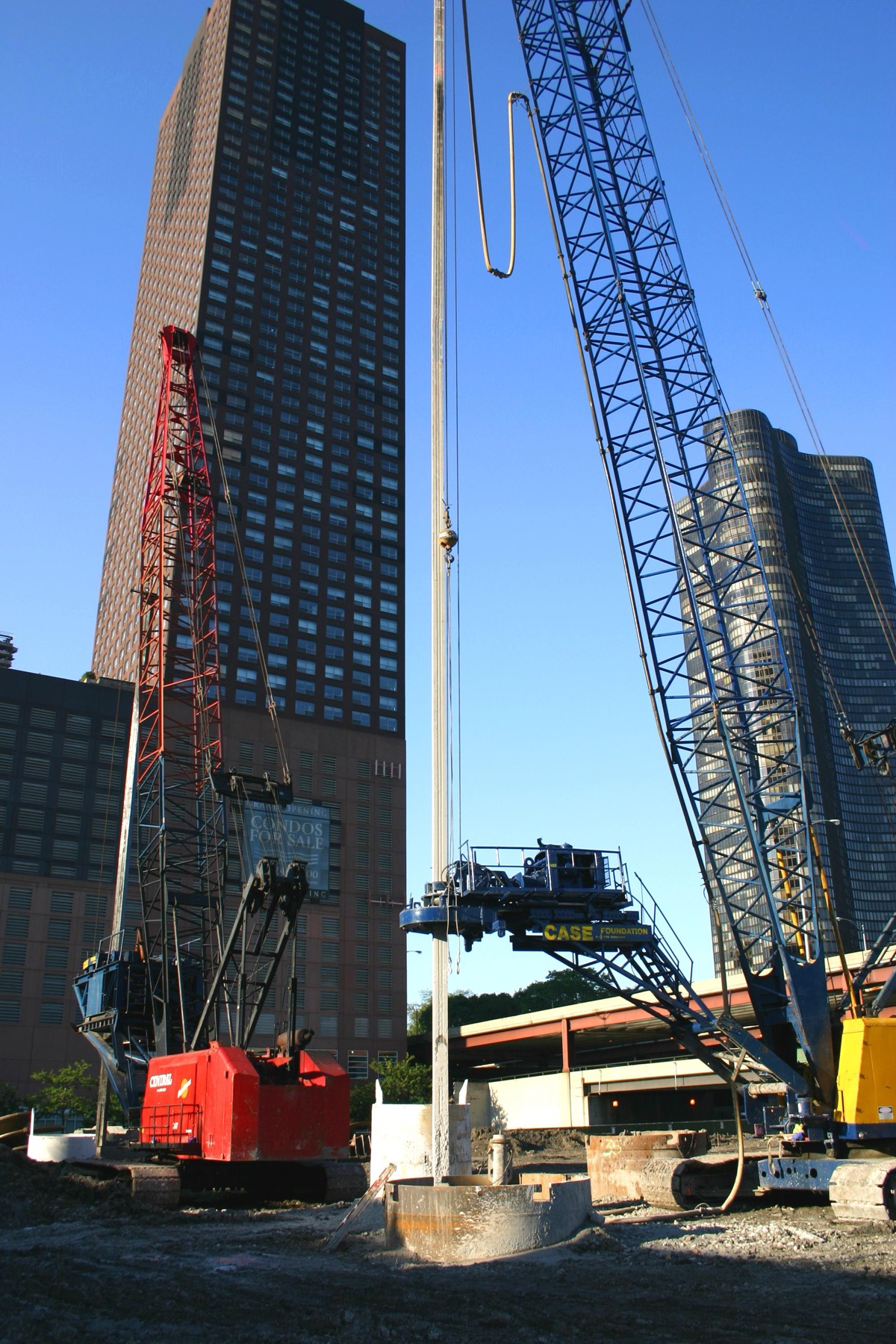
The record dates the Spire’s real turning point with uncomfortable precision. On 11 September 2008, Shelbourne and Anglo Irish Bank formally amended the loan upward, from $54.5 million to $69.5 million.1 Lehman failed on the 15th. By the end of September Shelbourne was conceding that underground work would slow “due to the roiled financial markets”; in October it shut the project down entirely as Anglo — soon to be nationalized — stopped being a bank in any useful sense.5,9 The foundation was complete: 34 caissons to bedrock, a cofferdam roughly 110 feet across, an excavation 76 feet deep. The superstructure never began.1,6,14
What followed was the slow-motion part. Contractors filed liens — Calatrava’s own, for $11.34 million of unpaid fees, among $18.4 million of them.1,8 Kelleher, who had put in about $250 million by his own account — $180 million of it his personal cash — hunted refinancing through 2009 and found none.6 Anglo filed its $77 million foreclosure suit in October 2010; a receiver took the site in December; and — a detail the cursed-hole retellings never carry — Chicago Spire LLC then returned every dollar of its buyers’ deposits, about $17 million, per its own statement in the bankruptcy record.1,7 The people who had bought apartments in a drawing got their money back. Nearly everyone else in the story did not.
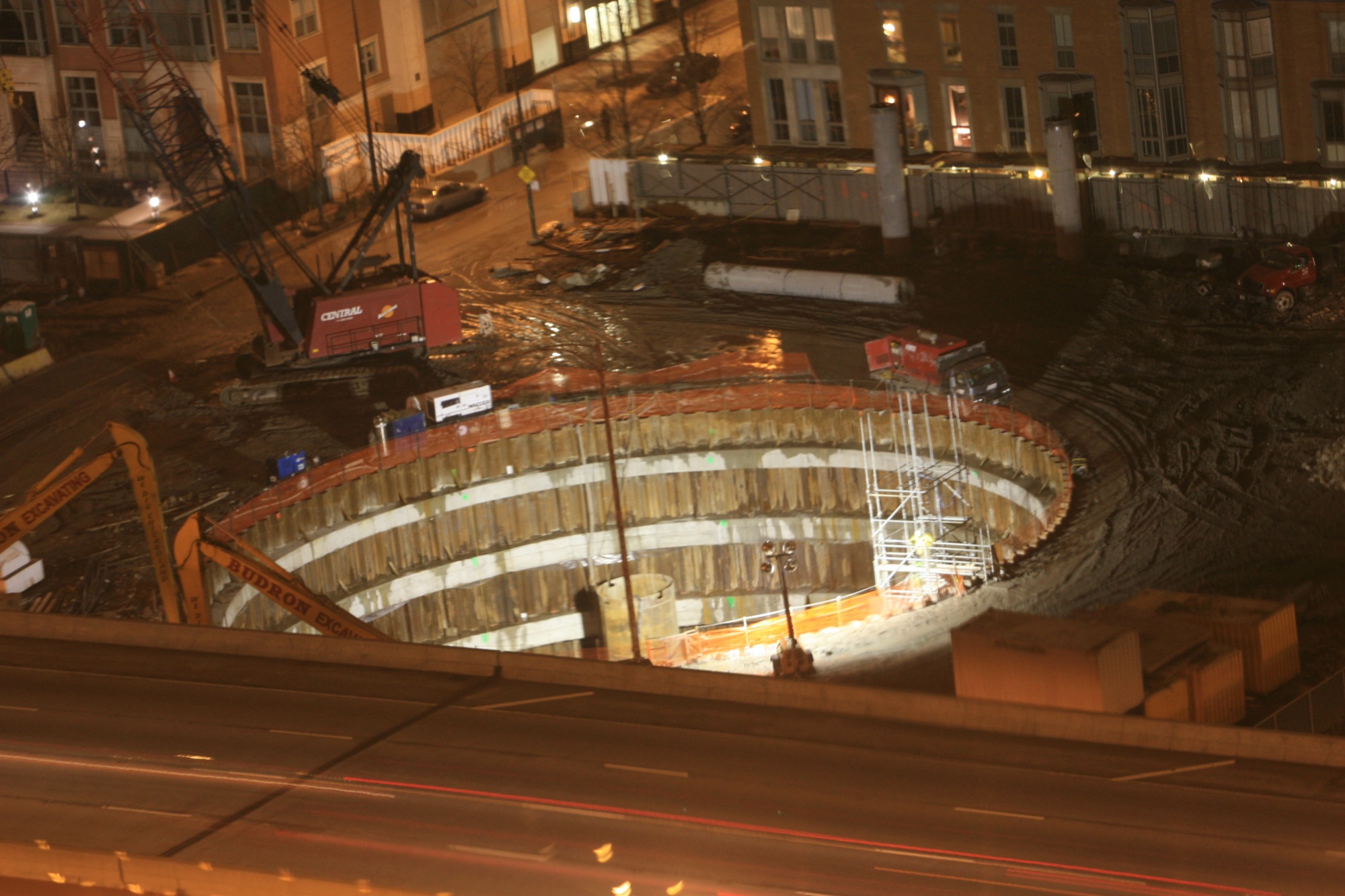
400 North Lake Shore Drive, January 2008
The foundation was finished. Nothing ever stood on it but the debt.
The excavation in January 2008, its last active winter, photographed from Lake Point Tower. Work slowed that autumn and never resumed; the circle in the ground spent fifteen years as Chicago's most famous failure before its successor stood on it.Photo: Hillndale57, public domain, via Wikimedia Commons
One loan, re-marked
The tower was never built, so the Spire's honest instrument is its debt: one loan, marked six times across eight years, ending not in repayment but in land.
What the Spire’s loan was worth
More than $109 million
31 Oct 2014 · What keeping the site would have cost its old owner11
2.0× $54.5 million
The confirmed plan’s buy-back price. Kelleher’s rescue venture missed the final $22 million payment, and title passed to Related on 4 November 2014 — no auction, a calendar.
- 20 Jul 2006$54.5 million
- 11 Sep 2008$69.5 million
- 12 Oct 2011$82,868,313
- Jul 2013≈$35 million
- Oct 2013$96,542,975
- 31 Oct 2014More than $109 million
- against$64.0M
What the 2.2 acres cost in July 2006 — the only price the site itself ever traded at, drawn as the line the paper crossed twice.
Six marks of one loan, from origination to land. Every figure except one is from the bankruptcy record or contemporaneous court reporting; the hatched mark is the price the Irish state took, which was redacted from the filings and survives only in later reporting. Whoever held this paper at each mark decided what happened to the site — which is why the buyer of the mark four paper, not the bidder at any auction, owns the tower standing there now.
| When | Mark | Value |
|---|---|---|
| 20 Jul 2006 | Lent by Anglo Irish Bank against the site | $54.5 million |
| 11 Sep 2008 | Formally raised, four days before Lehman failed | $69.5 million |
| 12 Oct 2011 | The foreclosure judgment, entered by agreement | $82,868,313 |
| Jul 2013 | Sold by Ireland’s NAMA to Related’s RMW vehicle — The one figure in this ladder that never appeared in a court record: the price was redacted from the bankruptcy filings, and the ~$35 million comes from later Irish-side reporting. Kelleher’s dismissed lawsuit claimed the loans went for $57 million less than an offer he backed. | ≈$35 million |
| Oct 2013 | The secured claim RMW filed in the bankruptcy it forced | $96,542,975 |
| 31 Oct 2014 | What keeping the site would have cost its old owner | More than $109 million |
| — | What the 2.2 acres cost in July 2006 — the only price the site itself ever traded at, drawn as the line the paper crossed twice. | $64.0M |
31 Oct 2014, What keeping the site would have cost its old owner, More than $109 million.
One loan, re-marked
Every mark on this ladder is the same instrument: the loan Anglo Irish Bank wrote against 2.2 acres in July 2006, eight days after Kelleher first saw them.1,3 The tower it was meant to seed exists only in renderings. The loan is the part of the Spire that had a complete life.
Watch what the marks measure. The first three are a lender’s hope, stated with increasing desperation. The last three are three different parties’ answers to one question: what is control of this dirt worth?
- 20 Jul 2006$54.5 million
- 11 Sep 2008$69.5 million
- 12 Oct 2011$82,868,313
- Jul 2013≈$35 million
- Oct 2013$96,542,975
- 31 Oct 2014More than $109 million
- against$64.0M
What the 2.2 acres cost in July 2006 — the only price the site itself ever traded at, drawn as the line the paper crossed twice.
Six marks of one loan, from origination to land. Every figure except one is from the bankruptcy record or contemporaneous court reporting; the hatched mark is the price the Irish state took, which was redacted from the filings and survives only in later reporting. Whoever held this paper at each mark decided what happened to the site — which is why the buyer of the mark four paper, not the bidder at any auction, owns the tower standing there now.
Fifteen years of a circle in the ground
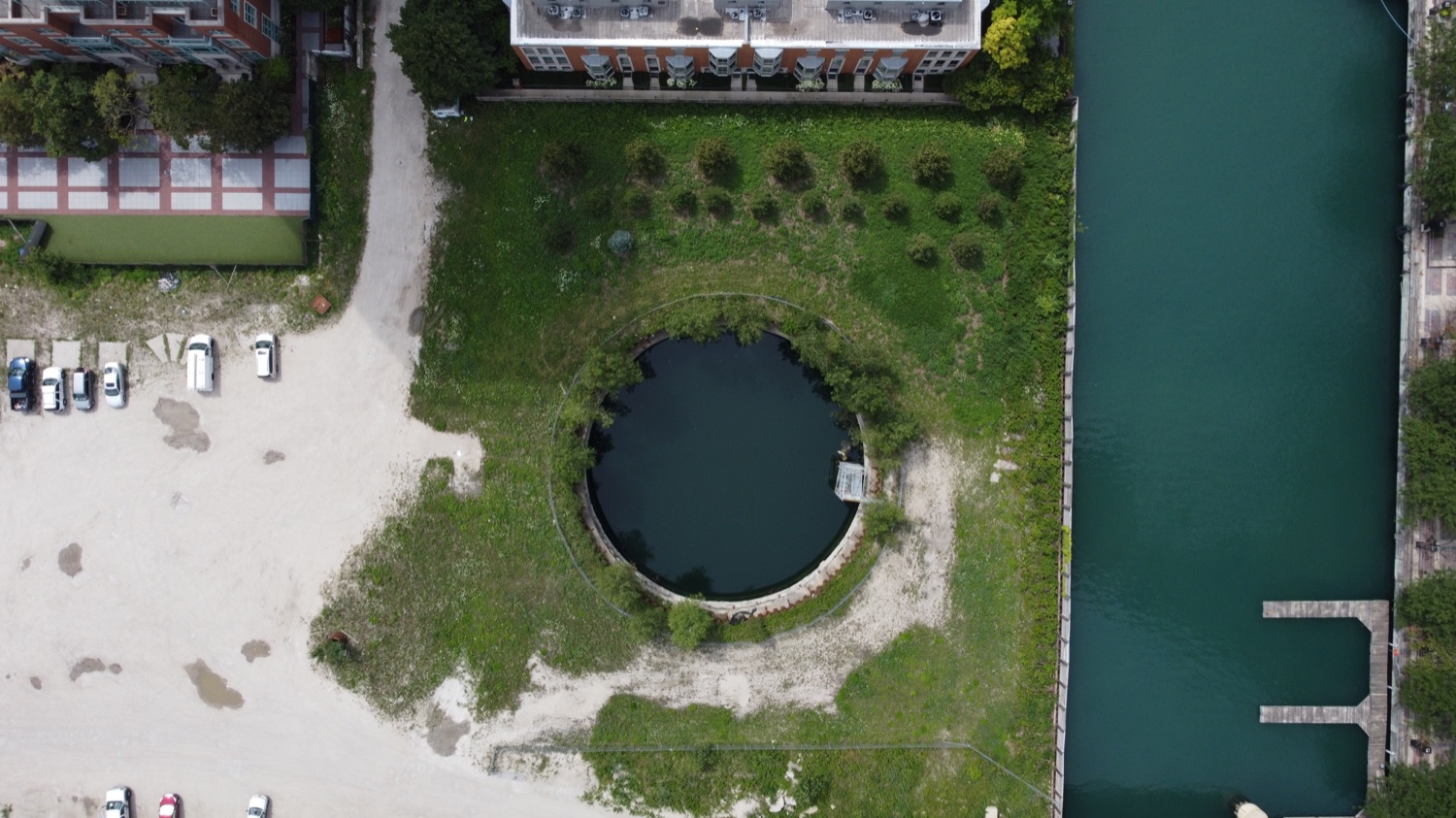
Between the handover and the groundbreaking sit ten more years, and they were not idle ones so much as expensive ones to be idle through. Chicago magazine’s 2015 retrospective fixed the image — a 2,000-foot corkscrew that “never materialized beyond a circular foundation sunk 76 feet” into the land between Lake Shore Drive and the river.14 Related’s first plan for the site — 1,100 feet, 300 condos, a hotel — was rejected by Alderman Brendan Reilly in October 2018 over scale and traffic.19 The revision of March 2020 cut the heights to 875 and 765 feet, dropped the hotel and the condos, and went through the Plan Commission and City Council that June as an amendment to the site’s Planned Development 368.20,21,22,23
Two commitments rode the approval, and they are the study’s second finding, because the record prices both. The affordable one first: the site’s 2007-era entitlement predates Chicago’s on-site affordability rules, so the zoning required no affordable units at all — Related paid $3.6 million in lieu.22 The 127 affordable apartments the tower actually contains — a fifth of it, at 30 to 50 per cent of area median income — arrived three years later through the financing: they are what qualified roughly half a billion dollars of tax-exempt Illinois Housing Development Authority bonds, sold to Wells Fargo, the cheapest construction money available in 2023.24,25,26,27 The reel says the developer promised a park to get permits. The record adds: it promised affordability to get the loan.
The same park, promised twice
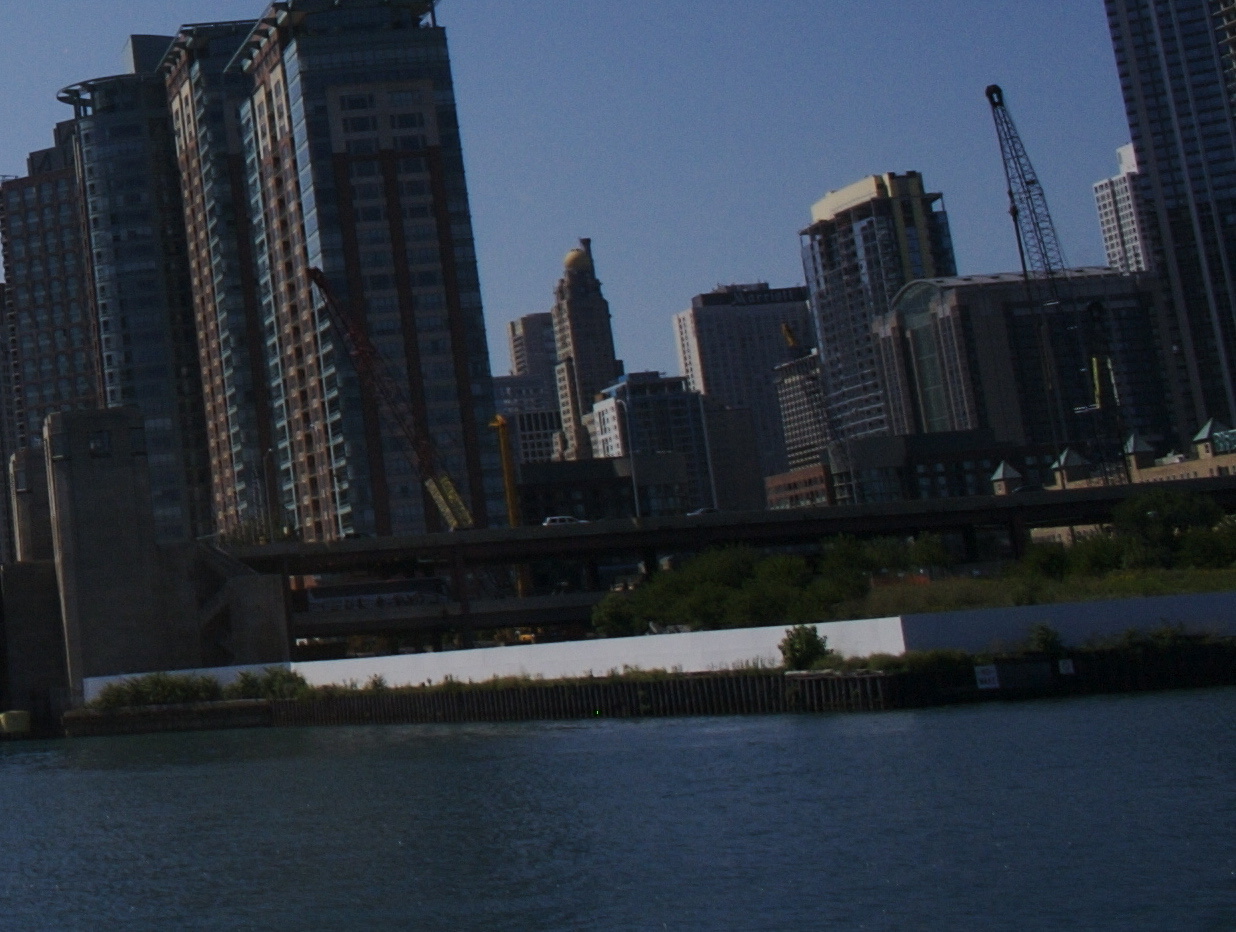
DuSable Park is older than either tower. Harold Washington named the peninsula at the river’s mouth for Jean Baptiste Point DuSable in 1987 — Dr. Peggy Montes, whom he tasked with finding the site, was still writing to the Plan Commission on its behalf at 89, in 2025.34,39 What kept it fenced for decades was not only neglect: the ground held radioactive thorium from the Lindsay Light gas-mantle works, and the cleanup — an EPA cooperative agreement worth $6.8 million, plus money from the Kerr-McGee settlement that removed nearly a thousand additional cubic yards — was not done until 2020.34,35,36 The Spire era added its own promise: in 2007 Shelbourne agreed to build the park in exchange for using it as a staging area, and Kelleher told a public meeting he would be “quite happy” to fund his contribution.3,34 Then the Spire died, and the park’s advocates drew the lesson out loud: “It was tied to the Spire and the Spire didn’t go forward.”37
Related’s version of the promise — $10 million, committed at the May 2020 Plan Commission hearing, with the city matching $5 million — differs from the Spire’s in exactly one structural respect: the city wired it to the tower’s certificate of occupancy. DuSable Park must be finished before 400 Lake Shore can legally fill.21,28 The park cleared the Plan Commission in October 2025 at a $13 million estimate, with construction from spring 2026 and an opening targeted by mid-2027 — forty years after it was named.38 A developer’s promise is a term only when breach costs something. The 2007 promise cost nothing to break. The 2020 one would cost a tower full of empty apartments.
Built on the failure’s bones
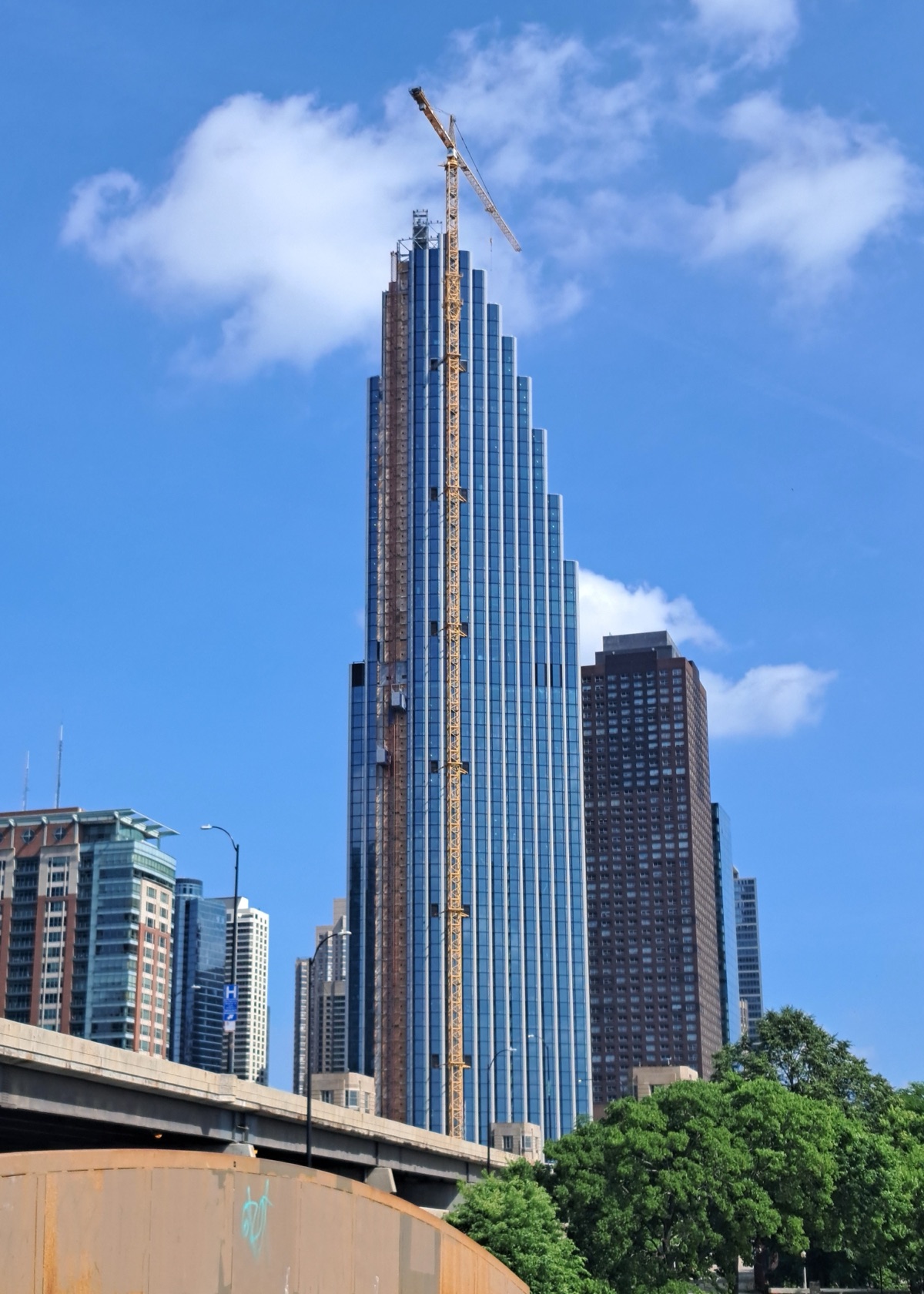
The reel’s engineering claims check out almost line by line, which deserves saying because it is rare. The new tower’s core sits on twenty of the Spire’s 10-foot-diameter rock caissons — “We positioned the building’s core directly over them to take advantage of what was there,” SOM’s project engineer Brad Young told Engineering News-Record — with more of the 34 originals worked into the design, and at the June 2024 groundbreaking guests signed a link beam that was lowered into the old cofferdam to become part of the new structure.24,28,31 The belt wall is real and is the builders’ own term: a continuous belt-and-outrigger system with outriggers on every floor to Level 44, where the primary belt wall — 400 cubic yards of concrete, 150,000 pounds of rebar — ties the core to the perimeter columns, a design chosen specifically so the tower needs no tuned mass damper.29,31 The names the reel garbles are LR Contracting — Related’s in-house arm — and BOWA Construction, the first Black-owned general contractor to co-build a Chicago high-rise, with Goebel Forming on the wall itself.24,30,31
Two of its claims do not survive. The “90 mile per hour winds” figure appears in no engineering source — what the record describes is wind-tunnel-shaped massing, tested in SOM’s own tunnel and by the consultants RWDI, doing the work a number would oversimplify.31,32 And the tower the reel calls condos is 635 rental apartments — the condos died with the 2018 plan.19,24,40 It topped out at 857 feet on 23 July 2026 — eighteen feet short of its approved height, a change no source explains — with first residents due in spring 2027, and the 765-foot south tower waiting on the market.32,33,40
The sequence
Jul 2005
Christopher Carley’s Fordham Company announces the Fordham Spire: 115 stories, $500 million, 200 to 250 condominiums atop a hotel, designed by Santiago Calatrava, with a spire reaching about 2,000 feet.2
$500M plan
20 Jul 2006
Carley cannot close on the land. Garrett Kelleher’s Shelbourne buys the 2.2 acres for $64 million, financed with a $54.5 million Anglo Irish Bank loan. His own account, six months later: “I looked at it on a Wednesday, and we closed it the following Thursday. Did no due diligence on the site whatsoever.”1,3
$64M
Sep 2007
The final design is unveiled: 150 storeys, 2,000 feet, 1,194 residences, every floor rotated 2.4 degrees. Caisson drilling has been under way since July — 34 shafts sunk 110 feet to bedrock.1,4,6
Jan 2008
Sales launch with a world tour — Beijing, Singapore, Hong Kong, Dubai, London — and Liam Neeson recruited for the campaign. Projected sellout: $3.4 billion against $2.3 billion of cost.6,16
$3.4B projected
11 Sep 2008
The Anglo loan is formally amended upward, from $54.5 million to $69.5 million. Lehman Brothers fails four days later.1
$69.5M
29 Sep 2008
Two weeks after Lehman, Beanie Babies founder Ty Warner signs a contract for the $40 million penthouse — floors 141 and 142. The next day, Shelbourne confirms underground work is slowing “due to the roiled financial markets.”5
$40M contract
Oct 2008
Shelbourne shuts the project down as its lender, Anglo Irish Bank, heads toward nationalization. The foundation is complete; the superstructure never begins. By mid-2009, 309 unit sales totalling $496 million are on the books, and contractors begin filing liens — Calatrava’s own is $11.34 million.1,8,9
Oct 2010
Anglo Irish Bank files its $77 million foreclosure suit; the loans matured a year earlier. A receiver takes the property in December — and Chicago Spire LLC returns all $17 million of buyer deposits.1,7
$17M returned
12 Oct 2011
A foreclosure judgment of $82,868,313 is entered, by agreement, in favor of a bank that by now belongs to the Irish state.1
$82.9M judged
Jul 2013
Ireland’s National Asset Management Agency sells the Spire loans — Kelleher’s personal guarantees attached — to RMW Acquisition Company, a Related vehicle, for about $35 million. The price is redacted from the bankruptcy filings.10,15
≈$35M
Oct 2013
RMW and other creditors force Shelbourne into involuntary Chapter 11. Related’s vehicle files a secured claim of $96,542,975 against a site whose only structure is the foundation it will later build on.1,10
$96.5M claimed
4 Nov 2014
Kelleher’s rescue venture misses the confirmed plan’s deadline — more than $109 million due by October 31, with a final $22 million payment unmade — and title passes to Related Midwest. No auction; a calendar. Crain’s headline: “It’s official: The Chicago Spire is dead.”11
$109M unpaid
Oct 2018
Alderman Brendan Reilly rejects Related’s first two-tower plan — 1,100 feet, condos, a hotel — over scale, traffic and the podium. The revision of March 2020 drops the hotel and the condos entirely.19,20
Jun 2020
The revised plan clears the Plan Commission and City Council under an amendment to Planned Development 368, carrying a $10 million commitment to DuSable Park — the 3.3-acre peninsula Harold Washington named in 1987, promised by the Spire itself in 2007, and still fenced. The site’s 2007-era entitlement means no on-site affordable units are required; Related pays $3.6 million in lieu.21,22,23,34
$10M pledged
2019–2023
Kelleher’s $1.2 billion lawsuit against NAMA — alleging “spite” — is dismissed on sovereign-immunity grounds in March 2019 and settled in principle that October, terms undisclosed. He returns to running St Patrick’s Athletic in Dublin.16,17,18,41
2023–2024
The financing that finally builds on the site: roughly $500 million, mostly tax-exempt Illinois Housing Development Authority bonds sold to Wells Fargo, with PNC, Bank of America and a $55 million AFL-CIO Housing Investment Trust piece — priced on 20 per cent of the tower’s 635 rentals being affordable at 30 to 50 per cent of area median income. Cranes rise in January 2024; the ceremonial groundbreaking is June 17.24,25,26,27,28
≈$500M
2024–2026
The new tower is built on the old one’s bones: its core sits on twenty of the Spire’s 10-foot rock caissons, a signed link beam is lowered into the old cofferdam, and a belt-and-outrigger system — the primary belt wall at Level 44 — replaces a tuned mass damper. The tower tops out at 857 feet on July 23, 2026.24,29,31,32
2026–2027
First move-ins are slated for spring 2027. DuSable Park — approved by the Plan Commission in October 2025 at a $13 million estimate — must be finished before the tower can receive its certificate of occupancy, and is targeted to open by mid-2027, forty years after it was named.28,32,38
What transfers
The first lesson is where discounts actually live. The reel says Related “saw a discount” in cursed dirt, and the record sharpens it: the discount was in the paper, not the parcel. The land’s price never publicly fell — it simply stopped trading. What fell was its loan, from a $96.5 million claim to a reported $35 million purchase price, and buying that fall bought control of everything under it. This is the third study in this room — after the Macklowe towers and Century Plaza — where the road to owning a landmark ran through buying its debt, and in all three the person who took that road paid less than any bidder ever would have.
The second is about what “complexity is a moat” actually requires. The Spire was the most complex thing anyone proposed on that lakefront and the complexity consumed it — first-of-kind height, one-lender financing, a sales program that needed $3.4 billion of strangers’ money to close. 400 Lake Shore’s complexity is bounded and priced: reuse engineering with the caissons already load-tested by time, a belt wall in place of a damper, bond financing whose price was known the day the affordability percentage was fixed. Complexity is a moat when you are on the right side of it — when it is a cost you have already paid and your competitor has not. The Spire paid the cost and never got the moat. Its successor inherited the moat for about $35 million.
The third is the park. The same public promise was made twice on the same three acres, by two developers, thirteen years apart. The first was sincere and free to break, and it broke. The second was wired to the certificate of occupancy, and there are excavators on the peninsula. When a community trades approval for a public benefit, the whole trade is in the enforcement clause — everything else is a press release.
And one human line survives everything: the buyers got their deposits back. The developer lost nine figures of his own cash, the architect went unpaid into the lien queue, an Irish bank died holding the paper, and the people who bought apartments on the 141st floor of a drawing were made whole in December 2010.1 Fifteen years of failure, and the retail money walked away clean — which is not how these stories usually end, and is worth remembering when one of them is retold as a curse.
Common questions
- Who lost money when the Chicago Spire failed?
- Nearly everyone except the condo buyers. Garrett Kelleher had put in about $250 million by his own 2009 account, $180 million of it his personal cash, and no total for his final loss was ever published. Anglo Irish Bank — nationalized during the crisis — carried the loan to an $82.9 million judgment, and Ireland’s NAMA sold it for about $35 million, a loss borne ultimately by Irish taxpayers. Contractors filed $18.4 million of liens, including Santiago Calatrava’s own $11.34 million for unpaid fees. The buyers were the exception: all $17 million of deposits were returned in December 2010, per the bankruptcy record.
- What did Related Midwest actually pay for the Spire site?
- It never bought the site — it bought the site’s debt. In July 2013 Ireland’s NAMA sold the defaulted Spire loans to Related’s RMW Acquisition vehicle for a price redacted from the bankruptcy filings and reported later at about $35 million. RMW then forced Shelbourne into involuntary Chapter 11, filed a $96.5 million secured claim, and when Kelleher’s venture missed the confirmed plan’s deadline — more than $109 million due by 31 October 2014 — title passed to Related on 4 November 2014 without any auction.
- Is 400 Lake Shore really built on the Spire’s foundation?
- Yes. SOM’s project engineer has said the new tower’s core was positioned directly over twenty of the Spire’s 10-foot-diameter rock caissons, with more of the original 34 incorporated into the design, and at the 2024 groundbreaking a signed link beam was lowered into the Spire’s old cofferdam to become a permanent part of the new structure. The reuse reduced concrete use and cost — the fifteen-year-old failure is literally load-bearing.
- Is 400 Lake Shore condos, and why is a fifth of it affordable housing?
- It is rentals — 635 apartments in the 72-storey, 857-foot north tower. Condos and a hotel were in Related’s 2018 plan, which Alderman Reilly rejected; the 2020 revision that passed is all-rental. The zoning required no affordable units at all, because the site’s entitlement dates from 2007, before Chicago’s on-site requirements — Related paid $3.6 million in lieu. The 127 affordable units, at 30 to 50 per cent of area median income, came through the financing: they qualified roughly half a billion dollars of tax-exempt Illinois Housing Development Authority bonds, the cheapest construction debt available in 2023.
- What is DuSable Park, and will it actually get built this time?
- A 3.3-acre peninsula at the Chicago River’s mouth, named for Jean Baptiste Point DuSable by Mayor Harold Washington in 1987 and left fenced for decades — partly for want of money and will, partly because the soil held radioactive thorium from the Lindsay Light works, not fully remediated until 2020. The Spire’s developer promised to build it in 2007 in exchange for staging rights, then collapsed. Related committed $10 million in 2020, with a structural difference: the park must be finished before 400 Lake Shore can receive its certificate of occupancy. It cleared the Plan Commission in October 2025 and is targeted to open by mid-2027.
Sources
- Shelbourne North Water Street LP (Chapter 11 Disclosure Statement, N.D. Ill. Case 13-44315) — The primary record: the $64 million site purchase of July 20, 2006, the Anglo loan raised from $54.5 to $69.5 million on September 11, 2008, the 110-foot substructure and cofferdam, 309 unit sales for $496 million, the $17 million of deposits returned in December 2010, the $82,868,313 foreclosure judgment, and RMW’s $96,542,975 secured claim (2014-03-10)
- The New York Times — In Chicago, plans for a high-rise raise interest — the original Fordham Spire: 115 stories, $500 million, 200 to 250 condominiums atop a 20-story hotel, a spire reaching about 2,000 feet (2005-07-26)
- Lynn Becker (ArchitectureChicago) — Kelleher at the January 2007 community meeting, in his own words: “I looked at it on a Wednesday, and we closed it the following Thursday. Did no due diligence on the site whatsoever” — and the promise to fund DuSable Park (2007-01)
- The Irish Times — $40m Spire penthouse sold to toy magnate — the 150-storey scheme unveiled in September 2007, and 1,193 apartments on completion (2008-10-02)
- Crain’s Chicago Business — Chicago Spire penthouse sold to Beanie Babies’ Warner — the contract signed two weeks after Lehman failed, and underground work slowing “due to the roiled financial markets” (2008-09-30)
- The New York Times — A Chicago skyscraper on hold — Kelleher’s $250 million in, $180 million of it his own cash; $3.4 billion of projected sales against $2.3 billion of cost; the seven-story-deep hole ringed with 34 caissons (2009-02-04)
- Chicago Tribune — Foreclosure suit filed against developer of the Spire — Anglo Irish Bank’s $77 million lawsuit, on loans that matured a year earlier (2010-10-11)
- Crain’s Chicago Business — Spire developer faces eviction from sales center site — Calatrava’s own $11.34 million lien among the contractors’ claims (2009-10-14)
- Curbed Chicago (archived) — What’s next for Santiago Calatrava’s troubled Chicago Spire? — the October 2008 shutdown as Anglo faced nationalization, NAMA’s May 2013 debt auction, Related’s $95 million guarantee suit, and the 76-foot-deep grave (2014-06-25)
- Chicago Tribune (Blair Kamin) — Say goodbye to the Chicago Spire — the $93 million of delinquent debt bought at a discount from NAMA, the price Related paid redacted from the filings, and the bankruptcy forced in October 2013 (2014-10-31)
- Crain’s Chicago Business — It’s official: the Chicago Spire is dead — the missed October 31 deadline on more than $109 million, the $22 million payment, and the handover (2014-11-04)
- Chicago Sun-Times — Would-be Chicago Spire developers lose coveted property — Related having acquired $93 million in debt from Ireland’s National Asset Management Agency (2014-12-17)
- Chicago Tribune — Chicago Spire bankruptcy quietly ends — Judge Janet Baer: “We look forward to seeing what your client does with the property now” (2015-03-18)
- Chicago magazine (Ian Spula, via the Chicago Tribune) — After the Spire — the 2,000-foot corkscrew that never materialized beyond a circular foundation sunk 76 feet (2015-01-28)
- Loop North News — NAMA sold the Spire loans to Related’s RMW Acquisition in July 2013 for about $35 million, with Kelleher’s personal guarantees attached (2019-03-15)
- The Irish Times — Kelleher sues NAMA for $1.2bn over Chicago Spire — the “spite” allegation, the $300 million he says he spent, and Liam Neeson recruited for the sales launch (2018-03-02)
- Crain’s Chicago Business — Judge dismisses Chicago Spire developer’s lawsuit seeking $1.2 billion — NAMA immune as an instrumentality of a foreign state (2019-03-18)
- Loop North News — The agreement in principle that settled both Kelleher’s suit against NAMA and NAMA’s claims against him, on undisclosed terms (2019-10-29)
- Chicago Tribune (Ryan Ori) — Two-tower plan for Chicago Spire site rejected by alderman — Reilly’s October 2018 rejection of the 1,100-foot condo-and-hotel scheme (2018-10-23)
- Chicago Tribune (Ryan Ori) — Related Midwest eyes early 2021 start — the March 2020 revision: 875 and 765 feet, the hotel dropped, 1,100 combined apartments (2020-03-11)
- Chicago Tribune (Blair Kamin) — Two-tower plan moves a step closer — the May 21, 2020 Plan Commission approval, Related’s $10 million DuSable Park commitment, and Reilly’s $5 million city match (2020-05-22)
- WTTW News (Heather Cherone) — Scaled-back plan for former Chicago Spire site advances — the unanimous Zoning Committee vote, and the $3.6 million paid in lieu of on-site affordable units under the 2007-era approval (2020-06-16)
- City of Chicago (Council File O2020-1897) — The filed ordinance amending Residential-Business Planned Development Number 368 for 400 N. Lake Shore Drive — applicant RMW Acquisition Company LLC (2020-03-18)
- Related Midwest (press release) — The June 17, 2024 groundbreaking — 72 stories, 858 feet, 635 rental apartments with 127 affordable, the link beam signed and lowered into the Spire’s cofferdam, and LR Contracting with BOWA Construction as co-builders (2024-06-17)
- CoStar News (Ryan Ori) — Apartment tower set to rise on Chicago site where 2,000-foot skyscraper was once envisioned — the $510 million of IHDA debt, the bonds sold to Wells Fargo, and Stantec as architect of record (2023-10-20)
- Multi-Housing News — Related breaks ground on downtown Chicago tower — the $501.3 million of IHDA bonds, with PNC, Wells Fargo and Bank of America in the financing (2024-06-19)
- AFL-CIO Housing Investment Trust — 400 Lake Shore — the Trust’s $55 million commitment in the construction syndicate, and 20% of units restricted to households at or below 50% of area median income (undated)
- Loop North News (Steven Dahlman) — Construction begins — the 34 existing Spire caissons, affordability at 30 to 50 per cent of area median income, and DuSable Park required before the tower’s certificate of occupancy (2024-01-22)
- Related Midwest (engineering blog) — Standing tall: the engineering behind 400 Lake Shore — the 858-foot tower, outriggers on every floor to Level 44, the 400-cubic-yard primary belt wall, and the reuse of the Spire’s deep foundations (2026-01-21)
- Related Companies (blog) — The primary belt wall completed — the collaboration between LR Contracting, SOM, Goebel Forming and BOWA Construction (2026-01-28)
- Engineering News-Record (Annemarie Mannion) — Towers will alter skyline and mitigate wind impacts — SOM’s Brad Young on the twenty 10-foot rock caissons under the core, the continuous belt-and-outrigger system, and designing out the tuned mass damper (2026-05-04)
- Skidmore, Owings & Merrill (press release) — 400 Lake Shore Drive tops out — the full 857-foot profile, wind testing from SOM’s in-house tunnel through consultants RWDI, and delivery slated for spring 2027 (2026-07-23)
- Chicago Sun-Times (Abby Miller) — The tower rising from the Spire’s crater — the cofferdam filled in August 2025, first units expected in the first quarter of 2027, and the 500-unit south tower waiting on the market (2025-08-11)
- DuSable Heritage Association — DuSable Park chronology — the 1985 planned development’s open-space parcels, Harold Washington’s 1987 naming, Kerr-McGee named responsible for contamination in 1996, and the Spire’s 2007 agreement to build the park in exchange for staging (undated)
- U.S. Environmental Protection Agency — Lindsay Light investigations — the thorium cleanup at DuSable Park: the 2017 $6.8 million cooperative agreement, and the Kerr-McGee/Anadarko settlement money that removed nearly 1,000 additional cubic yards (2026-07-01)
- WTTW News (Patty Wetli) — DuSable Park moves closer to becoming reality — remediation complete, the seawall rebuilt, and the park “plagued nearly from the start” by political will and thorium (2020-08-28)
- Block Club Chicago (Justin Laurence, via the Internet Archive) — Lightfoot’s $40 million DuSable Park package — and the advocates’ warning: “It was tied to the Spire and the Spire didn’t go forward” (2021-06-30)
- Chicago Sun-Times (Abby Miller) — Long-awaited DuSable Park clinches first city approvals — the October 2025 Plan Commission vote, the $13 million estimate, construction from spring 2026 and opening by mid-2027 (2025-10-16)
- Chicago Plan Commission (written comments) — Public comments on the DuSable Park application — including Dr. Peggy A. Montes, tasked by Mayor Washington in 1987 with locating the park site (2025-10)
- The Real Deal Chicago — Related Midwest tops tallest Chicago tower under construction — 72 stories and 857 feet, 635 apartments, 127 affordable (2026-07-24)
- Extratime.com — St Patrick’s Athletic announce American investment in the club — Kelleher, as chairman, welcoming the new strategic investors (2024-03-05)