
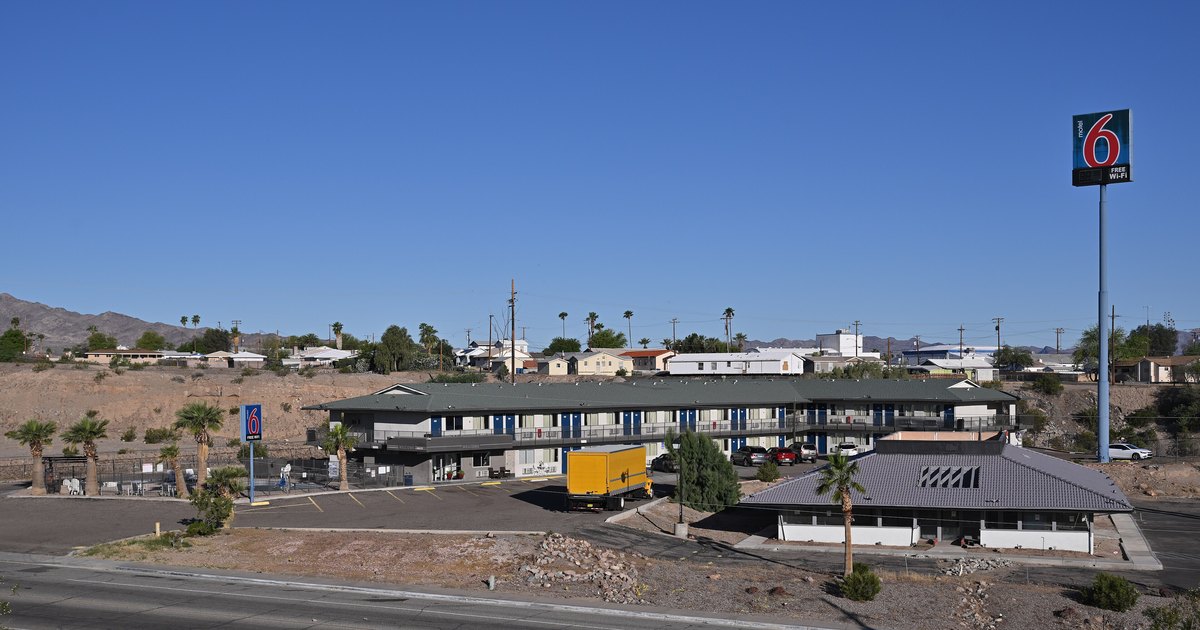
Case study Nº 01
Blackstone bought Motel 6 for $1.9B, sold it for $525M — and made money
The exit price looked like a loss. The public record — two cash-out refinancings, 354+ property sales and an asset-light conversion — shows where the return was actually built, with a source on every number.
Ben Fan, with Darryl WengNovember 16, 202512 min readWatch the reel
Bought, May 2012
$1.9B
Sold, Dec 2024
$525M
On paper, a 72% markdown.1,2,17 But Blackstone’s own cheque was $626 million, not $1.9 billion — and $1.41 billion of sourced cash came back before the sale. The rail above follows that position as you read. Jump to the money ↓
Blackstone’s version: the deal “more than tripled our investors’ capital and generated over $1 billion in profit.”20 That’s the firm’s own claim, made to Fortune the weekend the sale was announced — no independent tally of the full hold exists. But the public record between those two headlines shows how both sentences can be true at once. The mechanism is the lesson, and this brief walks through it a step at a time.
| The deal at a glance | Number |
|---|---|
| Purchase price, announced May 2012 | $1.9 billion1,2 |
| Portfolio at purchase | 1,102 hotels · 107,347 rooms1 |
| Blackstone's equity check | ~$626 million4 |
| Feb 2015 refinancing | $1.8B CMBS · $600M returned to Blackstone4 |
| Aug 2017 refinancing | $2.075B bonds · $286.5M more returned5 |
| Owned hotels sold 2012–2021 | 354+ (analyst count)7 |
| Sale to OYO, closed 17 Dec 2024 | $525 million, all cash17,19 |
| Stated outcome (Blackstone’s claim) | “More than tripled” equity · $1B+ profit20 |
Start with the seller
Every purchase is also somebody’s sale, and Accor’s reasons tell you what Blackstone was walking into. The French hotel group was carrying a US economy chain far from its core, and unloading it did two specific things to Accor’s balance sheet: cut net debt by about €330 million, and erased €525 million in fixed lease commitments — rent Accor owed on hotels whether they filled or not.2 Accor wasn’t selling a failing brand. It was selling a capital-heavy one it no longer wanted to fund.
The buyer was an affiliate of Blackstone Real Estate Partners VII, the firm’s flagship property fund.1 And the structure mattered more than the sticker: of the $1.9 billion price, Blackstone’s own cash was about $626 million — roughly a third — with the rest borrowed.4 Keep that $626 million in your head. The whole story is measured against it, not against $1.9 billion.
What the portfolio actually was
Durable demand, an iconic sign, and equity trapped underneath it.
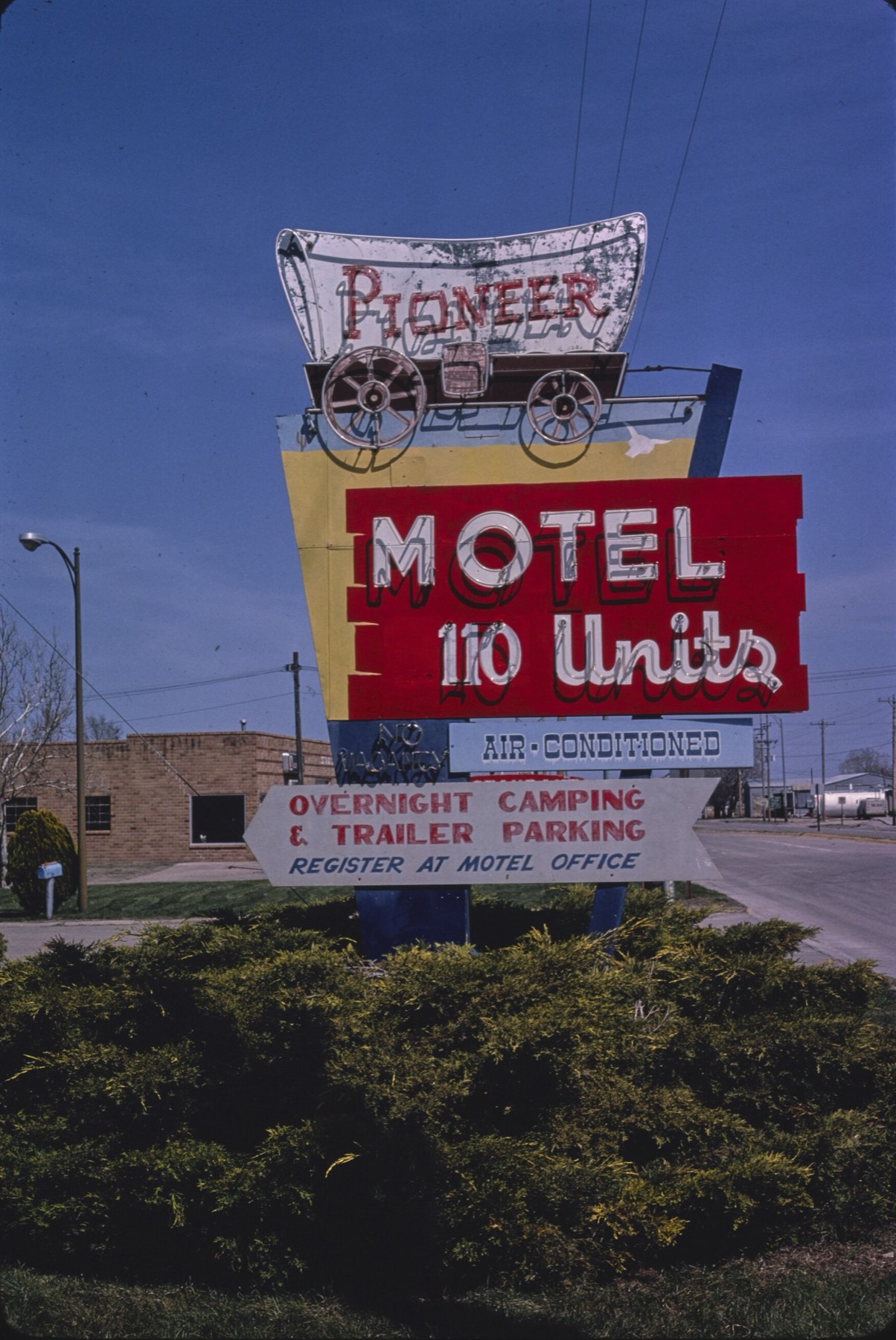
A roadside motel on Route 6 in Minden, Nebraska, photographed by John Margolies in 1980. Not a Motel 6 — this is the roadside economy Motel 6 was built for, and the kind of sign that still fills rooms when nothing else does.John Margolies · Library of Congress · public domain
What $1.9 billion bought
The deal, announced in May 2012, covered 1,102 Motel 6 and Studio 6 properties with 107,347 rooms across the US and Canada.1 It closed that October, and Blackstone stood up a new operating company — G6 Hospitality, headquartered in Carrollton, Texas — to run the chain.3 (Contemporaneous reporting said $1.9 billion; a 2017 bond filing later put it at $1.98 billion. This brief uses the 2012 figure.1,5)
What made this portfolio unusual for its era: Motel 6 still owned an enormous share of its real estate. By 2017 the split stood at 460 corporate-owned hotels against 935 franchised ones5 — and the owned buildings averaged 34 years old.5 Old buildings mean maintenance. Ownership means capital sitting in land and concrete instead of compounding. Most investors saw a tired budget brand. Blackstone saw a balance sheet that could be rewired: durable demand, an iconic sign, and equity trapped under it.
The unglamorous first move: fix the collateral
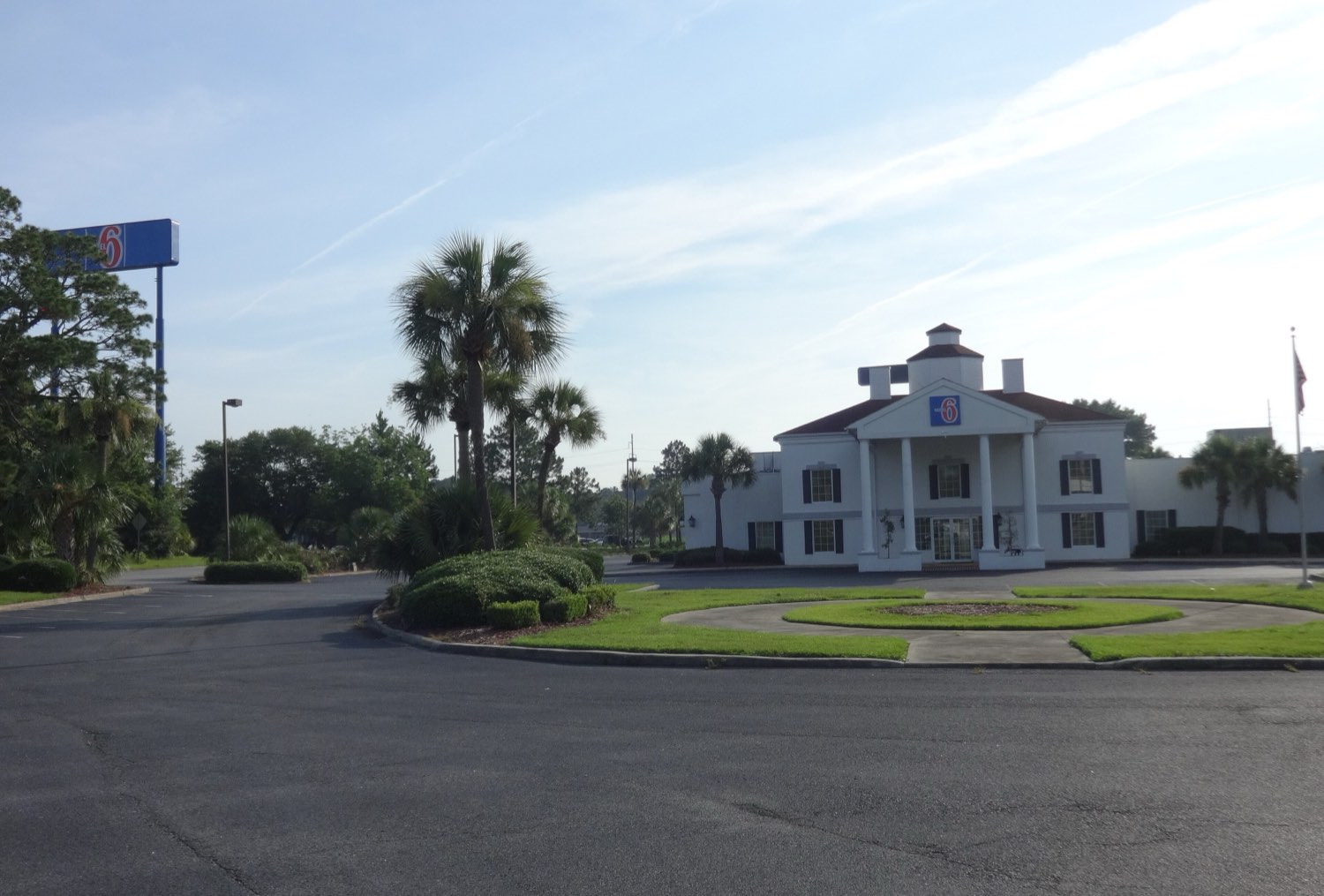
Before any financial engineering came renovation money — $542.9 million of it into the corporate-owned hotels by mid-2017.5 One analyst puts full-hold renovation spending near $900 million.7 This step is easy to skip in the retelling, and it shouldn’t be: every cash-out that follows depended on lenders and buyers treating these properties as worth financing. You can’t refinance your way out of a deteriorating asset. Blackstone spent first, then borrowed.
How the money came back
Blackstone's own cheque was $626 million. Watch almost all of it come back a decade before the sale.
Sponsor’s capital position
+$785.5M
2.25× the $626M cheque returned
Dec 2024 · Sale to OYO +$525M
Step one: borrow the equity back
In February 2015, Blackstone refinanced the portfolio with a $1.8 billion CMBS loan — a mortgage sliced into bonds and sold to investors, commercial real estate’s standard way of borrowing big against buildings. The new loan replaced the acquisition debt, and it was deliberately bigger than what it replaced: roughly $600 million of it went straight back to Blackstone as a distribution.4
Sit with that number. Thirty months into the deal, Blackstone had recovered about 96% of its original $626 million — and still owned the whole company. Bond-market commentary at the time said it plainly: the refinancing “nearly cashed out” the sponsor’s entire equity stake.4 From that point on, Blackstone was playing with the house’s money. That is the difference between return of capital and return on capital: get the first one early, and everything the asset produces afterward is upside on a stake that has already been repaid.
Step two: sell the buildings, keep the flag
Then the buildings themselves started leaving. From 2012 through 2021, Blackstone sold at least 354 owned hotels for estimated proceeds above $1.1 billion — that count and total are one analyst’s reconstruction, not a company figure.7 The individual trades that reached the press show how it worked. In 2022, four South Bay Motel 6s sold for $40.3 million — each to a separate buyer.8 One property near LAX went for $46 million to a private Inland Empire investor.9
Four hotels, four buyers is the detail worth stopping on. Nobody pays top dollar for a thousand motels at once — but for one motel on a corner they know, local operators, family investors and small funds will compete. Selling the portfolio piece by piece reached a deeper pool of buyers than any single transaction could, and captured retail prices for wholesale assets. And most of the sold hotels didn’t leave the system: they kept the sign and became franchises, paying fees to the brand they’d just been carved out of.
Dec 2024, Sale to OYO, +$525M. Position +$785.5M.
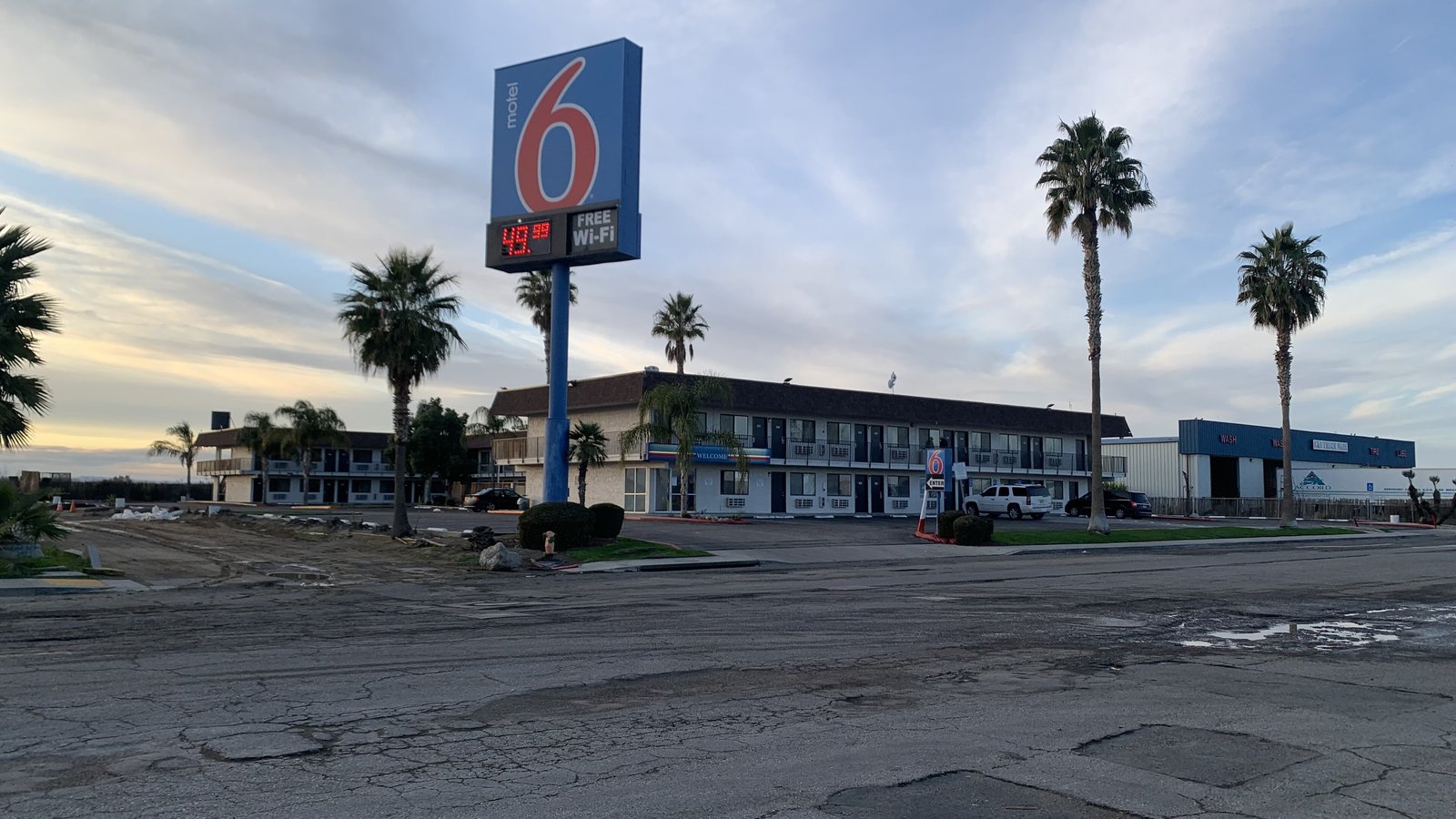
The 2021 refinancing is an X-ray of how far the shrinking had gone. The new debt — $685 million in bonds plus a $300 million loan — was secured by just 106 remaining owned hotels, 13,156 rooms, two-thirds of them in California.6 From 460 owned hotels in 2017 to 106 in 2021. The proceeds retired the 2017 bonds, a mezzanine loan (a second, riskier layer of debt), and $223 million of borrowings at the fund level.6 No distribution was disclosed that round; by then, the point was cleaning up the debt stack for an exit.
In June 2022 — the brand’s sixtieth year — G6 declared the conversion finished: a fully franchised, asset-light company. Its then-CEO said the quiet part out loud: “our measure of success will no longer be company EBITDA” — meaning G6 no longer judged itself on the profits of operating hotels, because it had stopped operating them. What remained was a brand, a reservation system, and a royalty on every room.10
The sequence
May 2012
Buys Motel 6 and Studio 6 from Accor for $1.9B — 1,102 hotels. Equity check ~$626M.1,4
Feb 2015
$1.8B CMBS refinancing against the hotels.4
$600M back to Blackstone
Aug 2017
$2.075B bond deal refinances the debt again. 460 owned hotels remain beside 935 franchises.5
$286.5M back to Blackstone
2012–2021
Sells owned hotels one and a few at a time — 354+ properties (analyst count), estimated $1.1B+ in proceeds.7
Estimated $1.1B+ in asset sales
Aug 2021
A $985M refinancing — $685M in bonds against the last 106 owned hotels plus a $300M loan — retires the 2017 debt, a mezzanine layer and $223M of fund-level borrowings.6
Jun 2022
Declares the brand fully franchised — an asset-light fee business.10
17 Dec 2024
Sells what remains — the brand and franchise platform — to OYO, all cash.17,19
$525M exit
The record has a stain
In September 2017, the Phoenix New Times revealed that two Phoenix-area Motel 6 locations were sending their complete guest lists to US immigration agents every morning — no warrants, no requests, a daily report — and that at least twenty guests had been arrested at those properties in the months prior.11 The company said the practice was local, not corporate policy, and banned it chain-wide. The legal system took years longer.
Washington State’s attorney general sued in early 2018 and settled in April 2019 for $12 million, covering roughly 80,000 guests whose information seven Washington locations had handed over across two years; more than $10 million of it went directly to affected guests.12 The Arizona class action is the number most retellings get wrong: widely reported at its proposed $7.6–8.9 million figure, it was actually approved by a federal judge at $10 million in February 2020, with individual payouts running as high as $200,000 and a three-year nationwide order barring the chain from sharing guest data without legal process.13 Neither settlement moved the deal math. But Motel 6’s customers are disproportionately people paying cash for the cheapest room on the road — trust is part of what the sign sells — and a case study that leaves this out is marketing.
The stress test
Then came the best evidence that the underlying demand was as durable as Blackstone had bet. COVID hit hotels from the top down. In 2020, luxury and upper-upscale hotels — the ones that live on conferences, business travel and events — saw occupancy fall by more than half. Economy hotels’ revenue per available room (the industry’s per-room yardstick, price times occupancy) fell just 6.1%, with occupancy nearly flat at −1.6%.14 The Motel 6 guest drives up, pays little, and often has to travel — construction crews, truckers, essential workers. In the worst year in modern hotel history, that was the demand that held.
A franchise system is a claim on room revenue, so this resilience flowed straight to the thing Blackstone still owned. By 2024 the system’s hotels were producing $1.7 billion a year in gross room revenue for the brand to take its royalty from.18
The exit, in slow motion
The sale took three years of visible motion. Bloomberg reported Blackstone exploring a sale as early as December 2021, with talk of a valuation above $1 billion.15 A formal process surfaced again in April 2024.16 On September 20, 2024, Oravel Stays — the parent of OYO, the India-based hotel operator — agreed to buy G6 Hospitality for $525 million in cash,17 and the deal closed on December 17.19
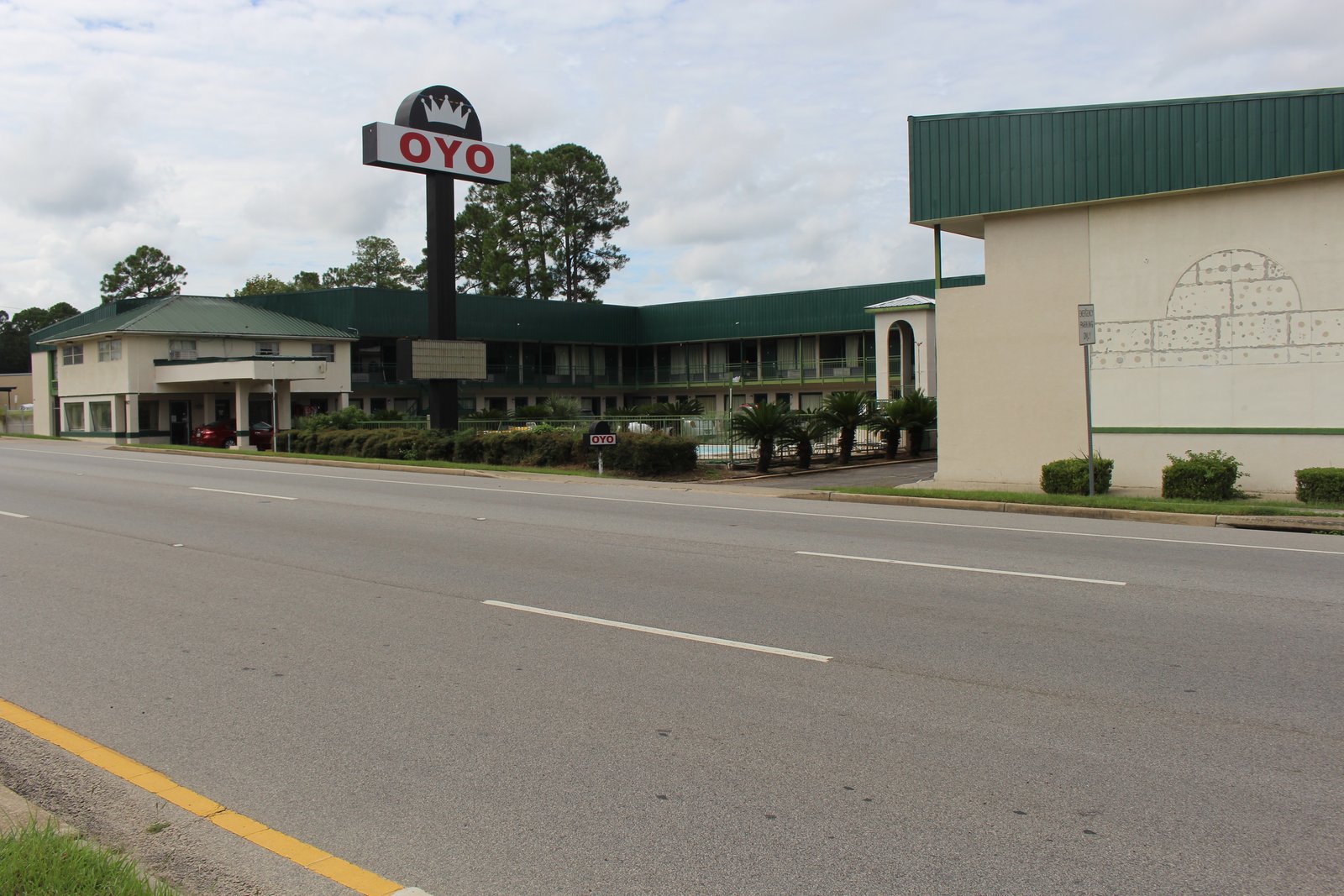
Notice what those three years did to the price. The company discussed near $1 billion in 2021 still owned the 106-hotel California-heavy portfolio; the company OYO bought in 2024 was down to the flag and the fee stream — roughly 1,450 hotels across 49 states and five Canadian provinces, nearly all franchised.6,18 The price didn’t collapse. The thing being priced kept shrinking, because Blackstone kept selling the parts separately. OYO, for its part, announced plans for about 150 new US hotels the following year19 — it was buying distribution in a market it wanted to enter, not real estate.
The ledger, opened
Put every sourced cash event in one place and the shape of the deal appears.
The ledger, stepped
5 of 5 events
| When | Event | Amount | Position after |
|---|---|---|---|
| Oct 2012 | Equity invested | −$626M | −$626M |
| Feb 2015 | CMBS cash-out | +$600M | −$26M |
| Aug 2017 | Bond cash-out | +$286.5M | +$260.5M |
| 2012–2021 | Property sales (analyst estimate, excluded from the running total) | +$1.1B | unchanged |
| Dec 2024 | Sale to OYO | +$525M | +$785.5M |
Dec 2024, Sale to OYO, +$525M.
- Hard-sourced position, at exit
- +$785.5M
- Plus the analyst estimate
- up to +$1.9B
The three hard-sourced distributions alone — $600 million, $286.5 million, and the $525 million exit — total $1.41 billion against $626 million invested. That’s 2.3 times the equity before counting a single building sale or fee dollar.
Honesty requires saying what can’t be added up, which is why the figure above leaves the property sales hatched and outside the running total: some of those proceeds went to paying down the debt secured by those same buildings, and the record doesn’t say how the split fell. Two more lines are missing entirely. Renovation spending — perhaps $900 million over the hold — sits on the cost side.7 And twelve years of franchise fee income, the quiet engine of the whole strategy, was never published at all. This is why no outlet has printed an independent profit figure: the public record shows the mechanism clearly and the total only in outline.
So the honest conclusion has three layers. Blackstone’s claim — capital more than tripled, over $1 billion in profit — is consistent with the visible arithmetic, and unverifiable in total.20 One outside analyst, counting only entry equity against exit-date value, models a gross return near 10% a year and notes the real figure is “meaningfully better” once the interim distributions are counted.7 And the naive read — bought for $1.9 billion, sold for $525 million, therefore lost — is simply wrong, because the 2024 sale priced only the last remaining piece of a company that had been sold off in parts for a decade.
What transfers
Enterprise value is not investor return. The company’s sticker price fell by nearly three quarters while the investor tripled its money — because the return was earned on $626 million of equity, harvested along the way, not on the $1.9 billion headline.
Return of capital comes before return on capital. The 2015 refinancing was the fulcrum of the entire deal: once the original check was back, every later decision — hold, sell, renovate, wait out a pandemic — was made from a position where losing was nearly impossible. When you underwrite a deal, ask where the interim liquidity comes from, not just what the exit looks like.
Each piece has its own best buyer. A single motel sells to a local operator at a price no bulk buyer would pay; a debt-free brand sells to a strategic acquirer entering the US; the real estate and the fee stream were worth more apart than together. Four hotels, four buyers was the strategy in miniature.
The exit price prints what’s left, not what the deal was. By 2024, most of the value had already been converted and collected. Judge any deal by the cash across the whole hold — the final headline is just the receipt for the last item sold.
Common questions
- Did Blackstone lose money selling Motel 6 for $525 million?
- No, by its own account. Blackstone told Fortune in September 2024 the investment more than tripled its capital and generated over $1 billion in profit. Most of the return came before the sale: a 2015 refinancing returned $600 million, a 2017 refinancing returned $286.5 million, and property sales through 2021 are estimated above $1.1 billion. The $525 million bought only the remaining brand and franchise business.
- How did a $525M sale price make sense against a $1.9B purchase?
- The two prices are for different things. In 2012, $1.9 billion bought a company that owned hundreds of hotels and their real estate. By December 2024 most of that real estate had been sold separately and the chain was fully franchised, so $525 million bought an asset-light brand and fee stream — the last piece, not the whole.
- Why did Accor sell Motel 6?
- To shed debt and lease obligations far from its core business. The 2012 sale cut Accor’s net debt by about €330 million and erased €525 million in fixed lease commitments, letting the French group refocus away from a capital-heavy US economy chain.
- Who owns Motel 6 now?
- OYO (through its parent, Oravel Stays), the India-based hotel operator, which completed its all-cash purchase of G6 Hospitality — the parent of Motel 6 and Studio 6 — on December 17, 2024.
- What was the Motel 6 ICE settlement?
- Two settlements, after Phoenix New Times reporting in 2017 revealed locations sharing guest lists with immigration agents. Motel 6 paid Washington State $12 million (April 2019) covering roughly 80,000 guests, and a Phoenix class action received final court approval at $10 million in February 2020 — higher than the widely reported $7.6–8.9 million proposal — with a nationwide order barring the practice.
Sources
- Bloomberg — Blackstone Buys Motel 6 for $1.9 Billion in Lodging Push (2012-05-22)
- CoStar — Blackstone Buys Motel 6, Studio 6 for $1.9b (2012-05-22)
- Hospitality Net — G6 Hospitality LLC established as management company for Motel 6, Studio 6 brands (2012-10-08)
- IFR via Yahoo Finance — Blackstone's large US$1.8bn CMBS tops list of priced deals (2015-02-26)
- Asset Securitization Report — Blackstone REMIC trust launching $2B Motel 6 ABS portfolio (2017-08-30)
- Commercial Observer — Blackstone refinances G6 Hospitality Motel 6 and Studio 6 portfolio (2021-08-25)
- Transacted (analyst estimate) — Blackstone sells Motel 6 parent company to Oravel Stays for $525 million (2024-09)
- The Real Deal — Blackstone sells Motel 6 inns for $40.3M (2022-07-12)
- The Real Deal — LAX-area Motel 6 leaves light on for $46M sale (2022-06-17)
- LODGING Magazine — G6 Hospitality transitions to an asset-light franchise model in its 60th year (2022)
- Phoenix New Times — Immigration Trap: Undocumented Dad Among Many Caught by ICE at Motel 6 (2017-09)
- Washington State Attorney General — Motel 6 will pay $12M for violating privacy of tens of thousands of Washingtonians (2019-04-04)
- MALDEF — Court grants final approval of $10 million Motel 6 settlement for rights violations (2020-02-18)
- Cornell Hospitality Quarterly — COVID-19 RevPAR declines by chain scale (Singh & Corsun) (2023-07-04)
- BNN Bloomberg — Blackstone weighs sale of budget hotel brand Motel 6 (2021-12)
- Skift — Blackstone weighs sale of Motel 6 owner — report (2024-04-15)
- CNBC — Motel 6 sold to Indian hotel operator OYO for $525 million (2024-09-21)
- Yahoo Finance — Blackstone sells Motel 6 to OYO — deal scope and franchise revenue (2024-09)
- Skift — OYO completes Motel 6 acquisition (2024-12-18)
- Fortune — Iconic Motel 6 chain sold to India-based OYO by Blackstone (2024-09-21)