
Case study Nº 09
Blackstone built Logicor out of 50-odd warehouse deals — then sold it for €12.25 billion
Europe’s largest logistics company did not exist in 2011. Six years later it was 13.6 million square metres in 17 countries and the biggest private real-estate sale the continent had recorded. A Hong Kong filing five months later priced 10% of it — and showed what sat under the headline.
Ben Fan, with Darryl WengDecember 26, 202513 min readWatch the reel
Sale price, Jun 2017
€12.25B
Equity implied, Nov 2017
€5.8B
€12.25 billion — $13.8 billion at the time — is the number every headline carried, and it was the largest private real-estate sale Europe had recorded.1,2,4 Five months later a Hong Kong stock-exchange filing priced 10% of the same company at €579,185,213. Multiply that out and roughly €5.8 billion of equity sat under the headline.5 Neither side has ever published the debt. Jump to the filing ↓
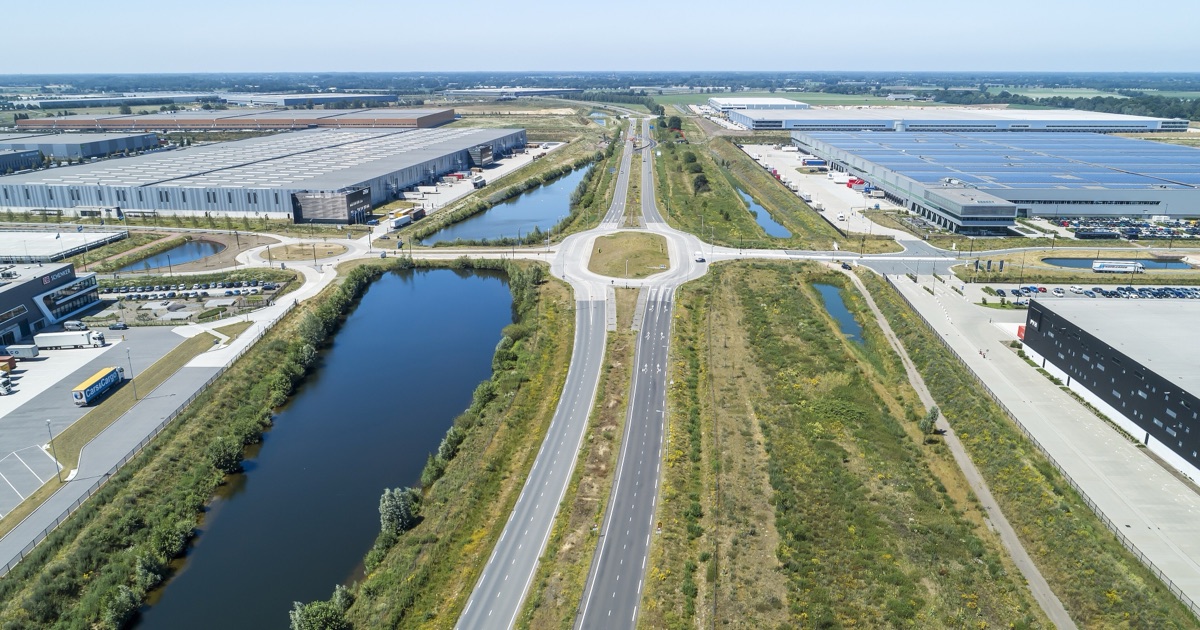
Logicor did not exist at the start of 2012. By the summer of 2017 it owned 13.6 million square metres — 147 million square feet — of warehouse space in seventeen countries, and Blackstone had sold it to China’s sovereign wealth fund in what Reuters called the biggest private equity real-estate deal in Europe on record.1,2 Blackstone’s head of real estate in Europe described how it was built in one sentence: “We built Logicor through over 50 acquisitions.”1
That sentence is the whole story, and it is also the reason the usual case-study arithmetic does not work here. There is no purchase price to set against the sale price, because there was no purchase — there were fifty-odd of them, spread over six years and a dozen jurisdictions, most of them never priced in public. What the record does contain is stranger and more useful: a Hong Kong filing that accidentally shows what the €12.25 billion headline was made of.
| The deal at a glance | Number |
|---|---|
| Platform founded | 2012, by Blackstone’s real estate business2 |
| Assembled through | “Over 50 acquisitions” (Blackstone’s count)1 |
| Scale at sale | 13.6M sq m · 147M sq ft · 17 countries1,2 |
| Assets and occupancy, mid-2017 | 600+ assets · over 93% let5 |
| Sale announced 2 June 2017 | €12.25 billion ($13.8 billion)1,2 |
| Buyer | China Investment Corporation and a Chinese consortium1,5 |
| Completion | Reported complete by 30 November 20174 |
| Equity implied by the 10% stake sale | ~€5.8 billion (inference from one filing)5 |
| Blackstone after the sale | Bought 10% back; still a minority holder6,7 |
| Blackstone's own description | “The largest private realization in BREP’s history”8 |
| Published profit on the deal | None, by either party8 |
What the bet actually was
The reel version — warehouses were boring, Blackstone saw the internet coming — is directionally right and worth pinning to a number, because the shift was already visible when the buying started. Eurostat measures how many European internet users buy something online in a given year. In 2012 it was 55% of them. By 2022 it was 75%, a twenty-point move in a decade, and in some member states far more: Estonia gained 47 points, Hungary 43, Czechia and Romania 41 each.14
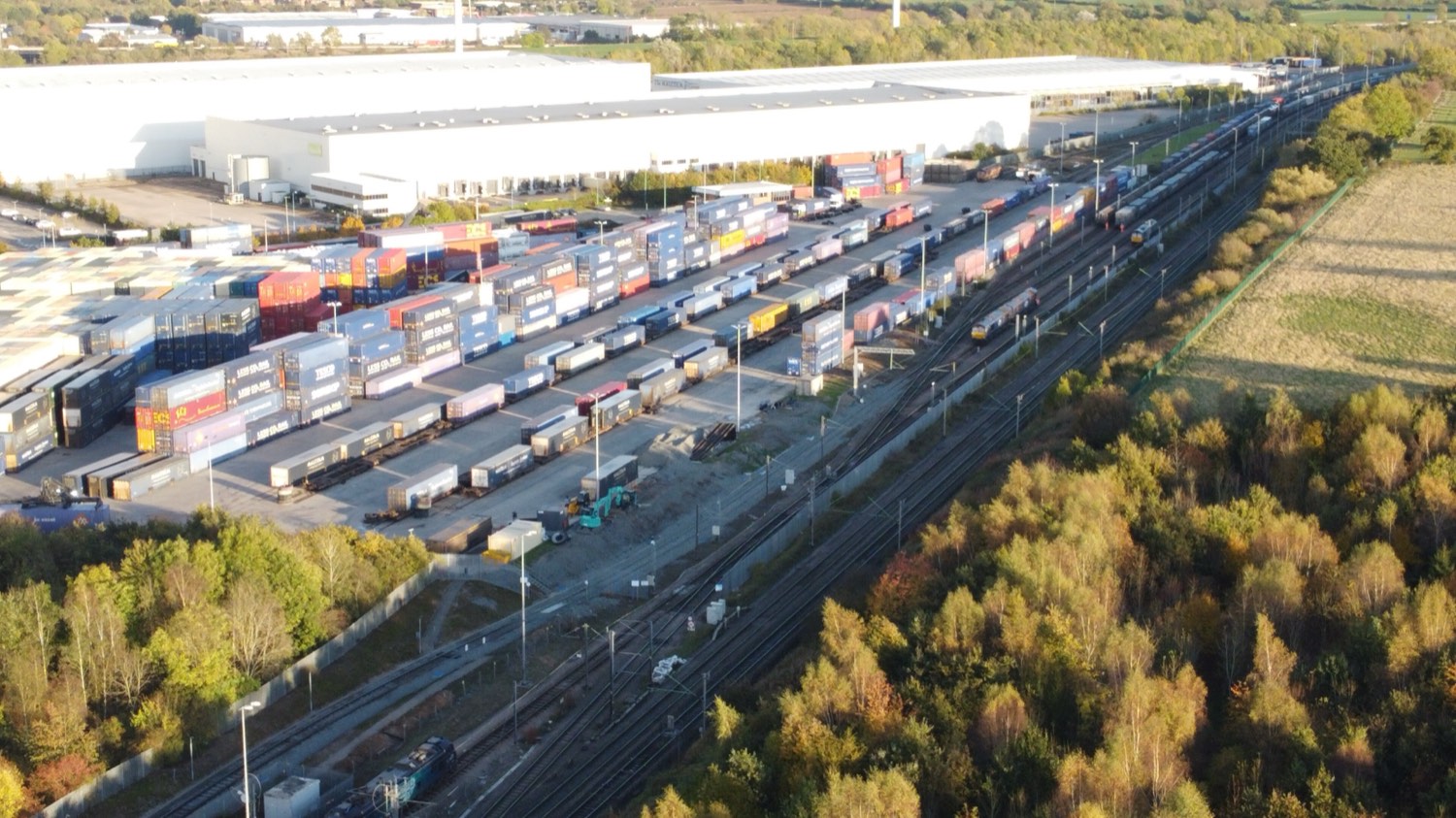
A shopper who orders online instead of driving to a shop does not remove a building from the chain. They move it. The shelf that used to sit in a retail park now sits in a shed beside a motorway, and it has to sit closer to the customer than the old one did, because the promise attached to the order is a delivery date. That is the whole thesis, and it is why the assets Blackstone wanted were unglamorous boxes in specific places rather than trophies.
Reuters records the founding plainly: Logicor was created by Blackstone’s real estate division in 2012 to manage and operate its European logistics assets, and it counted Amazon among its customers.2 One correction to the reel here, and it matters for how the story is read: the buying did not begin in 2012. The first of the four UK portfolios that became Logicor’s British core — the eighteen-asset Triangle portfolio, majority-owned by London & Stamford — was bought in December 2011, for £300 million, before the company existed.9 The platform was named after the strategy had already started.

Fifty-odd deals, one company
Unglamorous boxes in specific places rather than trophies.
Container cranes at the Prinses Amaliahaven, Maasvlakte 2, in the Port of Rotterdam, November 2015. Not a Logicor asset — this is the corridor the sheds are placed along, where the goods arrive before they have to sit closer to the customer than the shelf they replaced.Photo: Frans Berkelaar, CC BY-SA 2.0, via Wikimedia Commons
Fifty-odd deals, one company
The assembly is the part worth studying, because it is the part that is repeatable. Each purchase was small enough to be unremarkable and specific enough to be cheap.
In February 2013 Logicor made its first move into Poland, buying two portfolios totalling 402,000 square metres from a joint venture between Panattoni Europe and Pramerica for about €240 million.11 In August 2014 it bought six Spanish assets — 319,000 square metres in the Henares corridor east of Madrid, Spain’s main logistics hub, let to Leroy Merlin, Primark, Logiters and C&A. That single deal took Logicor past 640,000 square metres in Spain and 5.8 million across Europe.12 In the UK, three more portfolios followed the Triangle deal: thirteen assets from ProLogis at £214 million in 2012, six properties and a regional warehouse from SEGRO for £153.3 million in November 2014, and sixteen warehouses from an Oaktree-led joint venture for £388 million in April 2015.9 In March 2016 the platform was arranging finance against Certeum, a Finnish company holding 122 logistics and industrial properties, about 1.3 million square metres.10
Look at the shape of that list. Poland, Spain, the UK, Finland; developers, listed landlords, a distressed-debt fund, a Nordic property company. Nobody was competing to buy all of Europe’s warehouses, because nobody else was trying to. Each seller was selling for their own local reason, into a market with a handful of credible buyers, and the aggregate of those small negotiations became the largest logistics portfolio on the continent.
The other half of the work was standardisation, and the sale documents show it landed. By mid-2017 the portfolio was more than 600 assets averaging over 93% occupancy, with top tenants described as reputable third-party logistics operators and no concentration in any one of them.5 Blackstone’s own release describes the assets as sitting along primary transport corridors, close to large population centres, in Europe’s major economies — more than 70% of the portfolio in the UK, Germany, France and southern Europe.1 A buyer taking that on is not underwriting 600 separate leases. They are underwriting one income stream with 600 sources.
The debt nobody printed
Blackstone runs its European property out of closed-ended opportunity funds, and the UK financing names two of them as the ultimate sponsors of the British assets: Blackstone Real Estate Partners Europe III and Blackstone Real Estate Partners VII.9 That is the closest the public record comes to naming the equity behind Logicor, and it is not very close, because both funds held far more than warehouses.
The borrowing is better documented, one slice at a time. In July 2015 Goldman Sachs launched Logistics UK 2015 plc, a £646 million commercial mortgage-backed security — a loan secured on buildings, then sliced into bonds and sold to investors, which is how large sums are borrowed against property. It was secured on 42 UK logistics assets valued at £936.2 million, 98% occupied, throwing off £60 million a year of net operating income, at an exit loan-to-value of 69%. The three-year senior loan was priced at 204 basis points over three-month LIBOR.9 The ten largest buildings in it read like a directory of British retail logistics: a 716,988 sq ft warehouse in Rugeley purpose-built for Amazon in 2009 on a lease to August 2026; a B&Q distribution centre in Doncaster; an ASOS shed in Barnsley; two Travis Perkins buildings at Brackmills in Northampton; an Eddie Stobart warehouse at the Daventry rail freight terminal.9 Eight months later, Bank of America Merrill Lynch was lining up a €575 million five-year senior loan against the Finnish portfolio.10
What does not exist anywhere in the record is a platform-level number: how much debt Logicor carried in total when it was sold, or how much equity Blackstone had put in. Both parties were private, and neither published it. That absence is the reason the next section matters more than it should.
The auction that was really a threat — and what it cost
By early 2017 Blackstone was running the exit two ways at once. On 10 March, Reuters reported that it had appointed Morgan Stanley, Goldman Sachs and Bank of America Merrill Lynch to work alongside Citi on a possible London listing of Logicor, at a valuation that could reach €13 billion, with PJT Partners advising the company; no final decision to proceed had been taken.13 Running a flotation and a private sale in parallel is standard practice, and the reel is right about why: a live listing gives bidders a public market to beat.
The reel then says the tactic forced private buyers to pay up. The record does not support that. The listing being prepared was reported at up to €13 billion.13 The trade sale printed at €12.25 billion, and Reuters wrote that it “scuppered plans that were being worked on for a London initial public offering of Logicor later this year.”2 A dual track did what a dual track is actually for — it produced a competitive, certain, single-cheque outcome, against bidders that included Mapletree with Temasek and Global Logistic Properties.4 It did not beat the public-market number. It replaced a number that might never have printed with one that did.
€12.25 billion, and what it covered
On 2 June 2017 Blackstone announced that real estate funds it managed had agreed to sell Logicor to affiliates of China Investment Corporation for €12.25 billion. The release put the portfolio at 147 million square feet across seventeen countries with over 70% concentrated in the UK, Germany, France and southern Europe, and named Eastdil Secured and Goldman Sachs as lead advisers, with PJT Partners, Morgan Stanley, BofA Merrill Lynch and Citigroup also advising and Simpson Thacher & Bartlett as counsel. UBS advised CIC, with Clifford Chance as its counsel.1 The Associated Press filed it as a sovereign wealth fund expanding in Europe, one more in a string of Chinese acquisitions on the continent.3 Estates Gazette reported the deal complete on 30 November 2017, calling it the largest in the history of European real estate.4
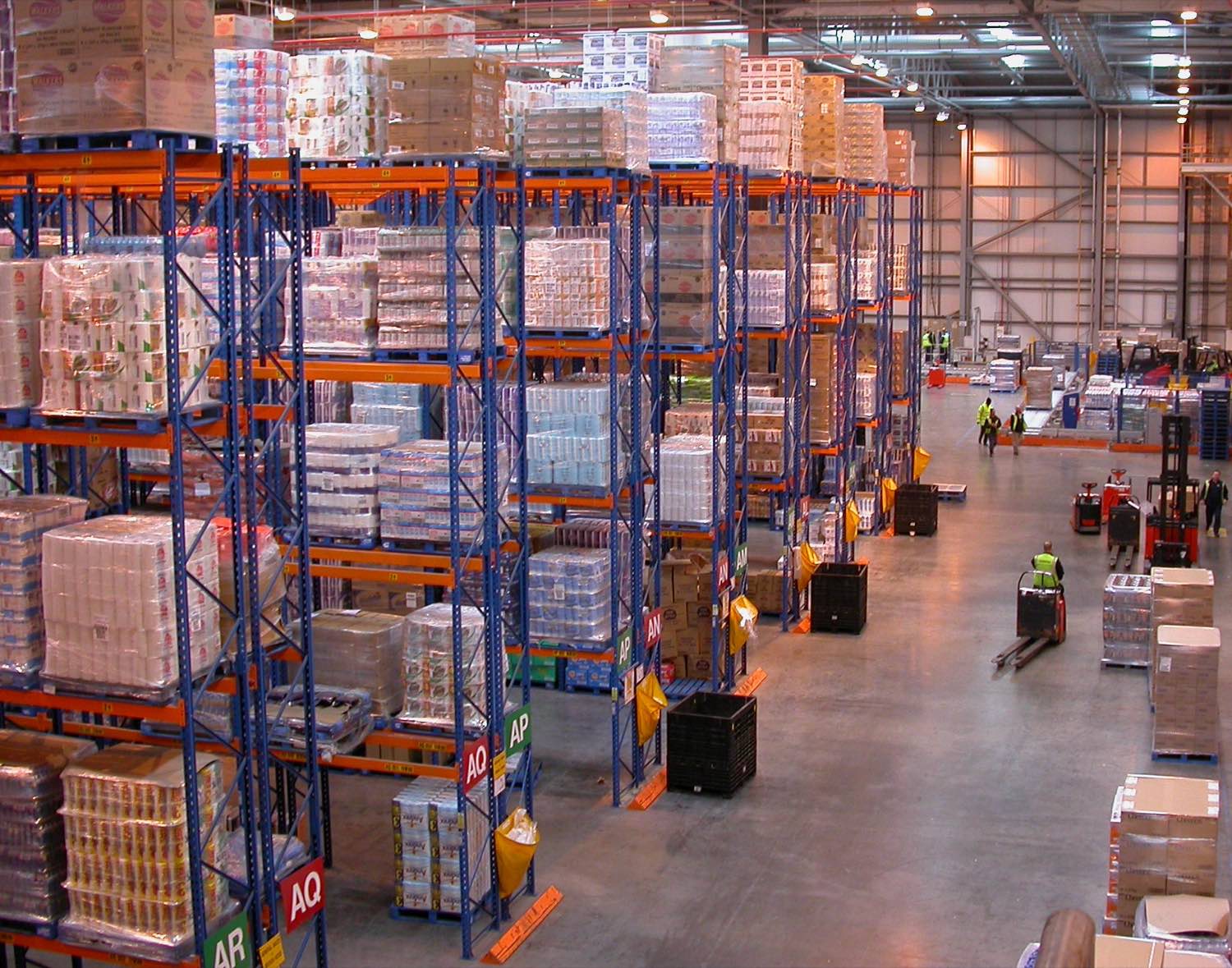
Notice what the release does not say. It does not say whether €12.25 billion was the value of the properties, the value of the company, or the cheque CIC actually wrote. That distinction is the difference between a headline and a return, and for five months nobody outside the deal could resolve it.
The Hong Kong filing that priced it
A headline price is a capital structure, not a cheque. One filing is the only reason anyone can say what was under this one.
The headline, agreed 2 June 2017
€12.25 billion
Five years of net rent collected along the wayNever published
- Equity, implied by the 10% stake sale5 ⁘~€5.8 billion
- Debt, as whatever is left of the headline5 ⁘~€6.45 billion
Sourced, and not part of that total
- Logicor's own net debt, end-202520€7.2 billion
Never published
- The equity Blackstone actually investedNever published
- The aggregate price of the fifty-plus acquisitionsNever published
- Five years of net rent collected along the wayNever published
The total is sourced. The split under it is not: both parts are drawn hatched because they rest on a single filing’s single number. This is why no outlet has printed a Logicor profit figure — the mechanism is fully visible and the total is not.
| Line | Amount | How it is counted |
|---|---|---|
| Equity, implied by the 10% stake sale | ~€5.8 billion | inferred from the sourced total, drawn hatched |
| Debt, as whatever is left of the headline | ~€6.45 billion | inferred from the sourced total, drawn hatched |
| Logicor's own net debt, end-2025 | €7.2 billion | sourced, but a different kind of number — not added to the total |
| The equity Blackstone actually invested | Never published | never published |
| The aggregate price of the fifty-plus acquisitions | Never published | never published |
| Five years of net rent collected along the way | Never published | never published |
| The headline, agreed 2 June 2017 | €12.25 billion | the sourced total |
The Hong Kong filing that priced it
- Equity, implied by the 10% stake sale5 ⁘~€5.8 billion
- Debt, as whatever is left of the headline5 ⁘~€6.45 billion
Sourced, and not part of that total
- Logicor's own net debt, end-202520€7.2 billion
Never published
- The equity Blackstone actually investedNever published
- The aggregate price of the fifty-plus acquisitionsNever published
- Five years of net rent collected along the wayNever published
The total is sourced. The split under it is not: both parts are drawn hatched because they rest on a single filing’s single number. This is why no outlet has printed a Logicor profit figure — the mechanism is fully visible and the total is not.
The sequence
Dec 2011
Before Logicor exists, Blackstone buys the 18-asset Triangle portfolio, majority-owned by London & Stamford, for £300M.9
2012
Logicor is founded by Blackstone's real estate business to run its European logistics assets. A 13-asset ProLogis portfolio follows at £214M.2,9
Feb 2013
First move into Poland — two portfolios totalling 402,000 sq m from Panattoni Europe and Pramerica.11
€240M into Poland
Aug 2014
Six Spanish warehouses, 319,000 sq m, in the Henares corridor east of Madrid. Logicor passes 5.8 million sq m across Europe.12
Nov 2014
Six UK logistics properties and a regional warehouse bought from SEGRO for £153.3M.9
Apr 2015
Sixteen more UK warehouses from an Oaktree-led joint venture for £388M.9
Jul 2015
A £646M CMBS is launched against 42 UK warehouses valued at £936.2M — an exit loan-to-value of 69%.9
£646M raised on 42 sheds
Mar 2016
BAML lines up a €575M five-year loan against Certeum's 122 Finnish properties, about 1.3 million sq m.10
Mar 2017
More banks are appointed for a London listing that could value Logicor at €13 billion. No decision is taken.13
Jun 2017
Sale to affiliates of China Investment Corporation agreed. The IPO is dropped. 147M sq ft, 17 countries.1,2
€12.25B to CIC
Nov 2017
A Hong Kong filing prices 10% of the same company, held through two Luxembourg companies. Completion is reported the same month.4,5
€579M for 10%
Dec 2017
Blackstone buys 10% back through a newly raised European fund, and keeps the mandate to manage the business.6,8
Feb–Apr 2022
Mileway, the second European platform, is recapitalised — 14.7M sq m, 1,700+ assets, 10 countries.15,16
€21B recapitalisation
The ledger, opened — and mostly empty
Here is the honest position. Blackstone has never published what it made on Logicor, and neither has anyone else. What it published instead sits in its annual report for 2017: total realisations of $55.2 billion, a firm record, of which the sale of Logicor was “the largest private sale in the firm’s history” and, in the real estate section, “the largest private realization in BREP’s history.”8 Those are rankings, not returns.
The nearest thing to a performance figure is fund-level, and it belongs to portfolios far wider than Logicor. As at 31 December 2017, the same 10-K put BREP Europe III’s realised investments at a 2.5× multiple with a 22% gross and 16% net internal rate of return since inception, and BREP Europe IV’s realised investments at 2.0× with 28% gross and 18% net.8 Logicor sat inside those funds and would have moved them. Attributing either number to this deal would be a fabrication.
So the sum that can be honestly written is short: €12.25 billion in, against a cost that was never disclosed. Four separate lines are missing and no amount of arithmetic recovers them — the equity Blackstone invested, the aggregate price of the fifty-plus acquisitions, the debt outstanding at sale, and five years of net rent collected along the way. That is why no outlet has printed a Logicor profit figure. The mechanism is fully visible; the total is not, and a case study that supplied one would be inventing it.
One more correction to the reel, and it is the largest. Blackstone did not sell the whole machine. In December 2017, weeks after completion, it was reported buying a 10% stake back through a newly raised $2 billion European real estate fund, while CIC invited other investors in alongside it.6 Its own 10-K describes a new core-plus vehicle “to manage Logicor on a long-term basis” and books roughly $5.9 billion of assets under management from a “Logicor asset management mandate.”8 Nine years later Logicor’s investor page still reads: majority owned by CIC, “Blackstone has a minority interest in the Group.”7 Blackstone sold the equity, kept a slice, and kept getting paid to run the thing.
The record has a stain
The Luxembourg detail in the Hong Kong filing is not incidental, and it is not unique to this deal. Logicor today describes itself as headquartered in London and Luxembourg.20 In March 2024 it told its bondholders it had reorganised: new companies incorporated in Jersey, its UK property companies moved beneath one of them, and that entity elected into the United Kingdom’s real estate investment trust regime with effect from 21 March 2024, its shares admitted to the International Stock Exchange the day before.23 None of that is hidden and none of it is unlawful. It is what large cross-border property ownership looks like.
It has drawn sustained criticism all the same, including at Blackstone specifically. In November 2017 the Paradise Papers leak produced tax advice prepared for Blackstone’s UK property funds. The Guardian reported on a 60-page PwC report from March 2011 for the £480 million purchase of Chiswick Park in west London, setting out steps to avoid stamp duty on the purchase, reduce tax on the rental income, and dispose of the building without paying capital gains tax.22 The ICIJ published documents describing structures in which UK rent passed to a Jersey trust and on to Luxembourg subsidiaries, with large intra-group loans; a tax professor who reviewed them for the ICIJ said the loans appeared to shift profits out of the UK “avoiding any tax anywhere.”21 Blackstone’s response, in both accounts, was that its investments are “wholly compliant with UK and international tax laws and regulations,” that it had acquired such structures from institutional investors, and that they had been used in UK real estate for decades.21,22 Those documents concern other UK assets, not Logicor. They are here because the question of where the rent on European warehouses is taxed is a real one, and because the answer for Logicor — Luxembourg holdcos, then Jersey and a REIT — is on the public record too.
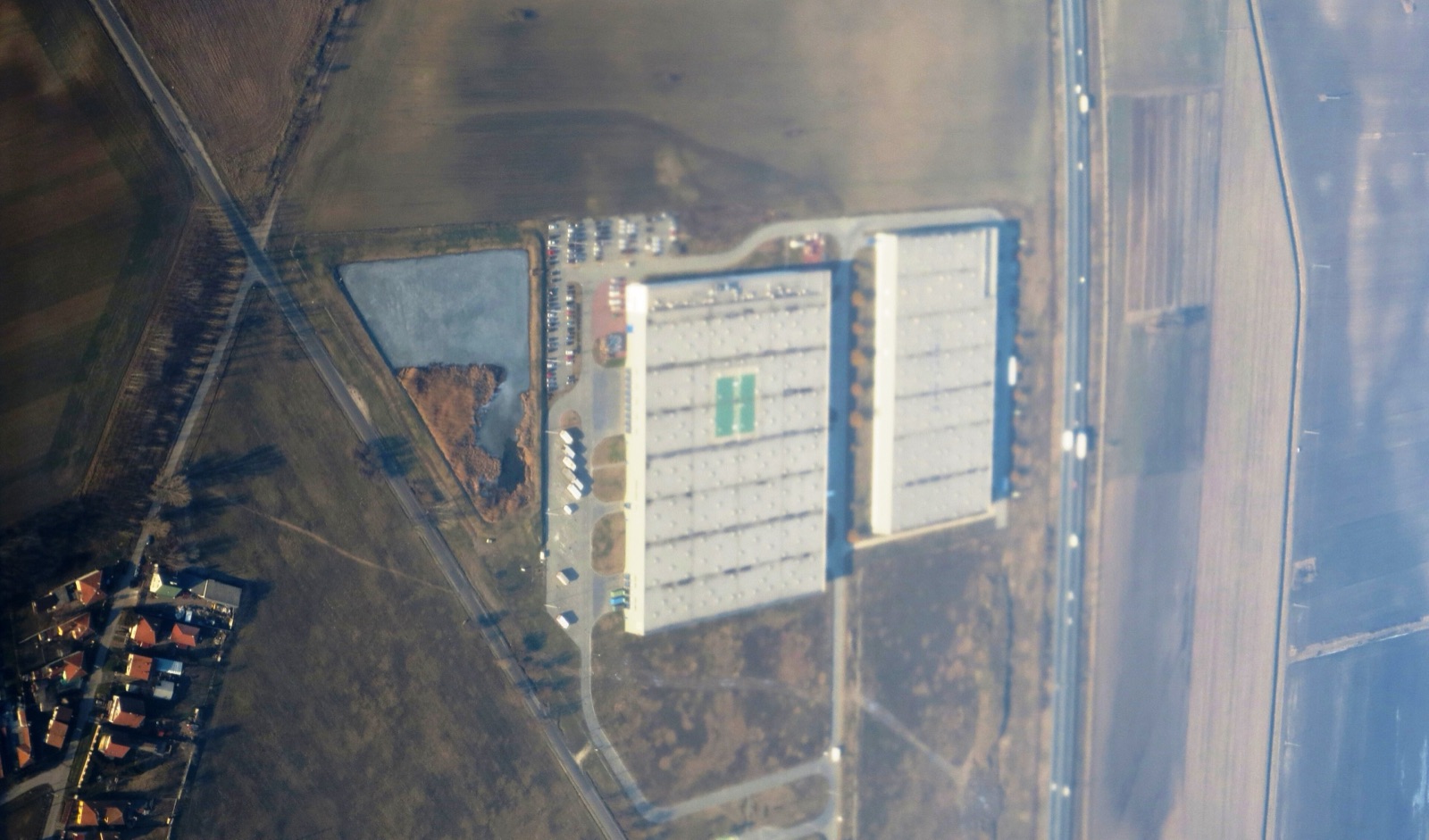
The buildings themselves are contested in a different way. In April 2022 the Dutch public broadcaster’s investigative programme Pointer reported residents in Limburg and Noord-Brabant organising against new distribution centres — one neighbour facing a proposed 130,000-square-metre hall — with at least 64 more centres due by the end of the following year despite several provinces wanting a brake on them. The Netherlands already held some 43 million square metres of logistics property, after a record €5.3 billion was invested in the sector there in 2021 on CBRE’s count. The government’s own advising architect called the big sheds ruimteverslindend — space-devouring.24 The Dutch coined a word for it, verdozing, which translates roughly as boxification. The infrastructure of two-day delivery has to be somewhere, and someone lives next to it.
The sequel, and the check
Having sold the platform, Blackstone built another one. On 15 February 2022 it announced that existing investors in Mileway — its pan-European last-mile logistics company — had agreed to recapitalise the business for €21 billion alongside its core-plus strategy and hold it long term. Mileway then comprised over 1,700 assets and 14.7 million square metres across ten countries, grown, the release said, over the previous six years. The deal was subject to a 75-day go-shop to test whether anyone would beat it, and Morgan Stanley and Eastdil Secured provided fairness opinions to the existing investors.15 It completed on 29 April 2022.16
A recapitalisation is not a sale. Blackstone was on both sides — selling from one set of its own funds to another, with existing investors free to roll, add or cash out — which is exactly why the go-shop and the two fairness opinions were there. It is a legitimate structure and a demanding one to price, and €21 billion in February 2022 was priced at the very top of the market.
What happened next is the check on the whole thesis, and Savills has tracked it with one consistent measure: the average prime logistics yield across Europe, which is the annual rent a top-quality warehouse produces as a percentage of its price. A lower yield means a higher price for the same rent. In the third quarter of 2022 that average was 4.26%, having compressed from 5.57% in Q3 2018 and 5.04% in Q3 2019.17 A year later it had gone the other way hard: 5.13% by Q3 2023, up 69 basis points year on year.18 By the end of 2025 it stood at 5.25%, and had been broadly flat for a year.19
- Savills, Q3 2018175.57%
- Savills, Q3 2019175.04%
- Savills, Q3 2022174.26%
- Savills, Q3 2023185.13%
- Savills, end of 2025195.25%
Blackstone sold Logicor in 2017 when the yield was near its bottom but still falling, and recapitalised Mileway in 2022 at the actual bottom. Only the first of those two was a sale to a third party.
Capitalise an unchanged rent at 5.25% instead of 4.26% and the building is worth about 19% less. That is arithmetic on Savills’ European averages, not a valuation of anyone’s portfolio, and rents did not stay unchanged — they rose, which is why the sector has not repriced by anything like the full amount. But it sizes the headwind that arrived within months of the Mileway number being struck. Blackstone sold Logicor in 2017, when the yield was near 5.5% and falling. It recapitalised Mileway in 2022, at the bottom of the yield curve. Only one of those was a sale to a third party.
And Logicor itself, nine years into Chinese ownership, is neither a wreck nor a rocket. Its 2025 annual report puts the portfolio at 17 million square metres across sixteen countries serving almost 1,700 customers, with gross assets of €15.1 billion, down from €15.6 billion a year earlier; net operating income of €702 million, down from €719 million; occupancy at 91.5%, down from 94.0%; net debt of €7.2 billion; and a portfolio equivalent yield of 5.6%. It sold €704 million of assets during the year to fund development.20 One of those disposals, announced in July 2026, was a 14-asset, 457,000-square-metre portfolio in the UK, Germany and France sold to EQT for €532 million.25 The platform is bigger than the one CIC bought and worth more in gross terms — but whether CIC has made money on it is unknowable from the outside, because the equity injected since, the distributions taken out, and nine years of currency movement have never been published.
What transfers
A platform is a different asset from the sum of its buildings. Fifty separate purchases, each negotiated against a local seller with a local reason, became one thing a sovereign wealth fund could buy in a single afternoon. The premium is not mystical: it is the cost the buyer avoids of doing fifty deals themselves, and the fact that at €12 billion the field of possible buyers is small, rich and in a hurry.
Read the buyer’s disclosure, not the seller’s. Blackstone’s release gave a price and a square footage. A listed Chinese reinsurer, obliged to explain a purchase to its own shareholders, gave the occupancy, the profit, the book value and enough to work out the equity. When a private deal has a public counterparty on the other side, that counterparty is where the real numbers are.
A headline price is a capital structure, not a cheque. €12.25 billion with roughly €5.8 billion of equity underneath it is a fundamentally different transaction from €12.25 billion paid in cash, and everything you might conclude about returns depends on which one it was. Ask that question first, every time.
And selling is rarely the binary event the retelling makes it. Blackstone sold the equity, repurchased a tenth of it, kept the management contract, and remains a shareholder today. “Exit” is a word from a pitch deck. What actually happens is that some claims change hands and others do not.
Common questions
- What was Logicor and how much did Blackstone sell it for?
- Logicor was the pan-European logistics company Blackstone’s real estate business founded in 2012 to own and run its warehouse assets. On 2 June 2017 Blackstone agreed to sell it to affiliates of China Investment Corporation for €12.25 billion — about $13.8 billion at the time — covering 147 million square feet (13.6 million square metres) across 17 countries, with more than 70% concentrated in the UK, Germany, France and southern Europe. Completion was reported by 30 November 2017.
- How much profit did Blackstone make on Logicor?
- Nobody has published a figure, including Blackstone. Its 2017 annual report calls the sale “the largest private realization in BREP’s history” and part of a record $55.2 billion of realisations that year, but gives no deal-level return. The equity Blackstone invested, the total cost of the 50-plus acquisitions and the debt outstanding at sale were never disclosed, so a profit number cannot be derived from public sources.
- Did the €12.25 billion include debt?
- Neither party said. But in November 2017 China Reinsurance told the Hong Kong stock exchange it was paying €579,185,213 for 10% of the same portfolio, which implies roughly €5.8 billion of equity — a little under half the headline — with the rest borrowed. That is an inference from a single filing rather than a disclosed figure. It is consistent with how the business has been run since: Logicor reported net debt of €7.2 billion against €15.1 billion of gross assets, a 48.1% loan-to-value, at the end of 2025.
- Why did Blackstone cancel the Logicor IPO?
- It ran a dual track. In March 2017 it appointed Morgan Stanley, Goldman Sachs and Bank of America Merrill Lynch alongside Citi to prepare a London listing reported at up to €13 billion, without committing to it. The June trade sale at €12.25 billion ended those plans. Contrary to a common retelling, the private sale did not beat the flotation valuation being discussed — it came in below it, but delivered certainty and a single buyer against competing bids from Mapletree with Temasek and Global Logistic Properties.
- Does Blackstone still own part of Logicor?
- Yes, a minority. In December 2017, weeks after completion, Blackstone was reported buying a 10% stake back through a newly raised $2 billion European real estate fund, and its own 10-K describes a vehicle created to manage Logicor long term plus roughly $5.9 billion of assets under management from a Logicor management mandate. Logicor’s investor page still states that the group is majority owned by CIC and that Blackstone holds a minority interest.
Sources
- Blackstone (company release) — Blackstone Announces €12.25 billion Sale of Logicor to China Investment Corporation (2017-06-02)
- Reuters via Yahoo Finance — Blackstone sells Logicor to China Investment Corporation for $14 billion (2017-06-02)
- Associated Press — China sovereign fund buys European warehouse company (2017-06-02)
- Estates Gazette — CIC completes €12.3bn acquisition of Logicor (2017-11-30)
- China Reinsurance (Group) Corporation (HKEX filing) — Discloseable Transaction: Subscription for Share Instruments in a Target Company (2017-11-09)
- Mingtiandi — Blackstone Buys Back 10% of European Warehouse Platform Logicor from CIC (2017-12-12)
- Logicor (company page) — Our Shareholders (undated)
- Blackstone (SEC Form 10-K, fiscal 2017) — Annual Report on Form 10-K for the year ended December 31, 2017 (2018-03-01)
- CoStar Finance — Goldman Sachs launches £646m Logicor UK CMBS for Blackstone (updated) (2015-07-23)
- CoStar — BAML refinances Certeum for Blackstone's Logicor in potential CMBS (2016-03-09)
- PropertyEU via IPE Real Assets — Blackstone spends €240m to enter Polish logistics market (2013-02-13)
- Blackstone (company release) — Logicor Acquires Spanish Logistics Portfolio (2014-08-01)
- Reuters via Yahoo Finance UK — Blackstone appoints more banks to prepare IPO for warehouse giant Logicor (2017-03-10)
- Eurostat — E-commerce continues to grow in the EU (2023-02-28)
- Blackstone (company release) — Blackstone Announces €21 Billion Recapitalization of Mileway (2022-02-15)
- Blackstone (company release) — Blackstone Completes €21 Billion Recapitalization of Mileway (2022-04-29)
- Savills — Spotlight: European Logistics Outlook — December 2022 (2022-12)
- Savills — Spotlight: European Logistics Outlook — November 2023 (2023-11)
- Savills — The European Logistics market shows signs of stability (Q4 2025 data) (2026)
- Logicor (company report) — Logicor 2025 Annual Report (2026)
- ICIJ (Paradise Papers) — How Blackstone Group Uses 'Fairly Aggressive' Tactics To Slash Its Tax Bill (2017-11-22)
- The Guardian — Paradise Papers reveal schemes used to avoid tax on UK property deals (2017-11-08)
- Logicor (notice to noteholders, via wertpapierinformationen.de) — Logicor EMTN — Written Notice to Noteholders: REIT Reorganisation (2024-03-27)
- Pointer (KRO-NCRV) — Rijksadviseur kritisch op grote distributiecentra: 'Ze zijn ruimteverslindend' (2022-04-26)
- Logicor (company release) via EuropaWire — Logicor Sells High-Quality Logistics Assets as Investor Demand Remains Strong Across Europe (2026-07-31)